Korea Family Trip Itinerary for Singapore Travelers

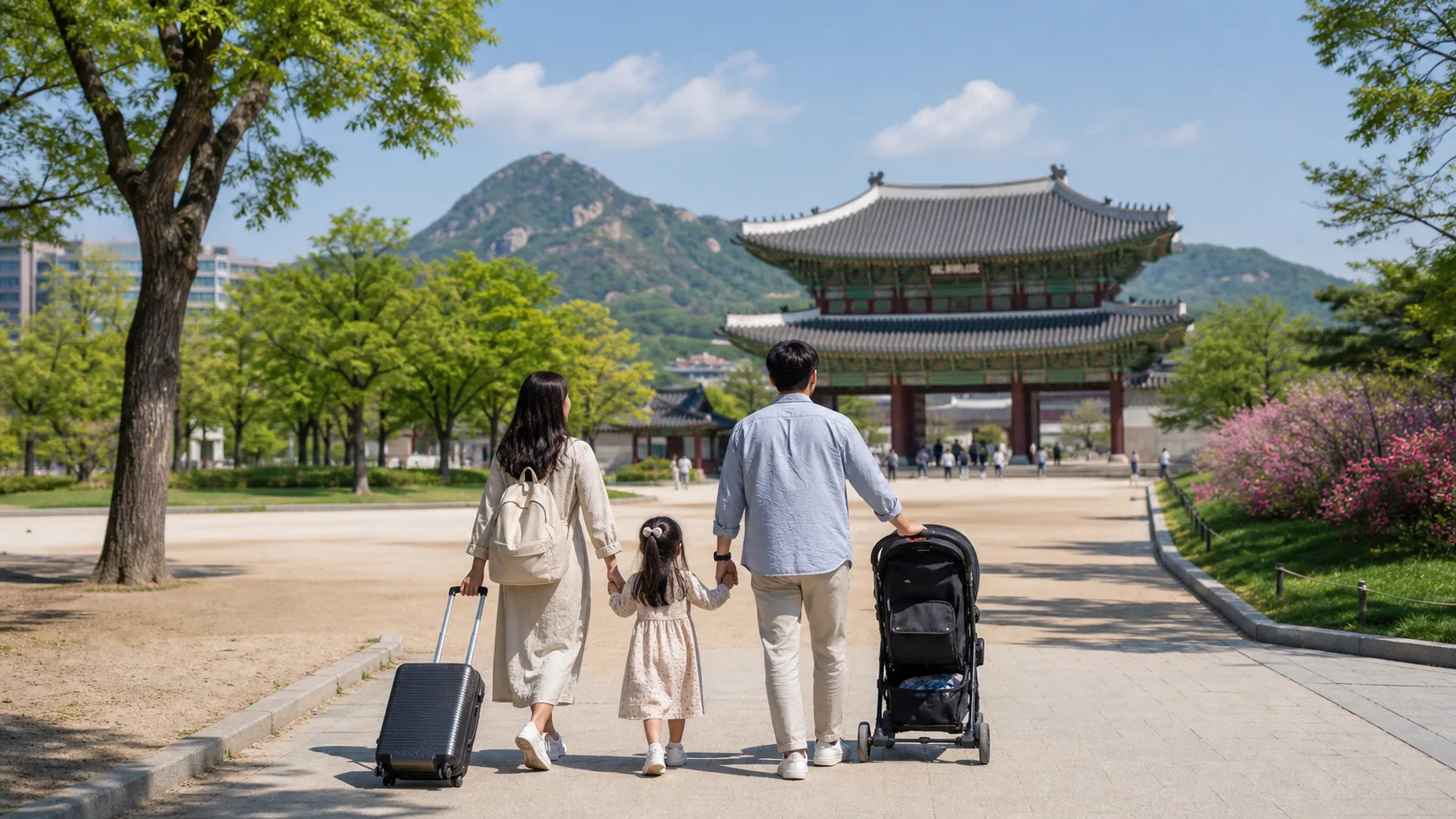
If you are planning Korea with children from Singapore, the winning strategy is simple: keep the route compact, front-load the hardest logistics, and leave enough slack for weather, jet lag, and snack breaks. A family trip that looks efficient on paper can become exhausting if you try to cover too many cities in one week.
Fast Answer
A good first Korea family itinerary for Singapore travelers is usually 6 to 8 nights, centered on Seoul with one side trip at most. For many families, the best balance is 4 nights in Seoul, 1 to 2 nights in a nearby add-on such as Suwon or Gangneung, then back to Seoul for a final night near the airport rail or downtown shopping area. That gives you variety without constant hotel changes.
The reason this matters right now is that Korea rewards planning. The country is very easy to navigate once you are there, but family travel can still go sideways if you underestimate commute times, book the wrong neighborhood, or plan too many “must-do” activities in a single day. Singapore families also tend to travel during school holidays, which means popular attractions, trains, and family-friendly hotels can sell out faster than expected.
For a first trip, think in layers. Build the itinerary around one core city, add only one or two day trips, and choose attractions that work in all weather. Keep one flexible afternoon every two days. That cushion is what turns a packed holiday into a trip that still feels like a holiday.
Context You Need
Korea is not difficult for families, but it does reward a different mindset from a resort-style trip. In Singapore, family trips often rely on short transfers, warm weather, and easy mall access. Korea adds a stronger seasonal swing, larger walking distances, and more time spent between neighborhoods, attractions, and meals. That is why the best itinerary is not the one with the most stops; it is the one with the fewest wasted steps.
For Singapore travelers, the most important planning question is usually whether to focus on Seoul only or split time between Seoul and another region. The answer depends on the children’s ages, the season, and whether this is your first Korea trip. If it is your first visit and you have children under 12, Seoul plus one nearby add-on is usually enough. Seoul gives you food, shopping, parks, museums, palaces, and easy hotel choices. A nearby day trip adds novelty without forcing you to pack up every morning.
The most useful way to think about Korea with family is by travel rhythm:
- Morning: one main attraction or neighborhood
- Lunch: simple, reliable food close to the activity
- Afternoon: a lighter stop, café break, playground, or indoor backup
- Evening: a walkable dinner area with convenient transport back to the hotel
That rhythm matters more than any specific attraction list. Children remember whether the day felt smooth, not whether you squeezed in one extra stop.
There is also a practical currency and logistics gap. Korea uses the Korean won, but cards are widely accepted in cities. Singapore travelers may still want some cash for smaller food counters, local markets, coin lockers, and the occasional taxi situation. Public transport is excellent, but stations can be large, elevators are not always where you expect them, and some older streets involve more hills than a Singapore family may be used to.
When you structure the trip with that in mind, Korea becomes a very family-friendly destination. Parks are common, food is accessible, and many attractions have enough infrastructure for strollers and tired legs. The trick is choosing a route that matches the family’s pace, not the algorithm’s idea of a “best itinerary.”
Step-by-Step Guide
Start with the length of the trip, then build the route backward from the return flight.
1. Pick the right trip length
For most Singapore families, the sweet spot is 6 to 8 nights. Less than that and the long-haul flight starts to dominate the experience. More than that and the itinerary needs a stronger regional split or more downtime. If you only have 4 to 5 nights, stay in Seoul and do one easy day trip. If you have 9 to 12 nights, you can add Busan, Jeju, or another region, but do it only if the transfer is worth the extra hotel change.
2. Choose the base city before the side trip
For a first family visit, Seoul should usually be the base. It has the best mix of hotels, transport, food, museums, shopping, and indoor backups for rain or heat. Book a hotel in one of these practical zones:
- Myeongdong if you want easy shopping and direct airport rail access
- Hongdae if you want younger nightlife nearby but still easy transit
- Jongno or Insadong if you want palaces, museums, and central sightseeing
- Jamsil if your family prefers a more modern district with big malls and theme-park access
If the children are very young, prioritize elevator access, a larger room, and fewer station changes over “best location” lists. In Korea, a hotel 10 minutes closer to a station can feel much better than a trendy address with a steep walk.
3. Plan the first two days as soft landing days
Do not schedule your hardest sightseeing on arrival day. Use the first afternoon for:
- check-in
- a convenience store run
- a short neighborhood walk
- one easy meal
- early bedtime if needed
The next day, keep the first main outing local. A palace visit, a museum cluster, a market, or a cable car can all work. The point is to avoid a day that starts with a two-hour cross-city commute.
4. Build the middle of the trip around one anchor activity per day
This is where most family itineraries fail. Parents try to combine palace, museum, café, shopping street, and night view in a single day. That sounds efficient, but children do not experience it as efficiency. They experience it as transit.
Instead, use one anchor activity and one backup activity:
- Anchor activity: a palace, aquarium, theme park, day trip, museum, or market
- Backup activity: playground, café, indoor mall, short river walk, or convenience stop
That structure keeps the itinerary flexible without becoming empty.
5. Add only one major side trip if the family is new to Korea
The best first-time add-ons are the ones that are easy to reach and easy to leave if everyone is tired.
Good options include:
- Suwon for fortress scenery and a slower pace
- Incheon for a more relaxed coastal or urban day
- Nami Island if your family wants an easier scenic day trip and does not mind a longer outing
- Gangneung if you want beaches and a more open feel, especially in warmer months
If the family is short on energy, a full day trip is enough. You do not need to turn every journey into a second holiday.
6. End the trip with a lower-stress hotel choice
On the final night, consider staying closer to the airport rail or in a district that makes the departure morning easy. If your flight leaves early, a simpler location can reduce the stress of taxis, luggage, and sleepy children. The last night should be practical, not aspirational.
Sample 7-night family itinerary
| Day | Plan | Why it works |
|---|---|---|
| 1 | Arrive in Seoul, settle in, light dinner | Recovery day after the flight |
| 2 | Palaces and a central neighborhood | Easy culture day with short transport hops |
| 3 | Museum or aquarium plus café break | Indoor backup for weather or fatigue |
| 4 | Day trip to Suwon or a nearby attraction | Variety without a hotel change |
| 5 | Shopping, markets, or a family park | Flexible day for snacks and downtime |
| 6 | Second big attraction or themed area | Use energy when everyone has adjusted |
| 7 | Free morning, souvenirs, transfer planning | Buffer before departure |
| 8 | Fly home | Keep the final day simple |
If you are traveling with toddlers, replace one of the museum days with a bigger park, stroller-friendly neighborhood, or a hotel pool day. If the children are older, you can swap in more cultural stops or a longer day trip.
Costs, Hours, and Logistics
Korea is not a budget-only destination, but family travel can be controlled if you avoid unnecessary transfers and overbooking premium activities. Flights from Singapore are often the biggest fixed cost. After that, the main budget items are hotel nights, intercity transport if you leave Seoul, entrance fees, and food.
For planning purposes, use broad ranges rather than exact assumptions. Hotel prices in central Seoul can vary widely by season, school holidays, and neighborhood. A family room or two connected rooms in a good location can cost much more during peak travel windows than a similarly sized room off-peak. Food can be affordable if you mix casual meals, convenience-store snacks, and one or two nicer dinners instead of treating every meal like a celebration.
On logistics, three points matter most:
- Korea transport is excellent, but not always stroller-light. Stations can be large, exits can be far apart, and some transfers involve stairs or long corridors.
- Taxis are useful for families when fatigue is high, especially at night or when carrying bags and sleeping children.
- Weather changes the entire experience. Summer heat, monsoon rain, and winter cold all push you toward indoor attractions and shorter walking loops.
For 2026 planning, check current entry and booking rules before you buy nonrefundable tickets. Travel policies, rail reservations, and attraction timing can change, especially around school holidays, public holidays, and peak tourism seasons. That is particularly important if your family depends on a tight transfer schedule or a specific regional train.
Opening hours also vary by attraction type:
- Palaces and museums often have weekly closure patterns or shortened hours on certain days
- Theme parks and outdoor attractions can change schedules seasonally
- Markets and shopping streets may be more lively in the evening than in the morning
- Small restaurants and cafés may close one day a week, sometimes without much notice
If you are deciding between prepaid passes and pay-as-you-go transport, the practical answer is usually to choose the simpler option unless your itinerary has a lot of intercity movement. Many families do not save much by buying a complex pass if they spend half the trip within one city. Keep the trip friction low first; optimize later only if the route clearly benefits from it.
For payment, most urban purchases are card-friendly, but it is still smart to carry a small cash buffer. That helps with lockers, some food stalls, and situations where a machine or terminal is not cooperating. The goal is not to be cash-heavy; it is to avoid a minor inconvenience becoming a family bottleneck.
Variations and Edge Cases
Not every family should follow the same Korea itinerary. The best route changes with age, season, budget, and energy level.
If you are traveling with toddlers
Choose fewer moves, more indoor stops, and one hotel base. A toddler trip should be designed around nap windows, stroller access, and meal timing rather than landmark coverage. Zoo visits, aquariums, children’s museums, large parks, and shopping districts with easy restroom access are more useful than packed sightseeing clusters.
If you are traveling with school-age children
This is the easiest age band for a Korea trip. Kids can enjoy palaces, food streets, cable cars, theme parks, and neighborhood walks without requiring constant physical help. You can also introduce more cultural context, such as hanbok rentals, palace etiquette, or Korean snacks, because they can process the experience as more than just “another place.”
If you are traveling with teens
Teens usually want a route that mixes food, shopping, K-pop-related areas, photography spots, and a few “real” experiences that do not feel too curated. Give them a role in the itinerary so they feel ownership. Let them choose one district, one café stop, or one evening activity. That small concession reduces friction dramatically.
If you are traveling in winter
Winter in Korea can be beautiful, but it changes the pace. Shorter daylight hours and cold wind mean you should cluster outdoor activities tightly and keep heated spaces nearby. A winter family itinerary should lean more heavily on museums, markets, cafés, and indoor attractions. If you want snow, build it in as a bonus rather than as the entire purpose of the trip.
If you are traveling in summer
Summer rewards early starts, indoor breaks, and fewer long walks in the afternoon. Korea can feel humid in the warm season, so plan more swimming-pool downtime if your hotel has it, and do not overpack outdoor neighborhoods. Think of summer as a time to move in layers: one outdoor stop, one indoor stop, one food break.
If budget matters most
Keep the trip in Seoul, use public transport where convenient, and choose simple meals for most days. Save your money for one or two experiences that actually matter to the family instead of distributing the budget evenly across every possible stop. A well-chosen hotel location can be more valuable than a fancy but inconvenient room.
If grandparents are joining
Reduce station changes, shorten walking loops, and avoid itineraries that rely on long stair climbs or full-day transfers. In mixed-age family groups, the best days are often the ones with a single anchor, several breaks, and a comfortable base nearby.
The larger point is this: there is no single “best Korea itinerary” for families. There is only a route that matches the children’s pace, the season, and the adults’ tolerance for moving luggage.
Mistakes to Avoid
The most common mistake is trying to treat Korea like a checklist destination. Families often plan too many neighborhoods, too many cafés, and too many “quick stops.” The result is not more value; it is more friction.
Another mistake is booking accommodation purely by photo appeal. For family travel, room size, laundry access, elevator convenience, and station proximity matter more than a beautiful lobby.
Do not assume every attraction runs smoothly on the same schedule. Some museums close on certain days, some markets are strongest in the evening, and some popular places are miserable at peak lunch or dinner time. Check the practical timing, not just the headline opening hours.
Finally, do not leave the airport transfer to chance. After a long flight with children, the first hour on the ground sets the tone for the trip. Decide in advance whether you are using rail, taxi, or a prearranged transfer, then keep that choice as simple as possible.
FAQ
How many days do I need for a Korea family trip from Singapore?
Six to eight nights is the most practical range for a first trip. That is enough to settle in, do a few major activities, and still keep one buffer day. If you only have four or five nights, stay in Seoul and do one easy side trip at most.
Should I stay only in Seoul?
If it is your first family trip, Seoul-only is a strong choice. You will waste less time changing hotels, and the city has enough variety for children of different ages. Add another region only if you have enough nights to make the transfer feel worthwhile.
Is Korea difficult with a stroller?
Not difficult, but not frictionless. The main issue is station layout, not the existence of public transport. Pick elevator-friendly routes, avoid unnecessary transfer chains, and use taxis when a long day has already worn everyone out.
What kind of itinerary works best for young children?
One anchor attraction, one light activity, one good meal, and an early return to the hotel. That pattern works better than trying to cover multiple “must-sees” in a single day.
Do I need cash in Korea?
Yes, but not a lot. Cards are widely accepted in cities, but a small cash reserve helps with smaller purchases, lockers, and occasional transport or food situations.
What is the biggest planning mistake Singapore families make?
Overpacking the route. Many families assume that because Korea is efficient, they can stack activities like a spreadsheet. In reality, the most memorable trips usually have a little empty space built in.
When should I book?
Book earlier if you are traveling during school holidays, cherry blossom season, or winter peak periods. The earlier you lock in hotels and any must-have side trips, the fewer compromises you will make later.
Next Steps
Use this guide to choose your base city first, then your one side trip, then your daily anchor activities. If you are still deciding between seasons or regions, narrow the trip to a single city before you add more stops. The best next move is not more research; it is a cleaner route plan and earlier hotel booking.
Related: korea-family-trip-first-day-setup-guide
Related: where-to-stay-in-korea-for-a-short-family-trip-holiday