Korea Family Trip First Day Setup Guide

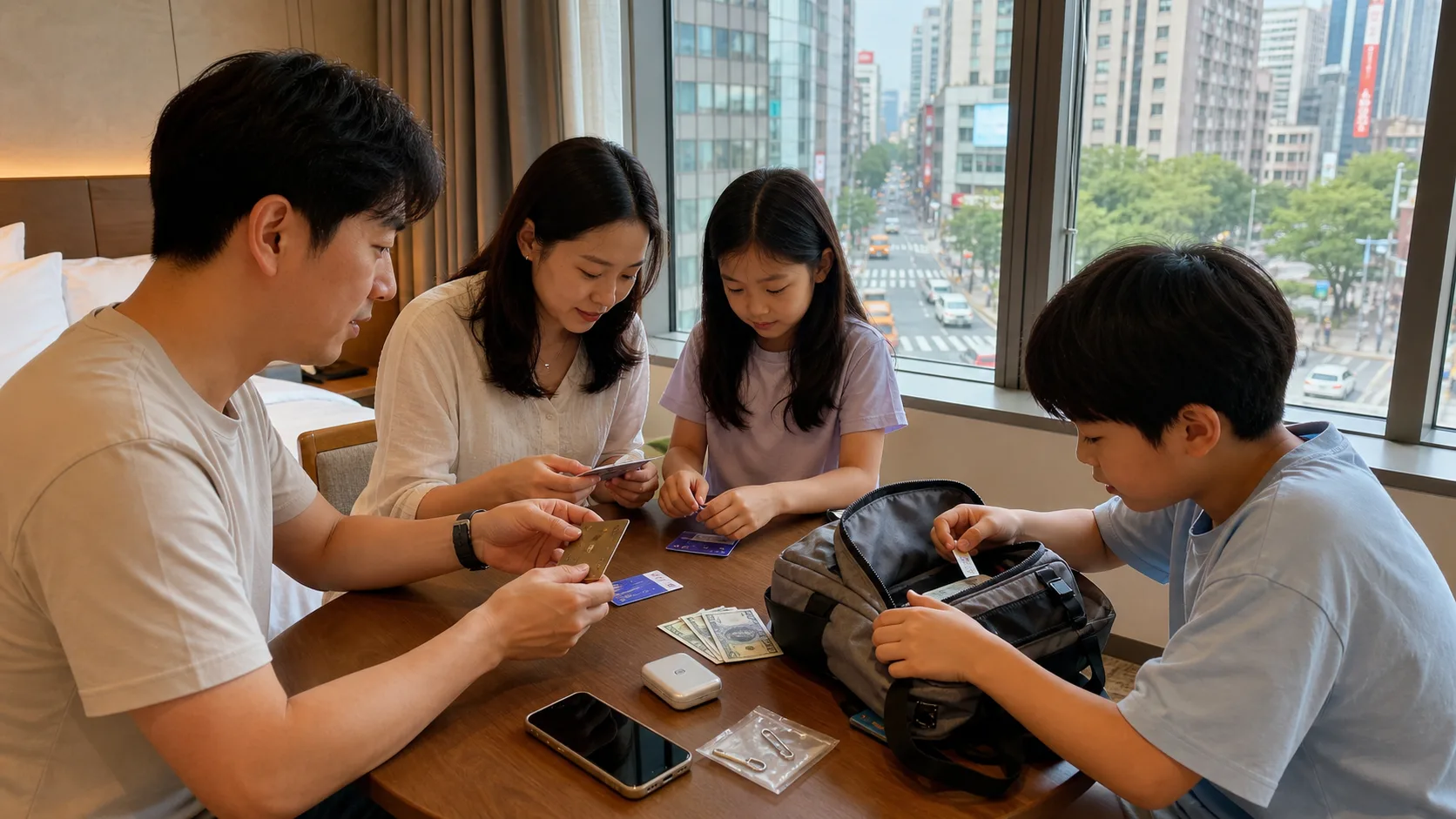
When a family lands in Korea, the first day is not about “doing” Korea. It is about setting up the trip so the next six or seven days are smoother. If you spend the first afternoon trying to figure out luggage, transit, connectivity, and dinner while children are tired and adults are carrying too many bags, the whole trip starts with avoidable friction.
The better approach is simple: land, clear immigration, get connected, decide on transport based on the amount of luggage and energy left, check in or drop bags, buy the small essentials, eat something easy, and stop. That sounds unambitious, but for a family it is the highest-value use of the first day. It preserves energy, reduces meltdowns, and gives you a clean start for the rest of the itinerary.
This guide is written for a Singapore-based family traveler, which means I am assuming you may be used to efficient transit, compact cities, and booking everything online before you fly. Korea rewards that style of travel, but the first day still has a few local details worth planning in advance: airport rail versus taxi, T-money versus cashless cards, how to handle luggage with kids, and when to cut the day short instead of forcing a sightseeing start.
Fast Answer
The best first-day setup for a Korea family trip is to keep the arrival sequence short and predictable: finish airport formalities, connect your phone, choose the least stressful ride into the city, settle into the hotel, and buy only the things you need for the first 24 hours. Incheon Airport’s official guide shows rail and taxi access from both terminals, with airport rail ticket machines in the transport center basement, so the practical choice is usually between train convenience and taxi simplicity. T-money also remains a useful mobility and payment layer, and the system now supports mobile payment options in addition to the familiar transport-card approach.
For most families, the right question is not “What is the cheapest option?” but “Which option leaves everyone calm enough to enjoy dinner?” If you have small children, grandparents, or more than two large suitcases, a taxi or prearranged van can be worth the extra cost. If you are light on luggage and staying near a major station, airport rail is often the easiest way to avoid traffic and start the trip on schedule.
Your job on day one is to reduce decisions, not maximize sightseeing. Korea will still be there tomorrow.
What to decide before leaving the airport
Keep these four decisions in mind before you exit the arrival hall:
- Do we need a rail ticket machine, taxi stand, or prebooked transfer?
- Do we have working data and messaging on all adult phones?
- Do we have enough cash or card access for the first evening?
- Are we going straight to the hotel, or do we need one quick stop for food or supplies?
If you can answer those questions confidently, the rest of the day usually falls into place.
Context You Need
The phrase “first day setup” matters because a family trip works differently from a solo trip or a business stopover. A solo traveler can improvise dinner, buy a local card on the fly, and switch hotels if the plan changes. Families carry more friction: strollers, exhausted children, snack timing, naps, a longer list of “must have” items, and more sensitivity to delays.
Korea is a very manageable country to travel in, but it still has enough structure that a little preparation pays off. Public transport is strong, convenience stores are everywhere, and major airports are well organized. That does not mean you should treat the first arrival hour as free time. It means the airport is the place to set up the systems that make the rest of the trip easier.
For a Singapore family, the biggest adjustment is usually not language. It is pace. Singapore travelers are used to planning efficiently, but Korea’s arrival process has a few layers: immigration, baggage collection, possible terminal transfers, transit card top-ups, data activation, and the question of whether your hotel is near a train station or easier to reach by road. Once you understand those layers, the rest is routine.
Incheon International Airport is the main entry point for most international family trips to Seoul and much of the country. The airport’s official guide shows that both Terminal 1 and Terminal 2 have public transport access, including rail stations and taxi/call-van access. It also notes airport-specific conveniences such as luggage services, which can matter if you arrive with several bags and do not want the first day to become a packing exercise.
The useful mindset is this: your first day is a setup day, not a content day. You are preparing the family machine for the actual trip.
That preparation usually includes:
- network access on every important phone
- a transport method that matches your luggage load
- local payment options for buses, trains, snacks, and small purchases
- a realistic hotel check-in plan
- one easy meal and one easy evening activity
If you build those five pieces well, the rest of the trip gets easier immediately.
Step-by-Step Guide
The cleanest way to think about the first day is in sequence: landing, clearing the airport, choosing transport, settling in, and then stopping before everyone gets too tired. Here is a practical family version that works especially well for a first Korea trip.
1. Prepare before you fly
Do as much setup as possible before you leave Singapore. The goal is not to make the trip rigid; it is to remove avoidable first-day work.
What to do before departure:
- download offline maps for the cities you will use
- save your hotel address in English and Korean if possible
- make sure every adult has the booking confirmations handy
- choose your data setup, whether that is eSIM, physical SIM, or roaming
- confirm whether your accommodation allows luggage drop before check-in
- check whether your airport transfer route is rail-friendly or taxi-friendly
The most important decision is connectivity. Families use phones for maps, translation, messaging, ride hailing, payments, and checking where the rest of the group is standing. If one adult has data and the others do not, you create an unnecessary point of failure. At minimum, one parent should be fully connected before walking out of the airport.
2. Land with a simple airport plan
Once you land, do not improvise. Pick the order in advance:
- immigration
- baggage claim
- connectivity
- transport
- hotel
That order matters because Korean airports are efficient when you move decisively, but they can still be tiring if you keep switching plans. Families often waste the most time by discussing transport choices after they have already reached the arrival hall. Make the decision earlier, ideally while waiting for baggage.
If your family is traveling with a stroller, sleeping child, or several large suitcases, slow down and choose the easiest path rather than the technically optimal one. There is no prize for choosing the cheapest route if the last 20 minutes turn into a logistics puzzle.
3. Decide between train, taxi, or prebooked van
This is usually the biggest decision of the day.
Use airport rail if:
- your hotel is near a major station
- your luggage is manageable
- everyone is awake enough to handle stairs, platforms, and transfers
- you want a predictable travel time
Use a taxi if:
- you have a lot of luggage
- one child is likely to fall asleep immediately
- you arrive late
- your hotel is awkward to reach by rail
Use a prebooked van or transfer if:
- you are a larger family group
- you have grandparents or very young children
- you want no decision-making at the airport
- your final stop is not close to a straightforward station
For many first-time family travelers, the real comparison is not rail versus taxi. It is “convenient and cheap enough” versus “expensive but mentally easy.” Korea is one of the few places where both options can be sensible depending on the hotel neighborhood and how tired the kids are.
4. Keep the airport itself useful
Incheon Airport is not just a transit point. It is where you can complete the first layer of trip setup.
The airport’s own guide shows public transport access from both terminals and identifies the airport rail ticket machines in the transport center basement. That matters because it means you do not have to hunt around the terminal for a ticketing system after immigration. If rail is your choice, follow the signs, buy what you need, and move.
For family travel, it also helps to use airport facilities tactically:
- use bathrooms before leaving the airport
- sort jackets and layers before you board any train or taxi
- buy only the absolute first-day essentials
- keep snacks accessible before the hotel stop
You do not need a perfect airport experience. You need a stable one.
5. Set up payment and transit access on the way in
Korea is increasingly cashless, but first-day travel still goes more smoothly if you have a backup plan for small purchases and transport. T-money remains useful because it is tied to daily mobility and small payments, and the official T-money site describes the system as a mobility and payment platform with mobile payment capability as well. That does not mean every family needs every possible payment method. It does mean you should not depend on “we’ll sort it out later” for a subway ride or a snack stop.
For a family, the most practical setup is:
- one primary payment card that works abroad
- one backup card
- transit access for the adults who will be moving between stations, convenience stores, and attractions
If your child is old enough to carry a small bag, keep the essentials with one adult anyway. Do not split passport copies, chargers, and card access across too many people.
6. Go straight to the hotel if the group is tired
This is the part many families get wrong. After a long flight, the temptation is to “take advantage” of arrival day by doing a little sightseeing, visiting a famous street, or squeezing in a first meal in a trendy neighborhood. In practice, that often creates a second wave of fatigue just when everyone should be settling in.
The better move is often:
- check in or drop luggage
- wash up
- rest for 30 to 90 minutes
- eat nearby
- do one easy neighborhood walk if energy remains
The first day is successful when nobody is irritated by bedtime.
7. Buy only the essentials near the hotel
Once you are settled, shop for only the things the family actually needs tonight and tomorrow morning.
Common first-night purchases:
- water
- tissues
- kids’ snacks
- a couple of fruit items
- charger cable if someone forgot one
- basic toiletries if the hotel kit is limited
Do not turn convenience-store shopping into a stock-up mission. Korean convenience stores are excellent, but overbuying on the first day usually creates clutter and luggage problems. Buy lightly, then do a proper grocery stop later if needed.
8. Keep dinner simple
The best first dinner is not the best Korean meal in the city. It is the meal everyone can eat calmly without navigating a long queue, a complicated ordering process, or a neighborhood with too many choices.
Good first-night dinner styles:
- hotel restaurant if the kids are crashing hard
- a casual noodle, rice, or chicken place near the hotel
- a familiar chain if everyone is overtired
- a late convenience-store meal only if you are deliberately keeping the day minimal
This is not the day for a “we should try everything” mindset. Save that for day two or three, when the family has found its rhythm.
First-day checklist
| Task | Why it matters | Ideal timing |
|---|---|---|
| Confirm data on all important phones | Prevents lost-family stress and map problems | Before leaving the airport |
| Choose rail, taxi, or van | Saves time and avoids indecision | While waiting for baggage |
| Have the hotel address ready | Helps if you need to show it to a driver | Before entering the arrival hall |
| Carry a small amount of cash or a working card | Useful for small purchases and backup situations | Before transport |
| Buy snacks and water | Prevents low-energy family conflict | After hotel drop-off |
| Stop early | Protects the next day | By early evening |
Costs, Hours, and Logistics
The first-day setup budget does not have to be large, but it should be realistic. Families usually spend more on convenience than solo travelers, and that is rational if it prevents a difficult start.
Here is a practical way to think about first-day costs:
- airport rail is usually the budget-conscious option if your hotel is near a station
- taxi or van is the convenience option if you have lots of luggage or tired children
- transit card or mobile payment setup is a small but useful expense
- snacks, drinks, and the first convenience-store run are usually minor costs, but they add up if everyone is hungry
Rather than obsess over exact figures at the airport, think in categories. Transport is your major variable. Food and small supplies are your minor variable. Everything else is setup friction.
For logistics, the official Incheon Airport guide is helpful because it confirms the shape of the airport rather than forcing you to guess. Both terminals have transport center access in the basement, and the airport guide points travelers toward rail ticketing there. The same guide also lists taxi and call-van access, which gives families a clean fallback if rail no longer looks like the best choice after landing.
One useful 2026 caveat is that airport information can change in small ways even when the overall system stays the same. That is why the safest practice is to use the airport’s official guide on arrival, not a blog memory from a previous year. If you are timing a transfer tightly, the airport’s own lines and signage matter more than any general travel advice.
Another useful point from the official T-money site is that the system is no longer just a plastic card story. It is positioned as a mobility and payment platform, and its mobile payment tools are part of the modern setup. That matters for families because one of the easiest ways to reduce first-day friction is to let adults pay and move without hunting for change or dividing cash at every stop.
A realistic day-one budget framework
If you want a simple mental budget, divide it like this:
- Transport from airport to hotel: low, medium, or high depending on your choice
- Connectivity setup: usually modest relative to the trip
- First dinner and snacks: small to moderate
- Emergency convenience items: small but worth planning for
Families often overfocus on the transport line item and underfocus on the mental cost. If a taxi costs more but saves one hour of stress, that can be the correct spend.
Hours and timing
The other logistics point is time of day. The later you arrive, the less ambitious you should be. If you land in the evening, your first day should be almost entirely about getting to the hotel and sleeping. If you arrive midday, you may have enough space to settle in, eat, and take a gentle nearby walk, but you still should not pack the day with activities.
As a rule:
- morning arrival: you may have room for a light setup plus one short neighborhood activity
- afternoon arrival: focus on hotel, dinner, and a quick reset
- evening arrival: skip everything nonessential
That simple timing rule saves families from the most common arrival-day mistake, which is trying to force a full itinerary into a body clock that has not adjusted yet.
Variations and Edge Cases
Not every Korea family trip should follow the same first-day script. The right setup depends on the group, the season, and the hotel location.
If you are traveling with very young children
With toddlers or preschoolers, the main risk is not missing an attraction. It is crossing the line from manageable tiredness into a meltdown. That means your transport decision should heavily weight door-to-door simplicity.
For this group:
- prefer taxi or van if luggage is heavy
- keep snacks and wipes immediately available
- plan at least one bathroom break before leaving the airport
- treat nap timing as more important than sightseeing
If you are traveling with grandparents
Older travelers often prefer fewer transfers and more predictable pacing. In that case, the decision usually tilts toward a direct ride to the hotel if the hotel is not right on a station. Rail can still work, but only if the walk from station to hotel is truly easy.
If you arrive in winter
Winter creates extra friction because layers, gloves, and bags are annoying to manage during transport changes. Families often underestimate how quickly the airport to hotel journey becomes uncomfortable when everyone is carrying outerwear. If you arrive in cold weather, keep the route simple and do not plan a long first walk after check-in unless everyone is energized.
If you arrive in summer
Summer adds heat, humidity, and sweat. That changes the equation in favor of the least exposed route. Families often tolerate walking or transfers well in spring or autumn and regret the same choice in July or August. If it is a hot day, protect the children from unnecessary platform time and keep hydration front and center.
If your hotel is in a station-rich neighborhood
If you are staying in areas that are easy to reach by rail, the airport train often becomes the best compromise between cost and comfort. It is especially effective if you can walk from the station to the hotel without stairs, escalators, or a maze of side streets.
This is where Singapore travelers sometimes overestimate their own tolerance. In Singapore, a 10-minute covered walk can feel routine. In Korea, with luggage and jet lag, the same walk can feel much longer. Pick the option that respects arrival fatigue rather than your usual city-walking standard.
If your hotel is in a taxi-friendly neighborhood
Some areas are better by road than by rail, especially for larger families or when the hotel entrance is awkward. If the last leg includes a hill, a confusing station exit, or a transfer with children half-asleep, a taxi can save more time than the rail ticket costs.
If you are doing a multi-city trip
Families combining Seoul with other cities should be even more disciplined on day one. The first night is the time to confirm:
- where tomorrow’s bags go
- which tickets are already booked
- whether anyone needs a laundry stop
- how early departure day starts
The longer the trip, the more important the first day becomes as a reset point.
Mistakes to Avoid
Most first-day problems are not dramatic. They are small errors that compound when everyone is tired.
1. Trying to sightsee immediately
You do not need to “make the most” of arrival day. You need to arrive well. For families, sightseeing on the first day often becomes half sightseeing, half recovery, and fully exhausting.
2. Choosing the wrong transport for your luggage
If you have several bags, strollers, or sleepy children, the cheapest route can become the most expensive in stress. Pick the route that matches the load you are carrying.
3. Leaving connectivity until after the hotel
Do not assume you can solve data later. Maps, ride arrangements, translation, and messaging are too useful on the way in. Make connectivity part of the airport plan.
4. Buying too much on the first convenience-store stop
Families often get excited by the convenience of Korean stores and buy far more than they can carry comfortably. Keep the first shop focused on dinner, drinks, and tomorrow morning’s needs.
5. Assuming the hotel will magically absorb schedule drift
If you arrive late, do not assume the accommodation or neighborhood will be easy to handle without preparation. Save the address, know the check-in rules, and have a backup dinner plan.
6. Making the first evening too ambitious
Jet lag can make everyone optimistic right after landing. That optimism usually disappears after the first delay. Keep the evening short and the bedtime earlier than you think you need.
FAQ
Should a family take airport rail or taxi on the first day?
If you are light on luggage and the hotel is near a station, airport rail is often fine. If you have many bags, young kids, grandparents, or a hotel that is easier by road, taxi is usually the better use of money.
Do we need cash in Korea on arrival?
You do not need a lot of cash for the first day, but it is sensible to have a backup payment method ready. Korea is heavily cashless in many everyday situations, yet small purchases and transit setup are easier when at least one adult has a working card or payment plan.
Is T-money worth it for a family trip?
Yes, if you expect to use public transport or make small purchases. The system is built around mobility and payment, and its modern setup includes mobile payment options. For families, the main benefit is convenience, not novelty.
How much should we do on day one?
Less than you think. The winning first day is usually arrival, transfer, hotel, a simple meal, and sleep. If you still have energy after that, add only a short neighborhood walk or a small convenience-store stop.
What if we arrive late at night?
Go straight to the hotel. Late arrivals should prioritize sleep over setup perfection. You can finish secondary tasks, like shopping or neighborhood exploration, the next morning.
Should we buy snacks at the airport or in the city?
Either is fine, but do not overthink it. Buy enough to cover the transfer and the first evening, then shop locally near the hotel if needed. The key is to avoid arriving hungry with no easy food plan.
What is the most common first-day mistake?
The biggest mistake is overfilling the first day with activities. Families do better when arrival day is treated as a logistics day. The sooner you accept that, the smoother the rest of the trip becomes.
Is it okay to rely on airport signage only?
It is usually enough for straightforward cases, especially at a major airport with clear transport zones. Still, it helps to know your transport plan before you land. Signage should confirm your choice, not force you to make one under pressure.
Next Steps
After the first-day setup is clear, the next decisions are usually transport from the hotel neighborhood, food planning for the first full day, and how aggressively you want to schedule sightseeing around nap time. For a family trip, those three choices matter more than any single attraction on day one.
If you are planning the rest of the trip now, keep the same rule: choose the option that reduces friction first, then optimize for cost or variety only after the family has adjusted. Korea rewards organized travel, but it rewards calm travelers even more.
Related: korea-family-trip-culture-guide-for-first-time-visitors
Related: korea-family-trip-itinerary-for-singapore-travelers