Korea Seoul Short Trip Airport Transfer Guide for Singapore Travelers

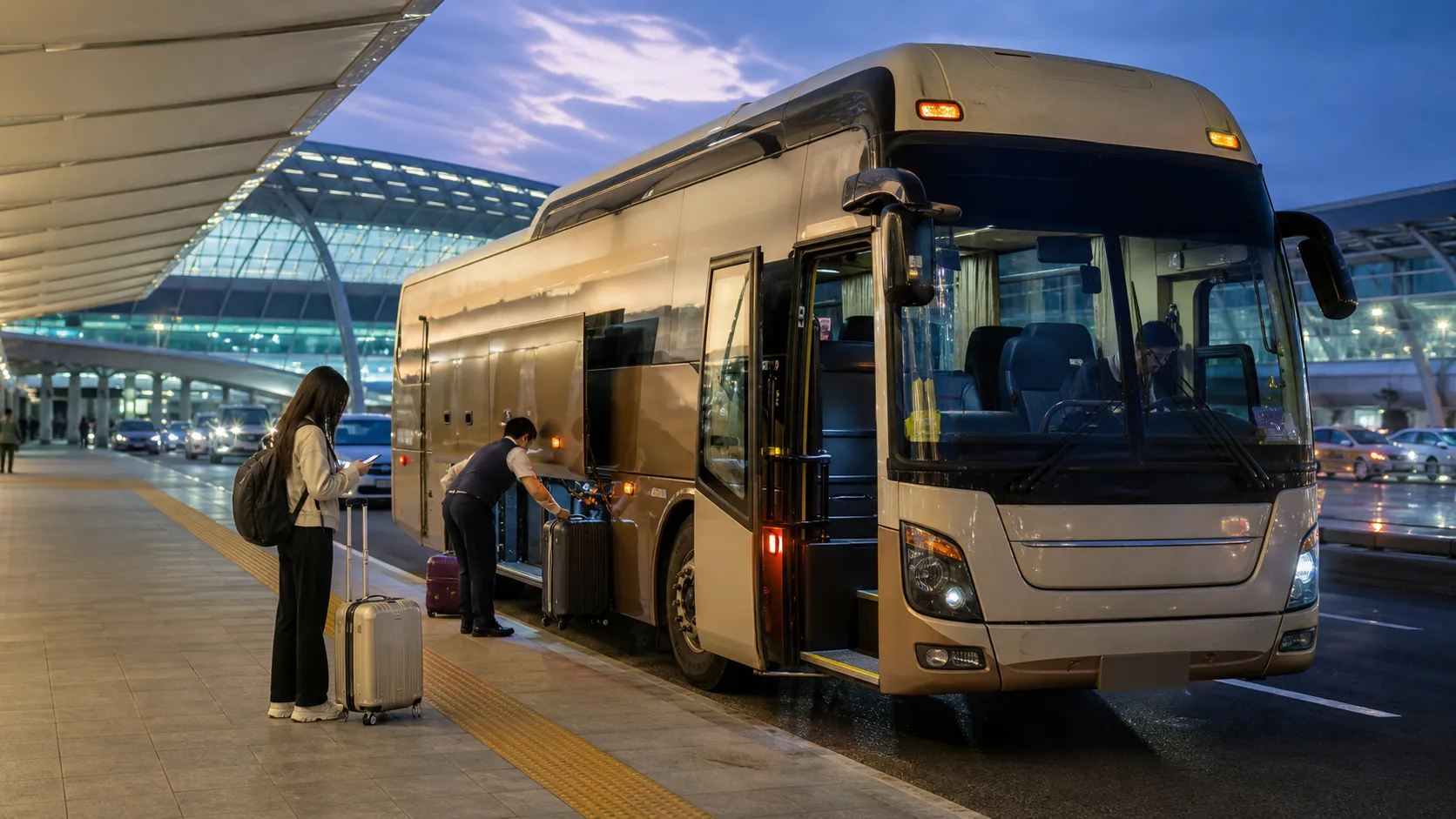
If you are flying from Singapore to Seoul for a short trip, your airport transfer choice matters more than most people expect. The difference between an easy 45-minute rail ride and a slow, tiring first hour in Korea can shape the rest of your day, especially if you land after a red-eye and want to check in, eat, and start sightseeing fast.
1. Fast Answer
For most Singapore travelers on a short Seoul trip, the best first choice is AREX, the airport rail link from Incheon International Airport into the city. If you want the simplest, most predictable transfer, take the Express Train to Seoul Station. If you want the cheapest standard option and do not mind extra stops, take the All-Stop Commuter train. If you are arriving very late, traveling with several bags, or staying somewhere awkward for rail connections, a taxi or pre-booked private transfer can be worth the extra cost.
The practical decision is not just about price. It is about how much energy you want to spend on arrival. Singapore travelers often land expecting the same level of clarity they get at Changi, but Seoul arrival can feel busier and less obvious if it is your first time. A short trip makes that even more important because you do not have the luxury of wasting an hour on confusion, ticket-machine stress, or a transfer that drops you far from your hotel.
If you are only in Korea for three to five days, think of the airport transfer as part of your trip plan, not an afterthought. Choose the option that gets you to your neighborhood with the fewest steps, not just the lowest headline fare.
2. Context You Need
The main gateway for international travelers to Seoul is Incheon International Airport, which sits west of the city on the coast. For a Singapore-based visitor, the airport transfer is usually the first real logistics decision after landing: rail, bus, taxi, or a booked car. The airport is large, the terminals are busy, and the correct choice depends on where you stay in Seoul.
Featured snippet version: Incheon Airport transfers into Seoul are usually easiest by AREX train, especially for short trips. Express is best for speed and comfort, the all-stop train is best for budget, and taxis or private cars are best when you land late, carry heavy luggage, or are staying in a district that is inconvenient for rail.
The airport rail link is called AREX, short for Airport Railroad Express. It connects Incheon Airport to Seoul Station and also serves intermediate stations in the western part of the Seoul metro area. The line has two useful personalities. One is the Express Train, which is aimed at direct airport-to-city travel. The other is the All-Stop commuter service, which functions more like a subway line and stops at more stations along the way. The airport also has limousine buses and official taxi pickup areas, so rail is not your only option.
For a short Singapore-to-Seoul break, what matters most is not the transport brand name but the arrival pattern. A traveler staying in Myeongdong, City Hall, Jongno, or near Seoul Station often benefits from rail because the route is straightforward and the timing is reliable. A traveler staying in Gangnam, Jamsil, or a hotel with a direct airport bus stop may find a limousine bus more convenient. A traveler arriving after midnight, or with family and bulky luggage, may decide that a taxi is worth paying for because the mental effort is lower.
That is the right framing for Seoul: not “what is the cheapest option,” but “what gets me from the airport to my hotel with the least friction for this specific trip.” For Singapore travelers used to efficient transit systems, the best Seoul transfer is usually the one that minimizes decision fatigue immediately after landing.
3. Step-by-Step Guide
Step 1: Decide based on your hotel area before you fly
Do this while you are still in Singapore, not after landing. Open your hotel address and ask one simple question: is the hotel easier to reach from Seoul Station, from a city bus stop, or directly by car?
A quick rule of thumb:
| Stay area | Usually best transfer |
|---|---|
| Seoul Station, Myeongdong, City Hall, Jongno | AREX Express or All-Stop |
| Hongdae, Gongdeok, western Seoul | AREX All-Stop |
| Gangnam, Jamsil, COEX | Airport limousine bus or taxi |
| Late-night arrival, family, lots of luggage | Taxi or private transfer |
| First trip, short stay, wants simplicity | AREX Express |
If your hotel is a 5 to 10 minute walk from Seoul Station, the Express Train is hard to beat. If your hotel is in a district with direct airport bus coverage, the bus may save you a transfer from the station to your hotel. The right answer is the one that avoids extra stairs, extra tickets, and extra walking.
Step 2: Know which terminal you are using
Incheon has Terminal 1 and Terminal 2, and both have rail access. If you are flying on a major full-service airline, your terminal depends on the carrier. The rail stations are inside the airport transport complex, so you do not need to exit to street level to find the train, but you still need to follow the terminal signs carefully.
For a short trip, the most important thing is to keep your arrival path simple. If you are tired, avoid trying to “optimize” by switching between transport types in the airport. Pick one transfer mode and commit to it.
Step 3: Use AREX if you want a predictable transfer
The Express Train is the cleanest mental model for a new visitor. Buy a ticket, board the direct service, and ride to Seoul Station without intermediate stops. That makes it the most comfortable rail option when you have luggage and want a calmer first hour in Korea.
The All-Stop train is cheaper and more flexible, but it makes more stops. It is a good fit if your hotel is near one of the intermediate stations or if your budget matters more than shaving off travel time. For a light-packing solo traveler, it is usually easy enough. For a family landing after a long-haul flight, the extra stops can feel more tiring than they look on paper.
A practical airport rail sequence looks like this:
- Follow the airport signs to the rail center.
- Decide whether you need Express or All-Stop.
- Buy the ticket or load the appropriate transit card.
- Confirm the train direction before entering the platform.
- Keep your luggage close and sit where you can stand up easily when your stop is near.
- If you are taking the Express Train to Seoul Station, arrange your onward transfer before you board only if you know the route already.
Step 4: Do not overcomplicate payment
For rail, payment is usually straightforward, but the details matter if you are arriving with a foreign card. The safest approach is to assume that staffed windows and official ticket machines are more reliable than hoping every machine will accept every card. If you already use a transport card in Korea, that can simplify the All-Stop train. If you do not, keep some Korean won available for ticketing or on-arrival transport.
Singapore travelers often expect card acceptance to be universal because that is normal at home. In Korea, contactless payment is common, but station workflows can still vary by machine, line, and ticket type. If you want to avoid friction, carry a small amount of cash and treat it as a backup, not your main plan.
Step 5: Match your transfer to your arrival energy
The best transfer is the one that matches how you actually feel after landing.
If you land in the morning and want to start exploring quickly, train is usually best. If you land at night and you are exhausted, take the mode that minimizes walking and ticketing. If you are traveling with parents or kids, a direct vehicle may be the least stressful choice even if it is more expensive.
For a short trip, the arrival transfer often doubles as your first Korea “test.” If you arrive smoothly, the rest of the trip feels easier. If the transfer is confusing, you may carry that stress into check-in, dinner, and the next morning’s itinerary. That is why spending a little more on convenience can be rational, not wasteful.
Step 6: Keep the onward route simple
If your hotel is not near Seoul Station, do not assume the Express Train is always best just because it is direct to the city center. Sometimes the best move is taking the All-Stop train to a more convenient intermediate station. Sometimes the best move is the airport bus directly to your district. Sometimes the best move is a taxi from the airport all the way to the hotel if the time saved and the reduced hassle are worth it.
The key is to avoid a “cheap but messy” arrival. A short trip gives you fewer chances to recover from a bad first decision.
4. Costs, Hours, and Logistics
The Incheon Airport rail line operates both express and all-stop services, and the airport site positions rail as one of the main public transport options from the terminal complex. As of the latest published fare information I could verify, the full-distance AREX All-Stop fare is 4,750 won and the Express fare is 9,500 won, with a 500-won deposit for single-use cards. That means rail is still inexpensive compared with private car options, especially if you are traveling alone or as a couple.
For travelers deciding between rail and taxi, the fare gap is usually enough to matter, but not enough to decide the trip on its own. Time of arrival, bag count, hotel location, and fatigue all change the math. A rail ticket that is cheap but forces you into two more transfers can be worse than a taxi that takes you almost door-to-door.
The airport and rail site also make one useful point for international visitors: the Express Train is designed for airport travel, while the commuter service functions more like part of the Seoul-area transit network. That means the Express Train is usually the easier option if you are carrying larger suitcases or if you are unfamiliar with local transit signage.
For the airport limousine bus, pricing and routes vary by destination and operator, so it is a better option when your hotel is directly served rather than when you need multiple transit hops afterward. Bus travel can be excellent if your hotel is in a district with a simple stop nearby. It can also be frustrating if the stop is far from your actual accommodation.
A taxi is the most flexible option and the one least dependent on reading rail maps or bus codes. It is also the most expensive of the standard choices, so it makes the most sense when comfort and certainty matter more than budget. For groups, the cost per person can become more reasonable, especially if you are splitting the fare.
A few logistics details are easy to overlook:
- Late arrivals: if your flight lands late at night, check whether your preferred rail or bus option still runs at the time you exit immigration.
- Terminal changes: if you need to move between Terminal 1 and Terminal 2 for any reason, do not assume walking is the easiest solution. Follow airport transfer signage.
- Bags: if you are carrying one carry-on only, rail is easy. If you are carrying multiple checked-bag-sized pieces, a taxi or private transfer gets more attractive.
- Payment method: do not rely on a single card type or one machine. Keep a backup.
Because transport schedules and fares can change, the safest trip-planning habit is to check official airport and carrier pages again in the final week before departure. That is especially true if you are traveling during a holiday period, a long weekend, or a major event in Seoul.
5. Variations and Edge Cases
If you are staying in Myeongdong or near Seoul Station
This is the easiest case for rail. The Express Train to Seoul Station is usually the cleanest arrival option because it keeps your transfer simple. Once you arrive, you can take a short taxi ride or a final subway hop if your hotel is not right by the station.
For a short stay, this is one of the best value combinations in Seoul: direct airport rail, then a short local transfer.
If you are staying in Hongdae, Gongdeok, or the western corridor
The All-Stop train becomes more appealing because some intermediate stations are more useful than going all the way to Seoul Station. This is one of the times when cheaper and more convenient overlap. If your hotel is genuinely closer to one of those stations, do not force yourself onto Express just because it sounds premium.
If you are staying in Gangnam or Jamsil
A limousine bus or taxi often makes more sense here. The rail line can still work, but you may end up adding a subway transfer after Seoul Station, which is fine if you travel light and know the system, but not ideal if you are tired and carrying luggage.
For Singapore travelers on a short vacation, the hidden cost is not money. It is energy. On a three-day trip, saving 20 minutes of confusion can be worth more than saving a few thousand won.
If you arrive with family or a group
The bigger the group, the more the “best” option can shift away from the cheapest option. A taxi or private car becomes more attractive because it reduces the chance that someone in the group gets separated, tired, or annoyed.
That said, if your group is comfortable managing luggage and transit, AREX still works well. The main advantage is predictability. The main disadvantage is that you still have to get from the station to the hotel.
If you land late at night or after a long connection
Late-night arrivals are where many first-time visitors make mistakes. They assume they will feel energetic enough to navigate a new rail system immediately after immigration. Sometimes that is true. Often it is not.
When in doubt, choose the path with the fewest decision points. If that means a taxi from the airport to the hotel, the extra spend can be justified by the lower stress.
If your trip is a very short stopover
For an overnight or two-night Seoul stay, your transfer should be built around check-in speed. The goal is to get to the hotel, drop your bag, and start your actual trip. If your hotel is near the airport rail route, rail is excellent. If it is not, a direct car transfer may be the better use of your limited time.
If you are mixing Seoul with a second city
Some Singapore travelers use Seoul as a stop on a wider Korea itinerary. In that case, airport transfer is only one piece of the puzzle, and the best choice is the one that preserves your energy for the next train or domestic flight. A rail transfer may still be smartest, but only if it keeps the rest of the itinerary simple.
6. Mistakes to Avoid
The most common mistake is choosing the cheapest transfer before checking where the hotel actually is. A low fare does not help if you still need two more legs to reach the door.
Another mistake is assuming every station machine will work perfectly with every foreign card. Bring a backup payment method and leave yourself a buffer for the first 30 minutes after landing.
Do not confuse “direct to the city” with “direct to my hotel.” Those are not the same thing in Seoul. Seoul Station is useful, but it is not automatically the best final stop for every traveler.
Finally, do not let arrival optimism drive the choice. After a long flight from Singapore, your brain is not in top logistics mode. Make the transfer decision before departure, while you are still fresh.
7. FAQ
Is AREX the best airport transfer for first-time Seoul visitors?
Often yes, especially if you are staying near Seoul Station or somewhere easy to reach from the rail network. It is simple, reliable, and usually cheaper than a taxi.
Should I take the Express Train or the All-Stop train?
Choose Express if you value speed and comfort and want fewer decisions. Choose All-Stop if your hotel is closer to an intermediate station or if saving money matters more than comfort.
Is a taxi from Incheon Airport to Seoul worth it?
It can be, especially for late-night arrivals, families, heavy luggage, or hotels that are awkward to reach by rail. If you are tired, the convenience may be worth the extra cost.
Do I need to book airport transfer in advance?
Not always. Rail and standard airport transport can usually be arranged on arrival. Pre-booking makes more sense if you want a private car, are arriving very late, or want a guaranteed door-to-door option.
How much cash should I carry for arrival?
Carry enough Korean won for backup transport, snacks, and any machine that does not accept your card. You do not need a huge amount, but having a small buffer reduces stress.
What is the smartest choice for a short Singapore weekend in Seoul?
For most travelers, the smartest move is the option that gets you to your hotel with the fewest steps. If that is AREX, use AREX. If that is a limousine bus or a taxi, choose that instead.
8. Next Steps
If you are planning a short Seoul trip from Singapore, make your airport transfer decision at the same time you book your hotel. That way the arrival route, neighborhood, and check-in plan all line up. The best transfer is the one that matches your hotel location, your landing time, and how much energy you want to spend on day one.
Related: korea-seoul-short-trip-itinerary-for-singapore-travelers
Related: korea-seoul-short-trip-neighborhood-guide-for-first-time-visitors