Korea Seoul Short Trip Itinerary for Singapore Travelers

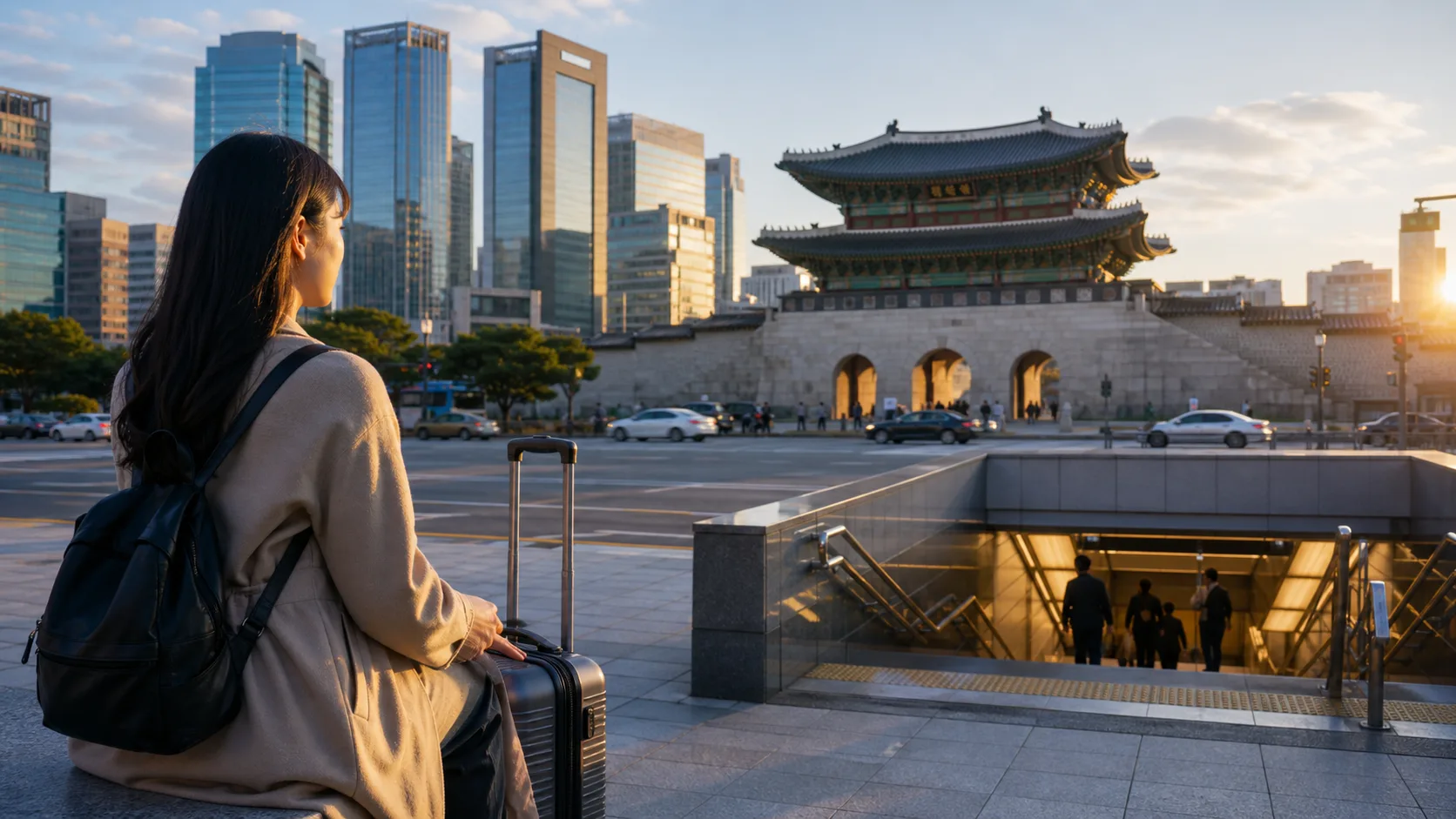
If you are flying from Singapore to Seoul for only a few nights, the winning strategy is simple: stay central, group your sights by neighborhood, and keep one slot open for jet lag or weather. Seoul rewards focused planning more than rushing around.
Fast Answer
For a short Seoul trip, aim for one heritage-heavy day, one modern neighborhood day, and one food-and-night view day. If you only have 3 nights, do not waste time chasing every famous district. Pick a base near a subway line, use the airport rail or a transfer van if your hotel is not convenient, and keep your itinerary tightly clustered.
For Singapore travelers, the biggest mistake is treating Seoul like a city you can "just wing." Distances are manageable, but they are not tiny, and walking from one district to another is rarely the best use of a short trip. The best short-trip plan is calm, organized, and deliberate: palace in the morning, lunch and cafe time in the middle, market or river walk in the evening, then a neighborhood with good dinner options.
The practical upside is that Seoul is built for exactly this style of travel. You can see a lot without leaving the city, and the subway makes it easy to avoid taxis unless you are tired or carrying luggage. The rest of this guide shows you how to turn a 3D2N or 4D3N window into a trip that feels complete instead of rushed.
Context You Need
Seoul is the kind of city where a short stay can still feel satisfying because the "must-see" experience is not a single attraction. It is the rhythm of the city itself: palace courtyards, cafe streets, market alleys, river walks, late dinners, and a subway system that gets you between them with minimal friction.
That matters for Singapore travelers because a short Korea trip often happens inside a work calendar, a school break, or a long weekend. You are not usually coming for one monument. You are coming for a compact city break that combines culture, food, shopping, and an easy connection from Incheon Airport into the center of town.
The key idea is to think in clusters rather than landmarks. Seoul is easiest when you group your days like this:
- Central heritage zone: Gyeongbokgung, Bukchon, Insadong, Jongno, Cheonggyecheon
- Youth and cafe zone: Hongdae, Yeonnam, Hapjeong
- Trend and retail zone: Myeongdong, Euljiro, Seongsu, Dongdaemun
- River and skyline zone: Han River parks, Namsan, Gangnam, Jamsil
That structure keeps transit times low and gives your trip a clear shape. It also helps if you are arriving from Singapore after a night flight. Instead of trying to see "all of Seoul," you can build a trip that has a beginning, middle, and end:
- Arrive and recover.
- See the historic core.
- Choose one modern neighborhood and one evening scene.
- Leave with room for one flexible meal, shopping stop, or cafe detour.
If you only remember one thing, remember this: a short Seoul itinerary should feel like a curated sampler, not a checklist.
Step-by-Step Guide
1. Decide Your Trip Length Before You Book Anything
For Singapore travelers, the most useful planning question is not "What should I do in Seoul?" It is "How many real sightseeing days do I actually have?"
Use this simple rule:
| Trip length | Best use of time | What to skip |
|---|---|---|
| 2 nights | One heritage day, one food/night view day | Long day trips, museum marathons |
| 3 nights | Add one modern neighborhood and one relaxed morning | Cross-city zigzags |
| 4 nights | Add a slower cafe day or a second shopping district | Any itinerary that requires an early-morning sprint |
If your trip is only 2 nights, do not overbuild it. Seoul will still be there on your next trip. For 3 or 4 nights, you can add enough variety to make the holiday feel complete without burning an entire day in transit.
2. Choose a Base That Makes the Trip Easy
For a short trip, hotel location matters more than hotel size.
The easiest bases are:
- Myeongdong: very simple for first-time visitors, strong transit access, good for shopping and late food
- Jongno or City Hall: best if you want palaces, traditional streets, and a more balanced central location
- Hongdae: best for younger travelers, cafes, casual nightlife, and airport access by rail
If you are traveling with parents or carrying big luggage, Myeongdong or Jongno usually makes the trip simpler. If your priority is food, nightlife, and a more energetic vibe, Hongdae can make sense. If you want shopping and direct access to many subway lines, Myeongdong wins on convenience.
Do not book a hotel far from a subway station just because the room looks better online. A great room in the wrong place will waste more of your short trip than you think.
3. Plan the Arrival Day Around Energy, Not Ambition
Most Singapore travelers arrive in the afternoon or evening, especially if they are trying to save annual leave. That means your first day should be light.
Good arrival-day choices:
- Check in, unpack, and walk one nearby district
- Have an easy Korean dinner
- Do a market stroll or river walk
- Sleep early if you landed on a red-eye
Bad arrival-day choices:
- Palaces, multiple museums, and a long taxi route
- A full shopping circuit across three neighborhoods
- Booking a late-night activity that depends on your body clock cooperating
If you arrive early enough and still feel normal, use the first day for Myeongdong, Insadong, or a simple Han River evening. These are high-return options because they let you see the city without requiring peak energy.
4. Use a Short-Trip Itinerary That Respects Geography
Here is the route I would recommend for most first-time Singapore travelers:
Option A: 3 Nights, First-Time Visitor
Day 1: Arrival and soft landing
- Incheon to Seoul
- Check in
- Walk Myeongdong or Jongno
- Simple dinner and early night
Day 2: Seoul's historic center
- Gyeongbokgung Palace in the morning
- Bukchon Hanok Village after that
- Insadong for tea, crafts, and a slower lunch
- Cheonggyecheon or Gwangjang Market in the evening
Day 3: Modern Seoul
- Hongdae, Yeonnam, or Seongsu
- Cafe hopping, shopping, or street art
- Namsan or Han River at sunset
- Dinner in the district you already chose
Day 4: Departure
- Late breakfast
- One final shopping stop
- Airport transfer
Option B: 4 Nights, Better Pace
Use the same first three days, then add one slower fourth day:
- A museum or gallery day in the city center
- A spa or jjimjilbang day
- A bigger shopping block in Seongsu, Gangnam, or Dongdaemun
- A relaxed cafe-and-park day if the weather is good
That fourth day is where a short trip starts to feel luxurious instead of compressed. You are not trying to "see more." You are giving yourself one extra buffer that keeps the trip from feeling like a commute with food breaks.
5. Follow a Route That Matches the Day
The easiest way to waste time in Seoul is to bounce between districts that do not connect naturally. Instead, build your day in one of these shapes:
Heritage Day
- Gyeongbokgung
- Bukchon
- Insadong
- Jongno dinner
Trend Day
- Seongsu
- Seoul Forest
- Gangnam or Apgujeong
- Late cafe or dessert stop
Youth and Night Day
- Hongdae
- Yeonnam
- Hapjeong
- Han River or bar street
Shopping and Food Day
- Myeongdong
- Namdaemun or Gwangjang Market
- Euljiro
- Convenience-store dinner if you end late
If you look at your day and cannot name its shape, it is probably too scattered.
6. Make Transit Boring on Purpose
For a short trip, boring transit is good transit. Buy or load your transit card early, and use the subway for most city movement. Taxis are best when you are tired, carrying bags, or moving outside the subway grid late at night.
That is especially true if you plan to do shopping. A slightly longer subway ride is usually better than a taxi in heavy traffic, because it is more predictable. On a short trip, predictability is worth a lot.
7. Leave a Little Empty Space
This is the part many travelers forget. A good short itinerary should include one empty block every day, even if it is only 45 minutes.
That empty block absorbs:
- A cafe you did not expect to like
- A line at a bakery
- A weather delay
- A shopping detour
- The basic human need to sit down
If every hour is scheduled, the trip starts feeling mechanical. Seoul is a better city when you allow one decision to be spontaneous.
Costs, Hours, and Logistics
You do not need a luxury budget to enjoy a short Seoul trip, but you do need to plan for a few fixed costs and a few timing realities.
Getting Into the City
From Incheon Airport, the two most practical choices are:
- Airport rail if you are staying near Seoul Station, Myeongdong, or another central line connection
- Airport limousine or taxi if your hotel is awkwardly located, you land late, or you have bulky luggage
The airport rail is usually the cleaner choice for short trips because it is predictable and avoids traffic. If your hotel is close to a station, it is hard to beat.
Transit Inside Seoul
Seoul transit is one of the strongest arguments for a short city break. A transit card is useful for subways, buses, and, in some cases, taxis or convenience-store purchases. Keep some cash or a top-up plan ready instead of assuming every machine will behave the way you expect.
For a 3 to 4 day trip, many travelers are comfortable loading a modest transit balance and topping up once if needed. That is usually enough for airport transfer plus several city days, unless you plan to taxi a lot.
Typical Daily Spending Pattern
Short-trip spending usually breaks into these buckets:
- Breakfast or cafe coffee
- One substantial lunch
- Snacks, pastries, or convenience-store stops
- Dinner
- Transit
- One paid attraction or shopping splurge
If you want a simple planning benchmark, a midrange Seoul day can easily stay reasonable if you control taxis and do not turn every meal into a destination restaurant. A "small spend" trip is very possible in Seoul, but it depends on discipline around transport and shopping.
Hours and Opening Patterns
You should not assume every attraction follows the same schedule. In Seoul, the pattern is more useful than the exact hour:
- Palaces and museums usually work best in the morning
- Traditional districts like Insadong are pleasant from late morning through afternoon
- Markets become more interesting as the day goes on
- Cafe streets and river walks are strongest in the afternoon or evening
- Shopping districts can be flexible, but many of them feel better after lunch
That means your itinerary should not be built around one hard opening time. It should be built around the natural rhythm of the area.
2026 Booking Caveats
Two things are worth checking before you leave Singapore:
- Entry requirements can change. Confirm the latest Korea entry rules for your passport before booking the final version of the trip.
- Weather and holiday timing can change everything. Summer heat, monsoon rain, public holidays, and school breaks all affect crowd levels, transport, and how long you want to stay outside.
My practical rule is this: if your trip is in a busy season, book hotel and airport transfer first, then reserve only the handful of experiences that genuinely need advance planning.
Variations and Edge Cases
If You Travel in Summer
Summer Seoul is hot, humid, and sometimes rainy. That changes the shape of the trip.
Do this:
- Put palaces and outdoor walks in the morning
- Use cafes, malls, museums, and markets as the heat rises
- Carry water and allow more time between stops
- Keep one weather-proof backup plan
Do not do this:
- Schedule three outdoor neighborhoods in a row
- Assume a sunset walk will be comfortable if the day felt okay at noon
- Forget that a wet afternoon can change the mood of the whole day
If You Travel in Winter
Winter is excellent for short Seoul trips because the city feels crisp, clear, and efficient. The tradeoff is cold air and shorter comfortable walking windows.
Winter is best when you:
- Cluster outdoor sightseeing tightly
- Build in more indoor food and cafe stops
- Choose hotels with easy transit access so you are not walking long blocks in the cold
If You Are Traveling with Parents
For older travelers, the winning plan is slower and more central.
That usually means:
- Fewer district changes
- More taxis between close points if walking is tiring
- Earlier dinners
- A hotel with easy elevator and station access
In this case, Jongno or Myeongdong often beats a trendier neighborhood because convenience matters more than aesthetics.
If You Are Traveling as a Couple
Short trips for couples usually work best when the itinerary has one romantic anchor per day:
- A palace or hanok walk
- A riverside or skyline moment
- A good cafe block
- A nice dinner without rushing
Seoul is great for this because it lets you alternate between active exploration and slower time together.
If You Love Shopping More Than Sights
Then your route should tilt toward Myeongdong, Seongsu, Dongdaemun, and Hongdae rather than trying to force a museum-heavy itinerary.
In that case, your "sightseeing" becomes:
- District atmosphere
- Store browsing
- Cafe hopping
- Beauty and lifestyle shopping
That is still a valid Seoul trip. It just needs to be planned honestly.
Mistakes to Avoid
1. Staying Too Far from a Station
If the hotel is cheap but far from transit, you will pay for it with time and energy. On a short trip, location is more valuable than a slightly nicer room.
2. Overloading the First Day
Jet lag and arrival fatigue are real. A short trip should start gently so the rest of the itinerary has momentum.
3. Mixing Too Many Districts in One Day
Hongdae, Gangnam, and Bukchon are not one easy loop. If your route crosses the city too many times, the trip becomes more about transit than Seoul.
4. Assuming Every Attraction Fits the Same Schedule
Markets, palaces, cafes, and museums each have their own best time window. Build your day around that rhythm.
5. Forgetting a Backup for Rain or Heat
One weather-sensitive day can undo a carefully packed itinerary. Always have an indoor alternative ready.
6. Treating Taxis as the Default
Taxi is convenient, but if you use it for every move, you lose the main advantage of Seoul: fast, cheap, reliable transit.
FAQ
Is 3 days enough for Seoul?
Yes, if you keep it focused. Three days is enough for a strong first impression: the historic center, one modern district, and one relaxed evening scene. It is not enough for everything.
Should I stay in Myeongdong or Hongdae?
Choose Myeongdong if you want maximum convenience and a central first-time base. Choose Hongdae if you prefer a younger, more casual atmosphere and you want to be near cafes, nightlife, and a lively street scene.
Do I need cash in Seoul?
Yes, some cash is still useful. You will not need large amounts, but it helps for transit top-ups, small purchases, and situations where a machine or store behaves differently from what you expected.
Is the airport rail worth it?
Usually yes. If your hotel is on a convenient line, airport rail is a strong choice because it is predictable and avoids traffic. If your hotel is awkwardly located or you land very late, a transfer service or taxi may be easier.
Can I add a day trip from Seoul on a short trip?
You can, but I would only do it if you have 4 nights or more and you are comfortable sacrificing a full city day. On a very short trip, Seoul itself already fills the schedule.
What if I arrive exhausted?
Cancel ambition. Check in, eat nearby, and keep the first evening simple. A short trip works best when you protect your energy for the days that matter.
Is Seoul walkable enough for short trips?
Yes and no. Many neighborhoods are pleasant to walk, but Seoul is not a city where you should rely on walking between districts. Use the subway or taxi to connect your chosen areas, then walk once you are inside them.
Next Steps
The next thing to do is choose your trip length and lock the neighborhood base. Once that is fixed, the rest becomes easy: airport transfer, one heritage day, one modern day, and one flexible meal or evening slot. Keep the plan tight and Seoul will feel surprisingly complete.
Related: korea-seoul-short-trip-booking-guide-for-first-time-visitors
Related: korea-seoul-short-trip-airport-transfer-guide-for-singapore-travelers