Korea Seoul Short Trip Booking Guide for First Time Visitors

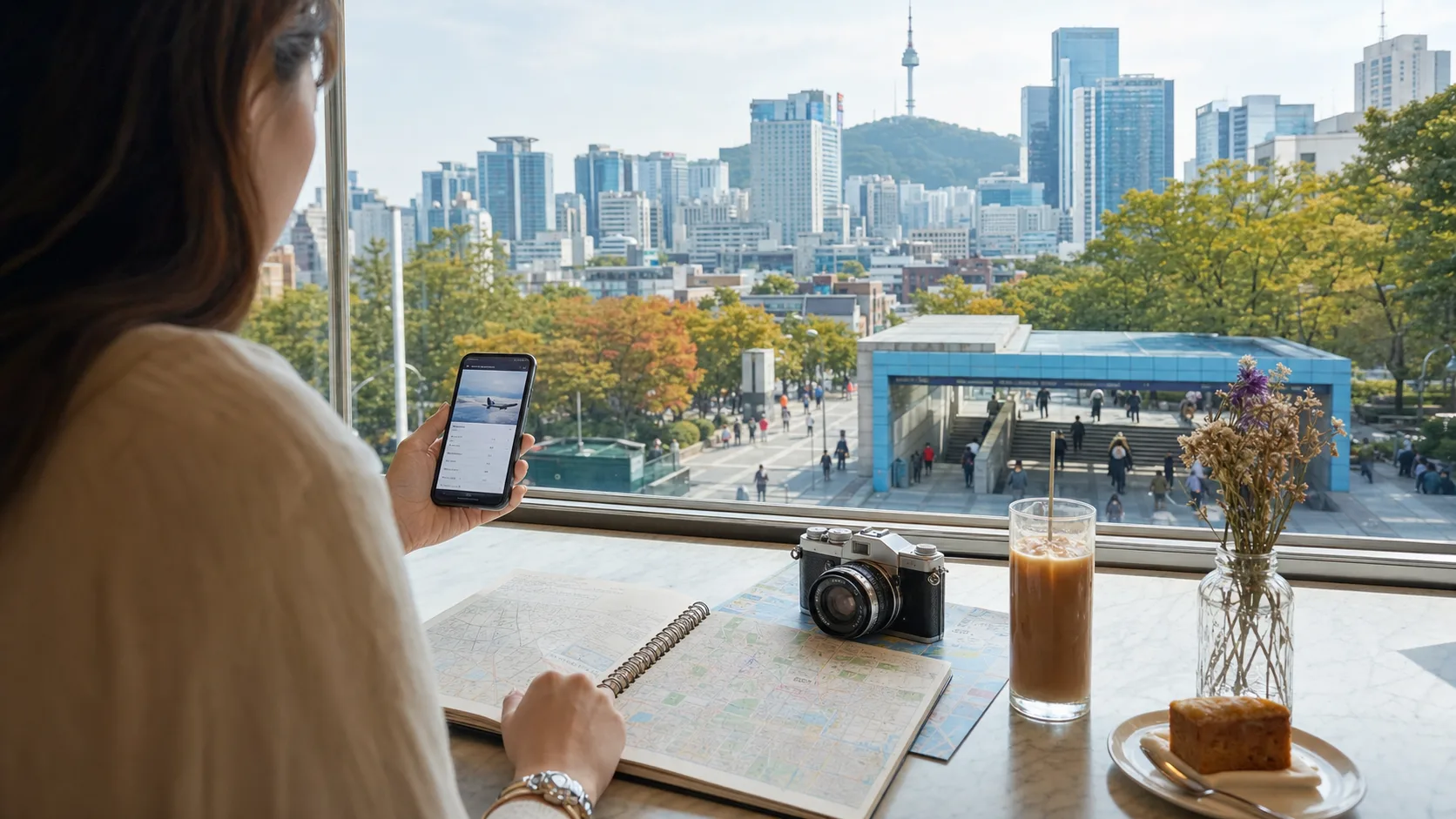
If you are booking Seoul for the first time, the winning move is not to cram in more attractions. It is to book the trip in the right order: entry rules first, then flight timing, then hotel area, then airport transfer, then only the time-sensitive activities. Seoul is easy to enjoy when the logistics are clean, but a short trip gets punished quickly by a bad hotel location or a route that crosses the city too many times.
For a Singapore-based traveler, Seoul is usually best handled as a 3 to 5 night city break with one central base, one historic day, one modern neighborhood day, and one flexible block for food, shopping, or a spa. If you keep the itinerary compact and book around neighborhoods instead of individual landmarks, the city feels efficient rather than rushed. That is especially true if you arrive tired, land late, or travel with family.
1. Fast Answer
If you only remember one thing, remember this: book Seoul like a neighborhood trip, not a checklist trip. Pick a central hotel area such as Myeongdong, Hongdae, Jongno, or Seoul Station, then build the rest of the booking around how you will arrive, how tired you will be on day one, and which districts you actually want to walk around.
The practical reason this matters right now is that Seoul rewards preparation in small, specific ways. You do not need to pre-book every meal or every subway ride, but you do need to make the parts that can derail a short holiday as simple as possible. That means checking current entry requirements before paying for nonrefundable tickets, choosing a hotel close to the kind of Seoul you want to experience, and reserving only the items that are genuinely time-sensitive.
For first-time visitors, the safest trip shape is usually one arrival day, two full sightseeing days, and one slower half-day or flexible block. If you have more time, add a day trip or another neighborhood, but do not let the trip become a transport project. Seoul is one of the easiest major Asian cities to enjoy once you stop fighting the geography and start booking around it.
One more useful rule: if your schedule is tight, pay for convenience where it saves time. A slightly better hotel location or an easier airport transfer is often a better use of money than squeezing in one extra attraction that forces another cross-city move.
2. Context You Need
Seoul is South Korea’s capital and the city most first-time visitors use as their introduction to the country. For short trips, that matters because Seoul is large enough to feel complex, but organized enough to feel manageable if you make a few good decisions early. The city is not built around one central sightseeing zone. It is built around districts with different personalities, and the best short-trip plan respects that.
That is why first-time travelers often underestimate Seoul. On a map, many places look close. In reality, the city works best when you group your plan by area. A palace morning, a hanok street, and a market lunch can fit together nicely. So can a shopping afternoon, a café block, and a night view. But if you mix those themes across the whole metro area, you burn time on transit and lose the relaxed rhythm that makes a short trip enjoyable.
For a Singapore-based visitor, the planning context is usually pretty specific. You want to know whether the trip can be done comfortably in a long weekend or whether it needs more days. You want to know where to stay so you are not dragging luggage across the city. You want to know whether to trust the subway, take taxis, or arrange transfers. And you want to know what needs booking in advance versus what can be left flexible until you land.
The simplest model is this:
- Historic Seoul for palaces, hanok streets, and traditional food.
- Modern Seoul for design neighborhoods, shopping, and polished cafés.
- Youth Seoul for casual late-night energy and food.
- Riverside Seoul for slower walks, sunset views, and recovery time.
You do not need all four moods on a first short trip. In fact, trying to sample every side of Seoul usually makes the trip feel fragmented. Two or three moods are enough. The point of booking well is to make the city feel generous, not exhausting.
Another piece of context that matters more than people expect is entry paperwork and connectivity. A short trip can go sideways if you leave visa or authorization checks until the last minute, or if you land without a plan for mobile data. Seoul is easy to navigate once your phone works and your arrival formalities are settled. It is much less easy when you are still trying to solve those things after a long flight.
In other words, the city is not hard. The booking sequence is what makes it easy.
What this guide is really for
This guide is for travelers who want to know the practical order of decisions:
- what to verify before paying for flights
- which hotel zones are best for a short stay
- how to choose an airport transfer
- which attractions or reservations deserve advance booking
- what costs and timing assumptions are still realistic in 2026
If you book those pieces in the right order, Seoul becomes a very clean short-trip destination.
3. Step-by-Step Guide
Step 1: Lock entry requirements before you book the fun parts
Before you buy the nonrefundable hotel or attraction tickets, check your entry requirements for South Korea. That sounds obvious, but it is where many first-time travelers make a bad assumption. The Korea Immigration Service’s official K-ETA site says the application is available only through the official website or the mobile app, the fee is KRW 10,000, and assessment is generally within 72 hours. It also warns travelers about fake or phishing sites that try to charge extra fees.
For planning purposes, the rule is simple: if you are not sure whether your passport needs K-ETA or a visa, verify that first. Do not rely on a screenshot from an old blog post. The week you book is the week to check. That matters even more for short trips because a paperwork problem can destroy the entire purpose of the booking.
Practical booking order:
- Check entry rules.
- Confirm your passport validity.
- Book flights only after you know the paperwork path.
- Book the hotel once your arrival day and landing time are fixed.
If you are traveling with family or on a tight schedule, add one more buffer: check whether the arrival process is likely to take longer because of late-night landing, luggage, or a connection.
Step 2: Choose your trip length before you choose your itinerary
The biggest Seoul booking mistake is planning attractions before you know how many full days you actually have. Short trips should be defined first by usable time, not by calendar dates.
Use this rough structure:
- 48 hours or less: keep it to one central base, one historic block, one meal district, and one easy evening plan.
- 3 nights: add a second neighborhood and one slower block for coffee, shopping, or a spa.
- 4 nights: add one day trip or one deeper neighborhood day.
- 5 nights: you can be more ambitious, but you still should not make every day a cross-city marathon.
If you are arriving from Singapore, it is usually smarter to protect the first and last day from over-scheduling. A late arrival day should not include a multi-stop sightseeing route. A departure day should not include a complex half-day on the opposite side of the city unless you are certain about transit and timing.
Step 3: Pick a hotel area that matches your actual trip style
The hotel is the anchor for a short Seoul trip. Get this wrong and the rest of the plan becomes harder than it should be.
| Area | Best for | Tradeoff |
|---|---|---|
| Myeongdong | First-timers, shopping, easy subway access | Busy and tourist-heavy |
| Hongdae | Casual food, nightlife, younger energy | Noisier at night |
| Jongno / Anguk | Palaces, hanok streets, slower mornings | Fewer late-night options |
| Seoul Station | Transfer convenience and central connections | Less atmospheric |
| Gangnam | Premium stays and polished retail | Less convenient for old Seoul sights |
If this is your first Seoul booking, Myeongdong and Jongno are the safest choices for a compact city break. Hongdae makes sense if you want a more casual, lively trip. Seoul Station makes sense if airport convenience matters more than neighborhood character. Gangnam is better when the hotel itself is part of the experience.
What you should not do is book far outside the center just because the room looks cheaper. On a short trip, a cheaper hotel can quietly cost you more in taxis, time, and energy.
Step 4: Book the airport transfer based on your arrival reality
After the hotel, think about how you will actually get there from the airport. This is where a short-trip booking either feels smooth or starts to fray.
The right choice depends on four things:
- arrival time
- luggage size
- group size
- hotel distance from a station
Use this rule of thumb:
- Daytime arrival with light luggage: airport rail or another public transfer is usually fine.
- Late-night arrival: choose the easiest door-to-door option you can tolerate.
- Group of 3 or 4: compare the cost of one transfer against multiple rail tickets.
- Hotel far from a station: a direct transfer can be worth it even if it costs more.
For many travelers, the useful question is not “what is the cheapest transfer?” It is “what gets me to the hotel with the least friction after a long flight?” That matters especially for a first Seoul trip because your first impression of the city should not be a confusing station transfer with luggage in hand.
Step 5: Build the days by neighborhood, not by famous place
Once the practical pieces are set, then you can actually shape the trip. Do not build a short Seoul itinerary as a long list of scattered landmarks. Group the days by district.
Here is the simpler way to think about it:
Historic day
- palace
- hanok street
- tea or café break
- traditional meal
Modern day
- shopping district
- design street or mall
- café stop
- night view or casual dinner
Food and energy day
- market or snack street
- lunch in a casual neighborhood
- late afternoon coffee
- optional nightlife or live music
Slow block
- river walk
- spa or jjimjilbang
- museum
- early dinner near the hotel
If you only have a few days, the most valuable question is not “what are the top ten sights?” It is “which two neighborhoods can I enjoy deeply without moving around too much?” That is the booking logic that makes Seoul feel easy.
Step 6: Decide what to reserve in advance and what to leave open
You do not need to pre-book every meal in Seoul. In fact, overbooking the trip is one of the fastest ways to make it feel tense. What you should reserve are the things that are likely to sell out, require timed entry, or make a long wait later.
Usually worth advance booking:
- hotel
- airport transfer if your arrival is awkward
- timed-entry attractions
- special tours or limited-capacity experiences
- any train seat or intercity connection you truly need
Usually fine to leave flexible:
- casual lunch and dinner
- cafés
- market browsing
- neighborhood walking
- shopping blocks
That balance gives you structure without making the trip brittle. It also leaves room for weather, jet lag, and actual appetite, which are the three things that almost always change once you land.
Step 7: Keep one block unscheduled on purpose
This is the most underrated booking decision of all. Leave one half-day open.
Use that block for whichever version of Seoul is actually working once you arrive:
- if the weather is nice, do a long walk or river evening
- if you are tired, choose a café-and-shopping block
- if the weather is bad, move indoors to a spa or museum
- if you have energy, add a second market or a nightlife district
For a short trip, the free block is not wasted time. It is insurance against the usual travel mistakes: a late landing, a long line, bad weather, or a place that turns out to be less interesting than you expected.
4. Costs, Hours, and Logistics
Short Seoul trips are easiest to budget when you separate the costs into four buckets: getting in, getting around, sleeping, and booking the few things that really need it.
What to expect on transport
Exact fares change over time, so do not anchor your whole budget to a single old number. The safer way to think about Seoul transport is like this:
- airport rail and metro are the value options
- taxis solve friction, not distance
- airport transfers are worth paying for when they remove a lot of hassle
- a reloadable transit card or mobile payment setup is usually the easiest way to handle city movement
The key logistics point is that Seoul is very usable if your payment setup works from day one. T-money’s official site still frames its service around mobility and payment, which is a reminder that local transport is built to be cashless and efficient. If you are landing for a short trip, the smartest move is to arrive with a payment method that works for transit and convenience stores without drama.
Timing and opening hours
For a short visit, assume that different parts of the city operate on different rhythms:
- palaces and museums may close on a weekly rest day
- markets can have stronger morning or evening windows depending on the place
- restaurants may close earlier than you expect outside nightlife areas
- cafés in popular neighborhoods can queue during prime hours
This is why the best short-trip plan has backups. If a palace is closed, you should already know the nearby museum or street you would swap in. If a restaurant line is too long, you should be able to step one block away and eat somewhere simpler.
Payment and connectivity
Seoul is highly card-friendly, but that does not mean you should land with no cash at all. A mixed approach is better:
- use card for hotel, most restaurants, and larger purchases
- keep a little cash for small stalls and low-value purchases
- make sure your phone data works immediately after arrival
For a first-time visitor, mobile data is not a luxury. It is your map, translation layer, and backup plan. Without it, even an easy city starts to feel harder.
2026 booking caveats that matter
There are two caveats worth keeping in mind for 2026 planning.
First, check entry rules close to your departure date. The official K-ETA site says the application is only available on the official website or app, the fee is KRW 10,000, and assessment is generally within 72 hours. That is exactly why you should not wait until the last minute if your trip depends on a visa-free authorization.
Second, do not trust old screenshots for airport or attraction logistics. Short trips are especially sensitive to recent changes because a small shift in flight timing, transfer timing, or opening hours can change the whole day. Verify the critical items yourself the week before you leave.
The rule of thumb is simple: if the item can ruin the trip, verify it twice.
5. Variations and Edge Cases
If you are visiting in winter
Winter changes the shape of a Seoul short trip more than many first-time visitors expect. The city still works well, but outdoor walking becomes less forgiving. You can absolutely do palaces, shopping streets, and evening views, but you should reduce long open-air stretches and build more indoor time into the plan.
Winter-friendly booking choices:
- choose a hotel with a very easy transit link
- keep the first day light
- book more cafés, shopping, and spa time
- plan for early sunsets
If you want a winter trip to feel good, do not overestimate how much walking you will enjoy in cold wind. Build comfort into the booking.
If you are visiting in spring or autumn
These are the easiest first-visit seasons because the weather is usually more pleasant for walking and neighborhood exploring. The tradeoff is that demand rises. Hotels can be busier, popular districts fill up faster, and the more scenic spots attract more people.
Best strategy:
- book the hotel earlier
- use mornings for the most photogenic places
- keep one flexible block for weather or crowd management
For a short trip, spring and autumn are ideal if you want the city to feel pleasant without needing to hide indoors too often.
If you are traveling with parents or children
Family travel changes the booking logic. You want fewer hotel changes, fewer station changes, and shorter moving parts during the day.
What helps most:
- stay closer to food and transit
- use taxis for the last mile when necessary
- plan one major item per half-day
- keep snack and restroom access in mind
With family travelers, the right hotel location matters even more than usual. If you can reduce friction at the start and end of each day, the whole trip feels smoother.
If your budget is tight
Seoul can absolutely be done on a tighter budget, but short trips are not the place to optimize every line item. A very cheap hotel far away from the center often creates hidden costs in time and transport.
Where it makes sense to spend:
- central hotel
- one good airport transfer
- one or two memorable meals
- any timed-entry item that genuinely matters to you
Where it makes sense to save:
- unnecessary taxis
- overpacked sightseeing
- souvenir shopping you do not actually want
For a short trip, location is the cheapest form of convenience.
If you want nightlife
If nightlife is a real priority, book around it instead of hoping it will fit later. Hongdae is better if you want a casual, lively atmosphere. Central Seoul is better if you want a more balanced trip with day activities and an easy return to the hotel.
The point is not to make the trip all-night. It is to make the hotel and neighborhood match the way you want to spend your evenings.
6. Mistakes to Avoid
1. Booking the cheapest hotel without checking the map
A short Seoul trip does not reward a distant hotel. A slightly better location is usually worth more than a slightly cheaper room.
2. Crossing the city too many times
Transit in Seoul is good, but it still costs time. If your plan zigzags across the map, the trip gets harder for no real gain.
3. Treating the arrival day like a full sightseeing day
After a flight, your energy is not the same as your calendar. Keep day one light.
4. Assuming every attraction is open every day
Many places have closures or reduced hours. Check before you go, especially if your stay is very short.
5. Leaving paperwork until after you buy everything else
Entry checks, hotel bookings, and transfer plans should happen before you lock in the fun extras. That order protects your trip from expensive mistakes.
7. FAQ
How many days should I book for a first Seoul trip?
Three full days is the minimum that still feels satisfying. Four or five days is better if you want one slower block or a day trip without rushing.
Where should a first-time visitor stay?
Myeongdong is the safest all-around answer. Jongno or Anguk is best if you care more about old Seoul. Hongdae is best for a younger, more casual vibe. Seoul Station is best for transfer convenience.
Do I need to book restaurants in advance?
Usually no. Book only the places that are truly hard to replace, then leave the rest flexible. Seoul is strong on casual food and neighborhood dining, so overbooking meals is rarely necessary.
Is Seoul easy to do without a car?
Yes. For a short trip, a mix of subway and taxis is usually better than trying to rent or drive. A car adds friction that most first-time visitors do not need.
What should Singapore travelers check before departure?
Check your entry requirements, passport validity, hotel location, airport transfer, and mobile data plan before you lock in nonrefundable parts of the trip. That sequence removes most of the avoidable stress.
Is a short Seoul trip worth it if I cannot take long leave?
Yes. Seoul is one of the best cities for a compact break because you can get a lot out of a few well-planned days. The city is especially good when you focus on neighborhoods instead of chasing everything.
Do I need cash in Seoul?
You should still carry some cash, but you do not need a lot. Cards and mobile-friendly payment are usually enough for most of the trip, with cash as a backup for small purchases.
Should I book airport transfer or just take transit?
If you land in the daytime with light luggage, transit is often fine. If you arrive late, have heavy bags, or want the smoothest possible first hour, a direct transfer is usually worth paying for.
8. Next Steps
The next step is simple: pick the hotel area first, then decide whether your trip is a palace-focused Seoul stay, a shopping-and-food stay, or a slower family-style stay. Once that is clear, book the arrival logistics, verify entry requirements, and reserve only the few things that truly need advance purchase.
If you do that in order, Seoul becomes a very efficient short trip. The city will still feel full, but it will not feel scattered. That is the difference between a rushed first visit and a trip that actually works.
Related: korea-seoul-short-trip-culture-guide-for-first-time-visitors
Related: korea-seoul-short-trip-itinerary-for-singapore-travelers