Korea Seoul Short Trip Culture Guide for First Time Visitors

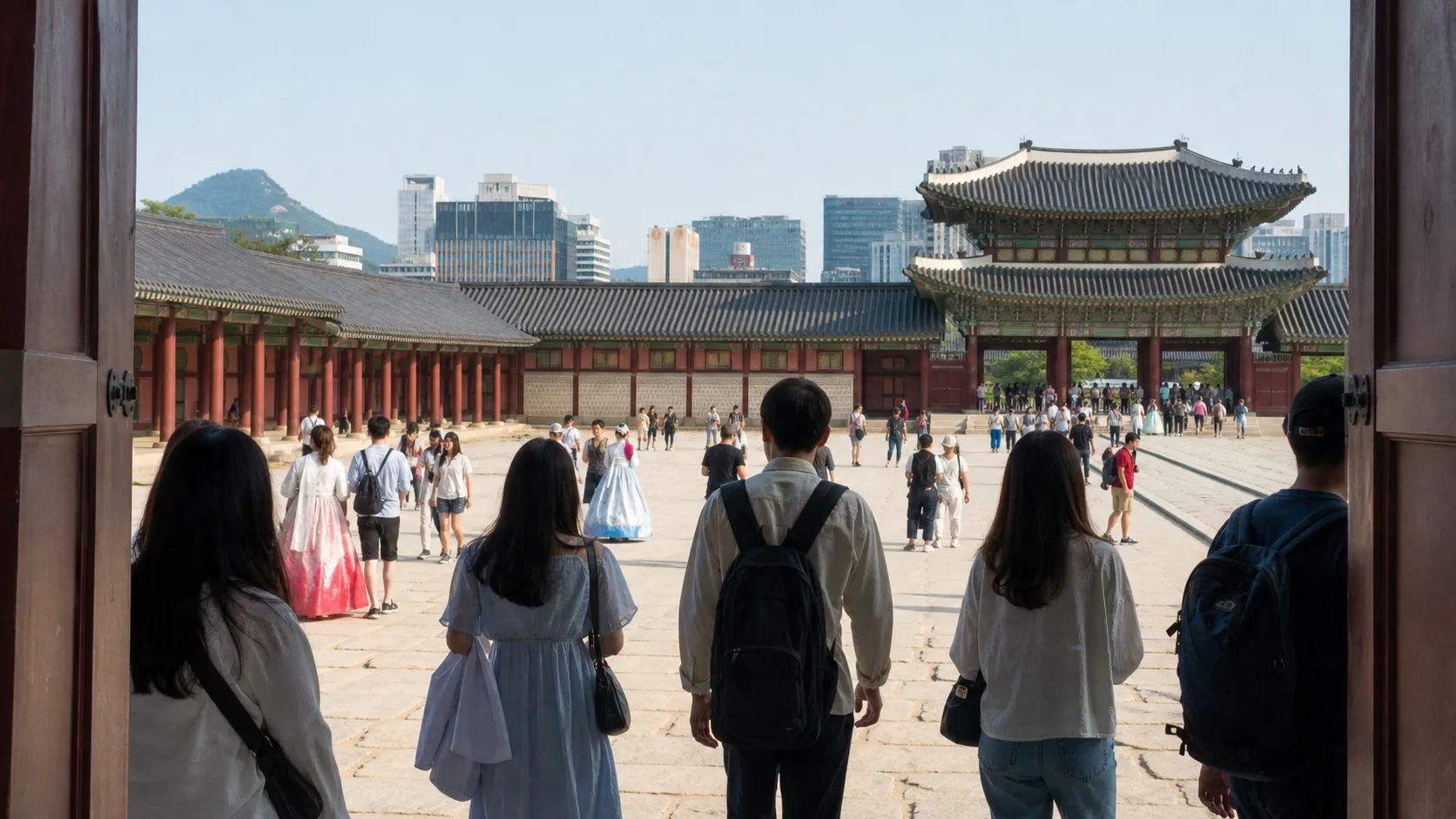
If you only have a short stay in Seoul, the best culture trip is not a race to check off every landmark. It is a compact route that combines one royal palace, one hanok district, one traditional market or food street, and one museum or temple, all linked by easy subway rides. That gives first-time visitors the widest possible read on Korean history, design, food, and daily city life without wasting half the day in transit.
1. Fast Answer
If this is your first Seoul trip and you only have two or three days, focus on three things: the Joseon royal palaces, the old-house neighborhoods around Bukchon and Insadong, and one evening food-and-lighting area such as Gwangjang Market, Myeongdong, or a riverside walk. That combination gives you the strongest cultural snapshot for the least planning overhead.
For a Singapore-based traveler, the practical logic is simple. Seoul is easy to move around, but the city rewards grouping sights by district instead of hopping all over the map. Start early at a palace, shift to a hanok and tea break at midday, then finish with street food, shopping, or a museum. If you want photos, go in the morning; if you want atmosphere, stay out after sunset. If you want the safest first-trip booking strategy, reserve any time-slotted experience such as a palace night program, Secret Garden visit, or popular traditional performance before departure, then build the rest of the trip around walk-in sites.
The biggest mistake is treating “culture” as only temples or only museums. In Seoul, culture also means how neighborhoods are arranged, how food is ordered, how people line up, and how the city layers modern life on top of older streets. That is why a short, well-paced route usually beats a long list of individual attractions.
2. Context You Need
Seoul’s culture is easiest to understand through layers. The city was shaped by the Joseon dynasty, modernized fast in the 20th century, rebuilt after war, and then turned into one of Asia’s most polished big cities. That means a first-time visitor sees old palaces beside glass towers, hanok roofs beside convenience stores, and centuries-old etiquette beside digital payment habits.
For a short trip, the most useful cultural question is not “What is the oldest thing here?” It is “What still matters in everyday life?” The answer in Seoul includes royal architecture, Confucian-era urban planning, neighborhood markets, traditional craft streets, temple customs, and food rituals. A short visit should aim to show all of those in a concentrated way.
If you are coming from Singapore, you will probably value three things immediately: convenience, predictability, and a clear sense of value. Seoul delivers all three if you plan by district. Palaces and museums are usually cheap relative to major attractions in other global cities. Subway travel is straightforward. Food is highly configurable, so you can choose between budget snacks, casual meals, and premium dining without changing neighborhoods.
The cultural visit also works better when you understand the difference between “historic Seoul” and “heritage Seoul.” Historic Seoul refers to the royal and dynastic core: the palace compounds, city walls, ceremonial roads, and government district. Heritage Seoul is broader and includes hanok clusters, craft lanes, religious sites, and preserved market culture. A first-time visitor should aim to experience both, because the first explains the state and the second explains everyday life.
One more planning point matters for a short trip: Seoul’s cultural sights are not all equally active every day. Some sites are closed on certain weekdays, some charge different prices for special gardens or exhibitions, and some cultural programs require timed entry. So the best strategy is to decide your “anchor day” attractions first, then use the rest of the trip for flexible walk-ins.
3. Step-by-Step Guide
The cleanest first-time Seoul culture route is to build one day around the royal core and another around living neighborhood culture. If you only have a single full day, compress both into an early start and a late finish.
A good short-trip sequence
| Time | What to do | Why it works |
|---|---|---|
| Morning | Start at a major palace | Quietest light, fewer crowds, strongest historical context |
| Late morning | Walk to a hanok district | Lets you move from formal architecture to residential heritage |
| Lunch | Eat in a market or casual neighborhood strip | Adds everyday Seoul, not just sightseeing |
| Afternoon | Visit a museum, craft street, or tea house | Gives your feet a break and deepens the story |
| Evening | Finish with street food, shopping, or a night view | Shows the modern city layer |
Step 1: Pick one palace, not all of them
First-time visitors often try to see every palace in one trip. That usually creates palace fatigue. Instead, choose one “main” palace and one optional secondary stop if you have time.
Gyeongbokgung is the strongest starting point because it gives you the largest and most recognizable royal setting. If you want a more intimate or elegant feel, Changdeokgung is often the better experience because its layout is less overwhelming and its garden-based areas reward slower walking. If you want a quieter add-on, Deoksugung works well with nearby modern-city sightseeing.
The key is to treat the palace as your anchor, not your entire day. Spend enough time to understand the gates, courtyards, and ceremonial axis, then move on before the visit becomes repetitive.
Step 2: Add a hanok district while your palace context is fresh
After the palace, go to Bukchon Hanok Village, Insadong, or nearby alleys that preserve older building styles and traditional retail. These places are best understood right after a palace because the connection is obvious: the palace shows state power, and the hanok district shows how elites, artisans, and later city residents lived around that power.
Do not rush through the area as if it were a photo stop. Slow down enough to notice rooflines, lane widths, signboards, teahouses, and craft shops. The district is not a theme park; it is a living neighborhood with visitors passing through it.
Step 3: Build lunch around a market
For first-timers, the easiest way to understand Seoul food culture is to eat in a market. Gwangjang Market is the classic choice because it offers a dense concentration of snacks, noodles, pancakes, rolled omelets, and quick meals that feel local without being hard to navigate. If you prefer something more contemporary, choose a neighborhood lunch street where you can order set meals, soups, or barbecue at a slower pace.
Order one thing at a time if you are unsure. Seoul food culture rewards trial and error, and markets are the best place to sample without overcommitting.
Step 4: Choose one depth stop
Once you have seen a palace and a heritage neighborhood, choose one deeper stop rather than trying to cover everything. Good options include:
- A museum, if you want context and air conditioning
- A tea house, if you want a quieter cultural pace
- A temple, if you want a spiritual contrast to palace culture
- A craft or design street, if you want souvenirs with local relevance
This is where many short trips become memorable. The best Seoul culture visits are not just visual. They include a pause that changes the pace of the day.
Step 5: Finish with a night layer
End the day somewhere with strong evening energy. That could be a market lit up at night, a shopping district, a river walk, or a view point. The point is to see how Seoul changes after dark. If you only see it in daylight, you miss part of the city’s personality.
A simple first-day route
- Palace opening
- Hanok walk
- Market lunch
- Museum or tea stop
- Evening street food or night view
This route works because it moves from official history to everyday life to modern nightlife in a single arc.
4. Costs, Hours, and Logistics
Seoul is a relatively affordable cultural city if you make a few smart choices. Many palaces charge modest admission, museums are often low-cost or free, and subway travel is efficient. The biggest variable is not transport, but how many paid special programs you decide to add.
What to budget
- Palace admission: usually only a few thousand won per site
- Special areas such as gardens or timed programs: extra fee or separate reservation may apply
- Museum admission: often free or low-cost, depending on the institution
- Tea house or dessert stop: budget a moderate sit-down spend if you want atmosphere
- Market snacks: easy to keep inexpensive if you share dishes or order one or two items
- Transit card and rides: low per-trip cost if you rely on the subway and buses
For transport, a rechargeable T-money card is the easiest default. Cards are typically sold and topped up at subway stations and convenience stores, and they are useful for both subways and buses. For a short trip, this is usually more convenient than buying individual tickets every time. If you are arriving from the airport and want a frictionless first day, load the card early and keep a little buffer balance so you do not need to hunt for a recharge machine after dinner.
Hours and booking caveats
Most major cultural attractions in Seoul open in the morning and close in the late afternoon or early evening, but the exact timing varies by site and season. Some places close one weekday each week. Some gardens, exhibitions, and palace night programs require advance booking. In practical terms, you should always check the day before you go, especially if your trip falls near a public holiday, the summer peak season, or a restoration period.
The most common timing mistake is arriving at a heritage site too late in the day and then having to compress the visit into a rushed photo stop. Build your first full day around the site’s opening time, not around your lunch preference. Seoul is flexible, but the cultural core rewards early starts.
2026 planning logic
For 2026, the best planning rule is still the same: reserve anything that is time-slotted or limited-capacity, then keep the rest of the day flexible. That includes special palace events, guided garden access, seasonal performances, and popular table reservations. If you only have one or two culture days, do not overbook yourself with too many timed entries. Leave space for walking, tea, and a spontaneous food stop.
Transit notes for a short stay
The subway is usually the fastest way to link the main culture districts. A single line change often saves more time than waiting for a taxi in heavy traffic. Use taxis when you are carrying bags, traveling late, or moving between neighborhoods with awkward walking links.
If you are planning to use mobile data constantly for maps and translations, set that up before arrival so the first day is not spent looking for SIM kiosks. A short stay gets much easier when your phone can handle navigation, food ordering, and payment confirmations without delay.
5. Variations and Edge Cases
The ideal Seoul culture route changes depending on season, travel style, and group size.
If you are traveling in spring or autumn
These are the best seasons for walking-heavy routes. You can spend longer outside in palace grounds and hanok lanes without fatigue. Prioritize gardens, courtyards, and outdoor markets. Put your museum time in the middle of the day and save the longer walks for morning and late afternoon.
If you are traveling in summer
Heat and humidity matter. In summer, shorten your outdoor segments and use museums, tea houses, department store food halls, and subway-linked neighborhoods as break points. A good summer route might include one palace in the morning, a long lunch, and an indoor culture stop in the afternoon. Avoid treating Seoul like a city where you can comfortably do six hours of continuous walking without rest.
If you are traveling in winter
Winter culture trips in Seoul can be excellent because palace courtyards and city streets feel crisp and photogenic. The tradeoff is that outdoor waiting becomes uncomfortable fast. Keep a warm inner layer, plan more indoor pauses, and avoid trying to do too many distant neighborhoods in one day.
If you are traveling as a couple
You can slow the pace down and choose more atmosphere-driven stops. A palace plus tea house plus riverside evening often works better than a packed market-hopping itinerary. Couples also have more flexibility to book a special dinner or traditional performance without worrying about group preferences.
If you are traveling with children
Children usually do better with shorter transitions and visible variety. A palace visit should be paired with a snack break and an open-ended market stop. Avoid making the day too museum-heavy unless the museum is especially interactive. The goal is not maximum information density; it is keeping the day moving.
If you are on a tighter budget
Seoul can be very affordable if you limit paid add-ons. Focus on one palace, one neighborhood walk, one market meal, and one free or low-cost museum. Skip premium experiences unless they are genuinely important to you. A strong culture day does not need to be expensive.
If you are very time-poor
If you only have half a day, combine one major palace with a nearby hanok street and one meal. That gives you the highest-value cultural snapshot possible. Do not try to fit multiple districts into a short window. In Seoul, over-scheduling is the fastest way to make a compact trip feel stressful.
6. Mistakes to Avoid
The most common mistake is overcounting attractions. Seoul’s culture is not best understood by ticking off a huge list. It is better understood through a small number of coherent districts.
Another mistake is ignoring timing. If you arrive late at a palace or museum, you lose the calmest part of the experience and often end up paying for a full site you barely saw. A first-time culture route should start early.
A third mistake is assuming every “traditional” street is equally authentic in purpose. Some areas are genuine heritage neighborhoods, while others are modern retail streets with historic styling. Both can be enjoyable, but they serve different goals. Know which one you are visiting.
Finally, do not ignore simple logistics. Bring a payment method that works on transit, carry a little cash for smaller food stalls, and leave room in the schedule for rest. Seoul is easy to navigate, but a culture trip still gets better when you move at a human pace.
7. FAQ
How many days do I need for Seoul culture?
Two full days is enough for a strong first impression: one day for palaces and heritage lanes, one day for markets, museums, and a different neighborhood. If you only have one full day, pick one palace, one hanok district, and one market.
Is Seoul good for first-time visitors?
Yes. It is one of the easiest major Asian cities for first-time independent travel because the transit system is strong, food is accessible, and many culture sites are close together. The main challenge is deciding what to leave out.
Should I book palace tickets in advance?
For standard daytime entry, advance booking is not always necessary, but for special programs, gardens, or night events, it often helps. When in doubt, check the site before you go and book anything that has limited capacity.
What should I wear for a culture day?
Wear comfortable walking shoes and layers that work outdoors and indoors. If you want to wear hanbok for photos, plan that around the palace portion of the day and avoid making the whole trip dependent on costume rental logistics.
Is cash still needed?
A little cash can still be useful for small stalls, street food, or edge-case purchases, but you should not rely on cash alone. For a short trip, the easiest setup is card plus transit card, with some cash as backup.
Is one palace enough?
Yes. For a short trip, one palace done well is better than three palaces rushed badly. If you have extra time, add a second site only if it gives you a different type of experience, not just another courtyard.
What is the best cultural stop for a solo traveler?
A palace-to-hanok route is usually the best solo option because it is easy to navigate, visually rich, and flexible. You can spend more time where you like without coordinating with anyone else.
Where does food fit into the culture plan?
Food should not be a side note. In Seoul, a market meal, a street snack, or a simple traditional dish is part of the cultural experience. Plan at least one meal around a heritage district or market so the trip feels complete.
8. Next Steps
If this is your first Seoul culture trip, the next move is simple: choose your anchor palace, pick one nearby heritage district, and decide whether your second day should lean more toward food, museums, or a quieter neighborhood walk. Once that is set, the rest of the itinerary becomes much easier to book and time.
For most first-time visitors, the winning formula is not “see everything.” It is “see the right few things in the right order.” That is what makes a short Seoul trip feel cultured rather than crowded.
Related: korea-seoul-short-trip-theme-park-and-family-ticket-guide
Related: korea-seoul-short-trip-booking-guide-for-first-time-visitors
Related: korea-seoul-short-trip-itinerary-for-singapore-travelers