Japan Tokyo Short Trip Airport Transfer Guide for Singapore Travelers

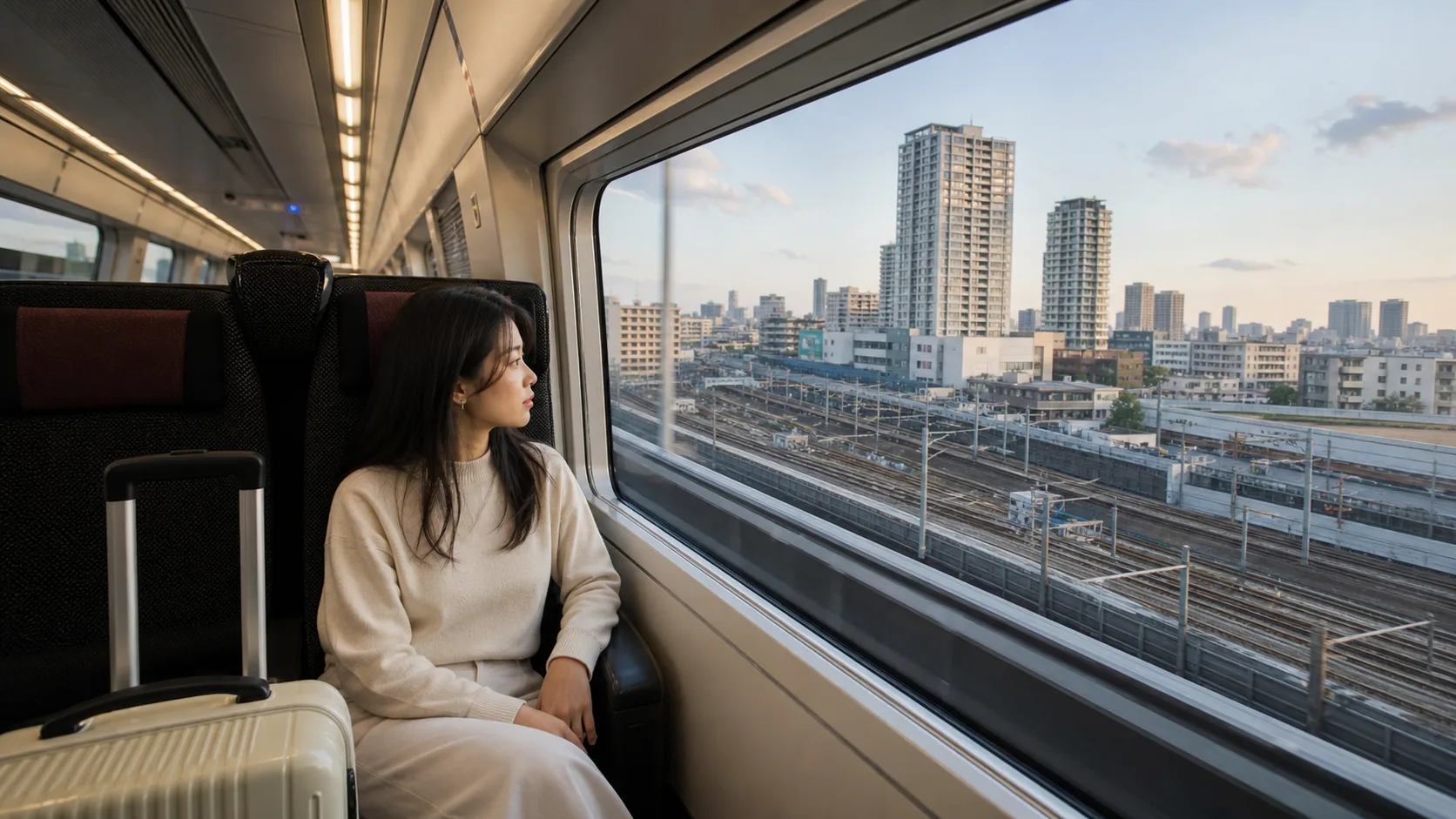
If you are flying from Singapore to Tokyo for a short trip, the airport transfer choice matters more than people expect. A bad transfer can waste the first hour of your holiday and make a compact itinerary feel rushed from the start. A good one gets you into your hotel area quickly, with enough energy left for dinner, a convenience-store run, or an evening walk.
Fast Answer
If you want the simplest rule for Tokyo airport transfers, use this: pick the airport rail link that matches both your arrival airport and your hotel area, and do not default to a taxi unless you arrive late, travel as a group, or have unusually heavy luggage. For a short trip from Singapore, the transfer is part of the trip, not a throwaway detail.
The practical split is straightforward. If you land at Narita, the fastest and most predictable option for many first-time visitors is the Skyliner, which reaches Ueno from Narita Airport in as little as 36 minutes according to Keisei. If you land at Haneda, the airport’s own access page points you toward train, monorail, express bus, route bus, or taxi, and in most cases rail is still the cleanest choice for a short stay.
That matters because short trips punish inefficiency. A three-night Tokyo trip from Singapore usually leaves no room for wandering around a station with luggage, missing a bus because you did not account for the queue, or paying too much for a car when a train would have been easier. The goal is not simply to reach Tokyo. The goal is to reach the correct neighborhood quickly, with the least friction, so you can check in and start the trip properly.
For most Singapore travelers, the answer is:
- Narita to east-central Tokyo, Ueno, Asakusa, Ginza, or Tokyo Station area: use rail, especially Skyliner if speed matters.
- Haneda to central Tokyo: use rail or monorail first, bus if the hotel is bus-friendly, and taxi only when the timing or luggage justifies it.
- Late arrival, very early departure, or family/group with many bags: compare transfer time against door-to-door convenience, not ticket price alone.
Context You Need
Tokyo has two major airports, and they behave differently for city access. Haneda is closer to central Tokyo, so its transfer options are usually shorter and simpler. Narita sits farther out in Chiba Prefecture, so you are normally balancing express rail, airport bus, or a more expensive car ride. If you are planning a short trip from Singapore, that distance difference affects the first and last hours of your itinerary more than almost anything else.
The right transfer is not just about distance. It is about where your hotel sits relative to the airport line you choose. A fast train that ends far from your hotel may still be the wrong choice if you have to switch lines twice with luggage. A slower bus may be better if it drops you close to the property and avoids stairs, transfer gates, or platform hunting. This is why the best airport transfer advice in Tokyo is rarely one-size-fits-all.
For Singapore travelers, there are a few common trip patterns. One is the long-weekend or long-weekend-plus-one style trip, where you want to see one district deeply rather than chase half of Tokyo. Another is the food-and-shopping trip, where your hotel is mostly a sleep base and you want to spend your energy in the city. A third is the family trip, where luggage and pacing matter more than saving a few hundred yen. In all three cases, the transfer should reduce decision fatigue, not add to it.
Narita Airport’s official access page lists rail, public bus, car, taxi, and even terminal-to-terminal movement as access options, which is useful because it confirms that the airport is designed around multiple transfer modes. Haneda’s official access page likewise separates train and monorail, express bus and route bus, taxi, and transfers between airports and terminals. That structure is the clue: Tokyo expects travelers to choose based on the whole journey, not just on one train timetable.
The most familiar Narita express option for many visitors is Keisei Skyliner. Keisei says it connects Narita Airport to Ueno in as little as 36 minutes and highlights discount ticket bundles, including combinations with Tokyo Subway Ticket. The practical meaning is simple. If your Tokyo plan centers on the eastern side of the city, especially Ueno, Nippori, Asakusa, Akihabara, or nearby neighborhoods, Narita rail access can be very efficient.
Haneda is different. Because it is closer to the city, many travelers can use standard rail or monorail and be in Tokyo quickly without paying for a premium airport express. That makes Haneda especially attractive for short trips, but only if your flight pricing and schedule work in your favor. In a short-trip planning context, airport convenience can be worth as much as a slightly cheaper fare.
The main idea to keep in mind is this: Tokyo airport transfer strategy is really hotel-location strategy in disguise. Choose the airport mode that gets you closest to your hotel area with the fewest changes, not the one that looks fastest in isolation.
Step-by-Step Guide
1. Decide which airport you are actually optimizing for
If you are still at the trip-planning stage, start with the airport, not the sightseeing list. For a short trip, Haneda is usually easier for central Tokyo, while Narita often makes sense when the flight fare is better or the schedule is more convenient. A Singapore traveler often chooses based on the total package: airfare, arrival time, and hotel area.
Ask three questions before you book anything else:
- Which airport do I arrive at?
- Which Tokyo neighborhood is my hotel in?
- How much luggage am I carrying?
If the answers are Narita, east Tokyo, and carry-on or one medium suitcase, the rail answer is usually obvious. If the answers are Haneda, Shinjuku, and multiple large bags, the best answer may be rail plus a short taxi, or even a direct bus if it drops close enough.
2. Match the airport to the hotel zone
Use this simple logic:
| Hotel zone | Best default from Narita | Best default from Haneda |
|---|---|---|
| Ueno, Nippori, Asakusa, Akihabara | Skyliner | Rail or monorail plus transfer |
| Tokyo Station, Ginza, Nihombashi | Skyliner or other rail | Rail or monorail |
| Shinjuku, Shibuya, Ikebukuro | Rail with one transfer | Rail with one transfer, sometimes bus |
| Odaiba, Ariake, waterfront | Rail with a planned transfer | Bus or rail depending on hotel |
| Airport hotel, late-night arrival | Taxi or shuttle only if it saves real time | Taxi, shuttle, or late bus depending on availability |
The table is not meant to force one answer. It is meant to prevent a bad answer. Many visitors overvalue the first leg from the airport and undervalue the last leg from the station to the hotel. If the station is a 15-minute walk with stairs and one extra line change, the “cheap” option can feel expensive in practice.
3. Book the right kind of ticket
For Narita express rail, look at whether a discount ticket, bundle, or online reservation is available. Keisei’s Skyliner page highlights a discount ticket, a Skyliner plus Tokyo Subway Ticket bundle, and an e-ticket option with facial recognition. Those details matter because they reduce both friction and queue time.
For Haneda, book ahead only when the route or service actually requires it. Some airport bus products are convenient, but they are not always necessary if your route is simple rail access. Use the airport access page as a routing tool first, then decide whether a reservation saves time. For a short trip, advance booking is only useful if it removes uncertainty or protects a tight arrival schedule.
4. Keep the transfer plan simple on arrival day
Do not build an airport transfer around your ideal mood. Build it around arrival reality. After landing, immigration, baggage claim, and the walk to the platform or bus bay are all part of the transfer time. That is why a “36-minute train” can still consume more than an hour door to door.
Use this arrival checklist:
- Confirm which terminal you arrived at.
- Check whether your hotel is closer to a rail hub or a bus stop.
- Decide whether you want the fastest route or the least stressful route.
- Keep a little cash or an easy payment method available.
- Do not assume the next train or bus is the one you will catch immediately.
If you are tired, tempted to improvise, or arriving after a long overnight flight, reduce decisions. Choose the route that has the clearest signage and the fewest changes, even if it is not the theoretically cheapest.
5. Think in terms of the whole first evening
The best transfer is the one that protects your first evening plans. If your hotel check-in is late and your dinner reservation is fixed, a transfer that saves twenty minutes can matter more than a transfer that saves a few dollars. If your goal is to arrive, drop bags, and eat in the neighborhood, choose the option that minimizes the chance of confusion.
For a short trip, one useful rule is to reserve your mental energy for the city, not the airport. The airport is a necessary obstacle. Your transfer should make the obstacle smaller.
Costs, Hours, and Logistics
What you can rely on in 2026
The key 2026 assumption is that Tokyo’s airport access network is still built around rail, bus, and taxi, with Haneda generally closer and Narita generally farther. Narita Airport’s official access page continues to present rail, public bus, car, and taxi as the main modes. Haneda’s official access page continues to present train and monorail, express bus and route bus, taxi, and terminal or airport transfers.
On the rail side, Keisei Skyliner remains one of the most practical Narita options for short trips because it reaches Ueno from Narita Airport in as little as 36 minutes. Keisei also promotes discounted ticket products and ticket bundles, which can matter if you plan to use the subway heavily after arrival.
Cost framing
Rather than obsessing over one exact fare, think in bands:
- Haneda to central Tokyo on ordinary rail or monorail is usually the budget-friendly end of the spectrum.
- Narita express rail is usually the premium end of the rail spectrum, but still often cheaper and more predictable than a taxi.
- Airport taxis are the most expensive option, but can become rational when several travelers share the cost or when late-night convenience is worth more than the fare difference.
That is the right way to budget a short trip from Singapore. A train that costs a little more may still be the better value if it saves a transfer or gets you to your hotel earlier. A bus may be cheaper, but if traffic adds uncertainty, the cheaper option may not be the better one.
Hours and operating caveats
Airport access services do not behave like a normal city commute. Early morning and late-night periods often have fewer services, and airport bus or train frequency may be lower than daytime expectations. Narita’s airport access page even has a specific section for terminal use at night and early mornings, which is a reminder that travel timing matters.
If your Singapore flight lands late, do not assume every access mode will feel equally easy. The most useful question is not “Does the route exist?” but “Will it still be comfortable after immigration, baggage claim, and the terminal walk?”
Payment and booking notes
For airport rail, online ticketing can reduce friction. Keisei’s Skyliner page points to discount tickets, purchase online, and e-ticket options. That makes sense for travelers who like to have the transfer settled before landing. It is also useful when you are arriving during a busy travel period and want fewer steps at the airport.
For buses and taxis, the booking model is less uniform. Some bus routes are simple walk-up services, while others are better booked in advance if you are traveling at peak times or need a hotel-specific drop-off. Taxis generally do not need advance train-style booking, but reserved or app-dispatched pickup points may be relevant at Haneda, and airport taxi stands are clearly separated there.
If you are trying to keep your Tokyo arrival light and efficient, use this rule:
- Book in advance when it removes a queue or guarantees a seat.
- Do not book in advance if it creates a cancellation headache for a route you are not sure you need.
Variations and Edge Cases
If you land at Narita but stay in central Tokyo only one or two nights
This is the classic short-trip problem. Narita is farther out, so the transfer can feel like a bigger share of the trip. In that case, choose the fastest practical rail route to your hotel zone, and do not chase a hyper-cheap transfer that adds a confusing transfer or a long walk.
If you are staying around Ueno, Nippori, or the eastern side of Tokyo, the Skyliner is especially attractive because it is built for speed and convenience. If your hotel is in Ginza or Tokyo Station, a straightforward rail plan still makes sense because you can continue to the hotel with one manageable change.
If you land at Haneda and want the least stressful arrival
Haneda is often the easier airport for short trips because it is closer. That said, “closer” does not automatically mean “easy” if your hotel is not near the line you choose. If your hotel is near a station served well by the monorail or one of the rail lines from the airport, take the rail option. If the hotel is near a direct bus stop and you are carrying more luggage than usual, a bus may be better.
For short trips, Haneda often rewards travelers who value speed plus simplicity. It is not just about minutes. It is about landing, moving once, and arriving.
If you are traveling as a couple, family, or small group
The more people and bags you have, the more you should evaluate door-to-door convenience. Two travelers can sometimes split the difference between train and taxi, but a family with strollers or multiple checked bags may find the cheapest rail option surprisingly tiring.
If one traveler needs to wrangle bags while another handles tickets and navigation, rail still works well. If everybody is tired and the hotel is not far from the airport drop-off point, a direct car transfer can become more sensible than it looks on paper.
If you arrive late at night or depart very early
Night arrivals are where many transfer plans break down. Services can be less frequent, and the best daytime route may not be the best nighttime route. In that case, prioritize the route with the fewest steps, especially if you do not want to arrive at a station and find yourself unsure about the last connection.
If you are leaving Tokyo after a short trip, reverse the same logic. The best airport transfer on departure day is the one that protects your check-out timing and buffers you against platform confusion, not the one that saves the smallest amount of money.
If your Tokyo hotel is actually on the edge of the city
Some “Tokyo” stays are really in surrounding areas or in districts with awkward final-mile access. In that case, the airport transfer and the hotel transfer should be planned together. If a direct bus gets you close enough, that can beat a train followed by a lengthy local transfer. If the hotel is near a major station, rail stays dominant.
The edge case rule is simple: the farther your hotel is from a major rail hub, the more valuable a direct drop-off becomes.
Mistakes to Avoid
The biggest mistake is choosing the transfer in isolation from the hotel location. A route that looks clever on a map can become annoying once you add luggage, stairs, and platform changes. Pick the route that fits the hotel zone first.
A second mistake is assuming the cheapest ticket is the best value. On a short trip, time and energy are real costs. Saving a few hundred yen while losing half an hour and one more transfer is often the wrong trade.
A third mistake is ignoring arrival time. Late-night and early-morning airport access is different from mid-day travel, and the service pattern can change the best option. If your flight arrives late, plan for the route that is easiest to execute when you are tired.
A fourth mistake is overusing taxis. Taxis are useful, but they should solve a problem, not become the default. Use them when the luggage, time, or group size justifies the price.
FAQ
Is Haneda always better than Narita for a short Tokyo trip?
Not always, but often. Haneda is closer to central Tokyo, so it usually offers a more efficient arrival experience. Narita can still be perfectly fine if the fare or flight timing works better, especially if you use a strong rail option like Skyliner.
Should I book airport transfer before leaving Singapore?
Book ahead if you want certainty, especially for Narita rail products or if you are arriving at a busy time. If your route is simple and you are comfortable buying on arrival, you can also keep it flexible. The main benefit of pre-booking is reduced decision-making after a long flight.
What is the fastest option from Narita to Tokyo?
For many travelers heading to the eastern side of the city, the Skyliner is one of the fastest practical choices. Keisei states that it reaches Ueno from Narita Airport in as little as 36 minutes.
What is the easiest option from Haneda to the city?
Usually train or monorail, depending on your hotel location. Haneda’s access page presents train and monorail, express bus and route bus, and taxi as the main options, so the easiest choice depends on whether your hotel is closer to a rail hub or a bus stop.
Is an airport taxi worth it in Tokyo?
Sometimes. It is worth considering if you are arriving late, traveling with several bags, moving as a group, or staying in a place where the transfer would otherwise involve multiple changes. For solo or couple travelers with light luggage, rail is usually the better default.
Can I treat the airport transfer as part of the sightseeing day?
Only if you keep expectations realistic. The transfer itself is not sightseeing, but it can be a smooth warm-up to the trip. On a short itinerary, the best move is often to arrive efficiently, store luggage, and save your energy for the actual neighborhoods you want to explore.
Should I choose the cheapest route or the shortest route?
Choose the route that gives you the best overall arrival. On a short trip, the lowest-stress route is usually better than the absolute cheapest one. If the savings are small and the inconvenience is large, the math usually favors simplicity.
Next Steps
The right next move is to match your flight airport with your hotel area and lock the transfer strategy before you focus on day-to-day sightseeing. If you are landing at Narita, start with the rail options and compare them against your hotel neighborhood. If you are landing at Haneda, check whether the hotel sits cleanly on a train, monorail, or bus path.
Once that is settled, the rest of the Tokyo trip gets easier. You can plan meals, neighborhoods, and day trips around a known arrival pattern instead of treating the airport as an unknown. For a short Singapore-to-Tokyo trip, that is usually the difference between a hectic start and a clean one.
Related: japan-tokyo-short-trip-itinerary-for-singapore-travelers
Related: japan-tokyo-short-trip-neighborhood-guide-for-first-time-visitors