China Shanghai Short Trip Airport Transfer Guide for Singapore Travelers

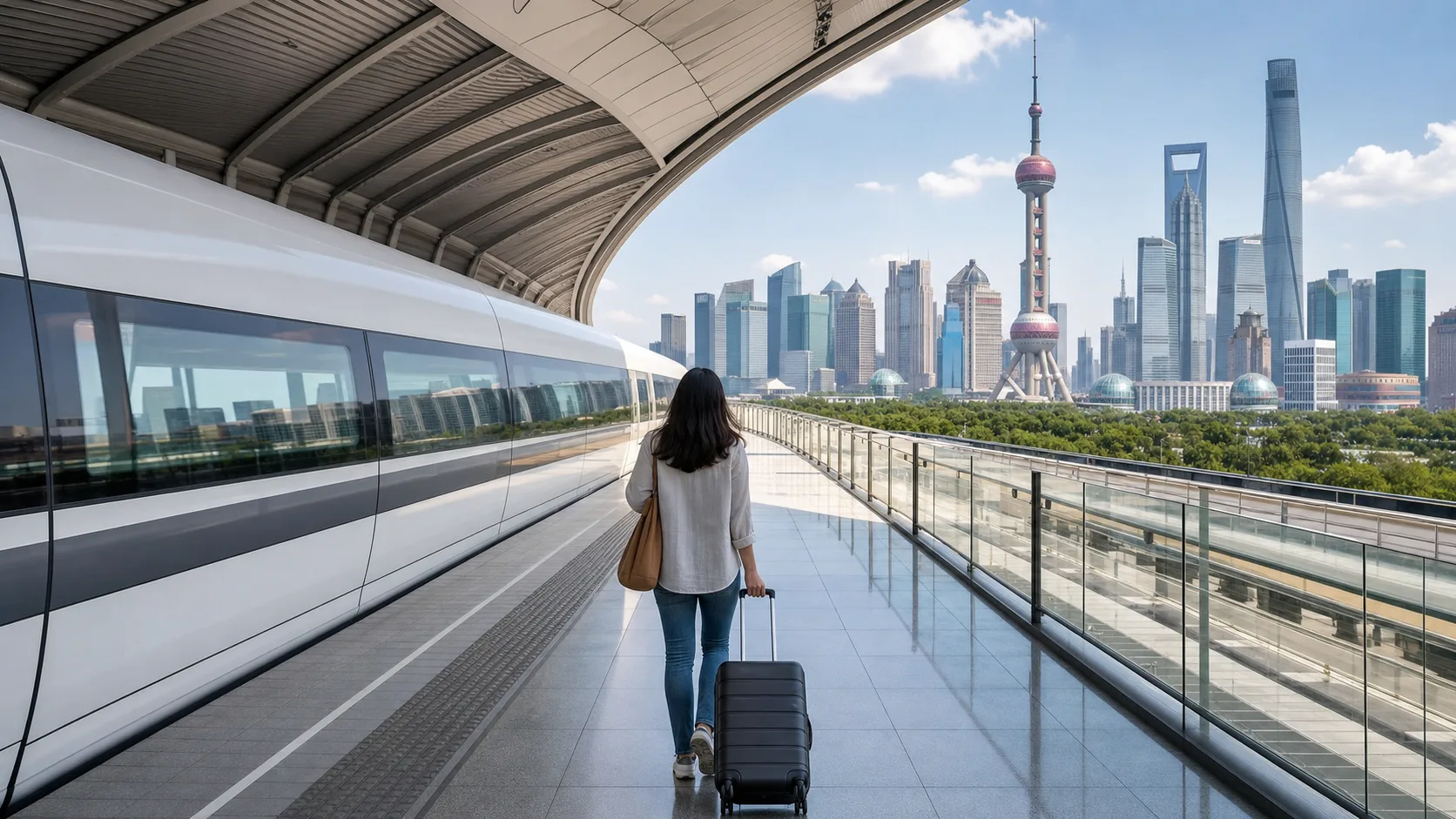
If you are flying from Singapore to Shanghai for a short trip, the airport transfer decision is not a small detail. It shapes how quickly you clear the airport, how tired you feel when you reach the hotel, and whether your first evening is a smooth check-in or a logistics problem. The good news is that Shanghai gives you several solid options, and the best one depends on where you land, how much luggage you have, and whether you are heading straight into the city or connecting between Pudong and Hongqiao.
For most Singapore travelers, the default answer is simple: use rail if your timing lines up, use a taxi if you land late or have heavy luggage, and think of the Airport Link Line as the best modern transfer if you need to move between the two airports or want a clean rail connection to the city. The Shanghai airport system is more orderly than many first-time visitors expect, but it rewards travelers who decide in advance instead of improvising at the arrivals hall.
1. Fast Answer
If you want the shortest practical answer, here it is: take the Maglev from Pudong Airport if you are arriving during its operating window and going into eastern or central Shanghai, take Metro Line 2 if you want a cheaper all-rail trip and do not mind a longer ride, and take a metered taxi if you land late, arrive with family, or simply want the least friction. If you need to transfer between Pudong and Hongqiao, the Airport Link Line is the most useful new option because it connects both airport systems directly and runs from early morning to late evening.
For a Singapore short trip, that usually means one of three scenarios. Arriving at Pudong with light luggage and a hotel near the metro? The Maglev plus metro is the fastest-feeling option. Arriving at Pudong with bags, kids, or a late-night landing? A taxi is the smarter choice. Arriving at Hongqiao for a domestic connection or a city hotel near the west side? The airport rail and Metro Line 2 are often enough. The key is to plan around your arrival time, not around the theoretical cheapest option.
The biggest mistake is treating Shanghai like an airport where every transfer works the same way. Pudong and Hongqiao serve different trip patterns. Pudong is usually the better-known international gateway. Hongqiao is more convenient for domestic Chinese connections and west-side city access. If you know which airport you are using, the transfer choice becomes much easier.
2. Context You Need
Shanghai has two major airports, and they are not interchangeable in practice. Pudong International Airport sits on the east side of the city and is the main long-haul international gateway for many travelers. Hongqiao International Airport is closer to the city center and is deeply tied to domestic flying and rail connections. For a traveler from Singapore on a short trip, that difference matters more than it might on paper, because your hotel, your flight time, and even your energy level after landing all shape the best transfer method.
If you are used to smooth airport systems in Singapore, Shanghai will feel familiar in some ways and different in others. The core idea is the same: choose the transport mode that matches the trip you are actually taking. Shanghai simply gives you more ways to be efficient, and a few more ways to make life harder if you guess wrong.
The modern infrastructure matters here. Pudong Airport is connected to the city by Metro Line 2, the Maglev to Longyang Road, airport buses, taxis, and the newer Airport Link Line. Hongqiao Airport has its own metro access, taxi stands, and Airport Link Line access as well. That means the city has moved far beyond the era when your only realistic choice after landing was a long taxi queue. It also means that you can build a transfer strategy around time, comfort, and luggage instead of just defaulting to the most expensive option.
The Airport Link Line is especially important for travelers making a short China trip or a multi-city itinerary. If your Singapore flight arrives at one airport and your next domestic leg leaves from the other, this line removes a lot of friction. It opened on December 27, 2024, and Shanghai Airport's official pages show that it serves both Pudong Airport Terminal 1 and 2 and Hongqiao Airport Terminal 2, with trains running from 6:00 am to 10:00 pm and departures about every 15 minutes. That is a meaningful upgrade for anyone who needs to move quickly between the two airport systems.
For Singapore travelers, there is one more planning point worth keeping in mind: payment and mobile access are not the same as in Singapore. You will usually want a working mobile data plan, a payment setup that works in China, and enough offline information to navigate the first hour after landing. Airport transfers are easier when you already know your terminal, your hotel district, and which transport mode you are trying to use before you touch down.
3. Step-by-Step Guide
The cleanest way to think about Shanghai airport transfers is to work in sequence: arrival, baggage, transport choice, city transfer, and hotel check-in. Once you stop thinking about it as a single decision, the whole process gets easier.
Step 1: Identify which airport you are using
Before you book anything else, check whether you are landing at Pudong or Hongqiao. If you are flying from Singapore to Shanghai for a short trip, Pudong is the more common arrival airport for international flights, but Hongqiao is possible depending on the airline, routing, or onward connection. Your airport determines your transport menu.
Ask yourself three questions:
- Am I landing at Pudong or Hongqiao?
- Am I going to the city center, a business district, or another airport?
- Am I arriving in the daytime or after the rail options become less useful?
If you can answer those three things before the flight, you can usually decide on the right transfer before the wheels touch down.
Step 2: Match the transfer to your arrival time
Shanghai has a clear hierarchy of transfer options.
- Use the Maglev if you are landing at Pudong, want a fast first leg, and are within its operating window.
- Use Metro Line 2 if you want a cheaper rail option and do not mind a longer ride.
- Use the Airport Link Line if you are crossing between Pudong and Hongqiao or want a newer rail connection that serves both airports.
- Use a taxi if you are arriving late, have heavy luggage, or are tired enough that saving 20 or 30 minutes of transfer planning is worth money.
That is the practical order. You can debate the exact cheapest option later, but this framework keeps you from getting stuck in the arrival hall trying to optimize everything at once.
Step 3: Decide whether speed or simplicity matters more
If your hotel is in a central district and you are traveling light, rail is often the best first move. It keeps you out of traffic and gives you a more predictable arrival time. If your hotel is in a neighborhood that is awkward to reach by metro, or if you are landing after a long red-eye from Singapore, a taxi is often the better overall choice even if it costs more.
This is where many travelers get trapped by the wrong kind of thrift. A cheaper fare is not always a better transfer if it adds a metro change, luggage dragging, or a long walk after a flight. On a short trip, your arrival experience matters more than saving the last few yuan.
Step 4: Use the right rail pattern for the airport
If you arrive at Pudong and want speed, the Maglev is the headline option. Shanghai Airport's official Maglev page lists operating hours of 07:02 to 21:42 from Pudong Airport to Longyang Road and 06:45 to 21:40 in the opposite direction. It also lists a regular ticket price of 50 yuan one way and 80 yuan round trip, with VIP tickets priced higher. That makes it easy to understand why the Maglev is so popular for first-time visitors: it is not the cheapest option, but it feels fast and efficient.
If your hotel is not close to Longyang Road or you want the cheapest rail route, Metro Line 2 is the more economical answer. Shanghai Airport's official Pudong page notes that both Terminal 1 and Terminal 2 are served by Metro Line 2, and that the line connects Pudong Airport to Hongqiao Airport Terminal 2. That is important because it means a rail transfer can work even if your final destination is not near the airport itself.
If you are using the Airport Link Line, remember that it is useful not only for airport-to-airport travel but also for some city transfers. Shanghai Airport's official pages say the line opened on December 27, 2024, with the first train from both Pudong Airport Terminal 1&2 Station and Hongqiao Airport Terminal 2 Station at 6:00 am and the last train at 10:00 pm, with departures about every 15 minutes. For a short trip, that is enough frequency to make the line a serious planning tool rather than a novelty.
Step 5: Keep the hotel check-in in mind
The transfer is not finished when you reach a station. It is finished when you arrive at a hotel that you can actually enter without stress. For a short Shanghai trip, this means choosing your transfer mode based on the hotel district as much as on the airport.
If you are staying near the Bund, Lujiazui, Jing'an, or the central business districts, rail plus a short taxi or metro transfer may be efficient. If you are staying in a suburban or less transit-friendly area, a taxi may save you more time than you think. For a two- or three-night trip from Singapore, that difference can matter more than a 20-yuan fare gap.
A simple decision table
| Situation | Best default | Why |
|---|---|---|
| Pudong arrival, daytime, light luggage | Maglev | Fast first leg, easy to understand |
| Pudong arrival, budget-first trip | Metro Line 2 | Cheaper than the Maglev |
| Pudong to Hongqiao transfer | Airport Link Line | Direct airport rail connection |
| Hongqiao arrival, city hotel nearby | Metro or taxi | Strong city access and short last mile |
| Late-night arrival | Taxi | Less waiting, fewer transfer surprises |
| Family trip or lots of luggage | Taxi | Lower stress, easier door-to-door movement |
Step 6: Pay attention to luggage and station layout
The moment you travel with more than a small backpack, transfer quality changes. The Maglev is still attractive, but stairs, platform changes, and final station exits all become more noticeable when you have a suitcase and a tired child. Rail is still a good option, but your tolerance for transfers drops as luggage increases.
This is why a lot of experienced travelers do one of two things: they keep the outbound airport transfer simple, or they take a taxi the first time and save rail for the return leg once they understand the city. There is nothing wrong with that strategy. The point is to make the first hour in Shanghai calm enough that the rest of the trip starts well.
4. Costs, Hours, and Logistics
In Shanghai, the three things that matter most for airport transfers are price, operating hours, and the transfer chain after you leave the airport. The exact taxi meter cost depends on traffic and destination, so the more useful comparison is between rail options and door-to-door simplicity.
The Maglev from Pudong is the most obviously priced option. Shanghai Airport's official page lists a regular one-way fare of 50 yuan and a round-trip fare of 80 yuan. That makes it easy to budget for, and for many travelers the time savings are enough to justify the premium over metro travel. If you need a faster first leg into the city and your hotel is not too far from the Longyang Road area or another metro connection, the Maglev is one of the most practical "treat yourself" transport options in Asia.
Metro Line 2 is the budget rail option. The airport's official Pudong page confirms that both terminals are served by Line 2 and that the line connects Pudong Airport to Hongqiao Airport Terminal 2. The metro is usually the right answer when you are keeping an eye on cost or when your hotel sits on a route that makes a metro transfer straightforward.
The Airport Link Line is the newest significant transfer upgrade. According to Shanghai Airport's official page, it opened on December 27, 2024. The first train from both airport stations departs at 6:00 am and the last train departs at 10:00 pm, with intervals of about 15 minutes. For travelers trying to move between the airports, that schedule is much easier to use than a vague shuttle system or a complicated chain of metro changes.
For taxis, the biggest advantage is not price but simplicity. A taxi gives you one vehicle, one route, and one drop-off. That matters late at night, in bad weather, or when you are traveling with someone who has no interest in navigating train stations after a flight. If you are arriving in the evening from Singapore and have a hotel reservation in a central district, the extra cost may be worth it simply because it removes all the uncertainty from the first hour on the ground.
There is one more logistics point worth mentioning for 2026: power bank rules. Shanghai Airport's official notices say that power banks without 3C certification, with unclear 3C labels, or from recalled batches are prohibited on domestic flights. If your China trip includes a domestic leg after arrival, double-check your power bank before you pack it. A traveler who is planning a short Shanghai stay and then a connection to another Chinese city should not assume the battery rules are the same as for international flying out of Singapore.
Payment is another practical issue. Shanghai airport services now support a range of payment methods, including mobile payment and transport card services in the airport itself, but you should still plan for your own setup. For a Singapore traveler, that means carrying a backup card, making sure your phone data is active on arrival, and not relying on a single app or wallet if you can avoid it.
In short, the transfer cost is not just the fare. It includes time, friction, and how many decisions you have to make while tired. Rail is usually cheaper. Taxi is usually simpler. The best choice is the one that makes the rest of your short trip smoother.
5. Variations and Edge Cases
Shanghai transfers do not behave the same way for every traveler. The right choice changes depending on season, arrival time, group size, and how much of the city you need to cover after landing.
If you are arriving late at night
Late-night arrivals favor taxis. Rail can still be excellent, but after a long flight from Singapore, the last thing many travelers want is a station change or a complicated last-mile walk. If you land late and your hotel is not next to a station, a taxi is often the most efficient spending decision you will make all trip.
If you are traveling with family
Families usually benefit from direct transfers. The Maglev is fun, and the Airport Link Line is useful, but the simplest family move is often a taxi straight to the hotel. The extra space for bags, stroller handling, and the ability to stop thinking about station navigation can make the difference between a good start and a stressful one.
If you are doing a same-day airport change
This is where the Airport Link Line matters most. If you land at Pudong but your next flight leaves from Hongqiao, or the reverse, the direct rail connection is the cleanest answer. Before the line opened, this kind of transfer often felt more awkward because it depended on slower or less direct surface transport. Now the route is much more manageable if your timing fits the operating window.
If you are staying in the city center
Central Shanghai hotels near Jing'an, the Bund, Lujiazui, or the French Concession are often well served by rail plus a short final ride. In that case, the Maglev is attractive if you land at Pudong and want to get moving quickly. If your hotel is a little less transit-friendly, however, a taxi can close the last mile with less hassle.
If you are trying to save money
The cheapest practical answer is usually Metro Line 2, especially if your hotel is on or near a connected line and you do not mind riding with your luggage. For a short trip, though, budget should be tied to your energy level. Saving a modest amount is not useful if you arrive exhausted and then spend the evening figuring out station exits and platform changes.
If you are coming during a peak travel period
Holiday periods and major travel surges can change how comfortable a transfer feels, even if the official service remains the same. The Airport Link Line's frequency helps here, but stations and taxis can still be busier than usual. If you are traveling over a public holiday or school break, build in extra time and avoid assuming that the first service you want will also be the easiest one to catch.
If your itinerary includes both Shanghai airports
This is the classic short-trip edge case. Singapore travelers often add Shanghai as part of a broader China or East Asia itinerary, and that can create an airport swap between international and domestic flights. In that case, your best move is to prioritize the airport-to-airport rail options first, then decide how much of the rest of the journey should be metro versus taxi.
The broader rule is this: edge cases are where a good transfer plan pays off most. The more complex your itinerary, the less you should optimize purely for price.
6. Mistakes to Avoid
The common transfer mistakes in Shanghai are predictable, and they are all avoidable if you plan a little.
Mistake 1: Choosing the cheapest option without checking the route
Metro is cheaper, but not every hotel sits conveniently on the metro. If your destination requires multiple changes, the savings can disappear into time and effort.
Mistake 2: Landing at the wrong airport without noticing
Pudong and Hongqiao are very different in practice. Do not assume you can switch airports casually. If your transfer or onward flight depends on moving between them, check the Airport Link Line schedule before you travel.
Mistake 3: Ignoring operating hours
The Maglev does not run all night. According to Shanghai Airport's official page, its service window is 06:45 or 07:02 to 21:40 or 21:42 depending on direction. If your flight lands outside that window, the Maglev is not your plan.
Mistake 4: Forgetting the last mile
A station near your hotel is not the same thing as a hotel you can reach comfortably. If the final walk is awkward, rainy, or long, a taxi for the last segment may save time and energy.
Mistake 5: Packing a battery without checking the rules
If you have a domestic flight after landing in Shanghai, do not assume all power banks are acceptable. Check the 3C label and recall status before you fly.
Mistake 6: Treating Shanghai like one transfer pattern fits all
A solo business traveler, a family of four, and a couple with backpacks all benefit from different transport choices. The right transfer is the one that matches the trip, not the one that looks smartest on a spreadsheet.
7. FAQ
What is the fastest way from Pudong Airport to Shanghai city center?
If your timing fits, the Maglev is the quickest-feeling first leg. It takes you from Pudong Airport to Longyang Road, where you can continue by metro or taxi. If your final hotel is not near that connection, a direct taxi may still be faster door to door.
Is the Maglev worth it for a short trip?
Yes, if you land at Pudong during operating hours and want a fast, memorable, low-stress first step into the city. If you are traveling very late, carrying heavy luggage, or going to a hotel that is not well positioned for a rail connection, the value drops.
Can I take the metro from Pudong Airport?
Yes. Shanghai Airport's official page says Metro Line 2 serves both Pudong terminals and connects Pudong Airport to Hongqiao Airport Terminal 2. It is the budget option and a perfectly reasonable choice if your hotel is connected well enough.
What if I am arriving at Hongqiao instead?
Hongqiao is usually easier for city access and domestic rail connections. Use metro or taxi depending on your hotel location. If you need to transfer onward between airports, the Airport Link Line is the key route to check.
How much should I budget for the Maglev?
Shanghai Airport's official page lists a regular one-way ticket at 50 yuan and a round-trip ticket at 80 yuan. VIP tickets cost more. That is enough to plan around without overthinking it.
Is there an airport-to-airport train in Shanghai?
Yes. The Airport Link Line connects Pudong and Hongqiao and opened on December 27, 2024. It is the cleanest option when your itinerary requires moving between the two airport systems.
Should Singapore travelers rely on one payment app?
No. Bring a backup card and make sure your phone data is ready before landing. Shanghai is very usable, but only if your connectivity and payment setup are not fragile.
Do I need to worry about visa or transit rules?
Yes, but check the rules for your exact itinerary instead of relying on generic advice. China transit and entry rules can change, and the right answer depends on where you fly from, where you are flying to, and how long you stay.
Is taxi the safest fallback?
Taxi is the simplest fallback, not necessarily the cheapest or fastest in every case. It is the best default when you are tired, arriving late, or carrying enough luggage that station navigation would feel annoying.
8. Next Steps
If you are planning a short Shanghai trip from Singapore, your next move is to lock down the arrival sequence before you buy anything else. Check your airport, your landing time, and your hotel district. Then choose between Maglev, metro, Airport Link Line, and taxi based on which transfer removes the most friction from the first hour of the trip.
The best short-trip setup is usually the one that gets you to the hotel with the least cognitive load, not the one that wins a theoretical cost comparison. If your flight timing aligns, use rail. If it does not, pay for simplicity and move on. Shanghai is a much better city to enjoy when you arrive rested, not when you arrive half-optimized and annoyed.
Related: china-shanghai-short-trip-itinerary-for-singapore-travelers
Related: china-shanghai-short-trip-neighborhood-guide-for-first-time-visitors