Korea Family Trip Neighborhood Guide for First Time Visitors

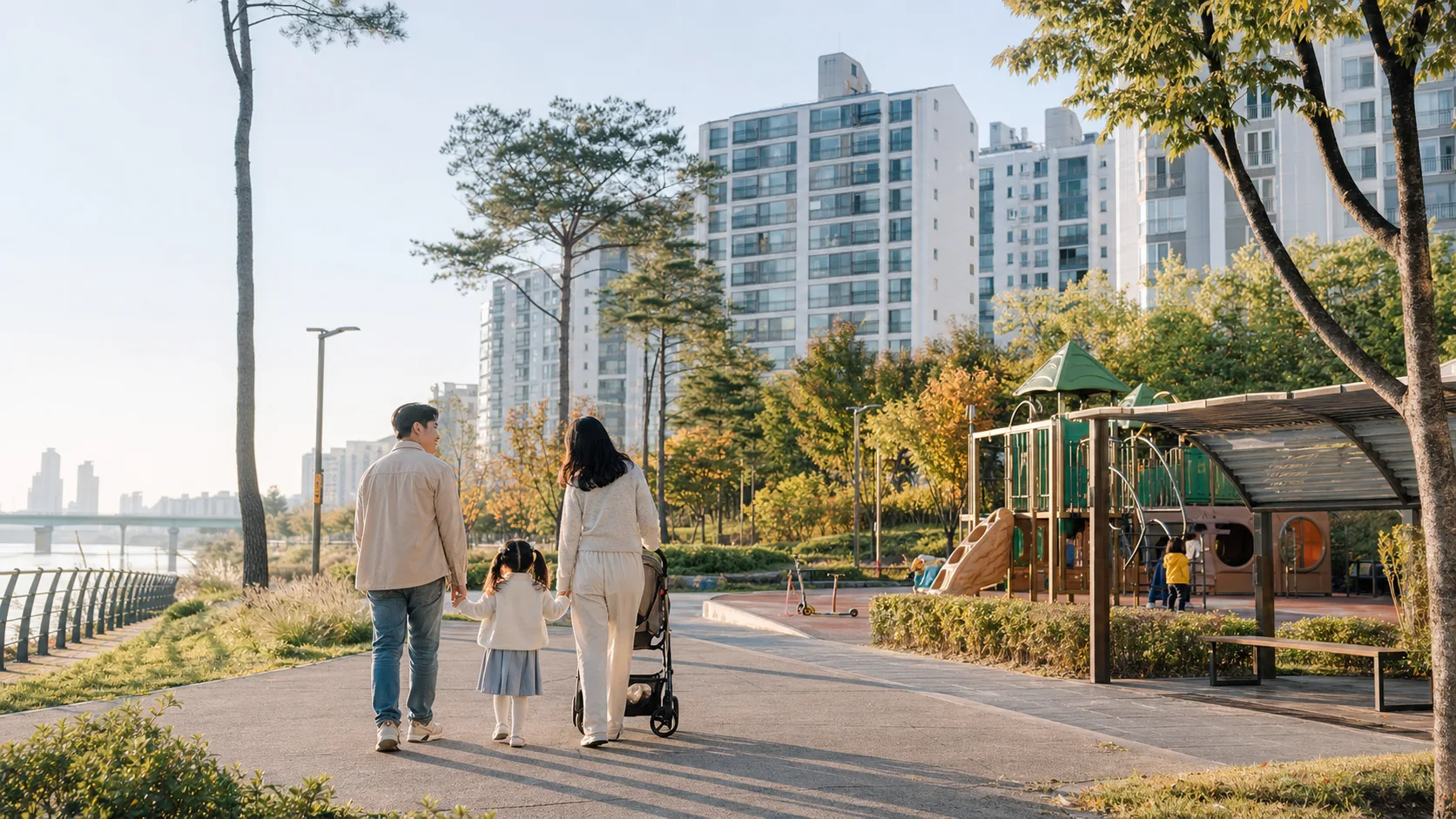
If you are planning a first family trip to Korea, the biggest decision is not which attraction to see first. It is which neighborhood to stay in and how many times you want to repack bags while managing kids, jet lag, and transit. For most first-time visitors, one Seoul base works best, with easy day trips and one secondary stop only if your trip is long enough.
1. Fast Answer
The simplest answer is this: for a first family trip to Korea, stay in a neighborhood that reduces transfers, walking stress, and late-night logistics. In Seoul, that usually means Myeongdong, Jongno/Insadong, Hongdae, or Jamsil, depending on whether you want the easiest shopping-and-transit base, a cultural base, a youth-friendly café base, or a more spacious family-and-theme-park base.
The best neighborhood is not the most famous one. It is the one that matches your family’s rhythm. Parents with young children often do better near a subway interchange, a direct airport train route, and plenty of food options within a 5 to 10 minute walk. Families with older children may prefer a livelier district with restaurants, convenience stores, and evening strolls. If you are traveling from Singapore, your flight time is short enough that a single well-chosen base in Seoul can cover a surprisingly rich trip without hotel hopping.
As a rule, first-time visitors should prioritize three things: transit convenience, room size, and food access. Sightseeing comes after that. A neighborhood guide is really a decision guide for where your family can recover between outings. Once you choose the right base, the rest of the trip becomes much easier.
2. Context You Need
For a first-time family trip, “neighborhood” in Korea means more than a dot on the map. In Seoul especially, each district has a different pace, hotel stock, restaurant style, and transport feel. Some areas are built around shopping and airport access. Others are better for cafés, museums, parks, or bigger family rooms. That matters because a family trip is not just a sightseeing trip. It is a repeated loop of breakfast, transit, naps, snacks, toilets, and dinner.
The most common mistake is choosing a place because it looks exciting on social media. That works for a solo trip, but families need fewer friction points. A district can be trendy and still be inconvenient if it means long uphill walks, crowded transfers, or limited breakfast options. A district can look “boring” and still be the best family base because the hotel is large, the subway is direct, and the children can get back to the room quickly.
For first-time visitors, Seoul is usually the anchor city because it has the broadest mix of family hotels, shopping, transit, and day-trip options. Neighborhood choice in Seoul often sets the tone for the rest of the trip. If you pick a smooth base there, you can use one or two day trips to add contrast without exhausting the family.
Here is the practical lens I would use:
- Choose a district with simple airport access if you arrive tired or land with children who nap unpredictably.
- Choose a district with food within walking distance so dinner does not require a taxi after a long day.
- Choose a district with wide sidewalks, escalators, and easy subway connections if you are carrying luggage or a stroller.
- Choose a district with rooms that match your family size, not just the best nightlife.
The final filter is age. Families with toddlers need easy stroller movement, quick access to convenience stores, and quiet nights. Families with school-age children often want more entertainment nearby. Families with teenagers can tolerate more transit, but they usually prefer neighborhoods with more energy and shopping.
3. Step-by-Step Guide
Start by deciding what kind of first trip you are actually taking. Most families fall into one of four patterns: a short Seoul-only trip, a Seoul plus one side trip plan, a multi-city trip, or a comfort-first trip where the hotel matters more than the itinerary. Once you know that, neighborhood choice becomes straightforward.
Step 1: Pick your trip style
If you only have 5 to 7 days, one Seoul base is usually enough. This keeps unpacking to a minimum and gives children time to recover from the flight. If you have 8 to 10 days, you can add one secondary city or a slower overnight outside central Seoul. If the trip is shorter, movement costs more energy than it adds value.
For families, I usually think about the trip in terms of “mobility budget.” Every transfer has a cost in time, money, and patience. A district with the right restaurants and transit can save enough energy to make one more museum, one more meal, or one more relaxed evening walk possible.
Step 2: Match the neighborhood to the family need
Use this quick planning table:
| Family need | Best neighborhood type | Why it works |
|---|---|---|
| Easiest first stay | Myeongdong or Jongno | Central, simple transit, lots of food and shopping |
| Cultural walking trip | Insadong or Jongno | Close to palaces, markets, and heritage streets |
| Young kids and cafés | Hongdae or nearby Mapo | Easy food options, lively but practical, better for casual dining |
| Bigger rooms and theme-park access | Jamsil | More space, family attractions, and lake-side walks |
| Business-like comfort | Gangnam | Good hotels, broad services, but can be pricier |
The table is not a ranking. It is a matching tool. Myeongdong is not “better” than Hongdae, and Hongdae is not automatically more fun than Jongno. The right choice depends on whether your trip needs convenience, culture, energy, or space.
Step 3: Build the day around one anchor
For each day, choose one main neighborhood or landmark cluster and keep the rest light. For example, a family staying in Myeongdong can do a palace morning, a noodle lunch, a rest break, and then an easy evening market walk. A family staying in Hongdae can do a slow café breakfast, a park or museum stop, and a casual dinner without crossing the whole city.
This is a better model than trying to “cover all of Seoul.” Korea rewards density, but children reward predictability. The best family day usually has one major activity, one good meal, and one fallback option if the weather or energy level changes.
Step 4: Choose accommodation by room layout, not just brand
The most important hotel detail for families is not the star rating. It is whether the room layout works. Look for:
- Two beds or a room large enough for extra bedding
- A lift from street level
- Space for luggage and a stroller
- Easy breakfast access
- Laundry access for longer stays
- A neighborhood with convenience stores and pharmacies nearby
In Korea, a midrange hotel in the right neighborhood often beats a fancier hotel in a less practical one. If your children wake early, a breakfast place within a short walk matters more than a rooftop bar. If your family likes late evenings, a district with light dinner traffic and safe walking routes matters more than being next to a single famous attraction.
Step 5: Plan the transfer logic before you land
From the airport, families should think in terms of simplicity:
- Take the option that has the fewest changes if you are carrying multiple bags.
- Use a taxi or pre-arranged transfer if you arrive very late, with toddlers, or after a long international connection.
- Use rail or express transport if you are comfortable navigating with luggage and want a cleaner price-to-convenience balance.
Once in the city, Korea is easy to navigate if you keep transit decisions simple. A T-money-type transport card, a reliable map app, and a short walking radius can reduce a lot of daily friction. Families that try to combine too many neighborhoods in one day often spend more time changing trains than enjoying the city.
Step 6: Use a daily rhythm that fits children
Most first-time family trips go better with a three-part rhythm:
- Morning: one major outing while everyone is fresh
- Afternoon: lunch and a rest break, even if the rest is only in a café or hotel room
- Evening: an easy district stroll, market visit, or casual dinner
This rhythm makes neighborhood choice easier because each district supports a different version of it. A cultural district gives you better morning activities. A shopping district gives you easier evening food. A park-heavy district gives children a place to reset.
Step 7: Decide whether you need a second base
Only add a second hotel if the trip is long enough to justify the packing overhead. A second base works when:
- You are spending multiple days outside Seoul
- You want one city for sightseeing and another for relaxation
- You are doing a long trip with toddlers and want to break the journey
If you are not sure, stay put. A well-chosen Seoul base is often better than an ambitious itinerary that creates constant bag movement.
4. Costs, Hours, and Logistics
Neighborhood choice affects cost more than many travelers expect. Room prices vary sharply by district, room size, and season. In general, central convenience costs more, but the extra spend may be offset by lower taxi use, easier dinners, and fewer transit mistakes. For families, the cheapest room is not always the cheapest trip.
What to budget for
Use these as planning ranges rather than fixed quotes:
| Item | Practical budget note |
|---|---|
| Hotel | Central Seoul family-friendly rooms often cost more than suburban business hotels, especially on weekends and holidays |
| Local transport | Transit is usually inexpensive compared with taxis, but families with multiple daily transfers still feel the difference |
| Meals | Convenience-store breakfasts and casual Korean meals can keep costs controlled, while large tourist districts tend to price higher |
| Taxis | Useful for late arrivals, bad weather, and tired children, especially when a short ride prevents a difficult transfer |
| Snacks and backups | Budget extra for convenience-store runs, water, and quick comfort purchases |
Opening hours also shape the neighborhood decision. Shopping streets and café districts are often most useful in the afternoon and evening. Museums and palaces are more morning-friendly. Convenience stores and many restaurants give you the late-night backup that families need after a long outing.
Current planning cautions for 2026
Before you book flights or nonrefundable accommodation, check the current entry requirements for your passport and travel dates. Visa policy and electronic travel authorization rules can change, and that matters more than which neighborhood you chose. For Singapore travelers, Korea usually remains straightforward to enter for tourism, but it is still smart to verify the latest official rules before you lock in your trip.
Transport is similarly easy only if you prepare once. Download the map and ride-hailing tools you plan to use before departure, because the first evening after landing is not the best time to learn five new apps while children are hungry.
Transit by neighborhood
- Myeongdong: easy for first-time navigation, shopping, and central transfer logic.
- Jongno/Insadong: best if you want palaces, heritage sites, and old-Seoul atmosphere with manageable walking.
- Hongdae/Mapo: strong for casual restaurants, cafés, and a younger street feel.
- Jamsil: useful for bigger-family comfort, lake walks, and attraction-based itineraries.
- Gangnam: practical if you want polished hotels and business-style convenience.
If you are arriving late, choose a neighborhood where you can still find food after check-in. That single decision often matters more than a small room-rate difference.
5. Variations and Edge Cases
The “best” neighborhood changes depending on who is traveling and when.
If you have toddlers
Pick a district with short walks, elevator access, and straightforward food. Toddlers do not care whether you are in the trendiest area. They care whether you can get back to the room before the second meltdown. This is why many families do well in central districts with easy restaurant density rather than in prettier but hillier zones.
If you have school-age children
You can widen the walking radius and use a more active neighborhood. Hongdae, Jamsil, and parts of Jongno work well because there is enough variety to keep the day interesting without forcing a full-city commute. School-age children can handle more transit, but they still need predictable meal breaks.
If you are traveling with grandparents
Prioritize elevator access, taxis as a backup, and a quieter street environment. In that case, a district with broad sidewalks and fewer steep walks may be more valuable than a high-energy nightlife area. A direct airport transfer can also be worth the extra cost because it removes a difficult first transfer.
If your budget is tight
Stay close to transit but choose a slightly less central room, then spend the savings on food and entry tickets. Budget families often get more value from a practical neighborhood with a good subway line than from paying extra for a premium address they barely use.
If you are traveling in winter or summer
Weather matters more than many first-time visitors expect. In winter, you want the shortest possible outdoor walks between station, hotel, and dinner. In summer, shade, rest spots, and quick indoor access matter more. A district with many underground connections, department stores, or short taxi hops can make a huge difference.
If you are adding a side trip
If your family wants to include a nearby city or a theme park, keep Seoul as the main base and treat the side trip as a one- or two-night change only if needed. This works better than spreading your Seoul time too thin. When you have children, the quality of the “home base” often determines how enjoyable the side trip feels.
6. Mistakes to Avoid
The first mistake is choosing a neighborhood based only on photos. Pretty streets can be uncomfortable with luggage, strollers, or tired kids. The second mistake is staying too far from transit because the room looks bigger. That usually gets expensive in taxis and exhausting in daily movement.
Another common error is underestimating meal logistics. If your family needs early breakfast, late dinner, or predictable snacks, the neighborhood needs to support that without effort. A district with restaurants that open late or convenience stores nearby reduces stress more than a “must-visit” district that empties out at night.
Finally, do not overplan on day one. If your neighborhood choice is good, the first day should be mostly about settling in. Families that try to start with a packed itinerary often spend the rest of the trip recovering.
7. FAQ
Which Seoul neighborhood is best for a first family trip?
Myeongdong is the easiest default because it is central, practical, and simple to navigate. Jongno is a strong alternative if your family values culture more than shopping. Hongdae is better if you want a more casual, youthful atmosphere with lots of food choices.
Is Myeongdong too touristy for families?
It is touristy, but that is sometimes exactly why it works. Touristy neighborhoods often have better English signage, more hotel choices, and a wider range of food. For first-time visitors, those conveniences can be more useful than local authenticity.
Should I stay in Gangnam with kids?
Yes, if your family wants polished hotels, a more business-like environment, and easy access to certain attractions. Gangnam is not the most obvious first choice for everyone, but it can be a very comfortable base if the room and transit fit your plan.
Do I need to change neighborhoods during one trip?
Not necessarily. If your trip is under a week, one base is usually enough. Change neighborhoods only if you are adding a second city, want a specific experience such as a theme-park-heavy stop, or are staying long enough that a second base will actually reduce transit time.
What is the best neighborhood for a stroller?
Look for flat walking routes, lift access, and easy restaurant density. In practice, that usually means central Seoul districts near major subway access rather than scenic but hilly streets.
How should Singapore travelers think about Korea?
Think in terms of short-haul efficiency. Because the flight is relatively manageable, you do not need to squeeze in too many bases. The smartest plan is often one strong city base, one optional side trip, and enough flexibility for meals, weather, and children’s energy.
8. Next Steps
The best next step is to choose your family base before you choose your attraction list. Start with the neighborhood that best fits your walking tolerance, room size needs, and airport transfer plan. Then build the itinerary around that base instead of forcing your base to adapt to an overpacked schedule.
If you are still undecided, shortlist two options: one central and one more spacious. Compare the hotel layout, transit access, and nearby food before you compare the landmark list. That usually reveals the right answer fast.
Related: where-to-stay-in-korea-for-a-short-family-trip-holiday
Related: korea-family-trip-packing-guide-for-singapore-travelers
Related: korea-family-trip-itinerary-for-singapore-travelers