Korea Family Trip Packing Guide for Singapore Travelers

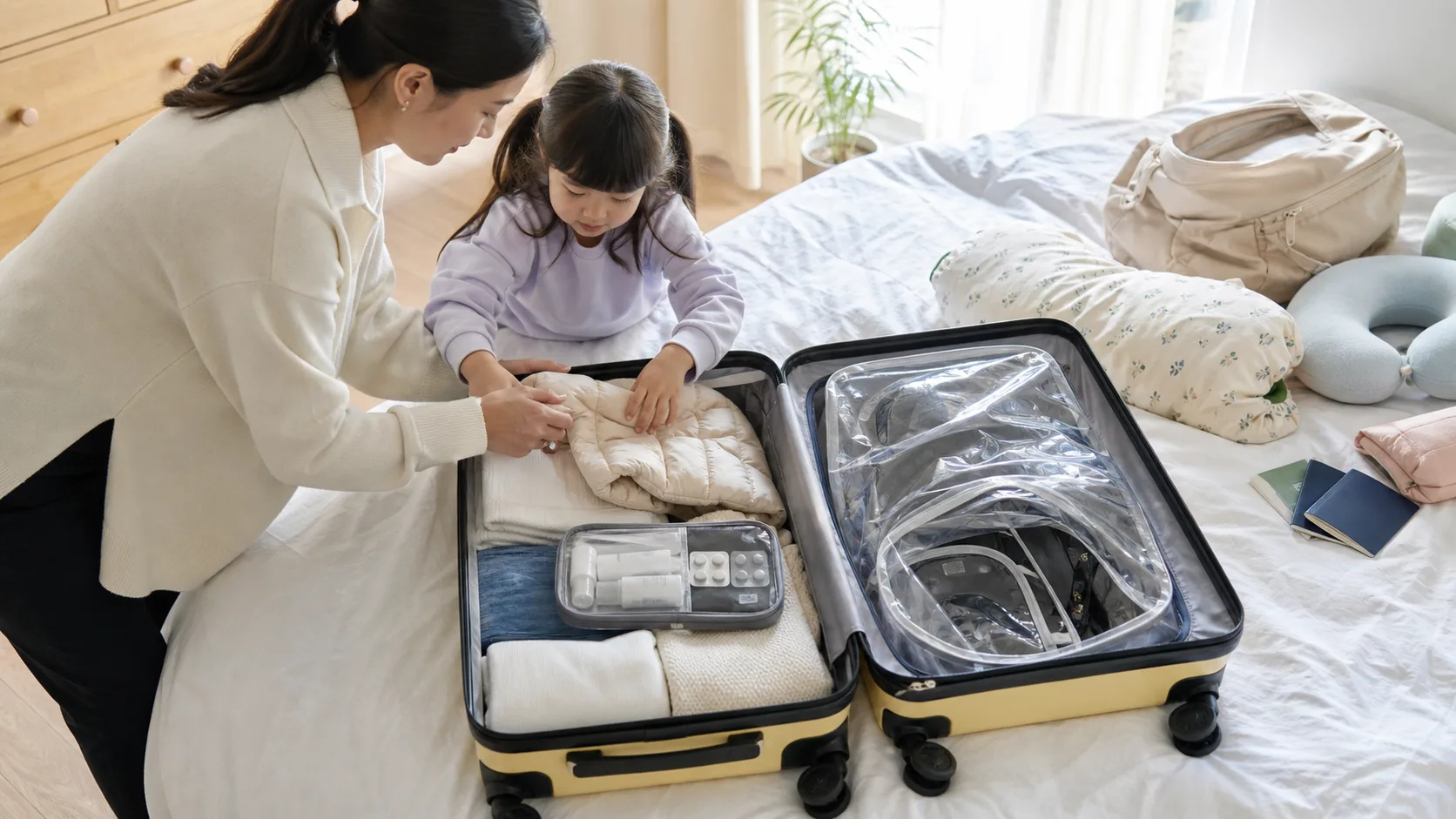
If you are flying from Singapore to Korea with kids, the biggest packing mistake is assuming you only need “warm clothes” or “a few extras.” Korea is not hard to pack for, but it does reward planning: winter can be dry and sharply cold, summer can be humid and rainy, and family days usually include a lot of walking, subway transfers, snack stops, and indoor-outdoor temperature changes. Pack for comfort, weather swings, and fast-moving days, not for hotel photos.
For most Singapore families, the smartest approach is to build a modular bag system: one carry-on for documents, electronics, medicine, and one-day essentials; one checked bag for shared clothing; and a small day pack for the parent carrying wipes, layers, snacks, and spare outfits. That setup keeps airport transitions simple, gives you backup if one bag is delayed, and makes day trips easier once you are in Korea.
1. Fast Answer
The right Korea packing list for a Singapore family is one that assumes three things: your kids will get tired faster than expected, the weather will change more than your app makes it look, and convenience matters more than packing light. Bring layers, comfortable walking shoes, a compact medical kit, a reliable stroller strategy, and at least one spare outfit per child in carry-on baggage.
For a family trip, the goal is not to pack “everything.” The goal is to avoid wasting time in Korea buying basics you forgot, carrying luggage that is too heavy for train stations, or realizing too late that your toddler has no warm layer for an evening in Seoul. If you pack around routines instead of outfits, the trip becomes much easier: documents stay accessible, snacks stay reachable, wet-weather items stay dry, and each child has what they need without overstuffing every suitcase.
The best family packing rule is simple: pack by function. One set of clothes for the plane, one set for weather flexibility, one set for emergencies, and one set that can be washed and reused. If you are traveling in summer, prioritize breathable clothes, sun protection, and rain gear. If you are traveling in winter, prioritize thermal layers, gloves, socks, and footwear that can handle slush and cold sidewalks. Either way, keep meds, passports, and one clean shirt accessible at all times.
2. Context You Need
Korea is a very family-friendly destination, but it rewards travelers who prepare for real-life movement. A family day can include airport arrival, a train or limousine bus, a hotel check-in, a convenience store run, then two or three neighborhoods in one afternoon. That means the most useful luggage is not the fanciest luggage. It is the luggage that can survive stairs, elevators, subway platforms, cold sidewalks, and a child who suddenly needs a snack right now.
Singapore travelers also come from a climate that changes expectations. In Singapore, “light packing” often means you can get away with a few breathable outfits and a compact umbrella. In Korea, especially outside the warmest months, the range is wider. You may need a jacket in the morning, then shed it indoors because heating is strong, then put it back on at night when the wind picks up. For families, that temperature swing matters more because children overheat, get cold, or complain before adults do.
The other big difference is movement. Korea is easy to navigate, but families often walk more than they expect. Stations are large. Streets can be hilly. Tourist areas can require a lot of standing and waiting. Even when transport is efficient, you still need a carry plan for strollers, diaper bags, wet wipes, and the small items that prevent meltdowns. A good packing list reduces friction at every step of the day.
There is also a documentation side to family travel. The official Korea travel and immigration portals are the places to double-check entry rules, transit updates, and any current travel notices before departure. That matters because a family trip is harder to recover from if one child’s document is missing or one parent discovers a requirement too late. Treat the paperwork pouch as part of the packing list, not as a separate admin task.
The useful mindset here is not “What do we normally use at home?” It is “What will we need when our day is split between airports, transit, restaurants, and cold or hot outdoor stretches?” Once you think that way, the rest of the packing list becomes much more obvious.
3. Step-by-Step Guide
Start with the trip shape, not the suitcase
Before you pack a single shirt, decide how your Korea family trip will actually move. A three-night Seoul city break, a one-week multi-city route, and a winter ski-and-Seoul combination all need different luggage logic. Families usually overpack because they pack for every possibility instead of the actual plan.
Ask four questions:
- How many hotel changes will you have?
- Will you use mostly trains, taxis, or private transfers?
- Are you traveling in a season with big weather swings?
- Do you expect laundry access halfway through the trip?
If the answer to the last question is yes, your packing list can be much smaller. If you have laundry access, you do not need to pack a new outfit for every day. You need enough clean changes to survive delays, spills, and weather.
For most Singapore families, the easiest setup is one medium checked suitcase for shared clothing, one personal bag for each adult, and one compact child bag or stroller basket for items that need to stay within reach. That keeps you flexible without turning every transfer into a hauling exercise.
Build a family packing system by category
Packing gets easier when you sort items by use, not by person. A family of four does not need four separate mini first-aid kits, four umbrellas, or four packs of tissues. One shared system is usually better.
Use these categories:
- Documents and money
- Daily clothing
- Outerwear and weather protection
- Sleep and comfort items
- Toiletries and medicine
- Food and snacks
- Electronics and charging
- Transit and airport items
Then assign each category to a home in the luggage. Documents in a zip pouch. Snacks in the top of the day bag. Chargers in one cable pouch. Medicines in a clear container. Wet-weather items in a separate compartment or plastic sleeve. If every category has a fixed place, your family can find things faster under stress.
Pack the child essentials first
Children drive most of the last-minute chaos, so their essentials should be packed before you finish the adults’ clothing. For babies and toddlers, the non-negotiables are diapers, wipes, change mat, spare clothes, milk or formula supplies, comfort items, and a feeding solution that works in transit. For older children, think in terms of snacks, boredom relief, water access, and temperature control.
If you are traveling with more than one child, do not split the essentials randomly. Put the items needed to handle a spill, a delay, or a sudden temperature drop into one easy-to-reach bag. That means a parent can solve a problem without digging through the entire suitcase at the platform or restaurant table.
A simple child-travel checklist:
- 2 spare outfits in carry-on for toddlers
- 1 spare outfit in carry-on for older children
- lightweight jacket or cardigan
- socks, including an extra pair
- wipes and tissues
- small snacks that do not melt easily
- refillable bottle
- comfort toy, book, or screen-ready headphones
- child medicine and dosing tool if relevant
Use layers, not bulky outfits
Layering is the most efficient way to pack for Korea because it lets you adjust to weather and indoor heating without carrying a huge wardrobe. This matters even more for families, because children are less patient about discomfort.
Think in three layers:
- Base layer: T-shirts, thermal tops, or breathable innerwear
- Middle layer: Long sleeves, sweaters, fleece, or light knits
- Outer layer: Jacket, windproof shell, or winter coat
For Singapore travelers, it is tempting to over-rely on one heavy jacket. That can work for adults, but children often need more flexibility. A mid-layer plus a packable outer layer is easier to manage in malls, cafes, and subway stations. For summer, the same logic applies in reverse: breathable clothes, a light overshirt for air-conditioning, and rain protection for sudden showers.
Keep the airport and plane bag separate from the holiday bag
Do not treat the flight bag as the same thing as the holiday bag. The flight bag should solve the first 12 hours of travel, not the whole trip. It should contain what you need when your family is tired, the plane is cold, and access to the checked suitcase is impossible.
For the plane bag, pack:
- passports and travel documents
- boarding passes or digital access
- wallet, cards, and some local cash
- phones, chargers, and a power bank
- medicine and basic first aid
- wipes, tissues, hand sanitizer
- one change of clothes per child if possible
- snacks that survive pressure and heat
- empty water bottle
- headphones and entertainment
This is also the bag that should contain anything you would hate to lose if the checked luggage is delayed. If your family has prescription medicine, bring enough in the carry-on for the full trip plus a buffer.
Decide in advance what gets washed in Korea
One of the easiest ways to avoid overpacking is to assume that some clothes will be washed. Korea is a good country for that because many hotels, apartments, and family-friendly stays have laundry access or at least nearby laundromats.
Decide before you leave which items are “single-use” and which items can be reworn. For example:
- underlayers can often be reworn
- outerwear can be used repeatedly
- pajamas can be packed lightly
- socks and underwear should have more buffer
- kids’ clothes should be easy to wash and dry
This matters because families often bring too many “just in case” outfits. If you plan your wash cycle, you can reduce one checked bag, keep the room tidier, and make repacking less painful.
Use a daily reset routine
The best packing hack is not a bag. It is a nightly reset. At the end of each day, put tomorrow’s essentials back in the same location: medicine, snacks, chargers, tissues, and weather gear. Refill water bottles, check jackets, and restock the stroller basket. Families that reset once a day travel lighter because they stop carrying yesterday’s clutter forward.
4. Costs, Hours, and Logistics
The most important “cost” in family packing is not money. It is friction. A trip becomes expensive when you keep buying missing basics in convenience stores, replacing forgotten layers, or paying for oversized baggage because the suitcase got filled with items you never needed.
For a Singapore family heading to Korea, it usually makes sense to budget for a few practical extras instead of trying to be ultra-minimal:
- one or two checked bags if you are traveling with kids in colder seasons
- a stroller or baby carrier, depending on child age and walking tolerance
- extra baggage allowance if you expect gifts or winter gear
- local laundry use if you want to pack lighter
Season matters. Summer packing usually costs less because clothes are lighter and bulk is lower, but you may spend more on rain protection, sun gear, and wet-weather backups. Winter packing usually costs more because outerwear, shoes, socks, and thermals take up space and can be pricey if you discover a missing item after arrival.
On the logistics side, pay attention to four things before you fly:
- Entry checks. Use the official immigration and K-ETA portals to confirm current rules for your family, especially if anyone is traveling with a nonstandard passport or a child document that needs extra review.
- Airline baggage rules. Families are often caught out by different baggage allowances on separate tickets or by adding children to booking combinations that do not share the same cabin or checked-bag terms.
- Hotel facilities. Laundry access, humidifiers, extra bedding, cribs, and family-room layouts matter more than most adults think when kids are involved.
- Transit from the airport. If you are arriving late, with sleeping children, or in winter, a direct transfer can be worth more than the cheapest option.
The current Korea Tourism Organization site is also worth checking before departure because it keeps travel information, announcements, and practical travel sections in one place. That is useful for family planning, especially if your route includes more than one city or you are timing your trip around school holidays.
For families, the best luggage strategy is to keep essential items in carry-on and treat the checked bag as support, not survival. If a bag is delayed, you want to be able to spend the first night comfortably without buying a full emergency wardrobe.
5. Variations and Edge Cases
Summer trips
Summer in Korea can feel much closer to Singapore humidity than many first-time visitors expect, but the packing challenge is different. You still need layers, just lighter ones. Air-conditioning inside malls, stations, and restaurants can be strong enough that a child in shorts and a T-shirt gets cold quickly.
For summer, pack:
- breathable clothes
- light cardigan or overshirt
- compact umbrella or rain shell
- sunscreen
- hats
- mosquito care if your family uses it
- quick-dry clothing
- extra socks for wet shoes
If you are traveling with younger children, consider shoes that dry quickly. Summer rain plus an impatient child plus a long transit day is a bad mix for heavy shoes that hold moisture.
Winter trips
Winter is where Singapore families usually underestimate Korea the most. The key issue is not just temperature. It is dryness, wind, and the fact that kids often take longer to warm up after being outside. A good winter packing list can make the difference between “fun snow day” and “everyone wants to go back to the hotel.”
For winter, bring:
- thermal base layers
- insulated outerwear
- gloves and spare gloves for kids
- warm socks
- hat or earmuffs
- shoes with better grip
- lip balm and moisturizer
- heat packs if your family likes them
Do not rely on one heavy coat alone. Children move between outdoor cold and heated indoor spaces constantly, so layering is easier than one thick piece that stays on all day.
Babies and toddlers
Traveling with a baby or toddler changes the packing equation completely. You are no longer packing for “comfort.” You are packing for interruption management. The most important items are not stylish, and they are not optional. They are the items that reduce crying, leaks, and lost time.
For babies and toddlers, prioritize:
- feeding supplies
- diapers and wipes with a buffer
- baby-safe medicine only if approved by your doctor
- change mat
- bibs and burp cloths
- favorite sleep item
- stroller rain cover or cold-weather protection
- spare layers for adults too, because kids often spill on parents
If your child is stroller-averse, think carefully before overcommitting to one. In some parts of Korea, a carrier plus a light stroller can be more practical than a bulky stroller alone.
School-age children
Older children can carry more of their own things, but that does not mean they need less planning. In practice, school-age kids just create different problems: they want choice, they get bored, and they notice when they are the only one without the right layer or entertainment item.
Let each child own a small personal pouch with:
- snacks
- headphones
- one small toy or activity
- water bottle
- tissues
- a spare layer if they can manage it
This gives children some independence and reduces the parent’s load. It also teaches them to keep track of their own essentials, which is useful on trains, at restaurants, and in crowded tourist areas.
Multi-city itineraries
If your Korea trip includes Seoul plus Busan, Jeju, Gyeongju, or another regional stop, pack differently than you would for a single-hotel stay. The more movement you have, the less you should pack.
For multi-city trips:
- avoid fragile wardrobe plans
- prioritize mix-and-match clothes
- keep toiletries compact
- use packing cubes or category pouches
- do one laundry reset mid-trip if possible
That keeps each transfer manageable. Family travel gets harder when every move requires unpacking and repacking half the room.
Shopping-heavy trips
Some Singapore families arrive in Korea planning to shop more than they expected. If that sounds like you, leave luggage margin on the way out. Even one extra carry-on or a foldable duffel can save you a lot of stress on the return journey.
If you know you will buy:
- winter clothes
- skincare
- snacks
- souvenirs
- gifts for relatives
then do not start with a fully packed suitcase. A little empty space on the way in is often more valuable than a perfectly optimized packing list.
6. Mistakes to Avoid
The most common mistake is packing for the postcard version of Korea instead of the family version. Families do not spend all day posing in one outfit. They are on trains, in cafes, in parks, in museums, and in weather that changes by the hour.
Avoid these errors:
- packing too many outfits and not enough layers
- putting all medicine in checked luggage
- forgetting a stroller strategy or carrier plan
- bringing shoes that look fine but fail on long walking days
- assuming your child will tolerate the same clothing as an adult
- forgetting a proper document pouch
- packing snacks only for the plane and none for daily use
Another mistake is underestimating indoor climate control. A light summer plan can still require a cardigan, and a winter plan can still require easy-on, easy-off layers for heated interiors. Families that ignore this end up buying random extra items after arrival.
Finally, do not wait until the night before departure to test the bag. Lay everything out early. If the suitcase feels too full in your bedroom, it will feel worse in a hotel room with one sleeping child and no floor space.
7. FAQ
What should a Singapore family pack first for Korea?
Pack documents, medicine, and child comfort items first. After that, pack layers and footwear. If you get those categories right, the rest of the suitcase becomes easier.
Do we need to pack winter clothes from Singapore?
If you are traveling in winter, yes. Korea winter gear is not something you want to assemble at the last minute after arrival. Bring thermals, outerwear, gloves, socks, and warm shoes from home unless you already plan a shopping trip and extra luggage allowance.
How many outfits should each child have?
Do not count by days alone. Count by how often a child spills, gets wet, or needs a backup layer. For most trips, enough for several days plus a few emergency changes is better than a full outfit per day.
Is a stroller worth bringing?
For babies and younger toddlers, usually yes. For older toddlers or school-age children, maybe not. Think about your itinerary, stair use, and how much walking your child realistically tolerates.
What is the most common thing families forget?
The most common misses are spare layers, child snacks, charging gear, and a clear document pouch. Those four items solve a surprising number of travel problems.
Should we pack toiletries or buy them in Korea?
Bring the essentials you know your family uses daily, especially for children with sensitive skin or specific routines. You can usually buy replacements in Korea, but not every brand or format will be convenient when you arrive tired.
How do we keep luggage under control on a family trip?
Use one shared packing system, plan for laundry, and leave some room for purchases. The best family suitcase is the one that is easy to move, easy to repack, and not stuffed with “just in case” items you never touch.
8. Next Steps
Your next step is to turn this guide into a trip-specific checklist. Start with your season, your cities, and your children’s ages, then cut anything that does not help with weather, movement, or comfort. If your trip includes winter, add the cold-weather items now. If it includes summer, focus on heat, rain, and quick-dry clothing.
The real win is not a perfect suitcase. It is a family that can land, transfer, check in, and start the trip without scrambling for basics. Pack for fewer surprises, and the Korea part of the journey becomes much easier.
Related: korea-family-trip-neighborhood-guide-for-first-time-visitors
Related: korea-family-trip-first-time-travel-guide-for-short-holidays
Related: korea-family-trip-itinerary-for-singapore-travelers