Gwangjang market food tour: what to eat and the stall strategy

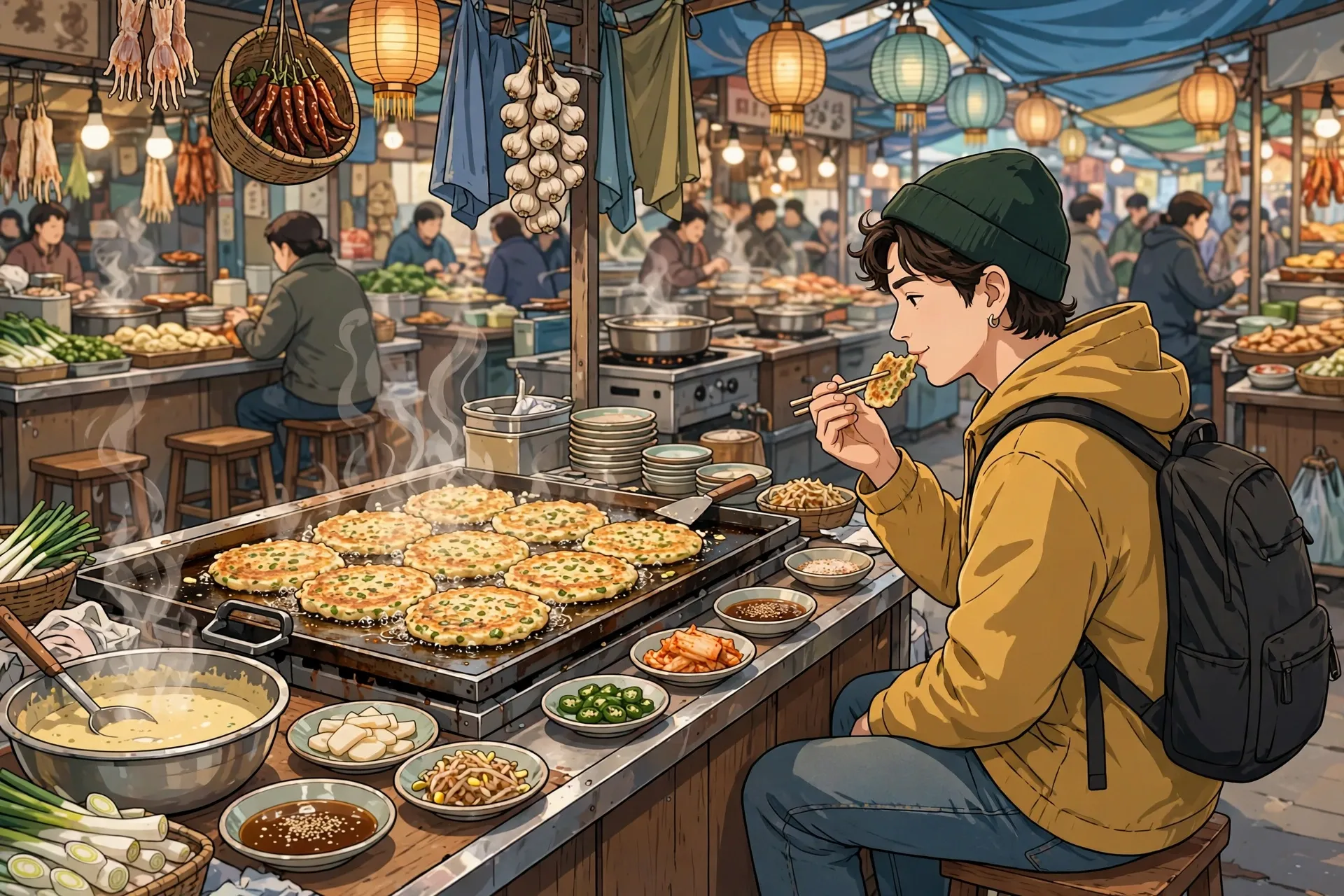
Gwangjang Market is the place to eat your way through Seoul in a single visit. Opened in 1905, it is one of the city's oldest traditional markets, and its food alley packs the dishes visitors come for — crisp mung bean pancakes, addictive mini rice rolls, raw beef tartare, and hand-cut noodles — into one narrow lane where you eat on a stool right in front of the stall. This guide gives you a stall order that works, the price anchors to budget against, and the payment rule that catches first-timers. Come hungry, bring cash, and start with the signature pancake.
When to go: lunch vs dinner
Weekday lunch is the calmest time to eat at Gwangjang. The food alley stays open late every day, so dinner is always an option, but the calmest tables are at weekday lunch. Come on a weekday if you can, and eat lunch before the afternoon rush.
The timing pattern is simple. Weekday mornings (9–11 AM) or weekday lunch (11 AM–1 PM) are significantly less crowded, while weekend afternoons (1–5 PM) are the peak tourist crowd period. That makes lunch the better first visit: shorter waits, easier seating, and vendors with time to talk. Dinner is still worth it — the food alley runs daily 09:00–23:00 — but expect a fuller, louder lane and longer waits at the popular stalls.
Getting there
The market sits at 88 Changgyeonggung-ro, Jongno-gu, Seoul. Take Subway Line 1 to Jongno 5-ga Station and leave through Exit 8; the market is about 62 meters away. Note the split hours: the food alley runs daily 09:00–23:00, while the general shops run 09:00–18:00 and are closed Sundays, so a Sunday visit is a food-only visit.
The must-eat stalls in order
Eat in this order and you will not fill up on the wrong thing first. Start with bindaetteok, the signature pancake, fried fresh on the griddle in front of you. Follow it with mayak gimbap, the mini rice rolls with mustard-soy dip — small, cheap, and easy to share. Then pick a main: kalguksu if you want something warm and filling, or yukhoe if you want the market's most famous raw dish. Round out the round with tteokbokki or sundae if you still have room, and a bowl of makgeolli alongside the pancake if you drink.
The logic is portion control as much as taste. The pancake and the rolls are the two dishes the market is known for, so they come first while you are hungriest. The noodle soup and the tartare are heavier and pricier, so they work better as a second act than an opener. The smaller fried and stewed items at the end are for grazing, not for planning around.
Bindaetteok, mayak gimbap, and yukhoe: what they are
Bindaetteok is a crisp mung bean pancake fried fresh on iron griddles. Vendors grind the mung beans, pour the batter, and fry it until the outside is crisp and the inside stays soft and savory. It is the dish the market is most associated with, and watching it made is half the experience.
Mayak gimbap translates to addictive gimbap, and the name is the review. These are mini rice rolls — smaller than standard gimbap — served with a mustard-soy dip. The dip is the point: sharp, a little sweet, and the reason a small plate disappears fast.
Yukhoe is raw beef tartare, seasoned and served with pear and egg yolk. It is the market's most adventurous signature dish, and the one where stall choice matters most: this is raw beef, so eat it where turnover is high and the beef looks freshly cut. If raw beef is not your thing, skip it without regret — the pancake and the rolls alone justify the visit.
Price anchors: what a full eat costs
Typical 2026 prices run like this: bindaetteok ₩5,000–8,000; mayak gimbap ₩3,000–5,000; yukhoe ₩15,000–20,000; kalguksu ₩7,000–8,000; tteokbokki ₩5,000–7,000; sundae ₩5,000–8,000; makgeolli ₩6,000–10,000 a bowl. Prices vary by stall, so confirm at the stall before you order — and be wary of any mixed plate pushed without a posted price, since ordering a la carte from the menu keeps you in control.
A full food visit covering 3–4 items runs about ₩10,000–25,000 per person. That range covers a pancake plus rolls plus one main, with a drink, at the low end; adding yukhoe pushes you toward the top. It is a genuinely cheap feast by Seoul standards, as long as you stick to the posted prices and skip the upsell.
Most food stalls take cash only, so bring small bills — ₩1,000 and ₩10,000 notes — because vendors often cannot break ₩50,000 notes for small orders. Seating is communal: stalls line both sides of a narrow food lane, and you grab a stool right out front and eat there. For snacks and drinks beyond the market, the convenience-store buying guide covers what is actually worth buying at CU, GS25, and 7-Eleven.
Netflix-famous stalls: worth the queue?
Gwangjang Market opened in 1905, but its current fame dates to a newer moment: the market was featured in the Netflix series Street Food Asia in 2019, and the food alley has drawn visitors from around the world ever since. Some stalls now carry that fame in their names and their queues.
The honest answer is that the queue is usually not worth it. The dishes are consistent across the alley — the same pancake, the same rolls, the same tartare, cooked the same way a few stalls down. A famous stall's queue buys you a photo more than a better meal. The exception is yukhoe, where a busy stall is a freshness signal worth following. Otherwise, skip the longest line, sit at a busy neighboring stall, and spend the saved time eating instead of waiting. Come on a weekday morning or at weekday lunch and most queues disappear anyway.