Korea Family Trip Budget Travel Guide for Singapore Travelers

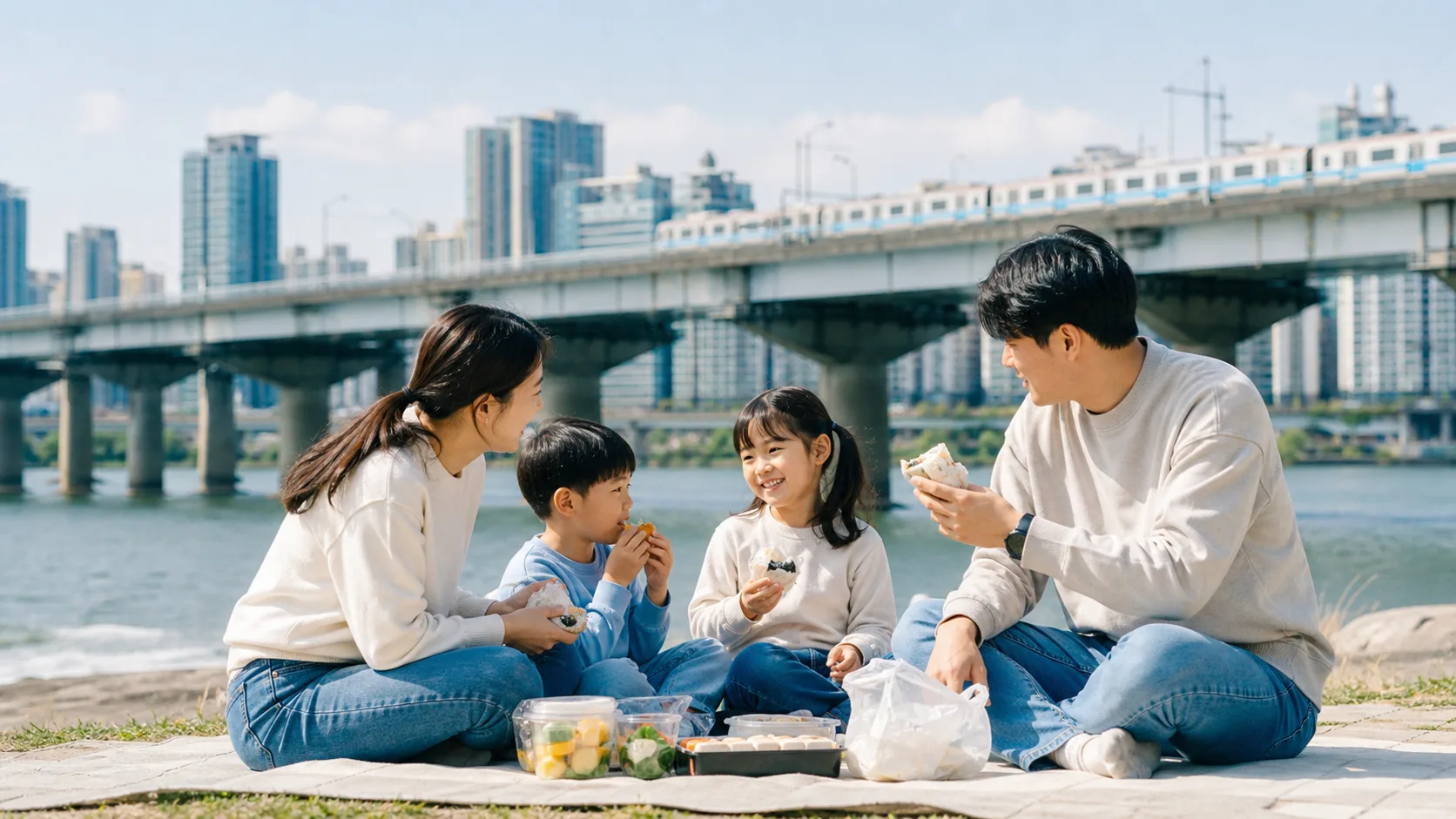
If you are planning Korea as a family trip from Singapore, the biggest mistake is thinking about it as a single "Seoul holiday." Korea can be very affordable if you keep the trip simple, use rail and transit well, and choose one or two strong bases instead of bouncing around every night. It can also get expensive quickly if you stack too many intercity transfers, private tours, theme parks, and short-notice hotel bookings in the same itinerary.
This guide is written for Singapore-based families who want a realistic budget, not a fantasy one. The goal is to help you decide what a comfortable Korea trip looks like at different spend levels, how to split money across flights, hotels, food, and transport, and where the hidden costs usually appear. If you are traveling with children, grandparents, or both, the right answer is usually to spend slightly more on convenience and save on the parts that do not improve the trip.
1. Fast Answer
For most Singapore families, a good budget for a 5 to 7 day Korea trip is usually somewhere in the middle, not the cheapest possible version. If you want low-friction travel with decent hotels, straightforward meals, and enough room for a few paid attractions, plan for a moderate daily spend and protect the budget from three things: intercity transfers, oversized hotel rooms booked too late, and too many "one more" add-ons such as private vans, premium tours, and impulse shopping.
A practical family plan is this: base yourself in Seoul for most of the trip, add one second city only if the family really wants a different pace, and keep the itinerary compact. Korea rewards efficient travel. The less time you spend moving luggage, the more your budget goes toward experiences that actually matter to the people in the room.
In real terms, family travel in Korea is usually cheapest when you:
- stay in one city for the first half of the trip
- use public transport for routine movement
- mix casual meals with a few special restaurant dinners
- book hotels with family-friendly room layouts early
- choose one major paid day out per day, not three
If you want the shortest answer possible: Seoul plus one easy side trip is the safest budget choice for Singapore families, while Seoul plus Busan or Jeju gives you more variety but needs tighter planning.
2. Context You Need
Korea is a strong family destination because it gives you a lot of control over spending. You can travel very comfortably without hiring a driver, and you can keep many days affordable by combining efficient public transport with walkable neighborhoods, convenience-store breakfasts, and casual lunch spots. That matters for Singapore families because the main shock is not the exchange rate alone. It is the way family travel multiplies every decision: a hotel room becomes two rooms, a taxi becomes a bigger taxi, and a simple attraction becomes four tickets instead of one.
The best way to think about a Korea family trip is by cost buckets rather than by destination labels. Flights are usually the first big line item from Singapore. Hotels come next, especially if you need more than one bed configuration or want space for children and luggage. After that, daily costs depend on whether you eat local or imported, stay in one city or move between cities, and prefer free sights or paid activities.
Korea also has a useful middle ground for families. It is not as expensive as some long-haul destinations when you use public transport and ordinary food courts, but it is more expensive than a bare-bones regional trip once you start paying for comfort. That middle ground is where most Singapore families will land. The trip feels easy if you keep the plan simple, but it still needs discipline.
For families, the biggest planning mistake is comparing only hotel room rates. A cheaper room in a less convenient area can cost more overall once you add taxi rides, longer transit with kids, or extra travel time between activities. A better test is this: ask whether the hotel location reduces friction for the people who will be tired at 8 p.m. If the answer is yes, a slightly higher room rate is often worth it.
Korea also changes by season in ways that affect family budgets. Spring and autumn are the most pleasant but also the most competitive periods for hotels and flights. Summer can be hot, humid, and busy around major attractions, while winter is lower-friction for some hotel deals but less forgiving for younger children and grandparents if you pack too much outdoors. A family budget should therefore include not just money, but comfort margin.
3. Step-by-Step Guide
Start with the family structure, not the destination list. A trip for two adults and one child is not the same as a trip for two adults plus two grandparents, and both are very different from a multigenerational group with a stroller and one child who naps on schedule. Before you book anything, decide how much walking everyone can tolerate, how often the group can switch transport, and whether the family will be happier with one hotel base or two.
Then choose a trip style:
| Trip style | Best for | What it usually saves | What it usually costs you |
|---|---|---|---|
| One-city trip | First-time families, younger children, older parents | Fewer hotel changes, fewer transfers | Less variety, more reliance on one city |
| Two-base trip | Families who want more than Seoul | Better itinerary balance | More luggage movement, extra transport |
| Rail-focused trip | Families who want easy intercity movement | Efficient city-to-city transfers | Higher hotel planning complexity |
| Taxi-heavy trip | Families with mobility constraints | Comfort and convenience | Higher daily spend |
For most Singapore families, the simplest budget strategy is a Seoul-first itinerary. Spend the first few days in Seoul, then add a second base only if the family is still energized. This is much cheaper than planning four or five destination changes, and it usually produces a better family mood.
Once the route is clear, build the daily skeleton:
- Morning: one major activity before the family gets tired.
- Lunch: something close to the attraction, not on the opposite side of the city.
- Afternoon: one indoor or low-energy stop.
- Dinner: easy, familiar, and close to the hotel.
- Evening: keep it optional, not mandatory.
That structure is boring on paper and excellent in practice. Families rarely lose a trip because there were too few attractions. They usually lose money and energy because every day was overpacked.
Next, book transport in the right order. For a Korea family trip, flights should be locked first if you are traveling in school holidays. Then book the main hotel base. Then decide whether you need intercity rail, airport transfer support, or a rental car. Rental cars are worth considering only if your route genuinely needs them. For many city-focused itineraries, the car adds more stress than value.
For Seoul, build the city around neighborhoods rather than landmarks. A hotel near a strong transit line, a food cluster, and at least one child-friendly activity can reduce taxi spending every day. For example, a family staying in a well-connected area can often use a mix of subway, short taxi rides, and walking without feeling trapped by distance. If the hotel is far out, every small outing becomes a transport decision.
If you are adding Busan, think of it as a change of pace, not a budget saver. Busan is a good family city because it offers beaches, aquariums, markets, and a different atmosphere from Seoul. But the move itself costs money and time. The savings, if any, usually come from being selective: one long move, one new hotel, one set of activities, and then back to a simple rhythm.
If you are adding Jeju, treat it as a separate mini-trip rather than a casual extra. Jeju is where many Singapore families overspend because they assume it will feel like a relaxed island add-on. In reality, transport choice matters more there, rental cars can be important, and weather can affect plans. A Jeju family budget should include more buffer than a Seoul-only or Seoul-plus-Busan trip.
Here is a simple planning checklist:
- choose one main base and one optional second base
- estimate nights before you compare hotel rates
- decide whether your family needs adjoining rooms or a larger family room
- prioritize subway-accessible hotels over scenic but remote ones
- pre-select one paid attraction per day
- avoid late-night arrival days packed with sightseeing
The goal is not to "do Korea cheaply." The goal is to do Korea efficiently enough that the family enjoys it and the budget does not collapse in the middle of the trip.
4. Costs, Hours, and Logistics
The Korea budget for a Singapore family usually breaks into five buckets: flights, hotels, food, transport, and attractions. Flights are highly seasonal. Hotels are the most controllable major cost if you book early and choose the right location. Food can be surprisingly flexible, because Korea supports both budget-friendly meals and higher-end dining without making the whole trip expensive. Local transport is generally efficient and good value, especially if you are not using taxis for every movement.
For daily spending, a useful family framework is:
- budget-friendly: simple meals, transit-first, free or low-cost sights
- midrange: comfortable hotels, mixed transport, a few paid attractions
- comfort-first: larger rooms, more taxis, more curated experiences
The daily spend can move a lot depending on family size, but the structure stays the same. If you want the trip to feel smooth, spend where friction is high and save where the family will not notice the difference. That usually means paying for location, room size, and a few transfers, while trimming back on redundant attractions and expensive convenience meals.
On hours and logistics, Korea is very manageable for families because major cities are built around predictable opening patterns and strong transit. Still, it is worth assuming that:
- popular attractions may need advance booking on weekends and school-holiday periods
- museums and indoor attractions are better anchors for rainy or very hot days
- some restaurants close earlier than Singapore families expect
- some attractions and transport products change seasonal timing or holiday schedules
Payment is usually straightforward, but families should still carry a mix. Cards are widely accepted in cities, yet a small amount of cash is useful for market snacks, lockers, some taxis, and places that are less tourist-oriented. If you are traveling with younger children, bring a small day wallet with enough cash to avoid repeated payment friction when splitting snacks, convenience-store drinks, and short rides.
For airport logistics, keep arrival day light. The family will likely be carrying bags, adjusting to time zones, and learning local transit rules. A light first day helps more than trying to "save time" by doing too much immediately. The same applies to departure day. Save one easy meal, one low-stress transport choice, and a buffer before the airport.
About K-ETA and entry rules: Singapore travelers should verify current entry requirements before booking, because travel authorization and exemption rules can shift. This is not the kind of detail you want to assume from memory. Always check the latest official guidance before you finalize flights, especially if you are traveling with children and cannot afford last-minute surprises.
For intercity movement, Korea is one of the easiest countries in Asia for rail-based family travel. If your family is comfortable riding trains, rail is often the cleanest way to move between major cities without the fatigue of long road transfers. That said, rail only helps if your hotel locations are also sensible. A cheap rail ticket can become a bad deal if it forces you into long taxi rides at both ends.
5. Variations and Edge Cases
Not every Singapore family should budget the same way. A trip with toddlers behaves differently from a trip with older children who can handle long station walks, and a trip with grandparents needs a different accommodation and transport strategy.
If you are traveling with younger children, increase the budget for convenience. That does not necessarily mean luxury. It means family rooms, shorter transfers, and less pressure to squeeze in extra stops. Young children turn delays into expensive mood problems, and those problems often cost more than the convenience itself.
If you are traveling with grandparents, think in terms of stairs, rest points, and short walking loops. A hotel near transit is useful, but a hotel near elevators, food options, and taxis can be even more useful. You may spend slightly more on location and slightly less on entertainment, and that is often the better exchange.
If your family is food-focused, budget for more meals out and fewer convenience shortcuts. Korea makes it easy to build a great trip around restaurants, cafes, bakeries, and markets. But once you start chasing specialties every day, the food budget climbs. The fix is to decide in advance which meals are special and which are routine.
If your family is attraction-focused, compare bundled experiences carefully. Some sightseeing combinations look cheap until you add transport and time. A family may be better off choosing one neighborhood with several low-cost stops than paying for a far-flung attraction that eats half a day.
If you are traveling in peak season, especially during school holidays, build in a price premium. The cost of convenience rises during crowded periods, and the family experience gets worse if you underbudget and then have to book whatever remains. Peak season is when it pays to be the least spontaneous.
If you are doing a multi-city trip, set a hard rule: every move must earn its place. A change of hotel should give you a real benefit, such as a different pace, better day-trip access, or a more suitable family setting. If the move only exists because you "want to see more," it may not be worth the time and money.
6. Mistakes to Avoid
The first mistake is booking a hotel by room rate alone. Families need layout, location, and sleep quality, not just the lowest nightly price. A slightly more expensive hotel can be cheaper overall if it reduces transport, stress, and lost time.
The second mistake is overestimating how much you can do in one day. Korea has excellent transit and plenty to see, which makes it tempting to stack activities. For families, that usually backfires. A slower schedule gives you a better trip and often saves money on taxis, snacks, and last-minute decisions.
The third mistake is moving cities too often. Every hotel change consumes time and energy, and family luggage multiplies the hassle. Unless the second city adds something essential, staying put is often the smarter financial choice.
The fourth mistake is forgetting that children change the budget structure. A family trip is not just "two adult tickets plus one more." It can require more food, more naps, more taxis, more buffer time, and more flexible room choices. Budget for the actual family, not the theoretical itinerary.
The fifth mistake is treating convenience purchases as harmless. One airport transfer, one premium ride, one skip-the-line activity, and one extra dessert stop do not look dangerous individually. Together, they can push a careful trip into a much more expensive one.
7. FAQ
Is Korea affordable for a Singapore family?
Yes, but only if you plan the trip intelligently. Korea can be good value because transit is strong and casual food is widely available, but family travel is rarely "cheap" once you add flights and decent hotels. Think in terms of value, not bargain hunting.
Is Seoul enough for a first family trip?
For many families, yes. Seoul gives you enough variety to fill a full trip without forcing intercity moves. If you want a calmer pace or a different atmosphere, add one second city. Otherwise, stay in Seoul and use day trips selectively.
How many days are ideal?
Five to seven days is the sweet spot for many Singapore families. That is long enough to settle in, see a few major sights, and keep the trip from feeling rushed. If you add more cities, increase the trip length rather than compressing the plan.
Should we take trains or taxis?
Use trains and subway for most routine movement, then take taxis when they reduce friction for children, grandparents, luggage, or late-night returns. A mixed approach is usually the best budget choice. Pure taxi travel is comfortable, but it will raise daily spend quickly.
What should families spend more on?
Spend more on hotel location, room size, and one or two comfort upgrades that reduce stress. Spend less on repetitive attractions and unnecessary transport changes. The right budget is the one that improves the daily experience, not the one that wins on paper.
Is Jeju worth it on a family budget?
It can be, but only if the family specifically wants an island-style leg and you are ready to plan around transport and weather. Jeju is not the cheapest add-on. It is a separate trip experience, and the budget should reflect that.
How do we avoid wasting money?
Set the route before you book too many extras. Choose one main base, compare family-friendly rooms carefully, and make sure every paid activity has a purpose. If an item does not save time, improve comfort, or create a clear highlight, it may not deserve the spend.
8. Next Steps
If you are at the decision stage, the best next move is to turn your idea into a short route plan. Decide whether this is a Seoul-only trip or a Seoul-plus-one-city trip, then estimate how many hotel nights belong in each place. After that, compare hotels by location and room layout before looking at entertainment extras.
For Singapore families, the most reliable Korea budget is the one that reduces friction. Keep the route compact, keep the rooms practical, and keep the itinerary honest. If you do that, Korea becomes much easier to enjoy and much easier to fund.
Related: korea-family-trip-public-transport-mistakes-to-avoid
Related: korea-family-trip-weather-and-clothing-guide
Related: korea-family-trip-itinerary-for-singapore-travelers