Where to Stay in Japan: Choosing Hotels, Ryokan and Neighborhoods

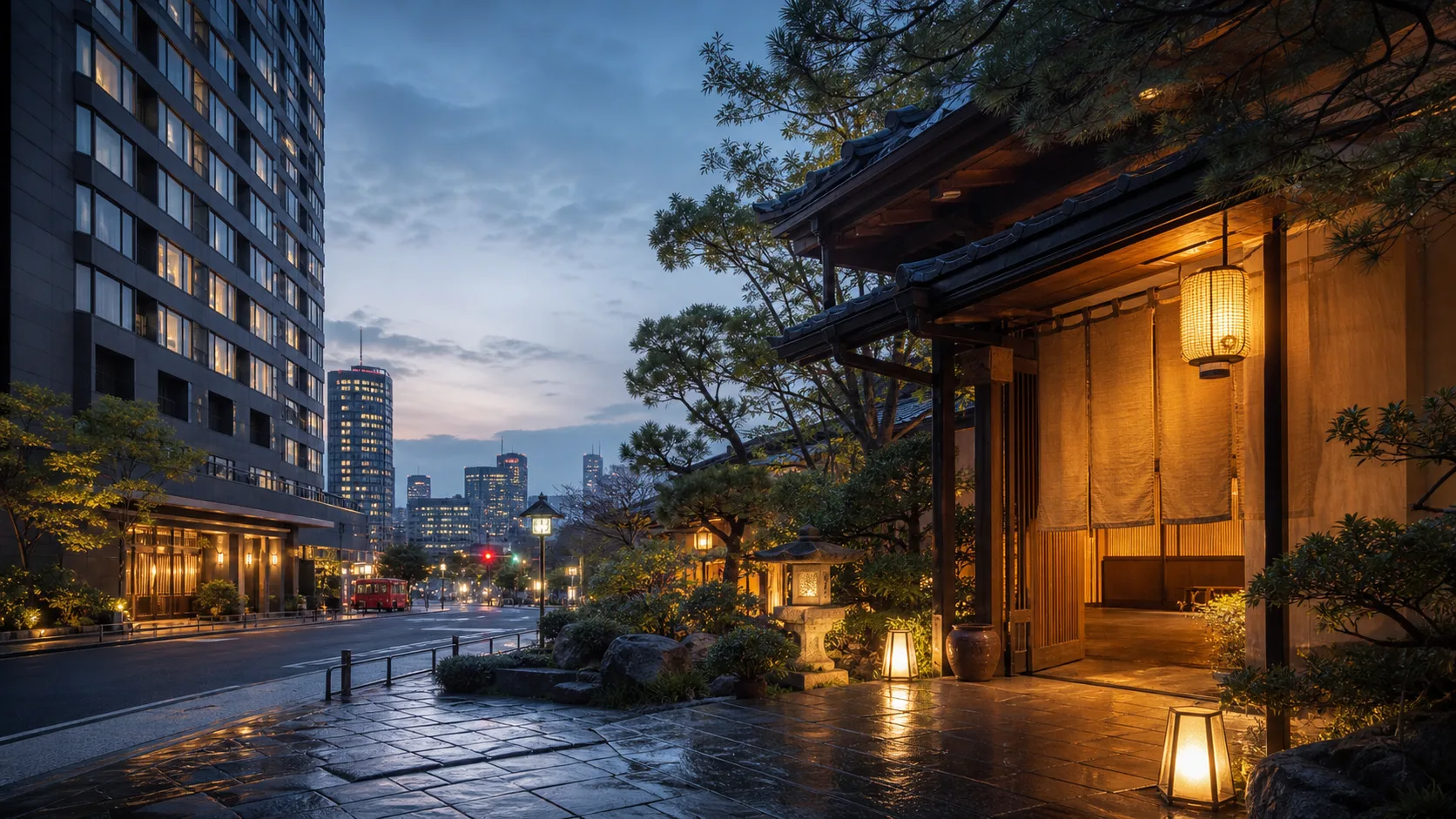
Choose Japanese accommodation by trip purpose, neighbourhood, room rules, transit, and the kind of stay you want. The right choice is usually the one that protects your time and energy, not the option with the loudest marketing.
The short answer
This guide helps you make the booking decision with a practical checklist: compare the experience, time cost, location, flexibility, and family needs before paying. Verify current availability, prices, operating conditions, and reservation rules directly with the official operator or accommodation before you commit.
Start with your non-negotiables
The first step in choosing Japanese accommodation is defining non-negotiable logistics rather than being swayed by headline marketing discounts. Begin by listing factors that cannot change: the exact count of travelers, the required bed configurations, whether rollaway beds or baby cots are legally permitted, and the single anchor activity that defines each stay. In dense urban centers like Tokyo and Osaka, hotel rooms operate under strict municipal occupancy fire codes, meaning a standard double room that sleeps two adults in Europe may legally refuse a couple traveling with an infant.
Establish your physical boundaries early. If someone in your travel party has knee sensitivity or mobility challenges, staying in a multi-story historic ryokan requiring steep interior wooden staircases or sleeping on low tatami futons will create daily discomfort. Conversely, prioritizing modern elevator-equipped hotels with raised Western bedding and step-free shower stalls ensures every traveler rests soundly without physical strain.
Compare the full cost, not one line item
A common mistake among first-time visitors to Japan is booking a seemingly discounted room on a third-party aggregator only to encounter compounding hidden fees upon arrival. An inexpensive business hotel located four subway transfers from central Tokyo can easily consume an extra ¥2,000 to ¥3,000 per person daily in local transit fares, completely erasing initial nightly savings while eating up precious sightseeing hours.
Factor in destination-specific municipal surcharges before finalizing your budget. Tokyo, Kyoto, Osaka, and Fukuoka all levy local municipal accommodation taxes (typically ¥100 to ¥1,000 per guest per night) that are rarely bundled into base online reservation totals. Additionally, confirm whether hotel breakfast, coin laundry access, Wi-Fi router rentals, and onsen bathing taxes (nyuto-zei, ¥150 per day) are included in your room rate or billed as separate out-of-pocket expenses.
Match the choice to your travel party
Different accommodation categories in Japan serve completely distinct traveler profiles. Solo backpackers and digital nomads thrive in capsule hotels and social boutique hostels, where compact pods provide private sleep sanctuaries alongside lively communal co-working lounges and shared craft beer bars. However, capsule hotels strictly enforce daytime checkout periods (often requiring guests to vacate pods between 10:00 AM and 3:00 PM for daily sanitation), making them unsuitable for travelers needing midday work or rest.
Couples and culinary travelers should dedicate at least one or two nights to an authentic ryokan with multi-course kaiseki dining in thermal onsen towns like Hakone, Kinosaki, or Yufuin. Families with young children, meanwhile, benefit immensely from modern apartment-hotels (such as MIMARU, Tokyu Stay, or Minn) that feature in-room kitchenettes, full-sized dining tables, and washer-dryer units, allowing parents to prepare familiar meals and wash clothes effortlessly.
Japan Accommodation Types Comparison
| Lodging Category | Average Nightly Cost (JPY) | Ideal Traveler Profile | Key Advantages & Amenities |
|---|---|---|---|
| Business Hotels (Dormy Inn, Daiwa Roynet) | ¥9,000 – ¥18,000 | Solo, couples, budget-conscious travelers. | Excellent locations, spotless cleanliness, often on-site public baths and free breakfast. |
| Traditional Onsen Ryokan | ¥35,000 – ¥85,000 (with meals) | Couples, cultural enthusiasts, relaxation trips. | Multi-course kaiseki dining, private hot springs, peaceful tatami aesthetics, attentive hospitality. |
| Modern Apartment-Hotels (MIMARU, Minn) | ¥25,000 – ¥50,000 | Families, small groups, long stays. | In-room kitchenettes, washer-dryers, dining tables, multiple Western beds. |
| Capsule & Pod Hotels (The Millennials, 9h) | ¥3,500 – ¥8,000 | Solo backpackers, overnight transit stops. | Smart app controls, low price, high-tech sleeping pods, social lounges. |
| Luxury Western Hotels (Palace Hotel, Conrad) | ¥60,000 – ¥150,000+ | Luxury travelers, special anniversaries. | Sprawling square footage, bilingual concierges, fine dining, spa facilities. |
Plan transport and arrival timing
Evaluate every potential hotel through the lens of arrival logistics and luggage management. Pinpoint the exact train or subway line serving the nearest station, noting whether the exit closest to the hotel features an escalator or elevator. Navigating the subterranean corridors of gargantuan stations like Shinjuku, Tokyo, or Osaka Station with two heavy suitcases and a toddler can turn a 5-minute walk on a map into an exhausting 30-minute ordeal if you emerge from the wrong turnstile.
If your flight touches down late at Haneda or Kansai International Airport, select a property offering 24-hour front desk check-in located along a direct rail corridor (such as the Keikyu Airport Line to Shinagawa or the Nankai Rapi:t to Namba). Avoid accommodations in quiet residential wards where front desks lock exterior doors after 10:00 PM or where missing the final midnight train leaves you stranded with exorbitant taxi fares.
Check official rules before you pay
Always verify room dimensions and child co-sleeping (soine) policies directly on the hotel's official website prior to paying. Japanese hotel listings measure room area in square meters rather than subjective labels; a standard "Double Room" in a central Tokyo business hotel frequently measures just 12 to 14 square meters, leaving virtually no floor clearance to fully open two large suitcases simultaneously.
Child age limits vary significantly across hotel brands. Some business hotel chains (such as Comfort Hotel and Richmond Hotels) permit children up to age 12 to stay free of charge when sharing existing bedding with parents, whereas luxury international brands or traditional ryokan often charge adult rates for children aged 6 and older. Clarifying these rules in writing prevents awkward billing disputes during front-desk check-in.
Build a realistic day around energy
Your hotel base should function as a daily energy recovery hub rather than merely a storage locker for luggage. After walking 15,000 to 20,000 steps through Kyoto's temple hills or Tokyo's bustling shopping districts, returning to a hotel located far out on the suburban perimeter drains traveler morale. Choosing a centrally positioned hotel allows you to easily pop back to your room for a 45-minute afternoon power nap, drop off retail shopping bags, and refresh before venturing out for dinner.
Consider booking hotels with on-site public bathhouses (daiyokujo) or natural hot spring baths (onsen). Soaking tired muscles in steaming mineral water each evening accelerates physical recovery, ensuring you wake up energetic and ready for another full day of active exploration.
Regional Lodging Dynamics: Tokyo, Kyoto, and Osaka
Understanding the structural differences between Japan's three primary travel hubs ensures realistic expectations:
- Tokyo: Characterized by ultra-compact room dimensions in prime transit wards like Shinjuku and Shibuya. Space is at an absolute premium, with square footage often hovering around 13 to 16 square meters. Staying slightly east in Ginza, Nihombashi, or Asakusa typically yields larger room layouts and better value per square meter.
- Kyoto: Heavily constrained by strict municipal height restrictions designed to preserve historic temple sightlines. High-rise hotels are virtually non-existent; instead, low-rise boutique properties and restored machiya merchant townhouses dominate. Early booking is imperative due to persistent high demand during spring cherry blossom and autumn foliage peaks.
- Osaka: Offers noticeably larger average room dimensions and approximately 20% to 30% lower nightly rates than Tokyo. Clustered around the northern hub (Umeda) and southern entertainment core (Namba), Osaka provides spacious family-friendly options and direct Shinkansen access, making it an economical base for exploring the entire Kansai region.
Avoid common booking mistakes
One of the most frequent pitfalls is booking a "Semi-Double Bed" (semi-daburu) assuming it equals a standard Western queen bed. In Japan, a semi-double bed measures only 120 centimeters in width—roughly equivalent to a single twin bed in North America. While adequate for solo travelers seeking a bit of extra room, sharing a semi-double bed between two adults results in cramped, restless sleep. Always insist on booking a standard Double (140 cm), Queen (160 cm), or Twin Room (two separate 100–120 cm beds).
Another common trap is booking a smoking room (kitsuen) because non-smoking options appear sold out. Japanese hotel smoking rooms feature deeply ingrained nicotine odors in carpets, curtains, and air conditioning units that air purifiers cannot eliminate. If non-smoking rooms are unavailable, switch to another nearby property rather than risking uncomfortable nights.
Use flexibility as a form of value
In volatile travel climates, reservation flexibility provides immense monetary value. Opting for flexible cancellation rates that allow free cancellations up to 48 hours before arrival protects your itinerary against unexpected flight delays, family illness, or shifting regional weather patterns. Paying a modest 5% to 10% premium for refundable terms is far wiser than locking yourself into rigid non-refundable bookings months in advance.
Flexible bookings also allow you to capitalize on dynamic rate drops. Set calendar reminders to re-check room prices two to three weeks before departure; if competitor properties release promotional inventory or lower their rates to fill empty rooms, you can easily rebook at lower rates and cancel your earlier reservation penalty-free.
Make the decision with a simple scorecard
When narrowing down hotel options in major Japanese cities, evaluate finalists using an objective, multi-point scorecard rather than emotional intuition:
- Transit efficiency: Is the property within a 5-minute walk of a primary JR or subway line?
- Room volume: Does the floor plan provide at least 18 square meters for couples or 25+ square meters for families?
- Luggage clearance: Is there designated floor space to open two full-size suitcases without blocking the bathroom door?
- Amenity suite: Does the hotel feature coin-operated laundry facilities, an ice dispenser, and microwave access?
- Pedestrian safety: Is the walking route between the station exit and the hotel well-lit with smooth, curb-free sidewalks?
Scoring candidate hotels across these five criteria swiftly exposes whether an attractively priced listing carries hidden logistical headaches that would compromise your vacation.
What to do one month before
Approximately 30 days prior to departure, re-verify your hotel itinerary against your finalized sightseeing reservations. If you have secured hard-to-get bookings—such as tickets to Ghibli Park, teamLab Planets, Universal Studios Japan Express Passes, or reservations at fine-dining sushi counters—confirm that your accommodation provides seamless morning transit to these venues.
This is also the ideal window to contact your properties regarding special requests. If you require twin beds pushed together for a toddler, need a baby crib installed, require hypoallergenic pillows, or plan to ship luggage via Yamato Transport (Ta-Q-Bin) directly to the front desk ahead of arrival, emailing the hotel staff a month early ensures these accommodations are properly arranged.
What to confirm one week before
One week before boarding your flight, compile a dedicated digital folder containing all hotel confirmation numbers, property telephone numbers, physical street addresses written in both English and Japanese characters, and check-in cutoff times. Having Japanese addresses saved offline is essential for showing taxi drivers or entering into smartphone map applications when data connections are spotty.
Verify your planned arrival window with the hotel if you expect to check in after 8:00 PM. Many Japanese properties automatically cancel bookings marked as "no-shows" if guests fail to arrive within two hours of their stated arrival time without prior notification. A swift 30-second message confirming your late flight arrival secures your room.
What to do on the day
On arrival day, streamline your movements by making full use of Japanese hospitality services. If you land in the morning hours before standard check-in (usually 3:00 PM), head straight to your hotel lobby; all licensed Japanese hotels will happily tag and store your luggage securely in their luggage hold free of charge, freeing you to explore unencumbered.
Take two minutes during check-in to photograph your room key card and emergency exit floor map on the back of your door. Familiarize yourself with elevator security protocols—many modern hotels require tapping your keycard against a sensor before pressing your floor button—and locate the ice machines and laundry facilities before unpacking.
When paying more is justified
While budget business hotels provide exceptional cleanliness and efficiency, selectively spending more for premium accommodations is well justified in specific scenarios:
- Scenic Onsen Ryokan: Investing in a top-tier ryokan featuring private open-air hot spring baths (rotenburo) and multi-course seasonal kaiseki dinners provides an unforgettable, once-in-a-lifetime cultural immersion.
- Major Transit Terminals: Paying extra to stay inside or directly above a shinkansen hub (such as Hotel Granvia Kyoto or Hotel Associa Shin-Yokohama) saves immense physical energy when traveling with heavy luggage or elderly family members.
- Theme Park Gateways: Booking official Disney or USJ partner hotels that grant early park entry privileges allows you to experience signature attractions without hours of grueling queue times.
When to keep the plan simple
Conversely, when your itinerary is packed with full-day sightseeing excursions, day trips, and late-night izakaya dining, splurging on an expensive luxury hotel is largely wasted. If you will only be inside your room between 11:00 PM and 7:00 AM to sleep and shower, prioritize ultra-reliable, immaculately maintained Japanese business hotels such as Mitsui Garden, Daiwa Roynet, Richmond Hotels, or Dormy Inn.
Dormy Inn properties, in particular, offer exceptional value for practical travelers, providing complimentary natural hot spring baths, evening bowls of hot soy-sauce ramen (yonaki soba), and expansive regional breakfast buffets at very accessible nightly rates.
A final booking checklist
Before entering credit card details on any Japanese accommodation portal, execute this final verification checklist:
- Confirmed whether the room is strictly Non-Smoking.
- Verified bed width in centimeters (Double = 140cm, Queen = 160cm, Twin = two separate beds).
- Checked exact room size in square meters (ensure sufficient floor space for luggage).
- Confirmed whether local municipal accommodation taxes are included or billed separately at check-in.
- Checked cancellation penalty deadlines adjusted for your home time zone.
- Verified the walking distance from the nearest station exit equipped with elevator or escalator access.
- Reviewed breakfast inclusion and child co-sleeping age allowances.
Final thoughts
Choosing the right accommodation in Japan is not about finding the single "best" hotel, but about selecting the property whose logistical strengths align perfectly with your itinerary and travel companions. By balancing station proximity, functional room layouts, and transparent pricing policies, you ensure that every night in Japan restores your energy for the adventures ahead.
Related: japan-tokyo-short-trip-booking-guide-for-first-time-visitors