Where to Stay in Tokyo: Best Areas for First-Time Visitors

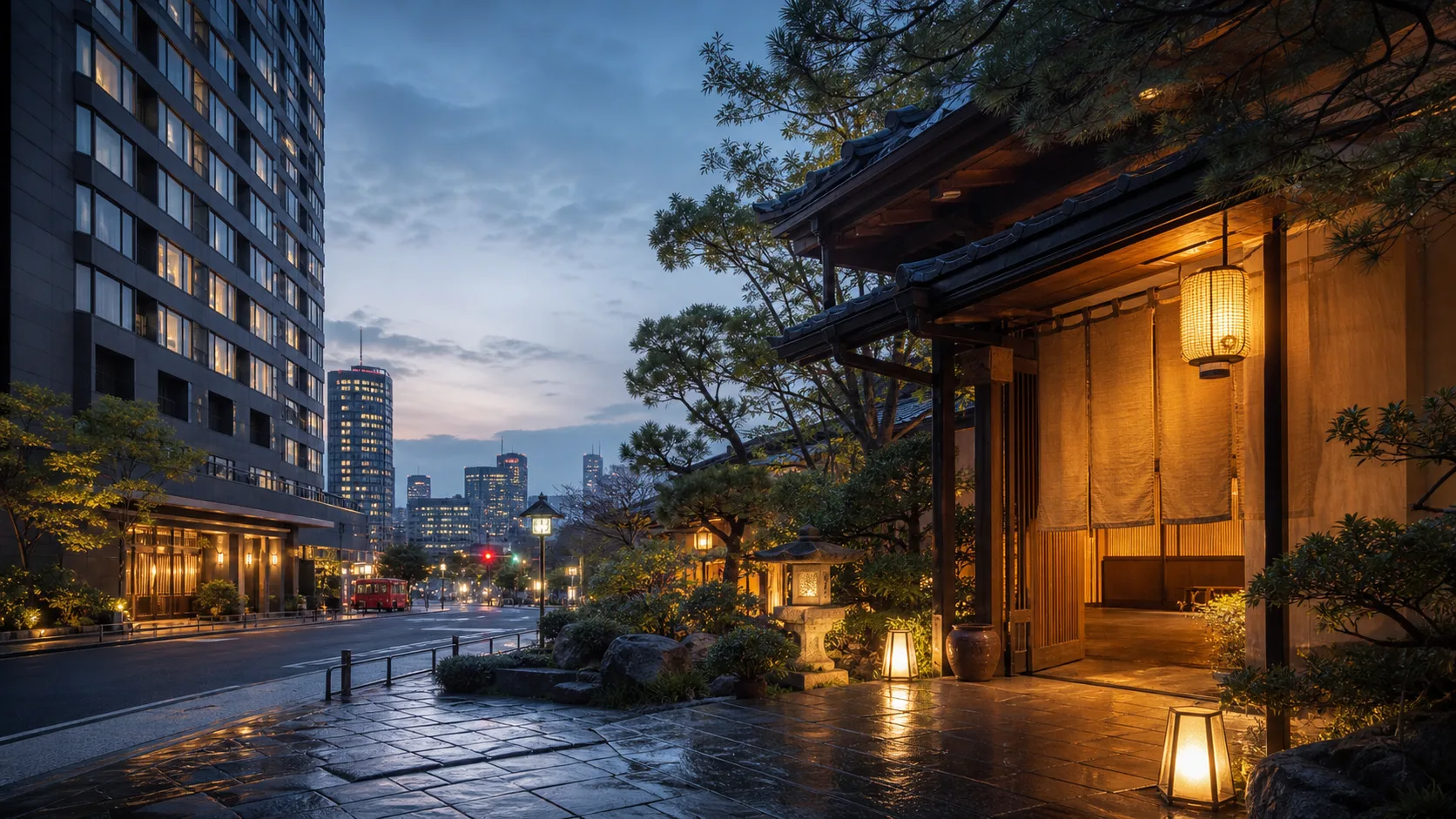
Tokyo does not have one universally best neighbourhood. The right hotel base is the one that makes your actual days easier: arriving from the airport, finding food when tired, returning after an evening plan, and reaching the places you have already chosen. First-time visitors should pick a district only after looking at the hotel’s exact station, exit, room type, and walking route—not a label on a booking site.
The short answer
For most first-time visitors, Shinjuku, Shibuya, Tokyo Station/Marunouchi, Ueno, and Asakusa are the strongest starting comparisons. Choose Shinjuku for connections, Shibuya for energy, Tokyo Station for arrival and rail convenience, Ueno for a practical eastern base, and Asakusa for historic atmosphere. Check the live rail route, hotel access, room policy, and cancellation terms before booking.
Shinjuku: who it suits
Shinjuku is useful for late-night dining, large rail connections, and a high-energy base. It suits a first-timer who wants maximum route choice and does not mind crowds. very simple for varied day trips, but allow extra time inside the station. Start with the hotel, not the district headline: map its walking distance to the station, identify the exit you will use with luggage, and test the route to your first two sightseeing days. A hotel that looks central can be inconvenient when a family has a stroller, an older traveller avoids long underground passages, or the return train arrives at the opposite side of a large station.
Think about the hours when you will actually be there. Ask whether you need breakfast nearby, a supermarket, a quiet room, a laundrette, restaurants after a late return, or space to recover from jet lag. Read recent hotel information for room size and bedding rather than assuming Tokyo rooms match Singapore expectations. A good Shinjuku booking solves these ordinary needs while keeping your preferred activities within a sensible journey.
Shibuya: who it suits
Shibuya is useful for shopping, youth culture, cafés, and an active evening scene. It suits travellers who enjoy being in the middle of the city after sightseeing. excellent for social energy; less restful for light sleepers. Start with the hotel, not the district headline: map its walking distance to the station, identify the exit you will use with luggage, and test the route to your first two sightseeing days. A hotel that looks central can be inconvenient when a family has a stroller, an older traveller avoids long underground passages, or the return train arrives at the opposite side of a large station.
Think about the hours when you will actually be there. Ask whether you need breakfast nearby, a supermarket, a quiet room, a laundrette, restaurants after a late return, or space to recover from jet lag. Read recent hotel information for room size and bedding rather than assuming Tokyo rooms match Singapore expectations. A good Shibuya booking solves these ordinary needs while keeping your preferred activities within a sensible journey.
Tokyo Station and Marunouchi: who it suits
Tokyo Station and Marunouchi is useful for airport and shinkansen convenience, polished streets, and compact logistics. It suits short-stay visitors who value efficient arrivals and early departures. a calm choice with strong transport, though evenings can feel quieter. Start with the hotel, not the district headline: map its walking distance to the station, identify the exit you will use with luggage, and test the route to your first two sightseeing days. A hotel that looks central can be inconvenient when a family has a stroller, an older traveller avoids long underground passages, or the return train arrives at the opposite side of a large station.
Think about the hours when you will actually be there. Ask whether you need breakfast nearby, a supermarket, a quiet room, a laundrette, restaurants after a late return, or space to recover from jet lag. Read recent hotel information for room size and bedding rather than assuming Tokyo rooms match Singapore expectations. A good Tokyo Station and Marunouchi booking solves these ordinary needs while keeping your preferred activities within a sensible journey.
Ueno: who it suits
Ueno is useful for museum access, park space, market energy, and a practical eastern base. It suits families and value-minded travellers who want straightforward rail links. good for a calmer rhythm and access toward Asakusa. Start with the hotel, not the district headline: map its walking distance to the station, identify the exit you will use with luggage, and test the route to your first two sightseeing days. A hotel that looks central can be inconvenient when a family has a stroller, an older traveller avoids long underground passages, or the return train arrives at the opposite side of a large station.
Think about the hours when you will actually be there. Ask whether you need breakfast nearby, a supermarket, a quiet room, a laundrette, restaurants after a late return, or space to recover from jet lag. Read recent hotel information for room size and bedding rather than assuming Tokyo rooms match Singapore expectations. A good Ueno booking solves these ordinary needs while keeping your preferred activities within a sensible journey.
Asakusa: who it suits
Asakusa is useful for historic streets, early-morning walks, and a more traditional visual setting. It suits visitors who prefer atmosphere over being beside every major interchange. pleasant and memorable, but check the exact late-night return route. Start with the hotel, not the district headline: map its walking distance to the station, identify the exit you will use with luggage, and test the route to your first two sightseeing days. A hotel that looks central can be inconvenient when a family has a stroller, an older traveller avoids long underground passages, or the return train arrives at the opposite side of a large station.
Think about the hours when you will actually be there. Ask whether you need breakfast nearby, a supermarket, a quiet room, a laundrette, restaurants after a late return, or space to recover from jet lag. Read recent hotel information for room size and bedding rather than assuming Tokyo rooms match Singapore expectations. A good Asakusa booking solves these ordinary needs while keeping your preferred activities within a sensible journey.
Ginza: who it suits
Ginza is useful for department stores, restaurants, and a central, polished location. It suits couples or food-focused travellers comfortable with a premium location. walkable and refined, with less of the chaotic station feel. Start with the hotel, not the district headline: map its walking distance to the station, identify the exit you will use with luggage, and test the route to your first two sightseeing days. A hotel that looks central can be inconvenient when a family has a stroller, an older traveller avoids long underground passages, or the return train arrives at the opposite side of a large station.
Think about the hours when you will actually be there. Ask whether you need breakfast nearby, a supermarket, a quiet room, a laundrette, restaurants after a late return, or space to recover from jet lag. Read recent hotel information for room size and bedding rather than assuming Tokyo rooms match Singapore expectations. A good Ginza booking solves these ordinary needs while keeping your preferred activities within a sensible journey.
Ikebukuro: who it suits
Ikebukuro is useful for department stores, entertainment, and an all-purpose western rail hub. It suits families and repeat visitors seeking a less obvious but capable base. often practical when the hotel and station exit are chosen carefully. Start with the hotel, not the district headline: map its walking distance to the station, identify the exit you will use with luggage, and test the route to your first two sightseeing days. A hotel that looks central can be inconvenient when a family has a stroller, an older traveller avoids long underground passages, or the return train arrives at the opposite side of a large station.
Think about the hours when you will actually be there. Ask whether you need breakfast nearby, a supermarket, a quiet room, a laundrette, restaurants after a late return, or space to recover from jet lag. Read recent hotel information for room size and bedding rather than assuming Tokyo rooms match Singapore expectations. A good Ikebukuro booking solves these ordinary needs while keeping your preferred activities within a sensible journey.
Shinagawa: who it suits
Shinagawa is useful for airport-facing connections and a less tourist-saturated business district. It suits travellers with early flights, rail trips, or a need for a quieter hotel. strong for movement, weaker if nightlife is the priority. Start with the hotel, not the district headline: map its walking distance to the station, identify the exit you will use with luggage, and test the route to your first two sightseeing days. A hotel that looks central can be inconvenient when a family has a stroller, an older traveller avoids long underground passages, or the return train arrives at the opposite side of a large station.
Think about the hours when you will actually be there. Ask whether you need breakfast nearby, a supermarket, a quiet room, a laundrette, restaurants after a late return, or space to recover from jet lag. Read recent hotel information for room size and bedding rather than assuming Tokyo rooms match Singapore expectations. A good Shinagawa booking solves these ordinary needs while keeping your preferred activities within a sensible journey.
Roppongi: who it suits
Roppongi is useful for museums, galleries, international dining, and a late urban mood. It suits adults focused on art, restaurants, and evenings rather than rail efficiency. choose it for its interests, not as a default sightseeing base. Start with the hotel, not the district headline: map its walking distance to the station, identify the exit you will use with luggage, and test the route to your first two sightseeing days. A hotel that looks central can be inconvenient when a family has a stroller, an older traveller avoids long underground passages, or the return train arrives at the opposite side of a large station.
Think about the hours when you will actually be there. Ask whether you need breakfast nearby, a supermarket, a quiet room, a laundrette, restaurants after a late return, or space to recover from jet lag. Read recent hotel information for room size and bedding rather than assuming Tokyo rooms match Singapore expectations. A good Roppongi booking solves these ordinary needs while keeping your preferred activities within a sensible journey.
Odaiba: who it suits
Odaiba is useful for waterfront views, large-format attractions, and resort-like space. It suits families whose confirmed activities are already on the bay side. enjoyable for that purpose, but isolate it only when the itinerary supports it. Start with the hotel, not the district headline: map its walking distance to the station, identify the exit you will use with luggage, and test the route to your first two sightseeing days. A hotel that looks central can be inconvenient when a family has a stroller, an older traveller avoids long underground passages, or the return train arrives at the opposite side of a large station.
Think about the hours when you will actually be there. Ask whether you need breakfast nearby, a supermarket, a quiet room, a laundrette, restaurants after a late return, or space to recover from jet lag. Read recent hotel information for room size and bedding rather than assuming Tokyo rooms match Singapore expectations. A good Odaiba booking solves these ordinary needs while keeping your preferred activities within a sensible journey.
How to choose between the shortlist
Make a two-column itinerary before opening hotel filters. In the first column, list fixed commitments: arrival airport, departure airport, a shinkansen trip, ticketed attractions, and any day tour pickup. In the second, list flexible neighbourhood days. Then score each hotel base for luggage movement, first and last day convenience, evening food, room comfort, and the number of train changes required by the fixed commitments. Do not optimise only for a famous crossing or view. A hotel near the correct station exit can save more energy than a fashionable postcode.
Airport and rail reality
Tokyo has more than one airport and many rail options, so do not accept a generic “easy airport access” claim. Put your flight number or arrival time into a live route planner shortly before travel, confirm the late-evening option, and check how much walking it involves. Do the same for a shinkansen day. If you carry large cases or travel with children, a direct route with a slightly longer ride may be better than a faster route involving several staircases. Keep the hotel name and address saved in Japanese and English, and confirm its check-in policy for a late arrival.
Room choice matters as much as location
First-time visitors sometimes change hotels to chase neighbourhood variety, then lose time to packing and luggage. Stay in one place unless a second location materially improves a confirmed part of the trip. Read bed configuration, child policy, bathroom arrangement, laundry access, and luggage storage details. A family of four may need a room type that is not visible in the cheapest search result. A couple on a short visit may value a quiet, efficient room near a major station more than extra floor space.
Final booking checklist
Before paying, confirm the exact station and exit, walking route with luggage, room size and bed type, guest count, breakfast, cancellation, check-in time, and airport or rail route for your actual dates. A neighbourhood should support the trip you have, not the generic Tokyo itinerary someone else completed.
Three first-visit patterns
A four-night city break. Keep one hotel and choose a base that makes arrival and departure uncomplicated. Shinjuku, Tokyo Station, Ueno, or Shibuya can all work; let the deciding factor be the hotel’s exact connection to your airport route and the activities you have actually booked. Do not change hotels merely to sleep in two famous districts.
A family with children. Prioritise room configuration, supermarket access, a predictable walk to the station, and an area where returning early does not feel like a waste. Ueno and Asakusa may suit a slower rhythm, while Ikebukuro can be a capable all-purpose option. Confirm every child’s age and bed requirement directly with the hotel.
Tokyo plus a shinkansen side trip. Tokyo Station or Shinagawa can remove stress on the rail day, especially with luggage. Balance that convenience against your evenings: if most dinners and sightseeing are elsewhere, make sure the last train and station walk still feel manageable.
Avoid the false economy
A cheaper room far from the station can cost more in taxis, tiredness, and missed time. Equally, an expensive central hotel is not worthwhile if its room is too small or its cancellation rules do not match your flights. Compare the total stay, not the nightly headline rate: breakfast, laundry, taxes, transfer costs, room occupancy, and the value of being able to return for a rest are all part of the decision.
Confirm the room, not just the neighbourhood
Before final payment, read the room type, bed configuration, floor area, child policy, bathroom arrangement, and cancellation terms on the hotel’s own confirmation page. A district can be perfect while a particular room is impractical for luggage, a cot, or two adults who need separate sleep space. Keep the booking reference and hotel address offline for arrival day. The best Tokyo base is the one that works at midnight with bags, not only on a map during trip planning.
Related: japan-tokyo-short-trip-booking-guide-for-first-time-visitors