Korea Family Trip Weather and Clothing Guide

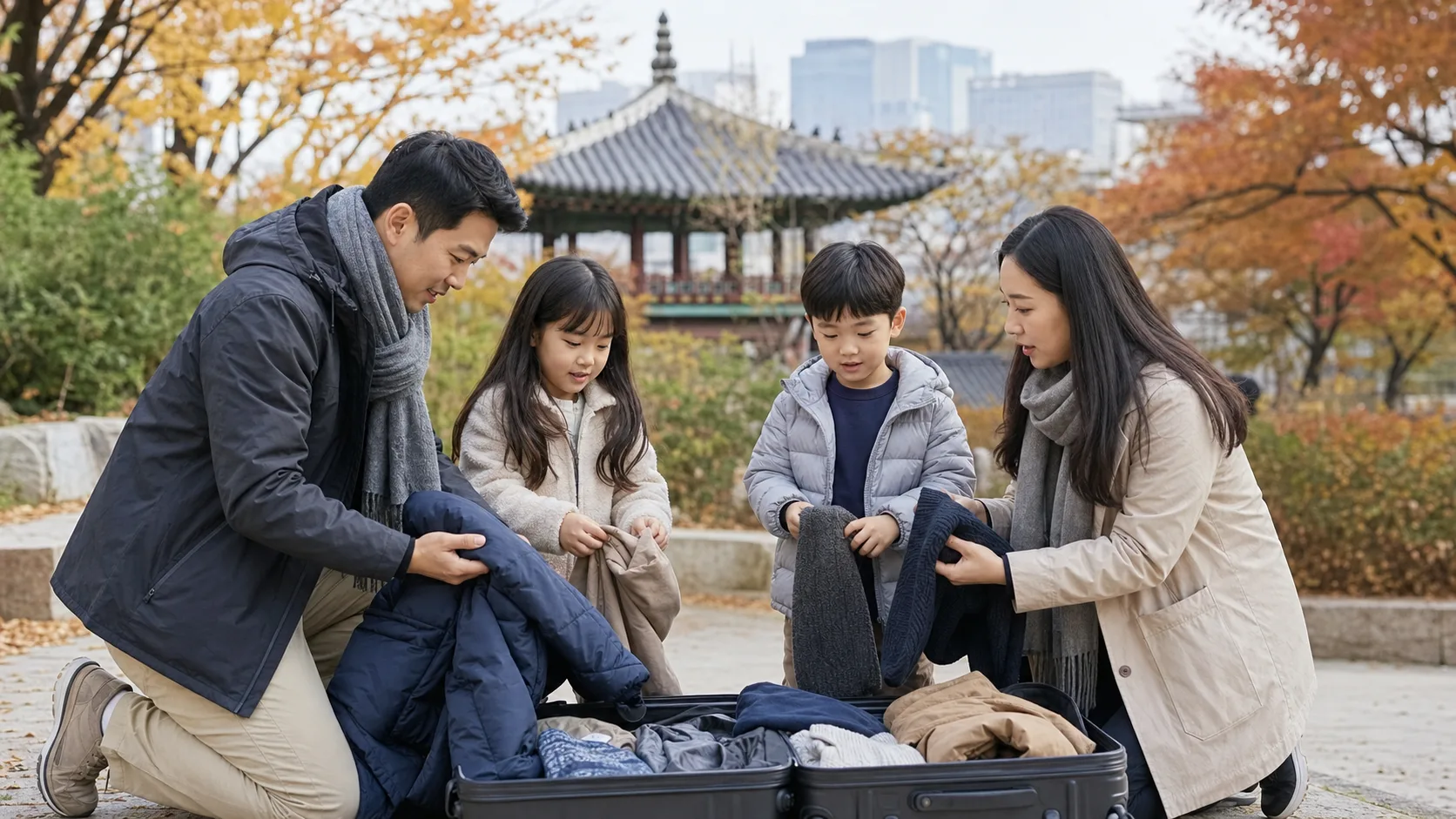
The hardest part of packing for Korea with kids is not the airline allowance. It is guessing how a day can start cold, turn sunny, and end windy or wet, especially when you are moving between trains, sidewalks, museums, and mountain viewpoints. This guide keeps the decision simple so you can pack fewer things, dress smarter, and keep the whole family comfortable.
Fast Answer
If you are planning a Korea family trip, pack for layers rather than single “season outfits.” Korea can feel hotter, colder, or wetter than the forecast suggests because the real challenge is not just the temperature. It is walking between indoor heating, outdoor wind, long transit transfers, and sudden rain or snow.
A good family packing formula is simple: breathable base layers, a light mid-layer, a proper outer layer, and shoes that can handle stairs, weather, and long walking days. In spring and autumn, most families do well with a T-shirt or long-sleeve base, a fleece or sweatshirt, and a light jacket. In summer, prioritize sun protection, quick-dry clothing, hats, and a very small umbrella. In winter, assume you will need thermal layers, insulated outerwear, gloves, hats, and shoes with traction.
For a Singapore-based family, the biggest adjustment is that Korea is usually much more seasonal and dry than home, and winter dryness can be more uncomfortable than the raw temperature number suggests. If you pack only for the “average” day, you will overpack in one direction and still miss the conditions that matter: wind, humidity, indoor heating, and rain. The goal is to build outfits your children can add or remove without becoming uncomfortable.
Context You Need
Korea is a four-season destination, and the clothing problem changes by month more than by region. Seoul, Busan, and Jeju can all feel different, but the practical reality for family travelers is that your day is often split between outdoor exposure and strong indoor climate control. That means a child may need a jacket on the street, then want it off on the subway, then need it again after sunset.
For visitors from Singapore, the biggest mental shift is that “feels like” matters more than the simple temperature. A 16 C afternoon in spring can feel pleasant in the sun but chilly in the shade if the wind is strong. A 30 C summer day can feel manageable until you add humidity, stair climbing, and a toddler who does not want to walk. Winter, meanwhile, is not just cold. It is cold plus dry air plus wind, which is why a 2 C day in Seoul can feel harsher than a number lower on paper.
The family angle also changes the packing strategy. Adults can tolerate a little discomfort; children usually cannot. If one child gets sweaty, then cold, then irritated, the entire day can slide. So the best clothes are not the cutest or the thickest. They are the ones that let you adapt quickly without a complicated bag of backups.
There is also a cultural side to dressing in Korea. Most places are casual, but people tend to dress neatly enough that very practical does not have to mean sloppy. Families visiting palaces, museums, temple areas, or nice cafes usually do better with tidy, layered clothing than with beachwear or gym-only outfits. This matters less as a strict dress code and more as a way to avoid standing out in the wrong setting.
For planning, think in three questions:
- How much walking will the family do each day?
- How many times will you move from outdoors to strongly air-conditioned or heated spaces?
- How much can each child comfortably carry or wear for hours?
If you answer those honestly, the rest of the packing list becomes much easier.
Step-by-Step Guide
The best way to dress for Korea is to plan backward from your itinerary. A family trip with museums, shopping, and subway rides needs different clothing from a nature-heavy route with parks, islands, or mountain viewpoints. Start with the month, then the activities, then the age of the children, and only then build the suitcase.
1. Start with the season, not the day
Korea’s main packing decisions are seasonal:
- Spring: variable temperatures, windy days, and occasional rain
- Summer: heat, humidity, UV exposure, and sudden showers
- Autumn: the easiest season, but mornings and evenings can be cool
- Winter: dry cold, wind, and the need for real insulation
If your trip covers more than one region or more than one week, assume that the weather will swing enough to justify layers. A single thick outfit is less useful than three adaptable pieces.
2. Build a family layering system
Each person should have a base, a middle, and an outer layer. For children, keep the layers soft and easy to remove. For parents, prioritize pockets, weather resistance, and shoes that are good for long days.
Use this basic formula:
| Layer | Spring / Autumn | Summer | Winter |
|---|---|---|---|
| Base | T-shirt or long-sleeve tee | Breathable tee | Thermal top |
| Mid-layer | Fleece, cardigan, sweatshirt | Light overshirt only if needed | Fleece or knit layer |
| Outer layer | Light jacket or windbreaker | Packable rain shell | Insulated coat |
| Accessories | Hat, compact umbrella | Sun hat, sunglasses, umbrella | Gloves, hat, scarf, heat packs |
For kids, choose pieces that are easy to wash and fast to dry. If a child spills food, gets wet in the rain, or refuses a scratchy sweater, the whole plan can fail. Soft layers win more often than stylish ones.
3. Pack for movement, not for photos
Korea family travel usually means a lot of walking:
- subway stations with stairs
- station exits that may be longer than expected
- crosswalk waiting time
- palace grounds and parks
- convenience store stops
That means clothing needs to support motion. Pants that are too tight, shoes that rub, or coats that are too bulky can make a day worse than the weather itself. If you expect stroller time, remember that one adult will probably push while carrying extra bags, so that person needs the most practical outer layer and the most weatherproof shoes.
4. Choose the right shoes first
Shoes matter more than almost anything else. If the shoes fail, the weather does not matter.
For most families, the safest option is:
- cushioned walking shoes for spring, summer, and autumn
- waterproof or water-resistant shoes for rainy periods
- insulated shoes or boots for winter
Avoid bringing brand-new shoes on the trip. Korea is a walking-heavy destination, and a small blister can affect every subsequent day. For children, test shoes at home with the same socks they will wear on the trip.
5. Pack one “weather emergency” kit
Keep a small shared bag for the things families always wish they had brought out:
- compact umbrella
- sunscreen
- tissues
- wet wipes
- spare socks
- light plastic bag for damp clothing
- hand cream or moisturizer in dry months
- lip balm in winter
This does not need to be a separate suitcase item. A small pouch in the day bag is enough. What matters is that the items are easy to reach when the weather changes suddenly.
6. Match outfits to common family scenarios
Instead of packing by clothing category only, pack by day type:
- city sightseeing day
- museum and cafe day
- palace and old-town day
- day trip with more wind or hills
- long transit day
- rainy day
That approach makes it easier to decide whether you need the warmer jacket, the umbrella, or the extra pair of socks. It also helps parents avoid overpacking too many “just in case” outfits that never get worn.
7. Make the kids’ comfort the final test
Before you close the suitcase, check whether each child can answer yes to these:
- Can they move freely?
- Can they sit on trains without overheating?
- Can they take layers off by themselves if needed?
- Can they stay dry enough if it rains?
If the answer is no, simplify. Family travel works better when outfits are boring and functional. Korea rewards practical packing much more than overdesigned capsule wardrobes.
Costs, Hours, and Logistics
Weather itself does not cost anything, but the practical response to it can affect your budget and day planning. In Korea, many families buy one or two trip-specific items after arrival, especially if they underestimated winter gear, forgot a hat, or need extra rain protection.
Common weather-related purchases include:
- compact umbrellas
- gloves and hats
- thermal layers
- moisture-control socks
- children’s extra jackets
- portable fans in summer
You can buy most of these at convenience stores, neighborhood shops, department stores, and major shopping streets. The important point is not that prices are fixed, but that you should not rely on finding every item immediately near the first attraction you visit. If your family needs a specific size or a child-friendly version, it is smarter to buy early in a district with more shopping options.
For logistics, the most useful rule is to plan weather checks at two points each day:
- the night before, to decide the main outer layer
- the morning of, to decide umbrella, hat, sunscreen, or extra socks
This matters because Korean weather can feel different by hour, not just by season. A family leaving the hotel at 8 a.m. may need a jacket, then remove it by lunch, then want it again after sunset. If you are taking the subway, the air inside can also feel very different from the street, so “one outfit all day” rarely works.
Seasonal timing also affects logistics:
- Spring can bring pollen and occasional rain, so sunglasses and masks may be useful for sensitive travelers.
- Summer can require more hydration breaks, more shade breaks, and lighter clothing changes for children.
- Autumn is often the easiest for family sightseeing, but you still want layers for temperature swings.
- Winter often requires more transit buffers because wet or icy conditions can slow walking, especially with children or strollers.
If you are deciding what to buy before you leave versus after you land, pack the basics before departure and buy only specialty items in Korea if needed. The basics are shoes, layers, socks, and rain protection. Specialty items are the ones tied to a particular season or child preference.
Variations and Edge Cases
The best clothing plan for Korea changes depending on your family setup and itinerary. There is no single “correct” packing list.
Families traveling with toddlers
Toddlers overheat quickly, get wet more easily, and often refuse to keep on the layers adults choose for them. Pack softer clothes, a spare set of socks, and one backup outfit in the day bag. If you use a stroller, remember that the child may be still while the adult pushing it is not, so the child usually needs the warmer layer first.
Families with school-age children
Older children are more likely to remove jackets, forget hats, or complain about shoe comfort. The answer is not stricter clothes. It is easier clothing management. Let them wear layers they can handle independently, and pick items that do not require constant parent intervention.
Families visiting in summer
Summer in Korea is not just hot. It can be sticky, wet, and tiring. Lightweight clothing, sun protection, and breathable shoes matter more than dressing up. If you plan many outdoor activities, schedule breaks indoors. For families, summer clothing should support comfort before style.
Families visiting in winter
Winter is where many first-time visitors underpack. A normal coat is often not enough if you will stand outside for long periods, wait for buses, or do night sightseeing. Insulation, wind protection, gloves, and warm socks matter a lot. If children dislike bulky coats, use warm base layers and a lighter, easier-to-manage outer shell on top.
Families splitting time between Seoul and other regions
Seoul can be drier and windier than some coastal destinations, while Busan or Jeju may feel milder in certain months but still windy near the water. If your route includes mountains, coastlines, or islands, assume the weather will feel less predictable than in the city. A family trip that combines urban walking with nature visits needs broader layering than a city-only itinerary.
Families who run cold or hot
Not every family member experiences the same weather. One child may sweat constantly while another feels cold at all times. In that case, the solution is not one universal outfit. It is a shared base packing system with personal adjustments. Let each person carry the layer they are most likely to remove or need first.
Mistakes to Avoid
The most common packing mistake is assuming Korea will feel similar to Singapore just because the trip is in Asia. It usually will not. The seasons are more distinct, the indoor heating and cooling are stronger, and the daily temperature swing can be enough to catch families off guard.
Other mistakes to avoid:
- Packing for the forecast only and ignoring wind or rain
- Bringing brand-new shoes that have not been tested
- Overpacking thick clothes that cannot be layered
- Forgetting that children get uncomfortable faster than adults
- Assuming one jacket will work for every day and every activity
- Skipping rain gear because the sky looks clear in the morning
The easiest fix is to think in systems. If every person has one base layer, one mid-layer, one outer layer, and one practical pair of shoes, the family can handle most weather changes without panic.
FAQ
What should a Singapore family pack for Korea?
Pack layers, not single-season outfits. Most families need breathable tops, a light jacket or fleece, comfortable walking shoes, socks that can handle long days, and weather accessories like umbrellas or hats depending on the season. If you are traveling in winter, add thermal layers and insulated outerwear.
What is the best season for a family trip to Korea?
Autumn is usually the easiest for clothing and comfort because temperatures are moderate and the weather is often stable. Spring is also good, but the wind can be tricky. Summer is manageable if you plan around heat and rain. Winter works well if you pack properly for cold and dry air.
Do children need special clothing for Korea?
Not special clothing, but more adaptable clothing. Children do better with soft layers, comfortable shoes, and spare socks. They also need easier outfit changes because they often get hot, wet, or tired sooner than adults.
Do I need waterproof shoes?
Not always, but they are useful if your trip includes rain, winter slush, or long walking days. At minimum, bring shoes that dry reasonably fast and do not slip easily. For winter or rainy trips, water resistance becomes much more valuable.
How many jackets should we bring?
Usually one main outer layer per person is enough, plus a light backup layer if the weather is unpredictable or the trip is long. The more important choice is whether the jacket can handle wind, rain, or cold. A single well-chosen jacket is better than two weak ones.
Should we buy winter clothes in Korea instead of packing them?
You can buy missing pieces in Korea, but do not rely on doing all the winter prep after arrival. Families are usually better off bringing their core cold-weather items and using local shopping only to fill gaps. That is especially important if you need specific sizes for children.
Is it okay to dress casually in Korea?
Yes. Most travelers dress casually. The main goal is to look neat enough for city sightseeing and comfortable enough for walking. For family trips, practicality usually matters more than fashion, as long as the outfit is clean and appropriate for the setting.
How do we manage weather changes during the day?
Use layers and keep small accessories in the day bag. A compact umbrella, spare socks, tissues, sunscreen, and a light spare layer can solve most problems. Check the forecast the night before and again in the morning, then adjust the outer layer rather than changing the entire outfit plan.
Next Steps
The most useful next step is to turn this guide into a packing list for your exact month and route. Start with the season, then add your child ages, walking load, and any mountain, island, or long-transit days. That gives you a sharper suitcase plan and fewer weather surprises.
Related: korea-family-trip-budget-travel-guide-for-singapore-travelers
Related: korea-family-trip-culture-guide-for-first-time-visitors
Related: korea-family-trip-itinerary-for-singapore-travelers