Where to Stay in Kyoto: Best Areas for Temples, Transit and Evenings

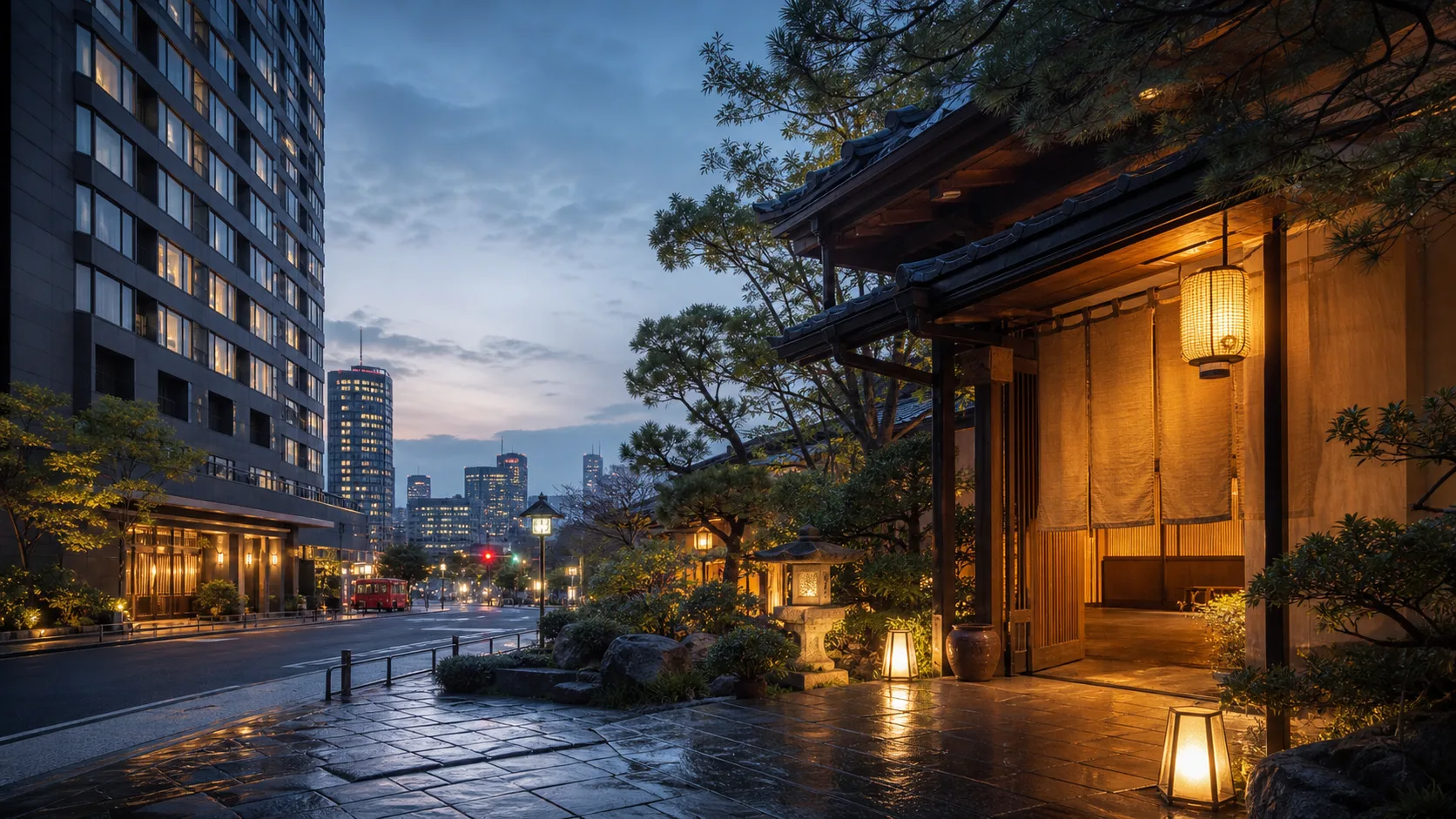
Kyoto rewards an accommodation choice that matches the order of your days. Temple mornings, crowded buses, a shinkansen arrival, evening dining, and a desire for a quiet room can point to different neighbourhoods. The best area is not a single answer; it is the base that makes your fixed plans easier while leaving enough energy to enjoy the streets after you arrive.
The short answer
Choose Kyoto Station for rail and luggage convenience, Gion or Higashiyama for historic atmosphere and early temple access, Kawaramachi for evenings and central dining, Karasuma/Shijo for a practical central base, and Arashiyama only when its western-Kyoto setting is a real part of the stay. Check the exact hotel, station exit, bus route, room, and return walk before booking.
Kyoto Station: who it suits
Kyoto Station is useful for shinkansen arrivals, airport transfers, luggage, and cross-city rail connections. It generally suits travellers with short stays or day trips. Before booking, check the hotel’s exact side of the station and whether the evening feels too transport-focused. District names can be misleading in Kyoto because a hotel may be a long walk from the stop or station you actually need. Map the route with luggage, identify whether it uses stairs or crowded buses, and test the journey to the first temple, restaurant, or rail departure already on your itinerary.
Kyoto Station functions as the city's primary transport spine, providing direct Shinkansen bullet train access to Tokyo and Osaka, the JR Haruka airport express directly to Kansai International Airport (KIX), and the central municipal bus terminal. Staying here is unbeatable for travelers making regional day trips to Nara, Uji, or Fushimi Inari, as well as those arriving late in the evening with heavy luggage. The station complex itself houses vast subterranean dining concourses (Porta and The CUBE) alongside the Isetan department store, guaranteeing effortless dining options after long sightseeing days.
Use Kyoto Station as a base, not a claim that everything is walkable. Group each day geographically, leave a buffer for bus congestion or a slow station exit, and plan a simple fallback meal near the property. The most comfortable Kyoto trip often has fewer neighbourhood crossings, not more.
Gion and Higashiyama: who it suits
Gion and Higashiyama is useful for early temple walks, historic lanes, traditional atmosphere, and a memorable evening setting. It generally suits first-time visitors who want to be near classic Kyoto scenery. Before booking, check bus and taxi needs, crowds, hills, and the late-night food plan. District names can be misleading in Kyoto because a hotel may be a long walk from the stop or station you actually need. Map the route with luggage, identify whether it uses stairs or crowded buses, and test the journey to the first temple, restaurant, or rail departure already on your itinerary.
Gion and Southern Higashiyama offer the quintessential historic Kyoto experience, surrounded by traditional wooden machiya merchant townhouses, stone-flagged lanes, and preserved tea houses. Stepping out of your hotel at 6:30 AM allows you to wander through Ninenzaka, Sannenzaka, and Kiyomizu-dera before tourist crowds and tour buses arrive. However, note that vehicle access along narrow preservation alleys is strictly restricted, requiring visitors to roll luggage over cobblestones, and most neighborhood dining establishments operate by advance reservation only.
Use Gion and Higashiyama as a base, not a claim that everything is walkable. Group each day geographically, leave a buffer for bus congestion or a slow station exit, and plan a simple fallback meal near the property. The most comfortable Kyoto trip often has fewer neighbourhood crossings, not more.
Kawaramachi: who it suits
Kawaramachi is useful for restaurants, shopping, river walks, and central evening energy. It generally suits couples and travellers who want dining on foot. Before booking, check the hotel’s noise level and morning route to temple districts. District names can be misleading in Kyoto because a hotel may be a long walk from the stop or station you actually need. Map the route with luggage, identify whether it uses stairs or crowded buses, and test the journey to the first temple, restaurant, or rail departure already on your itinerary.
Kawaramachi and the Shijo-Dori corridor serve as Kyoto's premier downtown dining, nightlife, and shopping district. Located along the banks of the Kamogawa River, it offers pedestrian access to Nishiki Food Market, modern retail boutiques, and atmospheric dining along Pontocho Alley. It is served by both the Hankyu Kyoto Line (direct to Osaka Umeda) and Keihan Main Line (direct to Fushimi Inari and Osaka Yodoyabashi), making it the most well-rounded lifestyle base for young travelers and couples.
Use Kawaramachi as a base, not a claim that everything is walkable. Group each day geographically, leave a buffer for bus congestion or a slow station exit, and plan a simple fallback meal near the property. The most comfortable Kyoto trip often has fewer neighbourhood crossings, not more.
Karasuma and Shijo: who it suits
Karasuma and Shijo is useful for subway access, centrality, shops, and a calmer business-hotel rhythm. It generally suits visitors balancing sightseeing with practical comfort. Before booking, check how the property connects to the exact bus or subway routes needed. District names can be misleading in Kyoto because a hotel may be a long walk from the stop or station you actually need. Map the route with luggage, identify whether it uses stairs or crowded buses, and test the journey to the first temple, restaurant, or rail departure already on your itinerary.
Karasuma and Shijo represent the modern central business intersection of Kyoto, where the Karasuma and Tozai subway lines cross. This district features an abundance of newly built, highly comfortable mid-range boutique hotels (such as Mitsui Garden, Hotel Intergate, and Richmond Hotel) offering spacious room dimensions, peaceful night acoustics, and on-site public bathhouses (daiyokujo). It is an easy 10-minute walk east to downtown dining while shielding guests from evening street noise.
Use Karasuma and Shijo as a base, not a claim that everything is walkable. Group each day geographically, leave a buffer for bus congestion or a slow station exit, and plan a simple fallback meal near the property. The most comfortable Kyoto trip often has fewer neighbourhood crossings, not more.
Arashiyama: who it suits
Arashiyama is useful for bamboo-grove mornings, riverside scenery, and a slower destination stay. It generally suits travellers giving western Kyoto more than a brief stop. Before booking, check the cost of repeated trips back to central Kyoto and evening options. District names can be misleading in Kyoto because a hotel may be a long walk from the stop or station you actually need. Map the route with luggage, identify whether it uses stairs or crowded buses, and test the journey to the first temple, restaurant, or rail departure already on your itinerary.
Arashiyama in western Kyoto provides a serene, nature-immersed retreat centered around the Oi River, historic Togetsukyo Bridge, and towering bamboo groves. Staying in Arashiyama is best treated as an indulgent one-or-two-night ryokan escape rather than a base for exploring eastern temples. Evenings here become wonderfully tranquil once day-trippers depart, allowing guests to savor private kaiseki dinners and quiet morning strolls through Tenryu-ji's UNESCO World Heritage Zen garden.
Use Arashiyama as a base, not a claim that everything is walkable. Group each day geographically, leave a buffer for bus congestion or a slow station exit, and plan a simple fallback meal near the property. The most comfortable Kyoto trip often has fewer neighbourhood crossings, not more.
Temple days need an early-morning strategy
For popular temple districts, the hotel choice affects when you can arrive before the busiest part of the day. Gion and Higashiyama can make an early walk feel natural, while a station or central base may require a deliberate early departure. Do not assume an address is close simply because it is in Kyoto; check the current route and the opening information for your date. Build one early priority, a nearby second stop, a meal break, and a flexible afternoon. That pattern is easier to enjoy than a list of temples scattered across the city.
Transit and day trips
If Kyoto is part of a Kansai itinerary, list the shinkansen, airport, Osaka, Nara, or Arashiyama journeys before filtering hotels. Kyoto Station can remove stress from a rail-heavy stay, while Karasuma or Kawaramachi can be better when central evenings matter more. A single convenient interchange may be worth more than a hotel that looks closer to a landmark. Confirm the last practical return route and allow extra time when travelling with children, older relatives, or large cases.
Evenings and food
Choose the night-time neighbourhood deliberately. Kawaramachi gives a wider on-foot dining and shopping rhythm; Gion and Higashiyama reward a slower, more atmospheric walk; Karasuma offers a practical middle ground; Kyoto Station can simplify a tired arrival. Restaurant reservations, weather, and fatigue can change a plan, so identify a reliable nearby meal as well as the aspirational one. A hotel base should make the final walk home feel easy.
Families and mixed groups
Families should give room layout, breakfast, laundry, lift access, supermarket access, and a predictable return route the same weight as temple proximity. A mixed group should agree whether the priority is early scenery, rail convenience, shopping, or late dinners. Avoid changing hotels merely to experience two districts unless the move significantly improves a confirmed part of the trip. Packing and luggage transfers often consume the time that the second location was meant to save.
Kyoto Neighborhood Comparison Matrix
| Neighborhood | Best For | Transport Links | Evening Vibe & Dining |
|---|---|---|---|
| Kyoto Station | First-timers, heavy luggage, day trips to Nara/Osaka. | JR Shinkansen, Haruka Airport Express, Bus Hub. | Huge mall restaurants, ramen street, fast casual. |
| Gion & Higashiyama | Atmosphere, early morning temple photography. | Keihan Line, municipal buses (crowded). | Exclusive kaiseki, quiet preservation alleys. |
| Kawaramachi & Downtown | Foodies, evening walks along Kamogawa, shopping. | Hankyu Line (to Umeda), Keihan Line. | Bustling izakaya, Pontocho alleys, late bars. |
| Karasuma & Shijo | Modern comfort, quiet nights, subway convenience. | Karasuma Subway Line, Hankyu Line. | Independent cafes, craft beer, relaxed bistros. |
| Arashiyama | Ryokan luxury, scenic nature, temple meditation. | JR Sagano Line, Randen Tram, Hankyu. | Quiet and peaceful after 5:00 PM; ryokan dining. |
Navigating Kyoto's Unique Accommodation Logistics
Understanding the Kyoto Municipal Accommodation Tax
Kyoto City imposes an official municipal accommodation tax (shukuhaku-zei) on all overnight visitors staying in hotels, ryokan, and licensed vacation rentals (minpaku). This tax is calculated per person, per night, and is almost always billed separately at the front desk upon physical check-in rather than included in online booking totals.
The tiered rates are structured as follows:
- Room rate under ¥20,000 per person per night: ¥200 tax per person.
- Room rate between ¥20,000 and ¥49,999 per person per night: ¥500 tax per person.
- Room rate of ¥50,000 or more per person per night: ¥1,000 tax per person.
Keep small denomination Japanese yen banknotes or 100-yen coins ready in your travel wallet upon arrival, as traditional guesthouses and smaller boutique hotels frequently collect this municipal surcharge strictly in cash.
Beating the Kyoto City Bus Bottleneck
A common rookie mistake among first-time Kyoto visitors is relying exclusively on municipal buses (such as Bus Routes 206 or 100) to travel between their hotel and major temple complexes. Due to unprecedented post-pandemic tourism volumes, city buses traveling along the Higashiyama corridor and towards Kinkaku-ji routinely fill to capacity, passing waiting passengers at roadside stops.
Savvy travelers structure their hotel selection and daily transit around railway lines:
- To Fushimi Inari and Tofuku-ji: Take the Keihan Main Line from Gion-Shijo or Sanjo, reaching Inari Station in 10 minutes without street traffic.
- To Arashiyama Bamboo Grove: Take the JR San-in (Sagano) Line directly from Kyoto Station to Saga-Arashiyama in 16 minutes, bypassing slow city streets completely.
- To Central Downtown & Nijo Castle: Utilize the Tozai Subway Line and Karasuma Subway Line, connecting across the city center in climate-controlled comfort.
Same-Day Station-to-Hotel Luggage Forwarding (Crosta Kyoto)
If you arrive at Kyoto Station on an early morning Shinkansen bullet train before hotel check-in time (typically 3:00 PM), do not waste two hours taking a taxi to drop off bags and returning to the station. Visit the Crosta Kyoto luggage service counter located at Kyoto Station B1 level (directly outside the JR Underground Central Gates).
For approximately ¥1,000 to ¥1,500 per suitcase, bonded couriers will transfer your heavy luggage directly to the front desk of any registered hotel or ryokan across Kyoto City by 5:00 PM that same afternoon. You can step directly onto the sightseeing trail empty-handed, maximizing your vacation time effortlessly.
Booking patterns
For two or three nights with a shinkansen arrival, Kyoto Station or Karasuma can be the low-stress choice. For a first visit focused on the eastern temples and early photography, Gion/Higashiyama can be worth the trade-offs. For a food-and-shopping stay, Kawaramachi is often compelling. For an Arashiyama overnight, stay there only when you want the river and western Kyoto to shape the evening rather than becoming a long commute back to central sights.
Key Kyoto Seasonal Reservation Windows
Booking timing in Kyoto is dictated by two extreme demand peaks: the spring cherry blossom bloom (sakura, typically late March to early April) and the autumn foliage peak (koyo, mid-November to early December). During these five-week windows, hotel occupancy across central Kyoto exceeds 95%, with average nightly room rates doubling or tripling.
To secure accommodations in desirable districts like Kawaramachi or Gion during these peak seasons, initiate bookings five to six months in advance. Top ryokan properties often release calendar availability strictly on the first day of the month six months prior. If planning a trip on shorter notice, look toward business hotels clustered around Karasuma-Oike or consider staying in southern Kyoto along the Kintetsu line, where room availability remains more flexible.
Final checklist
Before payment, confirm the property’s exact location, the station or bus stop you will actually use, walking route with luggage, room and bed type, check-in, cancellation, breakfast, and late-evening food options. Book the Kyoto area that makes your own temple, transit, and evening pattern feel calm.
A useful hotel base saves energy at small moments: the first bus stop, a rainy return, a breakfast decision, and the final walk after dinner. Those small savings make Kyoto feel more spacious.
Related: japan-tokyo-short-trip-booking-guide-for-first-time-visitors