Boseong Daehan Dawon: Tea Field Walk and Arrival Plan

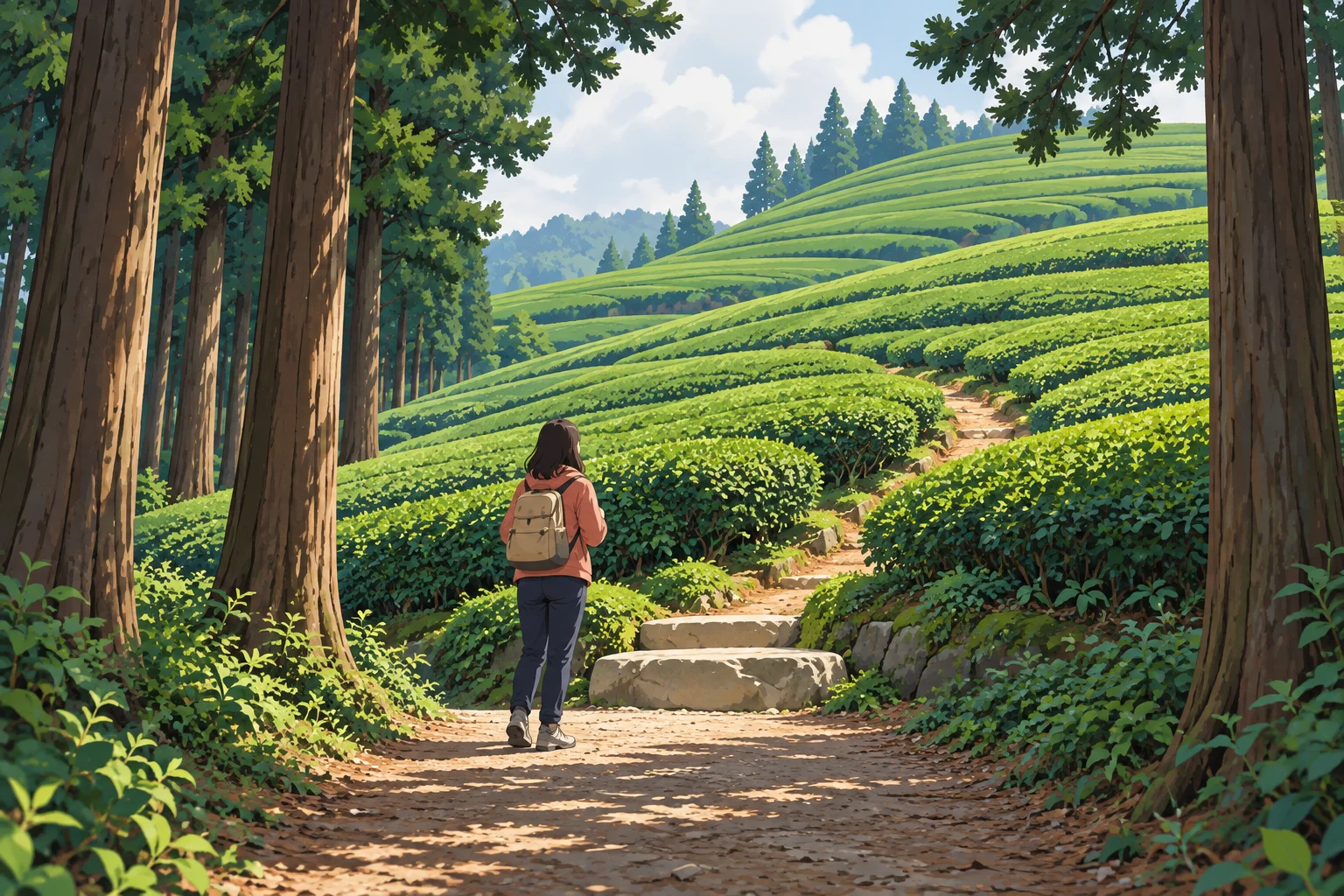
A search for “Boseong tea fields” can land you at a plantation, a museum, a festival ground or a viewpoint. If the goal is the recognizable rows of tea bushes and a cedar-lined walk, plan for Daehan Dawon by name. The harder part of an independent visit is usually not choosing a photograph location; it is reaching the correct entrance, allowing enough daylight and knowing how to get back to Boseong afterward.
This guide is for a Singapore-based traveler considering a Boseong stop within a wider Korea trip. The Korea Tourism Organization (KTO) lists the plantation's location, walking features and seasonal hours. The plantation operator publishes directions, but the bus timetable displayed on its site is dated 2021. Use it to identify the likely stop, not to promise a current departure. Confirm live local transport shortly before travel.
Identify Daehan Dawon rather than a generic Boseong tea-field map pin
Daehan Dawon is a named plantation, not every tea field in Boseong. Save its Korean name, 대한다원, and entrance at 763-65 Nokcha-ro. KTO describes a cedar approach, bamboo section and hillside tea view. Confirm your transport reaches this gate, then allow enough time to walk back before closing.
The distinction matters because nearby tea-related sites have different purposes. A municipal tea-culture space may offer exhibitions or activities, while the plantation is where you walk among the cultivated slopes. KTO's Boseong feature describes Botjae as a separate cultural space with tea programmes. An event called a Boseong tea festival also does not automatically take place inside Daehan Dawon's gate. Confirm the exact venue before buying transport or reserving an activity.
For a first-time visitor, the plantation is a focused half-day stop rather than a compulsory all-day circuit. The main experience is the changing view of the planted hillside as you walk higher. If your trip already passes through the Jeonnam region, it can fit naturally as a stop. If you are based far away, the travel time to and from Boseong can dominate the day. Compare the full door-to-door journey, not just the time printed next to the plantation on a map.
KTO lists Daehan Dawon as open year-round, with posted hours of 09:00–18:00 from March to October and 09:00–17:00 from November to February. Its listing gives adult admission at ₩4,000, with other categories shown separately. Those figures were displayed when checked in October 2026 and may change. Verify the current operator or KTO listing before relying on them, especially around holidays, unusual weather or special events. A green tea field can be beautiful in different seasons, but day length and the closing hour still govern how much of the route you can walk.
Decide what you actually want from the stop
If your priority is a short scenic walk and photographs, aim for the cedar approach and a lower or middle tea-field view. If you want the higher observation area, leave more time and expect an uphill walk. If you want a tasting or a scheduled programme, find the current operator or venue details separately. Do not assume that plantation entry includes a hosted tea ceremony, a guided tour or unlimited access to production areas.
A family with a stroller, someone with knee pain and a fit walker may all prefer different turn-around points. KTO describes a plantation on a 350-metre hill, not a uniformly level garden. You can still enjoy the lower views without treating the highest viewpoint as a required achievement. Decide on the walk your group can safely finish and leave the gate with enough time for the return journey.
Keep the attraction and region distinct
Boseong is a county, and Daehan Dawon is one address within it. That sounds obvious until an itinerary says “visit Boseong” without naming the specific destination. Save the plantation entrance separately from Boseong Station and the bus terminal. If arranging a taxi, show the correct Korean name and entrance address; if meeting a driver afterward, agree on the same place. Another green hillside in the county may be interesting, but it is not a substitute if your plan depends on Daehan Dawon's hours or amenities.
The broader Korea nature destinations guide helps you decide whether a regional detour belongs in your itinerary. This article starts after you choose Boseong and asks whether the named plantation can fit your transport and walking window. Keep those decisions separate so a scenic recommendation does not become an unworkable day trip.
Plan the last-mile transfer from Boseong to the plantation entrance
First get yourself to Boseong town by a route that works for your actual departure city. Then solve the last leg to Daehan Dawon and, just as importantly, the trip back. An intercity arrival at Boseong does not place you at the tea rows. The plantation operator's directions page shows where the roadside stop for travel back toward Boseong town sits relative to the plantation entrance. Its displayed bus times are explicitly marked as of November 2021, so copying them into a 2026 itinerary would be misleading.
Use current local journey-planning information for your date, then confirm the return with a local transport desk or operator if it is pivotal. Rural departures may be less frequent than urban subway services, and a route shown in a translation app can be difficult to identify at an unmarked stop. A taxi may be more predictable for a small group, but arrange a return pickup or know how to call one before you leave town. Availability and fare depend on the day; do not budget from an old online anecdote.
If arriving by bus, write down the name of the specific stop for Daehan Dawon, the side of the road for the return service and the latest practical return departure. The operator's directions distinguish the side toward Boseong town from the direction toward Yulpo. That is useful orientation, but it is not a live timetable. Ask the driver to confirm the plantation stop when boarding and allow a margin after alighting to find the entrance.
If arriving by taxi, show the Korean name rather than only an English map label. Ask the driver whether the drop-off is at the visitor entrance, then save the location. A road that passes tea fields is not necessarily the correct access gate. For a return pickup, give the driver the same entrance and an approximate time after you have assessed the walk. If you rely on a ride-hailing app, check that the app actually offers service in Boseong instead of assuming Seoul-level coverage.
Work backward from the return connection
Start with the last train or intercity bus that gets you to the next hotel without undue stress. Subtract the time from Daehan Dawon back to Boseong town, a buffer for finding the vehicle and a margin for weather or crowds. The remaining window is your plantation visit. This backward calculation can reveal that a late-afternoon arrival is good only for a short lower walk, even though the attraction is technically still open.
A sensible schedule includes three separate times: arrival in Boseong town, arrival at the plantation gate and the time you must leave the gate. Do not collapse them into one “Boseong arrival” entry. If travel from another city is long, consider staying locally or pairing the stop with a regional itinerary instead of forcing an overnight-return day from Seoul. The right choice depends on actual connections, not a generic claim that Boseong is an easy day trip.
A private driver or group tour can remove the last-mile uncertainty, but read what it includes. A tour may stop outside the plantation for a photograph, offer only a brief visit or combine several sites into a rushed day. Ask whether admission is included, how long you will spend inside Daehan Dawon and where the pickup happens. A lower advertised price is not useful if the visit does not reach the field walk you wanted.
Keep a return backup
Save the plantation's contact and the current local transport information before leaving town. KTO lists an attraction inquiry number, while the operator site supplies its own details. These contacts help confirm opening or directions, but they should not be assumed to dispatch a taxi for you. If a return bus does not appear, know the nearest staffed point where you can ask for a taxi and allow enough time before your onward reservation.
Mobile signal and translation can fail at inconvenient moments. Keep the Korean address in a screenshot and a copy of the return station name. Share your pickup plan with your group before anyone wanders up the hill. If the return trip is time-critical, arrange a driver rather than betting on a timetable that the operator has not updated for years.
Walk the cedar path and tea-field viewpoint without assuming a flat route
The approach is part of the attraction. KTO describes a cedar-lined entrance, bamboo forest and tea-field vista. The planted rows are on a hillside, so a route to an elevated viewpoint involves climbing and descending. Choose your turning point in daylight and with enough time to return to the gate. A photograph from the upper slope may make the path look short; the physical effort is easier to judge on site.
Start by orienting yourself at the entrance. Note the way back, available facilities and any posted access notices. Take the cedar approach at a comfortable pace, then decide whether to continue toward higher tea-field views. If the ground is wet, treat steps and slopes carefully. Do not walk into cultivated rows or across barriers to recreate a social-media angle. This is a working landscape as well as a visitor site.
A short visit need not feel incomplete. The lower path and views across the rows convey why the plantation is famous. Stop for a drink or a rest where facilities allow, then return before the group is tired. A long visit can add the upper observation area and pauses for photography, but should remain within the posted visitor route and closing time. Do not assign a universal 30-minute or two-hour duration; pace varies with weather, crowding and mobility.
Set expectations for children and limited mobility
KTO says visitors of all ages can enter, which does not mean every part of the hillside is stroller-friendly. A family can decide at the gate whether a stroller works for the lower approach and where it becomes inconvenient. Bring a carrier only if your group is comfortable using one; do not pressure a child or caregiver to reach the highest point. People with mobility limitations should ask the operator about the current accessible route rather than extrapolating from an attraction's general “open to all ages” label.
Wear footwear that handles a sloped outdoor path. Tea-field walks are not a city pavement; wet surfaces, uneven sections and sun exposure change the experience. Take drinking water and a light rain layer, but travel lightly if using local buses. In warm weather, start earlier and use shade. In colder months, shorter daylight and a 17:00 posted closing time make the return clock more important.
Photography is part of many visits, but leave room for other visitors. Avoid blocking a narrow path for a long portrait session and respect signs around the planted areas. A long lens or a lower viewpoint may provide the layered-field image without stepping into a restricted row. If the upper area is crowded, pause or use another permitted viewpoint rather than cutting across the slope.
Separate a field walk from a tea programme
Buying plantation admission primarily buys access to the visitor site. Tea products and experiences may be sold or offered separately. KTO's Boseong regional feature describes Botjae programmes as a distinct activity. If a tea-making class is the main reason for your detour, reserve that class through its current organizer first, then fit Daehan Dawon around it. Do not assume a tea ceremony runs every hour at the plantation.
Similarly, a café stop should be an optional rest, not the only way to justify the trip. Check on-site availability and opening if it matters. A visitor who comes for the landscape can still have a worthwhile walk without purchasing souvenirs. A visitor who wants to learn about cultivation can read posted information and ask staff where educational material is available rather than entering work areas.
Use opening hours and weather to decide whether to pair another stop
KTO's listed seasonal hours create a clear outer boundary: the plantation day is not infinitely flexible. Work backward from the closing hour, your return vehicle and the daylight available. If rain is heavy or visibility poor, decide whether a short lower walk is still enjoyable. A remote attraction is not a good place to discover at the gate that you have no practical way back after dark.
A second Boseong stop can add context, but only if it has a different purpose and a workable connection. Botjae can be a cultural programme rather than another field photo. A coastal or food stop may make sense if you have private transport and time. Do not write “Boseong tea fields plus everything nearby” as a default itinerary: the extra transfer can consume the very hours you hoped to spend at the plantation.
If visiting in autumn or winter, check whether special events or displays use a separate venue. KTO's older festival articles may describe a particular year's programme, not a permanent attraction included in admission. Use the current event organizer's notice before making a trip for lights or a workshop. If nothing is scheduled, Daehan Dawon remains a regular landscape visit under its own posted hours.
Choose the trip shape that survives a missed connection
A half-day local stop works best if you have arrived in the region the night before or have a flexible onward train. A day trip from a distant city needs enough room for the intercity journey, last-mile transfer, walk and return. If a missed bus would put your final connection at risk, pay for a more reliable transfer or choose a different day. This is a more useful budget decision than debating a small change in admission price.
For a group, agree on the main goal before arrival: a relaxed lower walk, a higher viewpoint, a tea activity or a photograph. Pick one as essential and leave the others optional. That avoids the common failure of spending the whole visit moving between loosely related pins and returning with no time to enjoy the planted hillside itself.
A practical departure checklist
Confirm the current Daehan Dawon hours and fee; save the Korean name and precise entrance. Verify the intercity arrival in Boseong, then the live last-mile and return options. Set the gate departure time from the onward connection, not from a guess about walking duration. Bring suitable shoes, weather protection, the address offline and a way to contact your return transport. At the entrance, choose a turning point that suits your group and the conditions.
The reward is a deliberate, unhurried visit to one named tea landscape. You do not need a complicated regional circuit to appreciate it. What makes the outing work is the ordinary logistics around the photograph: the right gate, a realistic hillside walk and a confirmed route back to the next part of your Korea trip.