Japan Winter Travel: Illuminations, Snow Festivals & What's Open

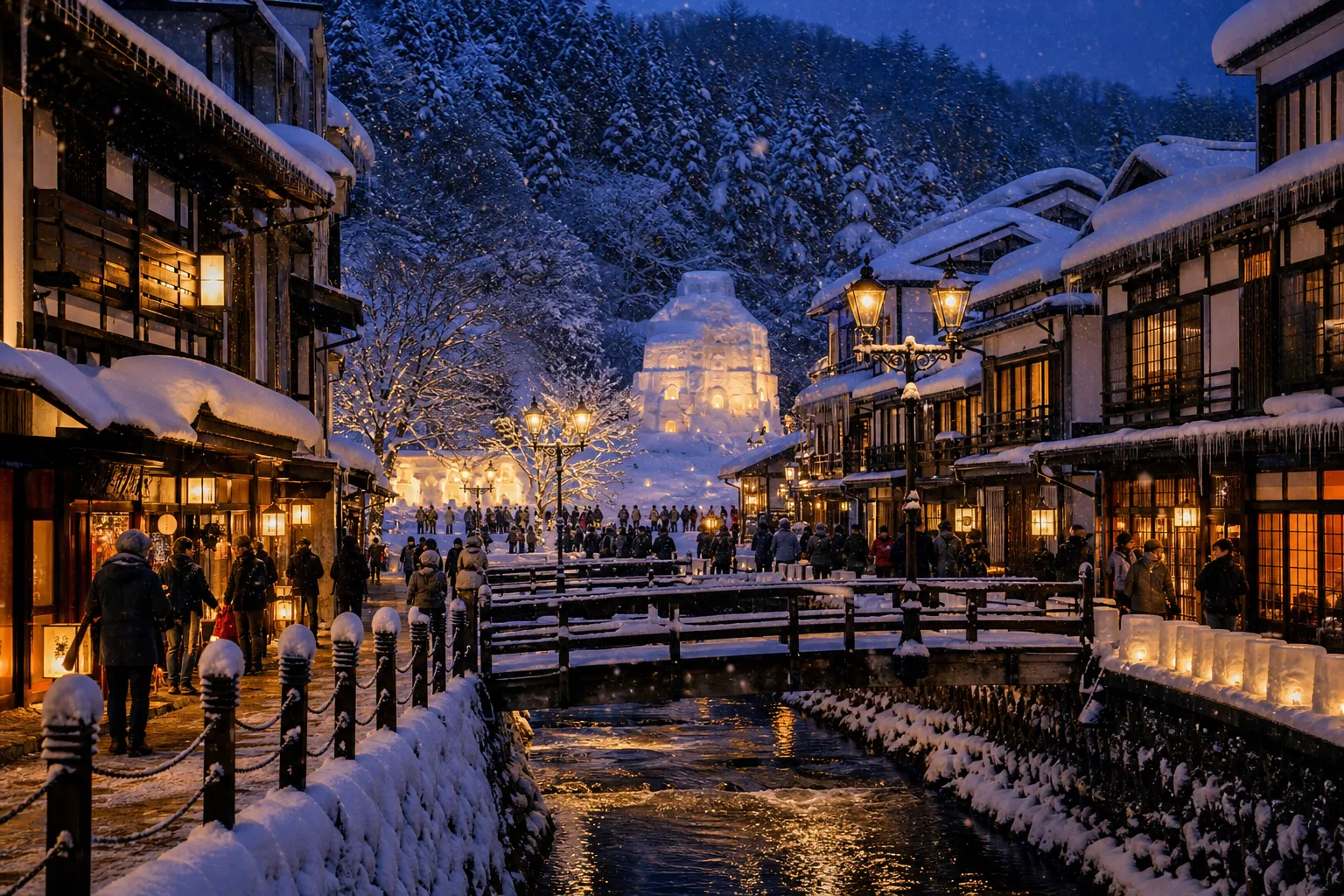
Winter is one of the easiest seasons to make Japan feel larger than it looks on a map. You can spend one day under city lights in Tokyo or Osaka, the next walking past snow sculptures in Hokkaido, and then unwind in a hot spring town where the whole trip suddenly slows down. The challenge is not finding things to do. It is knowing what stays open, what books out early, and what changes once the weather turns.
Winter in Japan: What’s Actually Open?
If you are trying to build a winter itinerary that is practical instead of picturesque, start with the simple rule: most major cities stay fully open, many scenic mountain areas stay open with reduced access, and some outdoor routes, ropeways, and high-altitude roads become weather-dependent or seasonal.
Japan winter travel works best when you separate destinations into three buckets:
- Cities and lowland areas that run almost normally.
- Snow destinations that are active because of winter, not despite it.
- Outdoor sightseeing spots that become fragile once snow, ice, or wind arrive.
Tokyo, Osaka, Kyoto, Nagoya, Fukuoka, and most other major cities remain highly functional in winter. You will still find trains, malls, restaurants, convenience stores, museums, observation decks, aquariums, depachika food halls, and plenty of indoor backup plans. What changes is the rhythm: gardens can close earlier, smaller attractions may shorten hours, and temple or shrine grounds feel more atmospheric in the early morning or just after sunset.
In the north, winter is the attraction. Hokkaido, Aomori, Akita, Yamagata, Niigata, and parts of Nagano lean into the season with snow landscapes, winter seafood, ski areas, festivals, and illumination events that are designed around darkness and cold. This is where you go for snow rather than around it.
The safest mental model is this: if your trip depends on one ridge, one mountain pass, or one scenic road, check it. If your trip depends on trains, hotels, museums, food, and city walking, winter is usually a fine time to go.
For seasonal context, it helps to compare winter against the rest of the year. Best Time to Visit Japan: Sakura, Autumn Leaves & Winter Snow Guide is useful if you are still deciding whether winter is the best fit for your route, budget, and weather tolerance.
What stays open most reliably
The most dependable winter experiences are the ones that do not rely on green leaves, long daylight, or mountain visibility.
- Major rail lines and urban transit networks.
- Large museums, observatories, and shopping districts.
- Onsen towns, ryokan stays, and hotel spas.
- Indoor food markets, department-store basements, and specialty restaurants.
- Ski resorts, snow parks, and winter-only festival zones.
- City illumination events, because darkness is part of the design.
If you want a trip that feels full even when the weather is severe, build around these categories first and treat outdoor scenic spots as add-ons rather than anchors.
What often changes in winter
Winter does not usually mean “closed,” but it often means “different.”
- Some ropeways suspend service when the wind picks up.
- Hiking trails and mountain roads can close for snow removal or safety.
- Ferries and boat tours may be reduced or stopped.
- Small restaurants and rural attractions may shorten their hours.
- Popular snowy destinations may require reservations for shuttles, guided activities, or rental gear.
This is why winter planning should be more route-based than attraction-based. In other seasons you can stitch together a day with multiple outdoor stops. In winter, it is often smarter to pick one core activity, one warm backup, and one evening plan.
Illuminations, Snow Festivals, and the Best Places to Go
Japan’s winter appeal is not one thing. It is a stack of experiences: bright urban lights, temporary snow art, hot springs, seasonal food, and the contrast between warm interiors and freezing streets. The best itinerary usually combines one city base, one snow destination, and one restorative stop.
The most effective winter trips have a visual arc. Start with lights in a city, move into snow or festival country, then slow down in an onsen town before you head home. That pattern gives you enough variety without forcing you to chase too many weather-sensitive stops. It also protects you if storms or train delays change the plan.
Illuminations: where winter feels easy
Illumination events are one of the safest bets in Japan winter travel because they are built for the season. They do not require perfect weather, and they are especially good for short trips because they fit neatly after work hours, dinner, or a day of sightseeing.
The strongest illumination districts usually have at least one of these ingredients:
- A shopping area that stays lively after dark.
- A riverfront, park, or garden with a clear walking loop.
- A tower, observatory, or landmark building that gives you a bigger view.
- Food options nearby so the evening is more than a photo stop.
Tokyo, Yokohama, Osaka, Kobe, Kyoto, and Fukuoka all have winter light displays that work well as low-effort evening plans. If you are traveling with kids or with a group that dislikes the cold, illuminations are often the easiest win of the trip because the commitment is small and the payoff is immediate.
The practical mistake travelers make is assuming every illumination is worth a special journey. Some are destination-worthy, but many are best paired with an existing evening in the city. Use them as a finishing layer, not as the whole dish.
Snow festivals: plan for weather, crowds, and timing
Snow festivals are the opposite of illuminations. They are weather-forward, crowd-heavy, and visually memorable enough that they can justify a northern detour on their own. The best-known examples are in Hokkaido and Tohoku, where snow is not an obstacle but the material of the event.
You do not need to chase every famous snow festival to get the benefit. One strong festival, one snowy walk, and one warm indoor meal can be enough to make the trip feel distinct. That said, if you want the classic winter-photo experience, festivals are where Japan really changes character.
The most useful planning rules:
- Go earlier in the day if you want smaller crowds.
- Go after dark if lighting and projection mapping matter more than temperature.
- Book lodging before event dates are publicly shared if your trip is fixed to a popular week.
- Assume that the best photos happen either right after opening or during the quietest hour before closing.
Some festivals are city-centered and easy to combine with normal sightseeing. Others are more spread out and require bus planning, local transit, or a hotel near the festival area. The difference matters because winter nights are cold enough that walking “just a little farther” can become a real problem.
What makes winter worth the trip
Japan winter travel is worth it when the weather changes the experience, not merely the forecast. That means:
- A street that looks better under snow.
- A town that becomes more comfortable because of the hot springs.
- A festival that only exists because of winter conditions.
- A city that becomes calmer and more photogenic after sunset.
If a place loses all its appeal in winter, skip it. If winter improves it, prioritize it.
This is why many travelers combine a city base with a ryokan or onsen stay. A hot spring night can turn a cold transit-heavy trip into something that feels balanced and restorative. If you are considering that kind of stop, Japan Onsen Guide: Best Hot Springs, Ryokan Stays & Etiquette Rules is the right companion before you book.
Practical Guide: Hours, Costs, and Booking
The practical side of winter travel is less about “what exists” and more about “what is easy to access when the weather turns.” A good winter plan reduces the number of variables. That means booking the places that sell out first, choosing transport that still works if a day is snowy, and not overestimating how much you want to move after dark.
Hours and admission patterns
There is no universal winter schedule in Japan, but the pattern is predictable:
- Large museums and indoor attractions often keep standard hours with occasional holiday closures.
- Gardens, zoos, and outdoor parks may close earlier than in warmer months.
- Illumination events usually begin at dusk and end relatively early compared with nightlife.
- Festivals can have different daytime and evening formats, with food stalls and activities operating on separate schedules.
If a specific attraction matters to your trip, assume the published hours are the only safe hours. Do not count on “it should still be open” when it is snowing, windy, or just outside the core season.
The same logic applies to transport. Even in Tokyo or Osaka, you should not assume that a late dinner and a last train will be stress-free just because the city is large. Winter weather is not usually dramatic in the biggest urban centers, but crowds, holiday traffic, and event nights can still compress your timeline.
Costs you should budget for
Winter does not always mean expensive, but it often shifts where the money goes.
- City hotels can be reasonable outside holiday peaks.
- Ski areas and snow festivals can push lodging rates upward.
- Hot spring ryokan stays may cost more than simple business hotels, especially if dinner and breakfast are included.
- Local buses, shuttles, and baggage forwarding can add up if you are moving between snow-heavy areas.
If your route includes long-distance rail, compare point-to-point tickets against a pass instead of buying a pass by default. The old assumption that a rail pass always pays for itself is weaker now than it used to be, especially for shorter winter itineraries that stay within one region.
Use Japan Travel Planning: Visa, IC Card, Rail Pass & Essential Logistics Guide as your logistics checklist before you lock transport. It is especially helpful if you are deciding between an IC-card-based trip, regional rail, or a more ambitious multi-city route.
How to get around in winter
The best winter transport plan is usually a mix of rail and short local transfers.
For city-to-city travel, the shinkansen is still the cleanest option when your destinations line up with the network. It is fast, reliable, and less weather-sensitive than a sequence of flights plus local buses. For snow destinations, look for direct buses, festival shuttles, or local train lines that continue operating on a clear timetable.
For airport arrivals and departures, keep a buffer. Winter trips go wrong when the first or last day is too tightly stacked with an event, a long transfer, and a restaurant reservation.
For snowy roads, remember that walking distance matters more than it does in warm weather. A hotel that looks “a little far” on the map can feel much farther when sidewalks are icy and you are dragging luggage through slush.
What to book first
If your winter trip has a fixed date, book in this order:
- Flights.
- The most weather-sensitive hotel or ryokan.
- Festival-adjacent lodging if you are traveling during a big event.
- Shinkansen or long-distance transport if you already know your dates.
- Restaurant reservations only for special dinners or high-demand spots.
For many travelers, the best use of booking effort is not every dinner or every train. It is the one or two nights that are most likely to disappear: a ryokan with dinner included, a small room near a snow festival, or a popular illumination-area hotel with a short walk back.
Klook, official sites, and when each makes sense
If you are booking tickets, transfers, or timed attractions, Klook is often useful when you want to compare options quickly and bundle practical add-ons in one place. Official sites are better when you need the most exact rules, access notes, or cancellation terms.
The deciding question is simple: are you trying to save time, or are you trying to verify details?
- Use Klook when you want easy comparison and quick booking.
- Use the official site when you need operating rules, weather policies, or the latest access instructions.
Winter is the season when that distinction matters most, because weather can change the plan and some venues publish temporary adjustments close to the date.
Tips & Common Mistakes
The most common winter travel mistakes in Japan are not dramatic. They are small planning errors that become annoying once you are cold, tired, or carrying a suitcase over wet pavement.
Mistake 1: Treating every day like a summer sightseeing day
In winter, fewer daylight hours and colder evenings change the shape of the day. If you schedule too many outdoor stops, you end up rushing through the moments that actually matter. Build in warm indoor breaks and accept that one excellent dinner or one onsen soak is sometimes a better use of time than a third photo stop.
Mistake 2: Underestimating the value of a warm base
Hotel location matters more in winter because walking back from dinner in snow is much less pleasant than walking back in spring. Pick a base that cuts down on late-night transit. In many cases, paying slightly more for a better-located hotel saves both time and energy.
Mistake 3: Ignoring footwear and layering
Winter in Japan is not uniformly extreme, but snow and meltwater can make ordinary sneakers a bad choice. Bring shoes with grip, socks that dry quickly, and layers that can be removed indoors. The indoor-outdoor temperature swing is where many travelers get uncomfortable.
Mistake 4: Assuming the north and south behave the same way
Japan is not one winter climate. Hokkaido can feel like a different country from Kyushu in the same month. If you are trying to decide whether to base yourself in a snowy region or a milder city, use the regional weather pattern, not the calendar, as your guide.
Mistake 5: Not planning one true backup
Every winter itinerary needs a backup that still feels worthwhile if snow, wind, or a delay changes the day. That backup can be a market, an observatory, a museum, a department store food floor, a long lunch, or an early hot spring visit.
If your backup plan is “wait and see,” you do not really have one.
A better winter strategy
The strongest winter trips are built around contrast:
- One bright city evening.
- One snowy daytime or festival experience.
- One slow, warm recovery stop.
That formula is simple enough to manage and flexible enough to survive weather changes.
FAQ
Is winter a good time to visit Japan?
Yes, if you want snow scenery, illuminations, onsen, winter food, and fewer crowds in some city sightseeing areas. It is less ideal if you want long outdoor wandering days, mountain hiking, or a packed itinerary with minimal transit risk.
What part of Japan is best for snow festivals?
Northern Japan is the strongest choice, especially Hokkaido and Tohoku. Those regions are where snow becomes an asset rather than a complication, and they tend to offer the most convincing festival atmosphere.
Do attractions close in winter?
Some do, but many more simply change hours or become weather-dependent. Outdoor routes, ropeways, mountain roads, and smaller rural venues are the most likely to shift. Major city attractions usually stay open, though holiday schedules can still affect them.
Should I buy a rail pass for a winter trip?
Sometimes, but not automatically. The answer depends on distance, route shape, and how many long JR trips you are actually taking. If your trip is mostly one region plus a city base, point-to-point tickets may be better. Recheck the math before you commit.
Are onsen a winter must?
They are not mandatory, but they are one of the best winter combinations Japan offers. A hot spring stay works especially well after a cold day of sightseeing or a snow festival night. For etiquette and choosing a good stay, the onsen guide linked above is a smart next read.
Conclusion
Japan winter travel works when you plan around what the season gives you instead of fighting it. City lights look stronger in the dark, snow festivals feel more memorable because they are temporary, and hot springs become a practical part of the itinerary rather than a luxury add-on.
If you want a trip that feels balanced, keep the formula simple: one city base, one snow-heavy stop, one warm recovery night, and enough transport flexibility that weather does not break the whole plan. Check entry requirements, compare transport choices before you buy, and book the lodgings that matter most before they disappear.
The best winter itineraries in Japan are not the most complicated ones. They are the ones that leave room for cold weather, warm food, and a little spontaneity once the lights come on.