Japan Summer Festivals: Tanabata, Obon & Fireworks Calendar

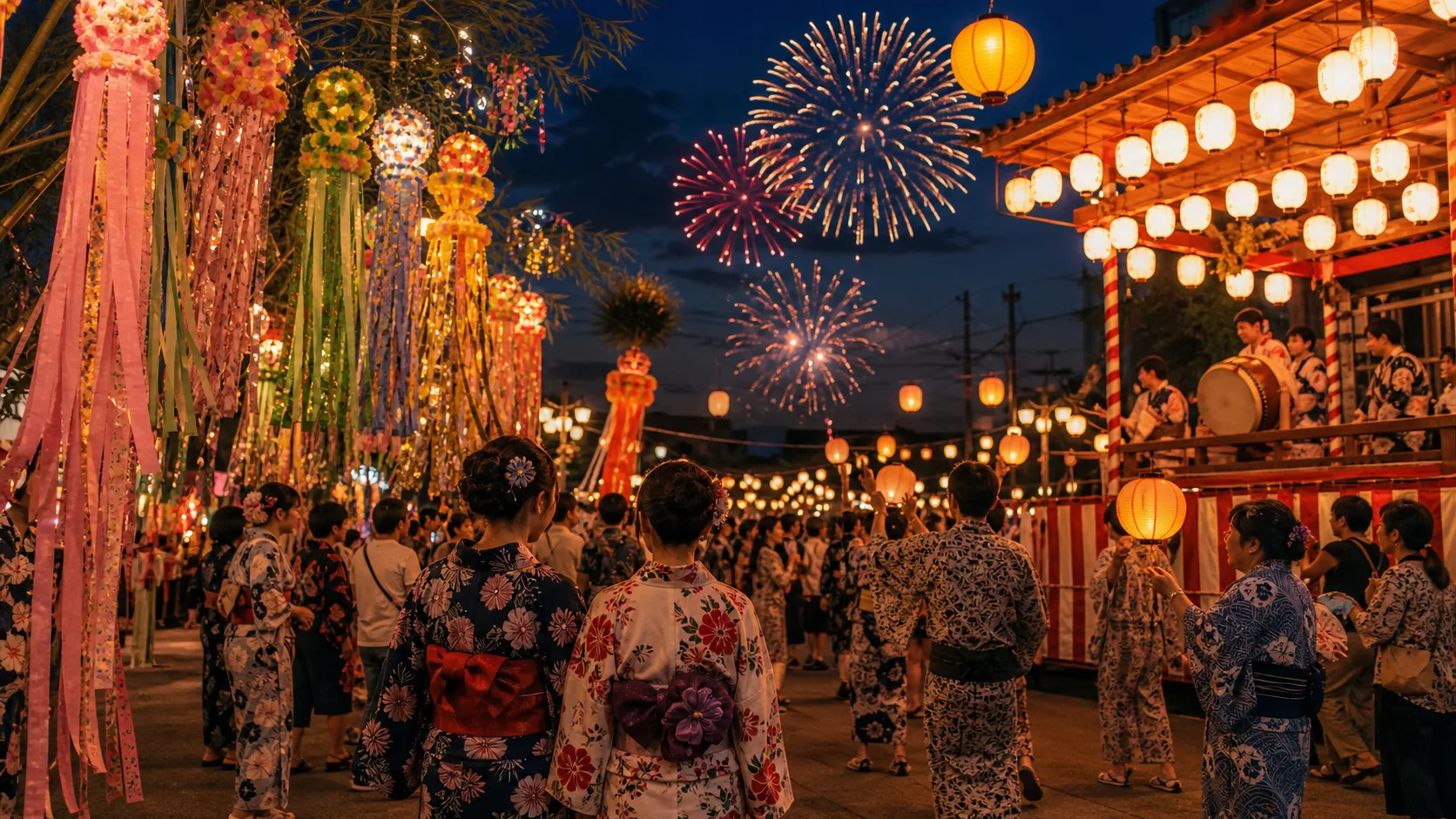
Japan in summer can feel overwhelming if you are trying to catch the best festivals without getting trapped by heat, crowds, or sold-out train seats. This guide turns the season into a simple calendar so you can time Tanabata, Obon, and fireworks trips with less guesswork.
Japan summer festival season at a glance
If you want to see the biggest summer traditions in Japan, the window to remember is late June through mid-August, with peak activity in July and August. Tanabata celebrations usually happen in early July or early to mid-August depending on the region, Obon centers on mid-August in most of the country, and large fireworks shows often cluster on weekends from late July through August.
The practical rule is simple: earlier summer is better for city festivals and shopping-street decorations, mid-summer is best for Obon atmosphere and family travel, and the hottest weeks produce the loudest fireworks calendars. If your trip is flexible, build around one anchor event rather than trying to catch everything at once.
What this guide helps you do
This article is meant to solve a very specific trip-planning problem: how to understand Japan’s summer festival season fast enough to build an actual itinerary. You will learn when Tanabata is celebrated, why Obon changes travel patterns, how fireworks events fit into the calendar, what to expect for tickets and prices, and how to move around efficiently when the trains are packed.
How Tanabata, Obon, and fireworks fit together
Japan’s summer festival season is not one single holiday. It is a stack of overlapping traditions that vary by region, date system, and local custom. Tanabata is the star-and-wish festival. Obon is the period when many families honor ancestral spirits and travel back to hometowns. Fireworks festivals are the public spectacle that most visitors picture first, even though they are not tied to one religious or seasonal rule.
Tanabata gives the season its visual identity. Streets, arcades, train stations, and shopping districts are decorated with streamers, paper ornaments, and wish strips. Depending on the city, you may see Tanabata in early July, in August, or on a local date that follows the traditional lunar calendar. That is why one Japan summer trip can feel very different from another even when the weather is the same.
Obon is the travel pressure point. Many Japanese people return to their family homes, memorial services are held, and the transportation network absorbs a surge in domestic movement. For visitors, this means busier trains, pricier accommodation in popular leisure areas, and more people out at night. It also means a stronger sense of local rhythm, because summer streets, temple areas, and neighborhood festivals all seem to come alive at once.
Fireworks are the easiest part of the season to enjoy as a traveler because they are often open to everyone, but they are also the easiest to underestimate. The good views may require paid seating, early arrival, a riverbank hike, or an understanding of which station exits are less congested. If you only show up five minutes before launch, you are usually too late for the better positions.
Tanabata by region
Tanabata is often described as a single festival, but in practice it behaves like a regional calendar of celebrations. In some places, it aligns with the traditional seventh day of the seventh lunar month. In others, it follows a modern fixed date. And in a few famous festival towns, the event is extended into a weekend-scale urban celebration.
That regional variation is what makes Tanabata useful for travelers. It is not just a single date you either hit or miss. It is a season of decorated streets, local food stalls, performances, and shopping districts that compete to build the most photogenic atmosphere. If you miss one city’s Tanabata, another may still be in full swing a week later.
The best-known Tanabata experiences usually combine three things: decorative streets, family-friendly evening crowds, and a neighborhood feel that is less formal than a shrine festival. You are not there to buy a ticket and sit in a seat. You are there to walk, look up, eat, and move slowly through the crowd.
Obon as a travel season
Obon matters because it changes the way Japan moves. Many domestic travelers are heading in the same broad direction at the same time, which affects trains, highway buses, rented cars, and hotel availability. Unlike a single fireworks night, Obon lasts long enough to shape the whole travel week.
For visitors, the smartest approach is to treat Obon as both an opportunity and a constraint. It is an opportunity because temples, cemeteries, local neighborhood festivals, and family gatherings can produce a memorable atmosphere. It is a constraint because long-distance transport may sell out, local attractions can be crowded all day, and casual walk-up hotel bookings become a bad idea in popular regions.
If you are traveling during Obon, plan transfers earlier than usual and keep one buffer day in your itinerary. That buffer helps if a train is crowded, if the weather forces a delay, or if a fireworks or festival venue ends up requiring more walking than expected.
Fireworks as the peak-night experience
Fireworks festivals are where summer travel in Japan becomes unmistakably seasonal. They often draw huge crowds, and the best events combine food stalls, riverside promenades, yukata outfits, and a long wait followed by a short but intense show. For many travelers, fireworks are the single most memorable summer activity because they compress local culture into one evening.
The biggest mistake is assuming fireworks are simple. The event itself may be free, but the logistics are not. Stations can become one-way traffic after the show, buses can be overwhelmed, and some venues split spectators into reserved and general areas. At major events, even leaving the viewing area can take longer than watching the display.
That is why fireworks belong in a calendar article rather than a simple “things to do” list. They are time-sensitive, crowd-sensitive, and transit-sensitive. If you know the season, you can choose the right city. If you know the city, you can choose the right departure station. If you know the venue, you can decide whether a paid seat is worth the stress reduction.
A month-by-month Japan summer festival calendar
The easiest way to plan is by month. Japan’s summer festivals are not evenly spread across the season, and the feeling of the trip changes quickly from one month to the next. Early summer is more comfortable. Mid-summer is the classic festival window. Late summer is still festive, but weather and crowds can become more demanding.
Late June
Late June is the soft launch of festival season. Temperatures are warming, the rainy season may still be active in some regions, and some smaller local events begin to appear in shopping streets and temple precincts. This is not the strongest fireworks month, but it can be a useful time to arrive early if you want to do slower sightseeing before the festival rush begins.
Travelers who come in late June often benefit from lower intensity. Hotels can be easier to book, and city sightseeing is less exhausting than it will be a few weeks later. If you are sensitive to heat or traveling with children, this is the most forgiving point in the season to build a Japan trip that still feels summery.
Early July
Early July is where Tanabata starts to become visible. Some regions celebrate on fixed Gregorian dates, so arcades and public squares begin putting up decorations and light displays. This is also when summer event schedules begin to crowd the calendar in larger cities.
If you want the best mix of manageable weather and festival energy, early July is a strong compromise. You can still see decorative streets and evening stalls without the same level of late-summer congestion that peaks around Obon. For a first-time visitor, early July is often the easiest time to understand how Japanese summer festivals work without being thrown into the deepest crowd conditions.
Mid to late July
Mid to late July is the classic fireworks ramp-up. More venues are active, evening temperatures are high, and local residents start making repeated weekend trips for summer events. This is the moment when the season becomes a true calendar item rather than a general travel backdrop.
It is also a good period for urban planning. A city stay with a single fireworks night can be more comfortable than trying to move around the countryside every day. If you are in Tokyo, Osaka, or another major hub, you can structure the trip around one or two anchor events and keep the rest of the itinerary light.
For travelers, mid to late July is the best time to practice crowd strategy. Arrive early, eat before the rush, identify your station exit, and know how you are getting back after the event. Those four habits matter more than any individual festival recommendation.
Early August
Early August is often the strongest Tanabata window in places that hold their most famous celebrations on regional August dates. It is also one of the busiest periods for sightseeing because many domestic travelers are beginning to arrange time off before or around Obon.
If you are chasing the richest festival atmosphere, early August is extremely rewarding. Streets are decorated, food stalls are active, and evening walks can feel celebratory even when you are not attending a ticketed event. The tradeoff is that accommodation prices can climb and train platforms can feel crowded much earlier in the evening.
This is the best time to stay near the action rather than far from it. A hotel within walking distance of a festival district or one quick train ride away can save a surprising amount of energy, especially if you plan to stay out after dark.
Mid-August
Mid-August is the Obon core. It is the most sensitive part of the summer calendar for domestic travel, and also one of the most atmospheric. Families return home, local neighborhoods feel active, and many people are out in the evening for food, entertainment, and summer traditions.
If you like the idea of a Japan trip that feels lived-in rather than purely tourist-focused, mid-August is the time to go. You will see the country operating at a different social pace. The key is to book with discipline. Hotels, intercity transport, and even some attraction-linked services should be arranged well in advance.
Fireworks during this period can be spectacular, but they can also be more tiring to attend because you are already competing with peak holiday travel. A major event plus a same-day long-distance transfer is usually a bad combination.
Late August
Late August keeps the festival energy but often feels slightly less compressed than the Obon peak. In some places, Tanabata celebrations or summer closing events still continue, and many fireworks calendars are still active. This is a useful period if you want summer atmosphere without scheduling everything around one holiday week.
Late August is also a practical compromise for travelers who need more flexibility. You may still face hot weather, but you are somewhat less likely to collide with the most intense domestic holiday crowding. If your goal is a balanced trip that includes one or two major events without organizing your whole vacation around Obon, late August is worth considering.
Practical guide: tickets, prices, and how to move around
Admission and price expectations
Most Tanabata street festivals are free to enter because they are neighborhood events centered on public streets, arcades, and shopping districts. Your costs usually come from transport, food, souvenirs, and any paid observation area you choose to visit. That makes Tanabata one of the more budget-friendly seasonal experiences in Japan, especially if you enjoy walking and photography.
Fireworks festivals are more mixed. Some are fully free from riverbanks, parks, or roadside areas. Others offer reserved seats, paid grandstands, or special viewing zones. In many cases, the free areas are perfectly fine if you are willing to arrive early and accept a less direct angle. Paid seating is mainly about comfort, certainty, and the ability to avoid a long pre-show stakeout.
Paid fireworks seats can range from relatively modest to expensive depending on the venue, the view, and whether food, seating materials, or priority access are included. The practical advice is to treat the ticket as a stress-management tool. If a venue is famous, crowded, or hard to reach, a paid seat can easily be worth more than the nominal price.
Obon itself is not something you buy a ticket for, but the travel implications are real. Hotels can sell out earlier, train reservations may need to be made sooner than usual, and last-minute plans are riskier. If you are traveling during Obon, think of transport and lodging as the actual “ticketed” parts of the trip.
How to get there
The best transport strategy depends on whether you are going to a city festival, a neighborhood Tanabata street, or a major fireworks venue. For central-city festivals, the train is usually the best option because parking can be limited and traffic can become unusable around event time. For suburban or riverside fireworks, the answer is still usually train first, car second, and only if you understand the local road closures.
From a visitor’s perspective, the most important transport tool is not a special pass but an easy local payment method. IC cards are helpful because they reduce friction when you are switching between trains, subways, buses, and convenience stores. That matters most on festival days, when you do not want to spend mental energy dealing with ticket machines and cash change.
If the event is famous, plan for exit congestion as part of the trip. The venue may be easy to reach before the show and slow to leave afterward. If you have dinner plans or a late-night train, build in a generous cushion. The safest habit is to know the next station after the obvious one, because the closest station can be the most crowded.
Booking logic for festival trips
For a festival-heavy Japan trip, booking is not just about hotel nights. It is about sequencing. The right order is usually: anchor event first, transport second, accommodation third, and everything else around those. If you reverse the order, you may end up with a great hotel in the wrong neighborhood or a good event that is impossible to reach comfortably.
Where booking platforms matter, use them for practical travel products rather than for the festival itself. That usually means airport transfers, intercity rail tickets, attraction bundles, or timed-entry add-ons that simplify the trip. A service like Klook can be useful when your real problem is not “what should I see?” but “how do I move between the things I already want to see?”
For the same reason, it is smart to think of your Japan summer trip in terms of support services. If you are arriving in heat and carrying luggage, an airport transfer or easy transit option can matter more than shaving a small amount off the ticket price. Seasonal travel becomes much easier when arrival day is smooth.
Best base cities
Tokyo is the easiest base if you want options. You can pair a city Tanabata, a fireworks show, and a day trip without changing hotels every night. Osaka is similarly useful, especially if you want access to Kansai-area festivals and a strong evening food scene. Kyoto is better for atmosphere and temple-linked traditions, but it can feel more intense in peak summer heat and crowd conditions.
If you want the most immersive festival trip, consider staying near the exact district of the event rather than simply near the city center. A short walk back to your hotel after a fireworks show can feel luxurious when everyone else is waiting at a packed station. That is one of the simplest upgrades you can make for comfort.
Tips and common mistakes
1. Do not assume all Tanabata dates are the same
Tanabata is a calendar family, not a single nationwide date. Some celebrations happen in early July, some in early August, and some follow a local or lunar-calculated schedule. The mistake is assuming one festival date works everywhere. Before you lock your itinerary, check the specific city or neighborhood you care about.
2. Do not plan a fireworks night like a normal sightseeing evening
A fireworks event is not something you casually squeeze in between dinner and a train. It should be treated like a major evening commitment. Arrive early, eat before the venue gets crowded, and identify your post-show route before the launch begins. If you do not plan the exit, the exit will plan you.
3. Do not underestimate heat and humidity
Summer in Japan is beautiful but demanding. Crowds are harder to handle when the air is heavy and your shoes are soaked with sweat. Carry water, use shaded breaks, and avoid building too many outdoor stops into a single day. The best festival trips are usually the ones that leave room for a slow lunch or a quiet late afternoon rest.
4. Do not rely on spontaneous hotel searches during Obon
Obon is one of the least forgiving times for last-minute booking. Even if you can still find a room, the price and location may be much worse than you expected. The better strategy is to book the city base first, then allow the exact festival choice to remain flexible.
5. Do not ignore station crowd flow
After a famous fireworks show, the nearest station may use special entry or exit routing. That is not an inconvenience to work around. It is part of the experience. Pay attention to local signs, station staff, and crowd-control barriers. If you fight the flow, you only make the exit slower for yourself.
6. Do not treat all free viewing areas as equally good
Free does not mean equal. A riverside bank, a bridge approach, and a roadside patch of grass can all technically be “free,” but they may differ dramatically in sightline, noise, comfort, and return time. If the event matters to you, compare a few viewing options before you go.
7. Do not skip the food-stall side of the experience
Street food is a major part of summer festivals. Even if you are focused on photography or transportation timing, the stalls are where the event feels local rather than staged. Try to eat early or use the first half of the evening for snacks so you are not trying to buy food in the busiest window right before the fireworks start.
FAQ
When is the best time to visit Japan for summer festivals?
If you want the fullest festival atmosphere, late July through mid-August is the core window. Early July is better for a less crowded trip with some Tanabata activity, while mid-August gives you the strongest Obon atmosphere. If you are sensitive to heat and crowds, arrive earlier in the summer and focus on one or two anchor events.
Is Tanabata always in July?
No. Some Tanabata celebrations happen in July, but many are held in August or follow a region-specific schedule. The date depends on local tradition and the way the city chooses to celebrate. That is why you should always check the exact festival page for the place you want to visit.
Do I need tickets for Obon?
No. Obon is a seasonal period rather than a ticketed event. What you may need to book in advance are the practical parts of the trip: flights, trains, hotels, and any fireworks seating or special museum entries you want around the same time.
Are fireworks festivals free in Japan?
Some are free, some are partly ticketed, and some offer both free and reserved viewing areas. The most popular events often have paid seats that are worth considering if you want a guaranteed view or less stress. Free viewing can still work well if you arrive early and do a little advance planning.
Is it better to stay in a big city or a festival town?
For a first trip, a big city is usually easier because it gives you more transport options and more hotel choices. If your main goal is a specific local festival, though, staying in the festival town or very nearby often makes the night much more enjoyable. The best choice depends on whether you value flexibility or proximity.
Related reading
If you are planning the rest of your Japan trip around this festival season, these guides are the most useful next steps:
- Best Time to Visit Japan: Sakura, Autumn Leaves & Winter Snow Guide
- Japan Travel Planning: Visa, IC Card, Rail Pass & Essential Logistics Guide
Conclusion
Japan’s summer festival season makes much more sense when you treat it as a calendar instead of a single event. Tanabata gives you the decorations and wish-filled streets. Obon changes the country’s travel rhythm and fills evenings with local movement. Fireworks turn the season into a nighttime spectacle that can anchor an entire trip.
The most useful planning move is to pick one event you care about most, then build the trip around its region and timing. If you want the easiest summer experience, choose early July or late August. If you want the most intense festival atmosphere, aim for late July through mid-August and book early.
For first-time visitors, the winning formula is simple: one city base, one or two festival nights, plenty of buffer time, and a transport plan that assumes crowds. That approach gives you the best chance of enjoying the season instead of just surviving it.