Lost Property on Japan Trains: How to Recover a Bag or Phone

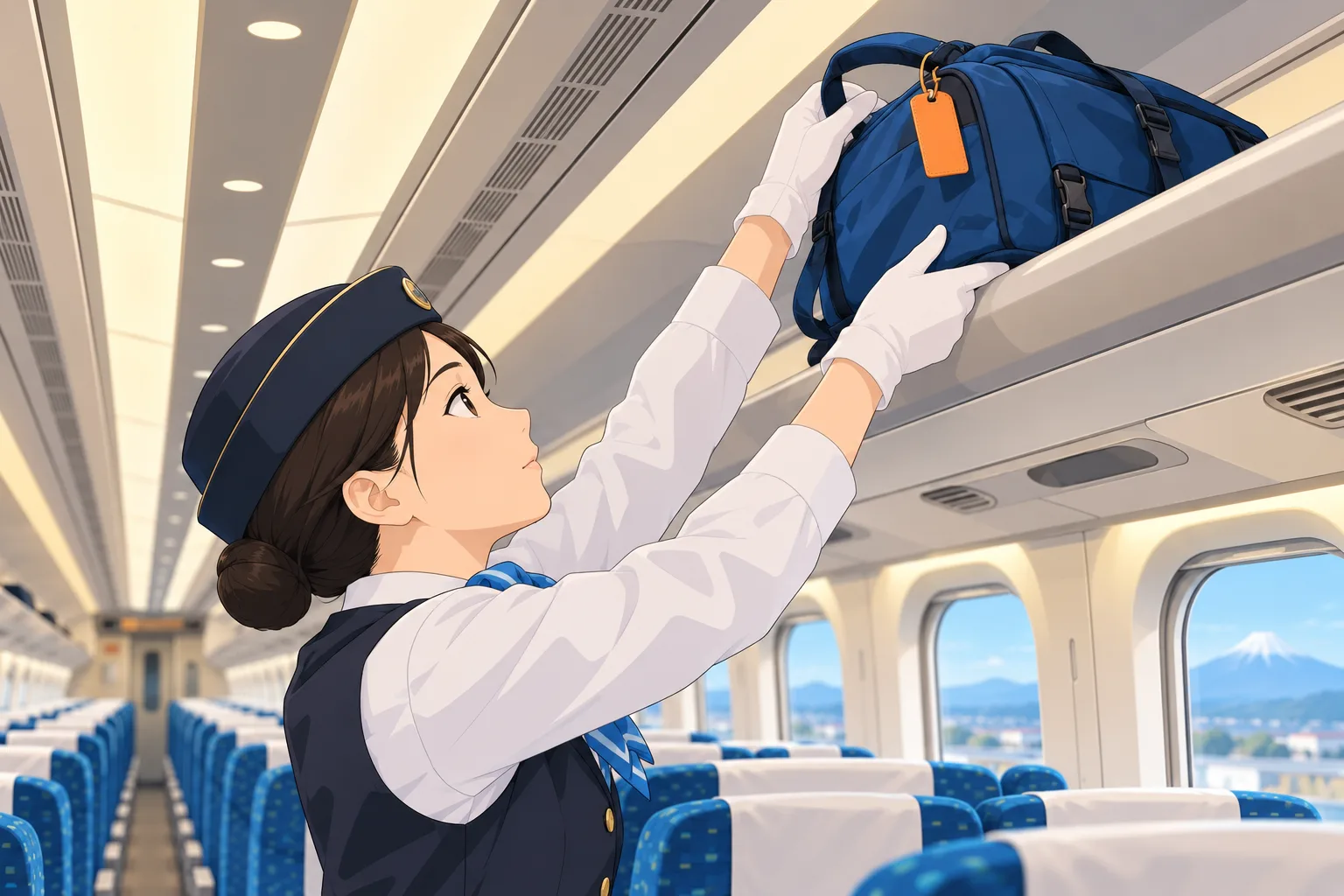
You step off a Shinkansen and realise that your bag is still above the seat. Or your phone is missing after a subway transfer, and you cannot tell whether it stayed on the train or fell near a ticket gate. Japan has organised lost-property systems, but there is no single desk for every railway. The useful first move is to identify the operator, preserve the journey details, and make a report that staff can actually search.
Identify the train operator and report the lost item
Report a lost item to the company that operated the train or managed the station. Keep your route, time, car or seat, and a distinctive item description ready. Use that operator's official channel, then confirm where and how to collect or forward the item if it is found.
A JR train, a Tokyo Metro subway train, and a private railway are different reporting channels. If you changed trains, write down where you last remember holding the item before assuming the final station is responsible. Ask station staff if you are still nearby; otherwise use the relevant operator's official lost-property page. Keep one record of each inquiry so that follow-up calls do not become contradictory.
The word “Shinkansen” alone is not an operator name. A journey on the Tokaido Shinkansen between Tokyo, Nagoya, Kyoto and Shin-Osaka points you toward JR Central's Lost & Found Information. A different Shinkansen section can involve another JR company. If the relevant service or station was managed by JR West, its official FAQ advises asking station staff; after returning home, use its inquiry form. JR West says recovered items can be collected at the holding station or centre, or delivered within Japan at the customer's expense, subject to identification. Check its current instructions before arranging collection. Check the train name, ticket, reservation email and station signage before choosing a form. If you are unsure, ask a station employee to identify the operator from your route and train number instead of sending the same vague report to every railway.
JR East's lost-property guidance offers a dedicated chat for items left on its trains and at its stations. The official page says inquiries can be submitted around the clock, while responses are handled during its stated daytime window and may arrive later. It also says an item may not yet appear in the system when you first ask. A negative first search is a reason to follow up with the same reference and better details, not proof that the item has vanished.
Tokyo Metro has a separate English Lost & Found page. For a recently lost item, it directs passengers first to a station office; its page explains how storage and contact points change over the following days. Do not assume this procedure covers Toei Subway, JR or every private railway in Tokyo. In a city where several networks share transfer stations, the logo on the train and the name printed on the platform matter more than the neighbourhood name.
Our Japan travel logistics guide helps you distinguish rail networks before a trip. If you are reading this after a loss, use your route planner or ticket history to reconstruct the actual operator. A search result that says “Tokyo Station” may refer to a huge interchange, but your specific departure platform and service narrow the inquiry to the company that can access its own lost-property register.
If you are still at the station
Tell the nearest staff member what happened while the train details are fresh. Show a reservation, ticket, IC-card journey record or route-plan screenshot if you have one. Explain whether the item was on an overhead rack, under a seat, in a restroom, on the platform or near a ticket machine. Staff may direct you to the appropriate operator or station office. Do not run onto a departing train or try to enter a staff-only area to search. A member of staff can record the report and tell you the right next channel.
If the train has just left, ask for its number or scheduled destination rather than guessing where to chase it. The found item may be handed in later at a terminal or another station. JR East explicitly says it cannot make an individual search of a train while that train is in passenger service, even when a device's location data appears to place it onboard. Reaching a station farther along the route before the train does not guarantee access to the item. Make the report, save the reference and keep your itinerary workable.
If you lost the item during a transfer, separate the train question from the station question. Was your phone in your hand when you left the first carriage? Did you still have the bag while tapping through the gates? A timestamped photo, message or payment can help you place the last confirmed sighting. Avoid turning a guess into a certain statement on the form. It is better to say “possibly on the 14:20 service or at the transfer platform” than to confidently name the wrong train.
Through-service trains complicate ownership
Some urban trains continue from one company's line onto another company's tracks without passengers changing seats. Tokyo Metro's official page specifically advises passengers on through-service trains to contact the other operator as well. JR Central likewise notes that through services can involve JR East, JR West or private lines. This is an exception to a simple one-operator rule: if the train crossed company boundaries, report to the plausible operators and note each reference number, while describing the same facts consistently.
Ask staff which company operated the carriage at the point where the item was probably lost and which company might receive a found item at the final stop. You need not master Japan's rail ownership structure from memory. What helps is the line name, direction, boarding and alighting stations, approximate time and the physical place where you left the object. If staff give you another operator's contact page, use that official link rather than a search advertisement or an unofficial phone number.
Choose the correct form and protect your information
Use the operator's official website or a station-recommended contact channel. A bag or phone may contain personal data, but you should share only the information the operator needs to identify it and contact you. JR Central warns about messages impersonating it and says its representatives will explain why they need personal information. If somebody contacts you first, do not send passport photographs or card details through an unexplained link. Return to the operator's published page or number and verify the request.
If your phone is missing, secure access to important accounts through your usual device-security and bank procedures as appropriate. This is separate from the railway's search. A remote location signal can help you describe a possible area, but it is not a claim ticket and may be delayed or imprecise. Do not confront a person or travel alone to an unfamiliar location based on a moving dot. The railway or police can advise what to do with an item that appears to have moved beyond their facilities.
Give the route, train and item details needed for a search
The strongest report combines a journey timeline with distinctive features of the object. JR Central's English checklist asks about travel date, boarding and alighting times, section travelled, train name or number, car, seat and where the item was placed. It also asks for the item's colour, type, contents and identifying features. Fill in what you know, label estimates clearly, and keep the same record for each follow-up.
For a reserved Shinkansen seat, find the booking confirmation or screenshot. Record the service name, departure date, departure and arrival stations, seat and car number, and whether the object was on the overhead rack, seat pocket or floor. If you had an unreserved seat, do not invent a seat number. Describe the carriage area instead: near a door, beside a luggage rack, or toward one end of the train. An approximate location can still narrow the staff's search when it is honestly marked as approximate.
For a subway trip, reconstruct the line, direction, stations and time window. A phone's journey history, transit app, payment notification or message to a friend can help. If you used an IC card, the station names in your history may confirm which gates you passed, but the card does not automatically identify the exact carriage. Note where you stood and whether you changed at a through-service junction. A ten-minute range is more useful than “this afternoon,” even when you cannot recover the exact minute.
Make the object distinguishable
“Black backpack” fits many reports. Add size, brand, unusual straps, a luggage tag, a small repair, a sticker, or the contents that only the owner would know. JR Central's examples distinguish bags by type, colour and contents; phones by model, colour, case and strap. Keep sensitive contents for the official inquiry rather than putting them in a public post. A dated photo of the object can help, but the matching team may still need a verbal description and ownership checks.
If you lost a phone, specify its make, model, case colour and any visible damage. Do not publish a full serial number on social media. If you lost a wallet, describe its colour and contents without broadcasting card numbers. For a passport or other identity document, contact the relevant authority as well as the railway because travel and identity issues may require separate action. The lost-property office can search its inventory; it cannot change an airline, immigration or bank rule for you.
Record the first inquiry time, channel and reference number. If a staff member tells you a likely holding station, write down the station name exactly and ask whether you should wait for confirmation before travelling there. A found item can move through registration and storage stages. JR Central and JR East both warn that the search database may not show an item immediately after it is handed in. Repeatedly submitting new reports with slightly different facts can make follow-up harder; a clear update to the original case is usually easier to track.
A useful message to prepare
Write a short note you can show a station employee or paste into an official form: “I may have left a [item and colour] on [operator, line or train] on [date], travelling from [station] to [station] between [times]. I was in [car and seat, if known], and the item was [specific location]. Its distinctive feature is [detail]. My contact email is [address].” Have a reliable speaker help if the form requires Japanese. Do not guess at a translated station name when a booking or map shows the official spelling.
Keep the note factual. If you are unsure whether the bag was on the train or at the station, say so and provide the last definite sighting. If you later remember a critical detail, update the same inquiry. If the item contains a tracker, give staff the timestamp and location shown, but also explain that the device reading may lag. The operator decides how it can search; a live train or restricted station area may not be available for an immediate inspection.
Follow up without losing the day
Ask the operator when to check again and through which channel. JR East says an item can take time to register; JR Central says the same about its management system. A reply may come the following day. Keep your booking references and a reachable email or phone number, then make a realistic alternative plan for the next few hours. If the lost item is essential medication, identification or a device used for travel bookings, handle those urgent needs through the appropriate medical, consular, airline or account channels while the railway searches.
Avoid a station-to-station chase based only on a guess. Travelling across a city costs time and may put you at the wrong operator's office. The official reply should tell you whether the item has been matched, where it is held, what identification is needed and when collection is possible. If a front-desk employee cannot see a newly handed-in item, this may reflect registration delay rather than indifference. A patient, specific follow-up is more effective than repeating “has anyone found my bag?” without the original details.
Collect or forward a recovered item safely
Once an operator reports a possible match, confirm the holding location and collection rules before changing trains. A found item may be at the station where it was handed in, an operator-designated holding centre or, later, a police facility. The JR Central instructions specifically say its Aichi Lost & Found Center does not offer in-person pickup; confirm the available collection or delivery route for your case before traveling there. Different operators use different timelines. Tokyo Metro describes same-day station handling, a later period at its Iidabashi lost-and-found centre and subsequent police transfer on its official page. That timetable is specific to Tokyo Metro; do not apply it to JR Central or a private railway.
Ask for the item's case or reference number, the exact counter name, address, opening hours, collection deadline and required documents. Confirm whether the item is at a station inside or outside ticket gates. A station can be large, and the lost-property office may not be next to the platform you used. If you plan to collect during a transfer, leave a realistic time margin. Transport to the holding site is usually your own arrangement; JR East and JR Central both say customers cover collection travel costs.
JR Central's collection guidance says the owner should bring identification. It describes written authorisation and the representative's identification when another person collects. Tokyo Metro lists its own identity and proxy documents and, on its English page, a seal requirement. Read the rules of the particular operator and ask whether a passport alone is acceptable for your case. Do not assume a friend can collect an item simply by showing your message on a phone.
If you have already left the city or Japan
Tell the operator where you are and ask whether delivery is available for this item. JR Central says some items may be returned by courier, with shipping arrangements and costs subject to its rules. JR East's FAQ also describes possible cash-on-delivery return in some cases. Availability depends on the operator, item type and holding place; do not assume international shipment or a fixed delivery time. Confirm the destination, recipient name, charge and what happens if delivery fails before making a payment or changing a flight.
Some items cannot or should not be mailed in an ordinary parcel, and some operators may require in-person or representative collection. A phone with a battery, a passport, cash or perishable food may face different handling. Ask the operator directly rather than treating an example on another railway's page as a promise. If a local friend can help, request the exact proxy form and identity documents from the operator. Keep copies of the written instructions and the case reference.
If the item has moved to the police, ask which station or lost-property centre holds it and what reference to quote. The railway's search may stop being the only channel at that point. Tokyo Metro and JR Central each describe later transfer to police under their own rules. Do not wait until the final morning of your trip to clarify the holding period. Times can change around holidays, and a recovered item may be moved between facilities after the first reply.
Check the item before closing the case
When you collect it, verify that the colour, contents and identifying marks match your report before leaving the counter. If a bag has been opened for identification, ask staff what was recorded and check that essential items are still there. Report a discrepancy through the official process while you have the case number and location at hand. Avoid accusing staff or another passenger based on a missing item you have not inventoried; the immediate task is to document the facts accurately.
If your phone returns after you secured accounts, reverse temporary security measures only through the provider's normal process. If you replaced a card or travel document, do not assume the found original becomes valid again. Confirm the relevant issuer's instructions. A railway can return the physical object, but it cannot decide the status of a cancelled payment card or document.
Make the next journey easier
The goal is not to travel anxiously. A two-step exit routine helps: look under the seat and at the overhead rack before standing, then check phone, wallet and bag at the door. Put one reliable contact method inside luggage without displaying sensitive data outside. Take a quick photograph of unusual luggage before a long rail day. These habits give you both a better chance of keeping your belongings and better descriptions if you later need to report a loss.
Our Japanese train etiquette guide covers behaviour on board; the lost-property process is a different decision. If something is missing, identify the operator, make one precise report, and ask for the actual recovery instructions. A clear reference and a workable backup plan let you continue your trip while the search proceeds.
Sources and verification
Operator procedures were checked against JR Central's Lost & Found Information, JR East's lost-property guidance, Tokyo Metro's English Lost & Found page, and JR West's English FAQ on 5 October 2026 Korea time. Hours, storage locations, collection documents and delivery options are operator-specific and can change; confirm the details of your case with the railway handling it.