Shiretoko Five Lakes: Boardwalk or Ground Trail?

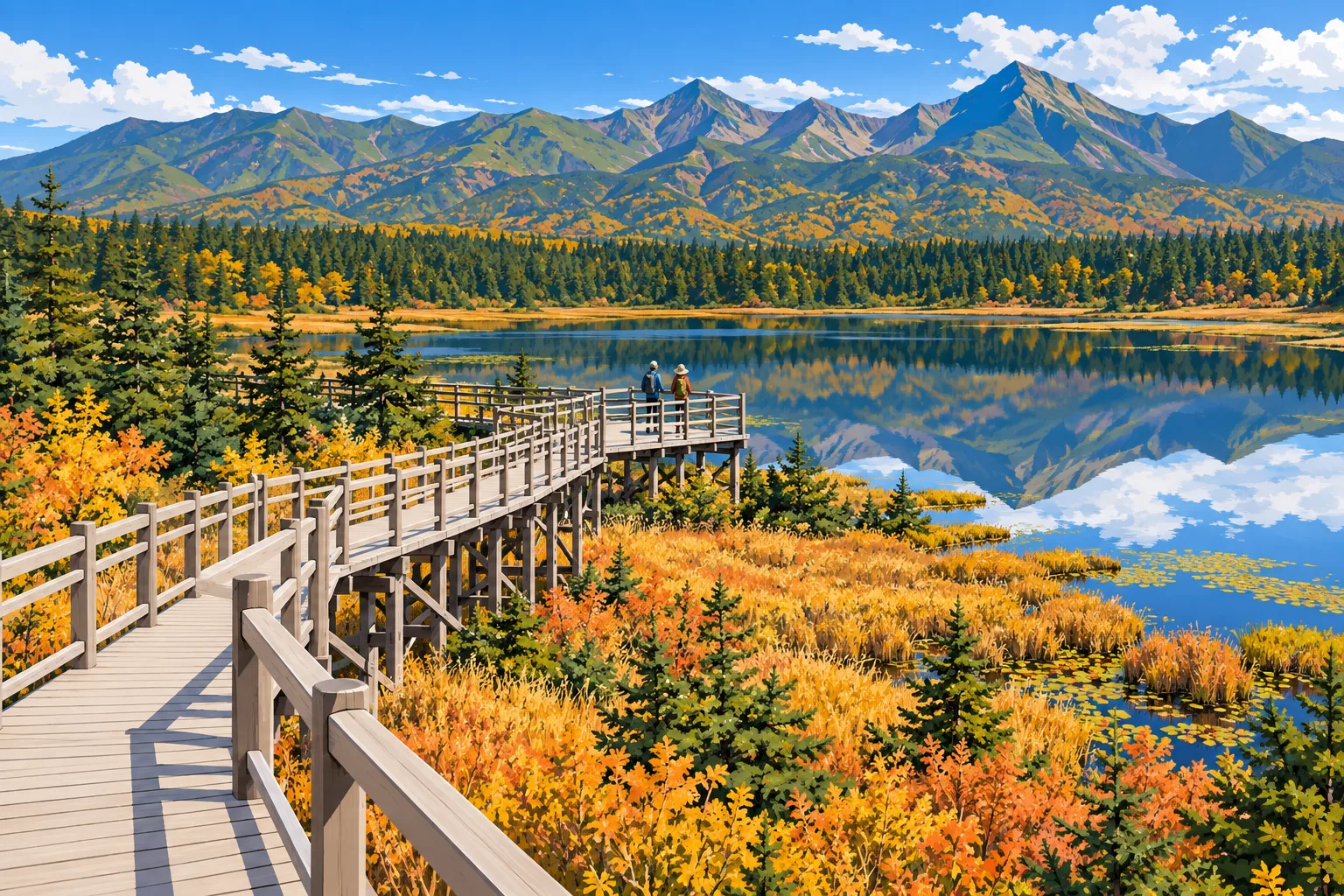
Shiretoko Five Lakes is often introduced as a single Hokkaido sightseeing stop, but there are two materially different ways to walk it. The elevated wooden path offers a straightforward view toward the first lake. The ground pathway enters the forest, has seasonal admission rules, and can close when brown bears are sighted. A traveler who books a bus or guide without distinguishing the routes can arrive with the wrong expectations.
This guide helps a Singapore-based visitor decide which walk fits the group, what to book, and what to do if access changes. Shiretoko is wildlife habitat, not a managed city park. Read the official Shiretoko Goko Lakes portal for the latest opening and bear notices immediately before travel, and follow staff and registered-guide directions on site.
Choose the elevated wooden path or seasonal ground pathway at Shiretoko Goko
The elevated wooden path is the simpler First Lake option during site opening; the ground pathway is a forest visit governed by seasonal rules. Pick the experience your group wants before arranging a guide or transport. Check current availability because bear activity, weather or operations may change either plan.
What the two routes actually provide
The official lakes overview describes an elevated wooden path and a ground pathway as two separate ways to see the area. The boardwalk page describes a level, elevated walk with views toward the first lake and notes wheelchair accessibility. The ground-pathway page describes forest loops, a one-way connection to the elevated path, and season-specific entry procedures. Those are not interchangeable names for the same trail.
Choose the boardwalk if the group's main objective is a scenic stop with less walking commitment, if you cannot secure a suitable ground-tour booking, or if a closure makes forest access unavailable. The official operator says use of the elevated path is free during its opening. “Free” does not mean the site is open every day of the year or that transport there is free. Check the portal's live pathway status, the road and the return before setting out. A level route may be more suitable for a wheelchair or stroller, but each person's access needs, surface conditions and transport boarding still deserve a direct check with the operator.
Choose the ground pathway if you actively want a forest walk and can meet its admission rules. It has short and long loops rather than a simple stroll to a single lookout. Time on the route can include check-in, a mandatory briefing or a guided group assembly, walking and the transfer back via the boardwalk. The official guide says there is no toilet or shop inside the ground pathways. Use the Field House facilities and carry what you need before entering, without carrying or exposing food in a way that could attract wildlife.
Neither route promises bear sightings. Seeing a wild animal from a distance is not a reason to leave the path, approach it or delay other walkers. A closed ground pathway is not an invitation to find an informal side trail. The Ministry of the Environment's Shiretoko description explains that the controlled trail system protects vegetation and manages conflict between people and brown bears. Treat the access rules as part of the experience, not as an obstacle to work around.
Choose by the group's actual constraints
Start with the least flexible member. An older visitor who wants a landscape view, a child who cannot sustain a long forest loop, or a traveler who needs predictable access may enjoy the elevated walk more than a guided route. A photographer wanting woodland perspectives may prefer the ground path, but should accept the one-way flow, group pace and closure possibility. A family should confirm that the guide accepts the children's ages and that every person can follow instructions in the tour language. Do not assume a guide listed on an English portal necessarily offers an English-language tour on your date.
The elevated path is not “all five lakes.” It is a viewpoint toward the first lake. If your goal is to see more of the lake system through forest scenery, confirm which ground loop a guide offers. Conversely, do not buy a ground tour just because the destination is named Five Lakes if your group primarily wants a short stop and mountain views. Read the current route map and tour description so the purchase matches the desired walk.
Think about pacing around a Shiretoko itinerary as well. A lakes visit may sit between an Utoro overnight stay, a nature-centre stop and a later transfer. A short boardwalk visit can sometimes fit a less certain schedule; a fixed guided departure requires arrival early enough for registration. The useful comparison is total door-to-door time, not only the trail's advertised walking time. Build a separate return margin instead of assuming that a bus waiting at the start will wait for your group at the end.
Our Hokkaido nature overview introduces the region's national parks and wildlife. This guide addresses the narrower decision that overview cannot settle: which of the two regulated Five Lakes walks to choose on a particular date. The decision depends on the current operator notices as much as on scenery.
A practical decision card
Write down four answers before paying for anything: the date and season of your visit; whether the group needs the boardwalk or wants a ground loop; whether a registered guide or lecture is required; and the latest departure you can safely take back to Utoro. Add the official status-page link to the same note. If any answer is unknown, keep the visit conditional rather than buying a tightly timed onward leg.
For a low-commitment visit, the plan can be: confirm the site is open, use the elevated path, and leave enough time to return by the last viable transport. For a deeper forest visit, it becomes: confirm the current ground-pathway regime, secure the relevant admission or guide place, check language and group suitability, and keep a boardwalk or alternate Utoro activity as the fallback. This small decision card prevents a scenic attraction listing from becoming a false guarantee of access.
Book a registered guide or safety lecture for the correct Shiretoko season
Ground-pathway access changes with the season. During the bear-active period, the official operator requires a registered guide; at other operating times it describes a required safety lecture and admission process. Check the current date rules and availability before booking. A general attraction ticket, parking place or bus seat does not replace the required ground-pathway procedure.
The season decides the entry method
The official ground-pathway guidance explains an ecosystem-protection or awareness period with a Field House procedure and safety lecture, and a bear-active period with registered-guide tours. The page and official FAQ describe the bear-active season as running from May 10 to July 31 in the site's established rules. Do not treat that recurring description as a promise that a future year's opening or closing day will be identical. Confirm the calendar for your actual trip and the live pathway status.
The guide-led period matters even if you are an experienced hiker. A registered guide is part of the operator's access control, not an optional premium add-on that can be declined by someone who knows how to use a map. The operator says guides receive bear-activity updates by radio, and tours can still be cancelled if bears appear. A booking reserves a place under the rules; it does not guarantee that the forest trail will remain open.
Outside the guide-led period, a short safety lecture and admission procedures may still apply to ground access. Read the official page's current instructions for forms, arrival, group size and any fee before leaving Utoro. A travel website may quote a fee or lecture time from an older season; the operator's current instructions control. Arriving just before your desired departure leaves no time for check-in, briefing, a queue or an operator-imposed delay.
The elevated wooden path has a different entry rule. The official operator describes free walking there during opening, without the ground tour. A traveler can therefore choose it when no guided tour fits. Still check its same-day status. “Ground path closed” and “boardwalk available” are separate facts to verify, not a single conclusion to assume. The site portal shows status for both walking routes.
Guide language, children and group pace
The official FAQ tells visitors to contact individual guide agencies about foreign-language tours. If your group needs English, ask the specific guide whether the briefing and field instructions will be understandable to everyone. Do not infer it from an English booking page alone. Also ask about children's minimum age, the short versus long loop, walking pace, cancellation handling and meeting location. A companion who cannot follow instructions in a bear-area group should not be sent into the forest on an assumed language arrangement.
If a child's attention span or another visitor's mobility makes a fixed group pace difficult, the boardwalk may be the better choice. The point is not to claim that one path is universally safe and the other unsafe. It is to align the route with the group's ability to follow the operator's instructions and complete the walk without rushing. A registered guide may refuse or modify access when conditions require it. Respect that decision even if it upsets the day's schedule.
Confirm what the booking covers. A ground-tour price is separate from transport to Shiretoko Goko and accommodation in Utoro. A guide booking also does not automatically supply rain gear, footwear or a meal. Ask what to wear for the forecast and current ground conditions, where to meet, and how far before departure you must arrive. The ground-pathway information warns that snow or wet conditions can affect footwear needs. Pack for local weather rather than for a generic “summer in Japan” image.
If a booking is unavailable
Try a different legitimate departure or loop, a different date while based in Utoro, or the elevated boardwalk. The ground-pathway page points visitors toward registered guides when regular availability is limited. Do not buy from an unverified intermediary promising to bypass the operator's system. Compare any third-party product to the official route, date, guide identity and cancellation terms before paying.
If the ground visit is your only reason for making a long detour, decide that explicitly. A flexible Utoro stay can absorb a closure better than a one-night trip with non-refundable transfers tied to a single trail slot. A person satisfied with the boardwalk and broader Shiretoko scenery may accept that risk; a person whose goal is a particular guided forest loop may prefer extra time or another destination. The choice is about what would still make the journey worthwhile after a route change.
Put the confirmation, operator contact and cancellation terms somewhere accessible offline. Mobile data can be patchy in rural travel. If the operator sends a changed meeting point or cancellation notice, your group should be able to find it without searching through an email inbox at a bus stop. Save a map of the Field House and the official site status page, but refresh the live page again whenever connectivity permits.
Check current bear sightings and switch to the boardwalk if ground trails close
Read the official pathway and bear notices just before leaving Utoro and again at the Field House. If the ground path closes, follow staff directions and check whether the elevated path remains open. Never cross a closure or improvise a forest route. Protect the bus return, guide cancellation and rest of the itinerary with a flexible alternate activity.
Make a two-stage status check
The official portal has distinct current-availability panels for ground and elevated pathways and a brown-bear sighting section. Read them on the evening before and on the morning of the trip, then treat Field House staff as the current authority on arrival. A screenshot from last week is not current access information. A sighting indicator means conditions need attention; it does not give a traveler permission to decide independently that a closed path is harmless.
The Shiretoko Nature Center rules emphasize avoiding bear encounters: stay aware of surroundings and signs, make appropriate noise, secure food, remain on the trail and never feed wildlife. If a bear is encountered, its public guidance says not to scream or run and to back away slowly while staying calm. This is general visitor guidance, not a guarantee or a substitute for an on-site guide's immediate instructions. Do not approach a bear for a photo, put yourself between a bear and a cub, or descend from a vehicle to get closer.
If your tour is cancelled because of a sighting, ask the operator which paths are open and how the booking is handled under its terms. Do not presume an automatic cash refund or transferable slot without checking the current contract. If the elevated path remains open and the group still wants a scenic stop, it can be a meaningful replacement. If it too is closed or the site's opening is affected, shift to an alternate permitted activity in or near Utoro that does not require entering the restricted area.
Tell the group before departure what counts as success. If one person expected a five-lake forest loop and another would be content with the First Lake boardwalk, they can agree on the fallback while everyone is calm. This matters especially when a guide or transport provider calls early with a change. A prepared alternative avoids pressure to ignore safety instructions after investing time and money in the trip.
Get there and get back without borrowing time from safety
The official access page places the lakes about 14 kilometres from Utoro, roughly a 20-minute drive. That is a geographic reference, not a guarantee of road conditions, parking or public-transport frequency on your date. Use the linked bus operator for the exact seasonal timetable. Check both the outbound and the final workable return before booking a tour. A bus that reaches the Field House minutes before group assembly is a risky connection.
If arriving by rental car, verify road access, opening hours and parking procedure with the operator. Do not make a tight drive after a long transfer just to meet a guide. If using a bus, leave margin for queues, weather, walking from the stop and the check-in process. The “last bus” problem is more serious after a fixed group walk: a slower finish or temporary closure can push you past a narrow connection. Keep a later feasible departure or pre-arranged return option where available, and avoid treating a taxi as guaranteed in a remote area.
Plan the rest of the day around the route you actually booked. The boardwalk visit may be short, but the journey from Utoro and return still take time. The ground route needs assembly and exit time beyond the walking minutes shown on a tour listing. If you have an onward rail or flight connection, separate that from the lakes visit with ample buffer rather than using a single advertised drive time to calculate it. Seasonal schedules and weather can change; an old PDF is not a safe travel-day timetable.
What to do at the Field House
Confirm the current pathway status before entering. If you booked a ground tour, report to the stated meeting point with the reservation name and enough time for the operator's instructions. Use the facilities before the forest route because the official ground-pathway guide says there is no toilet or shop inside. Put snacks away securely, carry water in a closed container, and follow any additional rules from staff about food and belongings. Do not leave litter or go off route to retrieve something dropped.
If staff change the route or close a section, ask for the permitted alternative and the expected finish point. The ground pathway joins the elevated path through a one-way gate; it is not a free-form network you can reverse to save time. Keep the group together, follow the guide during a tour, and do not chase wildlife or separate for a photograph. When a route has controlled access, an improvised shortcut can interfere with both safety and conservation.
At the end, verify your return transport before spending extra time at the viewpoints. If a guide booking was cancelled, retain the operator's message and check the stated refund or rescheduling process. If the boardwalk remained open, it may still deliver the mountain and first-lake view you came for. If the site closed entirely, use the planned Utoro alternative and revise later reservations promptly. A changed nature day is disappointing, but the decision should follow real access conditions rather than the itinerary written weeks earlier.
A simple final checklist
Before paying: decide boardwalk or ground loop, check the exact season's rules, confirm any registered guide and language, and verify the return route. The night before: read the official availability and bear updates, operator messages and weather. On the day: refresh status, arrive with margin, obey the Field House and guide, and leave time to return. If ground access disappears, switch only to a route staff say remains open or choose the planned Utoro fallback.
Shiretoko Five Lakes rewards visitors who treat the route choice as part of the trip rather than an afterthought. The free elevated walk and controlled forest trail can both be worthwhile; their booking and safety requirements are different. Make the choice from the current official notices and your group's needs, then keep the schedule flexible enough to respect a closure.