Japan Tokyo Short Trip eSIM and Wi-Fi Guide for Singapore Travelers

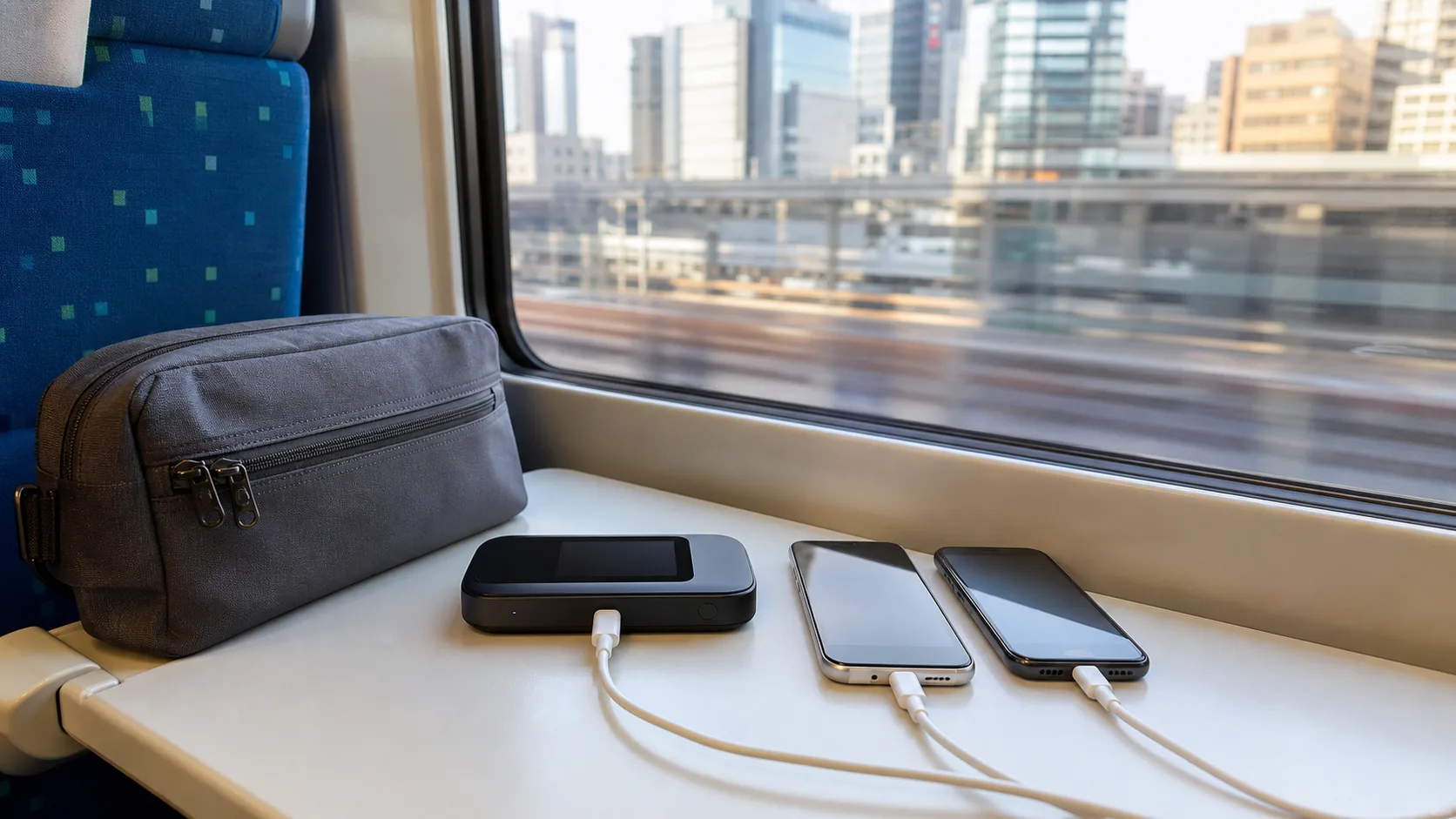
If you are flying from Singapore to Tokyo for a short trip, the connectivity choice matters more than most people expect. A bad setup wastes the first hour after landing, complicates navigation, and turns simple tasks like finding your hotel, checking train timing, or translating a menu into small friction points. The good news is that Tokyo gives you several workable options, and the best one is usually obvious once you know your trip length, group size, and how much you rely on your phone.
1. Fast Answer
For most Singapore travelers on a short Tokyo trip, a travel eSIM is the best default choice. It is fast to set up, avoids airport counter queues, and gives you data the moment you land. Pocket Wi-Fi is better if you are traveling as a family or group and want to share one connection across several devices. Roaming from a Singapore telco is usually the least attractive choice unless you already have a cheap travel bundle.
The practical rule is simple: if you are solo or traveling as a couple and each person has a phone that supports eSIM, go eSIM. If you are three or more people, or you need to connect a tablet, laptop, and multiple phones at once, pocket Wi-Fi becomes more competitive. If your travel style is more relaxed and you expect to spend time in hotels, cafes, and stations with usable free Wi-Fi, you can get by with a lighter data plan than you think.
Tokyo is not a city where you want to improvise connectivity after landing. Google Maps, Apple Maps, translation apps, train updates, and ride-hailing or taxi apps all become more useful when they are ready before you clear immigration. For a short trip, that convenience is worth paying for.
2. Context You Need
Tokyo is one of the easiest cities in Asia to travel around once your phone is connected. It is also one of the easiest cities to make unnecessarily difficult if you depend on spotty hotel Wi-Fi or try to buy connectivity only after arrival. The city is large, dense, and constantly in motion. Train transfers, station exits, neighborhood walking, and restaurant searches all get simpler when your data is stable.
For Singapore travelers, the comparison usually comes down to three options: a travel eSIM, a pocket Wi-Fi device, or roaming from your home line. A travel eSIM is a digital SIM profile you install on a compatible phone before departure or just after purchase. It does not require a physical card swap. Pocket Wi-Fi is a portable hotspot device that you carry, charge, and return after the trip. Roaming uses your Singapore number abroad, which sounds convenient but often costs more than the other two choices.
The reason this topic matters now is that Tokyo travel has become more mobile and more app-driven than older guidebooks suggest. Train maps are easy, but the city still rewards live navigation. Restaurant queues, day-trip timing, and same-day plan changes are all easier when your data is on from the start. That matters even for a short stay, because a short stay gives you less room to waste time.
There is also a practical difference between Tokyo and places where free public Wi-Fi covers most needs. In Tokyo, you can usually find Wi-Fi in hotels, convenience stores, airports, some cafes, and some stations, but it is not a complete solution. It works as backup. It is not the thing you want to bet your arrival on.
The other point Singapore travelers should keep in mind is that short trips usually have compressed arrival windows. You may land late, feel tired, and still need to make a train connection or find an airport bus. A setup that only works after a kiosk opens, a rental desk is staffed, or a voucher is exchanged introduces avoidable risk.
3. Step-by-Step Guide
The cleanest way to handle Tokyo connectivity is to decide it in the same sequence you would use to pack your passport and book your hotel. Start with your device, then your trip length, then your group size, then the amount of data you really need.
Step 1: Check your phone before you leave Singapore
Before you buy anything, confirm three things:
| Check | Why it matters |
|---|---|
| Phone is unlocked | A locked phone may reject an eSIM or physical SIM from another provider |
| Device supports eSIM | Not every phone does, and some older models support only physical SIMs |
| Dual-SIM behavior is understood | You want to know which line handles calls, texts, and data |
If your phone is locked to a carrier, do not assume you can fix it at the airport. That is the point where people lose time. If your phone does support eSIM, install the eSIM after purchase while you still have reliable Wi-Fi. That lets you test the profile before the flight instead of hoping the QR code works in a crowded terminal.
Step 2: Match the product to the trip length
For a short Tokyo trip, there is no reason to overbuy data.
- 3 to 5 days: a small eSIM plan is usually enough if you mainly use maps, messaging, and ride-hailing.
- 6 to 8 days: a mid-sized eSIM is usually the sweet spot.
- 9 days or more: compare the per-GB cost of a larger eSIM plan against a pocket Wi-Fi rental.
Tokyo is not data-hungry in the way remote-work travel can be. If you are not uploading videos, tethering a laptop all day, or streaming heavily, a moderate plan is enough. Most travelers use more data than they think on day one because they are downloading maps, checking trains, and messaging family after landing. After that, usage usually settles.
Step 3: Decide whether sharing matters
This is the most important decision after device compatibility. The right choice changes once more than one person depends on the same connection.
| Traveler type | Best option | Reason |
|---|---|---|
| Solo traveler | eSIM | Cheapest friction-free option |
| Couple | Two eSIMs or one pocket Wi-Fi | Depends on whether both phones support eSIM |
| Family of 3-5 | Pocket Wi-Fi | One device can serve everyone |
| Mixed devices with tablet or laptop | Pocket Wi-Fi | Easier to share across multiple gadgets |
| Longer stay | Larger eSIM or local SIM-style plan | Better value if you are using one phone heavily |
An eSIM is best when each traveler wants independence. Pocket Wi-Fi is best when one person handles the device and everyone else just connects. The tradeoff is battery management. With pocket Wi-Fi, someone has to carry, charge, and protect the unit. With eSIM, each person carries their own data and nobody has to think about a shared device.
Step 4: Buy before departure when possible
Buying before departure is the safer habit. It gives you time to read the activation rules, screenshot the QR code, and check whether the plan begins on purchase, on installation, or on first connection. Those details matter because some providers start validity immediately, while others begin the countdown only when the eSIM first connects to a network.
If you are using pocket Wi-Fi, pre-booking is even more important. Rental services often offer pickup at the airport, hotel delivery, or courier return. That is convenient when everything goes right, but it becomes less convenient if your plane is delayed or the pickup desk closes before you arrive. Short trips do not need that kind of uncertainty.
Step 5: Install and test the setup before you fly
For eSIM, do the setup while you are still in Singapore:
- Buy the plan.
- Install the eSIM profile.
- Leave your primary Singapore line active for calls and texts if you need it.
- Set the travel eSIM as the data line.
- Turn off any setting that would accidentally use your home line for data roaming.
- Open a browser and a map app to confirm the line is ready.
Do not wait until you land to learn that the QR code is malformed, the profile was not installed correctly, or your phone prefers the wrong line for data. A five-minute test before departure can save a much longer airport headache.
Step 6: Keep your first Tokyo day simple
Once you land, do not use connectivity as a reason to overplan the day. The first goal is to get from airport to hotel or from airport to your first train connection without stress.
Use your data for:
- live airport and train directions
- translation if you need help at a ticket gate or hotel desk
- checking whether your room is ready
- confirming a dinner reservation or meeting point
That is enough. You do not need to burn data by streaming, downloading large files, or leaving hotspot on constantly. For a short Tokyo trip, data is there to reduce friction, not to become a destination in itself.
Step 7: Build a backup
Even the best setup can fail because of a dead phone battery, a bad airport signal, or user error in the settings menu. Carry one backup:
- a screenshot of your eSIM QR code
- the provider support contact
- your hotel address in Japanese and English
- an offline map of the airport and your first neighborhood
- a power bank
If you are using pocket Wi-Fi, the backup should also include a charging cable and a clear plan for who carries the device during the day. The fastest way to ruin a shared hotspot is to let it die during the one hour when everyone splits up.
4. Costs, Hours, and Logistics
The price difference between eSIM, pocket Wi-Fi, and roaming is large enough that it should shape the trip, not just decorate it.
Recent 2026 eSIM pricing examples for Japan look roughly like this:
- small plans around US$4 for 1GB
- mid-size plans around US$17 for 10GB
- unlimited 7-day plans around US$25
- larger unlimited monthly plans around US$66
You do not need to buy the exact cheapest plan. The useful comparison is the cost per day and the cost of convenience. A short Tokyo trip normally falls into the low-cost eSIM category unless you are tethering multiple devices or using your phone heavily as a work tool.
Pocket Wi-Fi pricing varies more, because the final price depends on rental length, insurance, delivery or pickup method, and whether the plan includes unlimited data or fair-use limits. In practice, a pocket Wi-Fi device often makes sense when the total device cost is shared across several travelers. If one person pays for the unit and three or four people use it, the per-person cost can be very reasonable. If one solo traveler carries the whole burden, eSIM is usually the cleaner value.
Roaming from a Singapore telco is usually the most expensive option on a short trip unless your plan already includes a generous Japan allowance. Roaming is convenient because you keep your home number active without switching profiles, but convenience alone rarely closes the price gap. For a few days in Tokyo, roaming is best treated as a backup or emergency option rather than the default.
There are also hour-based logistics to consider. eSIM is available 24/7 because it is digital. That matters if you buy late at night, leave on an early flight, or land outside normal retail hours. Pocket Wi-Fi, by contrast, depends on pickup and return windows. Airport counters, hotel delivery cutoffs, and courier processes can all impose deadlines. If your trip includes a midnight arrival or an awkward transfer, eSIM removes a whole layer of scheduling risk.
Some practical booking caveats:
- Do not assume an airport counter will be open for your arrival time.
- Do not assume hotel Wi-Fi will be strong enough to download a large eSIM profile.
- Do not wait until the last minute if you need a printed or forwarded QR code for a second device.
- Do not forget that hotspot use drains battery quickly on both eSIM and pocket Wi-Fi setups.
If you want a simple budgeting rule, use this:
| Scenario | Recommended budget logic |
|---|---|
| Solo short trip | Buy a small or mid eSIM plan |
| Couple with eSIM phones | Buy two eSIMs, compare combined cost to pocket Wi-Fi |
| Family trip | Compare one pocket Wi-Fi against several eSIMs |
| Business-style trip with laptop tethering | Pocket Wi-Fi or a larger eSIM plan |
The day you land is not the day to discover that your plan expires too soon. Build in one extra day of validity if your return flight is late, if you have a transit buffer, or if you want connectivity for the airport ride home.
5. Variations and Edge Cases
The best solution changes depending on who is traveling and how aggressively you use your phone.
If you are traveling solo for a weekend, eSIM is almost always the cleanest answer. You set it once, forget it, and keep moving. The only reason to choose pocket Wi-Fi instead is if your phone does not support eSIM or if you already know you need to connect a laptop or tablet.
If you are traveling as a couple, the decision becomes closer. Two eSIMs are still simple and often cheap enough, especially if each phone can install its own profile. Pocket Wi-Fi wins if one person wants to use a laptop or if one phone is old, locked, or incompatible. The more independent you are as travelers, the more sense individual eSIMs make.
If you are traveling with family, pocket Wi-Fi deserves a serious look. A shared device can reduce the number of accounts, QR codes, and setup steps you need to manage. That said, family travel also means more battery drain and more chances for someone to walk away with the hotspot in a bag or stroller. If your group splits often, separate eSIMs may still be better.
If you are taking a short Tokyo trip but also plan to visit Kyoto, Osaka, or a day trip outside the city, the answer does not really change. A national or Japan-wide eSIM plan is usually enough. Just check that your provider supports the whole route and that there are no regional restrictions hidden in the fine print.
If you are a heavier user, the edge case is not whether you need data, but what kind of heavy use you mean.
- Heavy maps and messaging: eSIM is fine.
- Heavy hotspot use for laptop work: pocket Wi-Fi may be better.
- Heavy video calls: prioritize stability and battery management.
- Heavy uploads or downloads: buy a larger plan than you think you need.
If you are traveling during peak season, having a pre-arranged connection matters more. Crowded airports make kiosk pickup slower, and airport queues are the last place you want to be solving a SIM issue. In peak periods, the advantage of eSIM is not just convenience. It is time saved when everybody else is also trying to figure things out.
6. Mistakes to Avoid
The first mistake is assuming all phones support eSIM. Many do, but not all. Check before you buy.
The second mistake is buying too little data and then treating every map refresh like a crisis. Short trips usually do not need giant plans, but they do need enough headroom for live navigation, messaging, and occasional translation.
The third mistake is leaving setup until after landing. That turns a five-minute task into an airport problem, and airport problems are always more annoying than they looked on the packing list.
The fourth mistake is choosing pocket Wi-Fi for a solo trip just because it sounds simpler. It is not simpler if you are the only person carrying it, charging it, and remembering to return it.
The fifth mistake is forgetting to protect your battery. Any connectivity plan is useless if your phone dies in the middle of the first transfer.
7. FAQ
Is eSIM better than pocket Wi-Fi for Tokyo?
Usually yes for solo travelers and couples. eSIM is lighter, easier to activate, and harder to forget. Pocket Wi-Fi is better when several people need to share one connection or when you need to connect multiple devices at once.
How much data do I need for a short Tokyo trip?
Most short-trip travelers are fine with a small or mid-sized plan if they mainly use maps, messaging, ride-hailing, and occasional searches. If you plan to hotspot a laptop or watch a lot of video, move up one size.
Can I just use roaming from Singapore?
You can, but it is usually expensive for a short Tokyo trip unless your telco already includes a strong Japan roaming package. Roaming is convenient, but the value is often worse than eSIM.
Do I need a local Japanese phone number?
For most short tourist trips, no. Data is the main need. Some services and bookings may work better with a local number, but most visitors can get by without one if their main goal is navigation, messaging, and normal travel logistics.
Will my phone hotspot work with a travel eSIM?
Often yes, but not always in the way you expect. Some providers allow hotspot use freely, some limit it, and some plans are better than others for tethering. Check the plan details before you buy if sharing data matters to you.
What if my eSIM does not activate?
Restart the phone, confirm the eSIM profile is installed, check that data roaming is set correctly for the travel line, and make sure your home line is not trying to carry the data session. If that still fails, contact provider support before you panic. Most issues are setup problems, not network failures.
Is free Wi-Fi enough in Tokyo?
Free Wi-Fi is useful as a backup, but it is not reliable enough to be your only plan. Hotels, cafes, stations, and airports help, but the quality is uneven. For a short trip, you want your own connection as the default and public Wi-Fi as a bonus.
8. Next Steps
If you are planning a short Tokyo trip from Singapore, the best next move is to decide three things before you buy anything: whether your phone supports eSIM, whether you are traveling alone or sharing a connection, and how much data you actually need for navigation and messaging. Those three answers will usually tell you the right product immediately.
Once that is settled, install or order the plan before departure, keep your battery backup ready, and save the hotel address and first-day route offline. That is enough to make arrival smooth. The rest of Tokyo travel becomes easier once your phone is not the thing you need to think about.
Related: japan-tokyo-short-trip-neighborhood-guide-for-first-time-visitors
Related: japan-tokyo-short-trip-first-time-travel-guide-for-short-holidays
Related: japan-tokyo-short-trip-itinerary-for-singapore-travelers