Japan Heat Alert: Change a Summer Day Plan

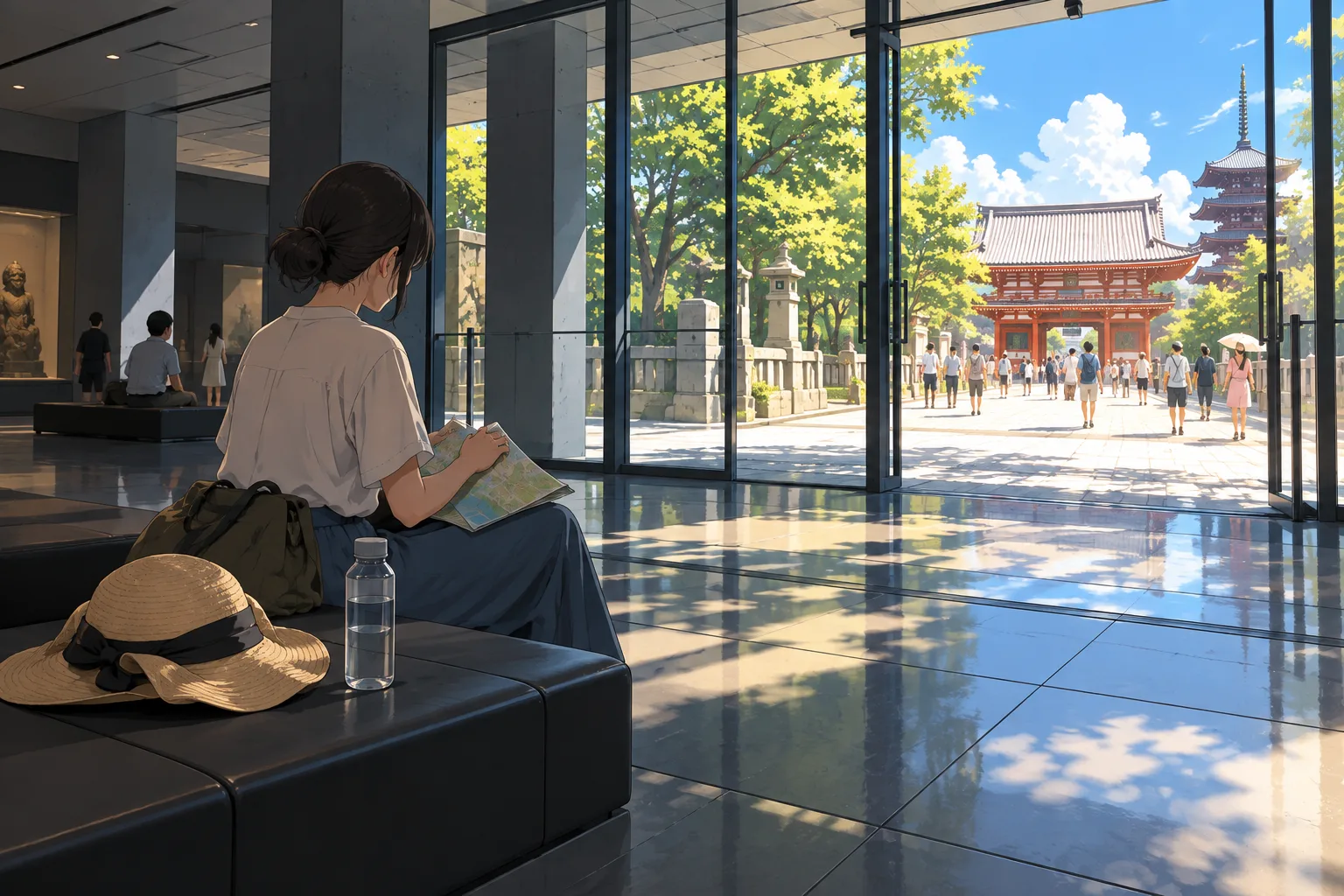
The day you planned for an open-air festival, castle grounds and a long walk across town begins with a heatstroke alert on your phone. The admission tickets may already be paid for, but the itinerary is still a choice. First check whether the alert covers your actual destination and time. Then decide which outdoor commitments can safely move, shorten or go.
This guide is for Singapore-based visitors already travelling in Japan during hot weather. It shows how to use Japan's official heat information to change one day, not how to predict every summer week before departure. It focuses on exposure, reservations and companion check-ins; it cannot diagnose illness or replace medical advice. A serious symptom calls for help, not a better spreadsheet.
Read the official heatstroke alert for the destination
Open Japan's Ministry of the Environment heat-illness site and check the alert for your destination, including the date and update time. Compare the local WBGT forecast with the hours of your outdoor plan. A normal air-temperature headline alone does not describe the full heat risk along your route.
Match the alert to the right place and day
The Ministry of the Environment's English heat-illness portal displays heatstroke alerts, special alerts, and heat-stress information for Japan. Open the current map rather than reading a screenshot from a travel forum. A forecast shared yesterday may refer to a different region or to tomorrow; both the geography and timestamp matter. If your day spans Tokyo and a second prefecture, check each relevant destination. A hot day in the city and a mountain excursion can have different local conditions. Do not use a nationwide headline as a substitute for the place where you will be exposed.
Record the forecast for the hours you intended to be outdoors. A morning walk before shops open, an exposed midday queue, and an evening festival are not the same exposure. The official page includes today's conditions and the next day's alert where available, so a change made the previous evening can be reconsidered in the morning. Weather and heat forecasts can change. Refresh the page before a long transit leg, particularly when the attraction has a fixed entry time and there may be no easy indoor shelter after arrival.
Use a normal local forecast for rain, cloud, wind and general timing too, but do not mistake the air temperature on that forecast for the heat-stress index. Japan's environment ministry calls its index WBGT. Its WBGT guideline connects the index to heat-illness precautions and shows different categories from an ordinary thermometer reading. Humidity, solar radiation and other conditions contribute to how taxing a place can feel. A photograph of someone enjoying the same site last year tells you little about your own visit on a high-risk day.
The ministry's guideline places WBGT 28–31 in severe warning and 31 or higher in danger for exercise guidance. It states that heavy exercise should be avoided at the severe-warning range and that exercise should be stopped at 31 or above except in special cases, with particular caution for children. Sightseeing is not a sports event, so these categories do not automatically cancel every museum entrance or short walk. They do, however, argue strongly against treating a long, exposed hike, a fast-paced neighbourhood crawl, or standing in a sunlit queue as an ordinary afternoon. The sensible travel decision can be more conservative when a companion is unwell, young, older, pregnant or not acclimatised.
Read an alert as a decision trigger
An alert is useful only if it changes a concrete action. Write your three most exposed commitments for the day: perhaps a hilltop shrine approach at noon, an open-air market, and an outdoor performance. Mark which require a long approach, which have indoor or shaded alternatives, and which can be skipped without trapping you far from a train station. A special alert or sharply elevated local WBGT should prompt a stronger reduction in outdoor exposure than a routine warm day. If you cannot identify a cool place to stop or a low-effort exit, the route is too brittle for uncertain heat.
Distinguish a current official status from a seasonal travel tip. The Japan National Tourism Organization's national-park climate guide explains that heat and humidity rise rapidly after the rainy season and recommends hydration and sun protection. That context helps explain why a July or August route needs slack. It does not tell you whether your exact prefecture has an alert at 11 a.m. today. Use the environment ministry for that live decision, and use attraction or operator pages for opening and closure details.
If the official page does not load, try a reliable connection through your hotel or a station, and ask local staff where to find the current alert in Japanese. Do not infer “no alert” from a blank page. If the official season of alert publication has ended, use the available WBGT and weather information rather than assuming heat cannot occur outside peak summer. Conditions at a sheltered street, exposed temple approach and concrete platform may differ. This article deliberately avoids publishing a live alert value that will be stale by the time you read it.
Put the question into one sentence
Before buying another ticket, state the day's decision plainly: “Because the official heat information for [area] at [time] is [level], we will [cancel/shorten/move] [outdoor activity] and use [cool alternative].” This sentence stops a group from collecting interesting weather numbers but keeping the same unsafe itinerary. If you have no specific replacement yet, pause the purchase. A little unplanned time in an air-conditioned station can be more useful than rushing to an exposed attraction simply because it is on the list.
Our Japan best-time-to-visit guide helps choose a season before booking. This page starts later, with a summer booking and a new heat warning. The choice is how to change today's route with the information you now have, not whether Japan is generally worth visiting in summer.
Reduce exposure and reschedule outdoor bookings
Sort your plan by exposure, not by how expensive the ticket was
List every planned stop, its door-to-door travel time, the exposed walking or queuing portion, and an indoor refuge nearby. A ticket's price is already committed; extra minutes in high heat are a new cost. A five-minute covered transfer to a museum may be workable while a 45-minute uphill approach to an open lookout is not. Move the most exposed activity out of the hottest period or remove it. If the attraction only opens at midday and has no shade, a refund request may be a better use of your energy than trying to “get your money's worth.”
Check the actual booking terms: refund deadline, time-slot change, weather policy, cancellation process and whether the ticket is transferable. Contact the organiser or platform through the original booking channel. An official heat alert does not automatically entitle every traveller to a refund. Some events may proceed and some may change operation; do not guess either outcome from the weather icon. For a guided tour, ask the operator how it adjusts the route and whether sheltered transport or breaks are available. If the answer is vague and the route is exposed, decide whether to skip it under the stated terms.
Our Japan summer-festival guide helps select seasonal events. The evening timing of a festival may reduce direct sun but does not make a crowded or humid event risk-free. Verify start time, entrance queue, route to and from the station, and the organiser's latest notice. If you attend, create a short exit plan rather than assuming you will stay until the last firework. A child who has been outdoors all day may need the festival removed even if the evening forecast is less intense. The alternative can be a short indoor dinner and an early return, not a second crowded attraction.
Shift one substantial indoor visit into the hottest hours: a museum, gallery, aquarium, covered shopping district or simply a long lunch near your route. Check today's opening hours and ticket availability before traveling there. “Indoor” is not a magic property; a tiny unventilated shop or long outdoor entry line may be hotter than the original plan. Find the entrance, the queue conditions and the nearest exit to transit. In a rural area, a visitor centre or hotel break may be the only reliable cooled stop. Do not invent a city-style indoor itinerary where none exists.
For a city day, draw a shorter loop around one station instead of crossing town three times. Reduce the number of transfers and the distance from the platform to the attraction. If a site is worth keeping, go during its cooler opening period if the current forecast and operator hours support that move. Reserve the midday block for a cool interior and food. Leave at least one unbooked slot so a companion can rest without making the whole group miss a prepaid connection. The goal is not to fit the original list into fewer hours; it is to remove exposure.
Protect the route home
An itinerary is unsafe when the return journey is harder than the outbound journey. Check the last convenient train or bus, the walk from the stop to your lodging, and whether a cooled waiting place is available if service is delayed. Carry enough water for the transit you actually expect, but do not use a bottle as a reason to continue an exposed activity against worsening conditions. A taxi may be a useful shorter exit in some places, yet availability and cost vary; do not build your only escape plan around one appearing immediately at a remote trailhead.
When adjusting a group day, agree on the meeting point and communication method before splitting. A companion who chooses to leave early should know the station name and route, not merely “go back to the hotel.” Use a map link and written address that works offline if coverage fails. If one person needs a slower pace, keep the route flexible rather than making them hurry to protect a timed ticket. A shortened day can still include a meaningful stop; it should finish while people still have energy to travel home.
For strenuous nature travel, apply an even more cautious filter. JNTO's national-park seasonal guidance notes the rapid rise of summer heat and humidity. An exposed mountain path, long coastal trail or cycle ride has fewer easy cooled refuges than a city. Check the local park's current access and any operator safety notices. If the official WBGT guidance and the route's exposure make safe completion doubtful, change the plan rather than starting and relying on willpower to turn back later. Do not substitute an equally strenuous outdoor route just because its entrance is free.
A booking example
Suppose your Kyoto day includes a 10 a.m. indoor exhibition, a 1 p.m. hillside walk and an evening outdoor performance. The environment ministry shows elevated heat risk for the relevant area. Keep the museum if reaching it is manageable. Call the hillside tour operator about moving or cancelling under its terms; if the approach and return are exposed, do not preserve the walk merely because it was paid for. Ask the performance organiser for its current schedule, check the queue and return route, and leave it optional. Build in a cooled lunch and hotel break. That plan is less ambitious on paper but much more likely to leave the group able to enjoy the next day.
Change one fact: the midday stop is a nonrefundable reservation. The refund outcome does not change the heat conditions. Ask whether a different time or someone else using the booking is permitted; if not, decide whether the sunk cost is worth the exposure. A visitor can choose to forfeit a ticket. Keep a record of any operator notice or policy if you later discuss insurance, but do not assume a travel-insurance policy pays because it was hot. The safe route comes first and the financial questions follow the contract you actually bought.
Choose cooling stops and monitor companions during the day
Make the break plan visible before anyone feels ill
Pick a cooled stop near each outdoor segment and a simple return point. Say when the group will check in: after the first attraction, before the longest walk, and before the evening decision. Set a conservative threshold for ending an exposed leg; nobody should have to persuade the group after they are already dizzy or exhausted. If a child, older relative or person with a relevant health condition is travelling with you, build their pace into the route from the start. People have different tolerance and the same weather reading does not make the same plan suitable for everyone.
Japan's environment ministry's English prevention leaflet emphasizes avoiding heat, using air conditioning appropriately, taking breaks, and paying attention to hydration and symptoms. Carry drinking water and plan where to refill or buy more, especially between stations and outdoor sites. For heavy sweating, follow appropriate health guidance on replacing both fluid and salt; a person with a condition or prescribed fluid restriction should seek individualized medical advice rather than following a generic travel rule. Sun protection and light clothing can reduce exposure, but neither makes a high-risk midday walk safe by itself.
Look for clear changes in how a companion feels or behaves. Headache, dizziness, unusual weakness, confusion, collapse or inability to drink should not be shrugged off because the tickets are timed. Move the person to a cool place, stop the activity and seek appropriate medical help. Do not diagnose a particular heat illness from a blog checklist or force water into someone who cannot safely swallow. Japan's Ministry of the Environment provides prevention advice, while the JNTO visitor hotline page lists 119 for urgent ambulance help. The tourism hotline can help with visitor information; it is not a substitute for emergency care. If the person is seriously unwell, call 119 promptly.
Ask for help with the location in terms staff can act on: the station, attraction entrance, nearby landmark and the person's symptoms. Keep an address in Japanese on your phone if possible. If you do not speak Japanese, a nearby staff member may help convey the location, but do not delay an emergency call while searching for a perfect translator. If symptoms seem less severe but persist or worsen despite rest, seek medical assessment. This article does not recommend a drink quantity, medication or diagnosis; those depend on the person and condition.
Check again after the indoor stop
Heat planning is not a one-time morning decision. Refresh the official heat information when you leave a cooled building, because the next outdoor leg may fall in a different period from the one you planned for. Look at your companions too. A group that has been walking slowly, losing appetite or asking repeatedly for rests should not add a “quick” outdoor viewpoint at the end. A forecast improvement is not a command to return outside if the people on the trip need rest. The easiest activity to cut is often the last one, before anyone is stuck far from the hotel.
Keep an eye on the temperature of waiting spaces. An unshaded bus stop, concrete square or crowded platform can be a substantial exposure even when the attraction itself is indoors. If you have time, choose a shaded or cooled waiting location close enough to reach your service safely. Check which station exit has lifts or escalators if mobility matters; a long stair climb in heat can turn a reasonable route into a hard one. Do not move between several air-conditioned buildings if the connections between them are long and exposed.
At the end of the day, write down what worked for tomorrow: alert location and time checked, the outdoor section you removed, the cooled refuge that was genuinely accessible, and how each traveller felt. A return to ordinary sightseeing tomorrow should depend on tomorrow's current conditions and the group's recovery, not on wanting to “make up” the missed stop. A good summer day in Japan may have one planned attraction, a pleasant indoor meal and plenty of unhurried time. The itinerary succeeds when everyone can travel onward safely.