Japan Budget Trip Public Transport Mistakes to Avoid

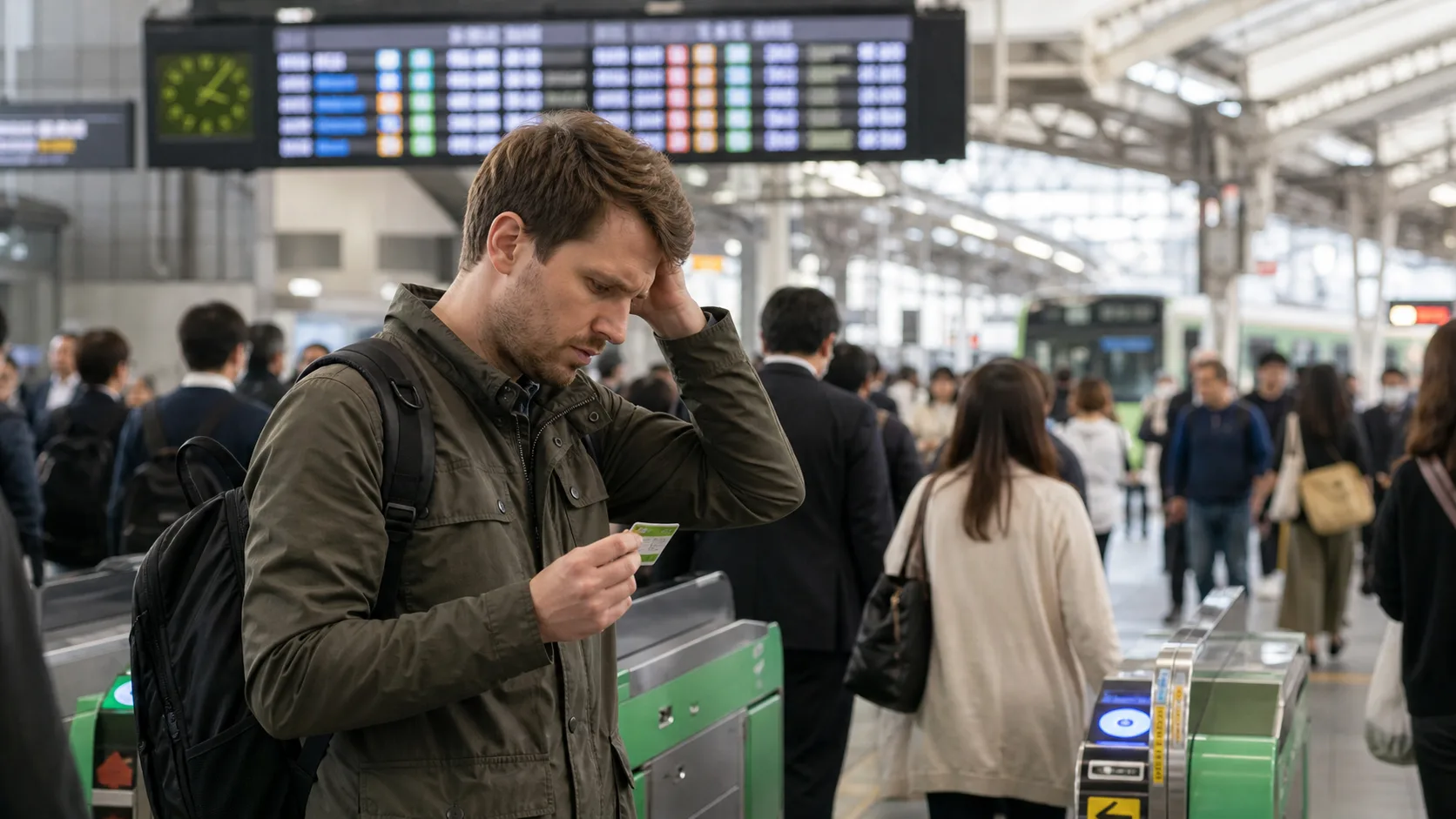
If you are planning Japan on a budget, transport can quietly become one of the biggest trip costs. The good news is that the expensive mistakes are predictable: buying the wrong rail pass, assuming an IC card solves every journey, skipping seat reservations on busy legs, and mixing private railways with JR lines without checking coverage. Fix those four things and the rest of your trip gets much easier to budget.
1. Fast Answer
The fastest way to avoid overspending on Japan transport is to plan around the actual routes you will ride, not the transport brand you recognize. For many first-time visitors, that means using an IC card for local travel, buying separate tickets for long-distance shinkansen legs, and only considering the nationwide JR Pass if the fare math clearly works for your itinerary. The mistake is not "using trains in Japan." The mistake is paying pass-level prices for a trip that mostly needs point-to-point tickets.
The other common budget leak is route ignorance. Japan's transport network is excellent, but it is not one system. JR, private railways, subways, airport rail links, and buses all overlap, and what looks like a cheap direct ride in one city can become two or three paid segments if you do not check the operator and transfer rules first. If you are traveling from Singapore, the safest framing is simple: assume every city has its own micro-system and every intercity leg needs a separate cost check.
2. Context You Need
Japan is easy to navigate once you understand the basic layers. Local rides in cities like Tokyo, Osaka, Kyoto, Fukuoka, and Sapporo are usually handled with an IC card, which is a rechargeable contactless card used for trains, buses, and even some shopping. Long-distance rail is different. JR operates many major intercity lines, including shinkansen, while private railways and municipal subways cover a lot of city travel that JR does not reach.
That distinction matters because budget travelers often think in terms of "a train is a train." In Japan, the operator determines the rules, the pass coverage, and sometimes even the platform you need. A subway ride across central Tokyo may be cheaper than a JR route, while a JR suburban train might be the easiest way to move between neighborhoods. In Kyoto, the bus network can be useful but slow, and in Osaka private railways can be more convenient than JR for certain destinations. If you compare only the headline fare, you can miss the real cost, which is time, transfers, and the price of getting to the station you actually need.
There is also a second layer that budget travelers underestimate: ticketing behavior. Japan is punctual, but not every service is designed for casual hop-on travel. Reserved-seat shinkansen services, limited express trains, and some airport routes need more planning than a regular metro ride. On the other hand, local rides are often frictionless if you load enough balance onto your IC card and tap through. The best savings come from matching the right payment method to the right trip type instead of forcing one ticketing habit onto every journey.
For a Singapore-based traveler, this usually means you should plan Japan transport the way you would plan a multi-city regional trip: check the actual route, check whether a pass really pays off, and do not assume one city card will cover everything once you move to another prefecture. The country is very friendly to visitors, but it rewards a small amount of pre-trip homework.
3. Step-by-Step Guide
Step 1: Map your trip by route type, not by attraction list
Start with a simple list of where you sleep, where you arrive, and which day trips you want to take. Then split each journey into one of three buckets:
| Trip type | Typical payment method | Examples |
|---|---|---|
| City hops | IC card | Metro, local JR, bus, tram |
| Intercity rail | Reserved ticket or pass | Tokyo to Kyoto, Osaka to Hiroshima |
| Airport transfer | Airport rail ticket, bus, or IC card | Narita, Haneda, Kansai, Chubu |
This matters because budget mistakes usually begin with the itinerary, not the checkout page. If your trip is mostly Tokyo plus one day trip to Yokohama and one to Kamakura, a nationwide rail pass is probably unnecessary. If your trip is Tokyo, Kyoto, Osaka, Hiroshima, and Fukuoka in a short window, separate tickets may still be expensive enough that a pass deserves a real comparison. The point is to compare the exact route, not the romantic idea of "lots of train travel."
Step 2: Buy an IC card for daily local travel
For most first-time visitors, an IC card is the simplest baseline. JR East's Suica page describes Suica as prepaid electronic money for transport and shopping, and Welcome Suica as a visitor card that lasts 28 days. The official JR East guidance also says top-ups are cash only, with a maximum balance of 20,000 yen.
That creates a practical budget rule: load enough cash to avoid constant recharging, but not so much that you are stranded with unused balance at the end of the trip. For short visits, a visitor card like Welcome Suica can be convenient because there is no 500-yen deposit, while a standard Suica includes that deposit and can be refunded later. If you plan to reuse the card on a later Japan trip, the deposit version may be worth it. If this is a one-off trip and you do not want refund hassle, a visitor card can be simpler.
Step 3: Separate local rides from shinkansen decisions
Do not let a city card shape your long-distance decisions. A common budget mistake is assuming an IC card can cover the entire trip to the next city. It cannot. When you ride a shinkansen or limited express, your local IC card may help with gate entry in some scenarios, but it does not remove the need for the correct fare and any reserved-seat or express ticket.
For the budget traveler, this is where planning saves real money. If you are going from Tokyo to Kyoto and back, compare the cost of two point-to-point shinkansen tickets against any pass you were considering. If you are only doing one long ride and spending the rest of the trip in one region, separate tickets usually win. If you are doing multiple long-haul legs in a short period, a pass may start to make sense. The important thing is to price the actual movement you will do, not just count how many days you will "be in Japan."
Step 4: Check whether a rail pass actually beats point-to-point tickets
The nationwide JR Pass is the classic trap for budget travelers because it sounds like a money-saving default. In reality, it is only a good deal when your itinerary is rail-heavy enough to justify it. The official Japan Rail Pass site lists current online prices at 70,000 yen for a 7-day Green Car pass, 50,000 yen for a 7-day Ordinary pass, 110,000 yen for 14 days Green, 80,000 yen for 14 days Ordinary, 140,000 yen for 21 days Green, and 100,000 yen for 21 days Ordinary. The same official price page also shows that purchases made on or after October 1, 2026 will cost more.
That makes the math obvious: if your route is mostly local metro plus one or two medium-distance journeys, the pass is often too expensive. If your route is a chain of major shinkansen hops across Japan, it can still be useful. Do not buy it because you have seen it recommended in old forum posts. Buy it because your route truly uses it.
Step 5: Reserve seats early on busy intercity legs
Reserved seating is another place where budget travelers lose time or pay more than they need to. The official JR Pass site notes that reserved seats can be booked in advance when purchased on the official website, and that online purchase is the easiest option. Even if you are not using a pass, the rule of thumb remains the same: popular time slots fill first, especially on Friday evenings, Sunday afternoons, holiday periods, and routes connecting Tokyo, Kyoto, Osaka, and Hiroshima.
If your budget is tight, booking earlier can help you avoid a last-minute premium decision such as buying a more expensive departure time or splitting up your group because only scattered seats remain. It also helps with luggage planning. When you know the train time ahead of schedule, you can decide whether to take a larger bag with you, send it ahead, or use a luggage service.
Step 6: Plan airport transfer separately
Airport transfer is where many travelers waste money because they treat the arrival leg like a normal city ride. Narita, Haneda, Kansai, and Chubu all have different rail and bus options, and the cheapest choice is not always the most efficient when you arrive tired. If your hotel is near a station that is directly served by a cheaper airport line, use that. If it is not, a bus or a single transfer can be smarter than saving a small amount on paper and then dragging luggage across three platforms.
For a budget trip, the right approach is to calculate airport transfer as part of the daily transport budget. A trip that saves 500 yen but costs 40 minutes and two transfers may not be a real saving if you are exhausted and likely to make an additional taxi decision later.
Quick planning checklist
- Confirm every intercity segment.
- Mark which rides are JR, which are subway or private rail, and which are buses.
- Decide whether an IC card, point-to-point tickets, or a pass fits each segment.
- Reserve shinkansen seats early if the route is popular.
- Budget extra cash for IC top-ups and station-side meals.
That checklist sounds basic, but it is exactly what keeps transport from becoming the hidden cost that blows a "budget" Japan trip.
4. Costs, Hours, and Logistics
Transport budgeting in Japan is most useful when you think in yen and in categories. Local rides are cheap enough that the best saving is usually convenience, not heroic fare hacking. Intercity rides are where the numbers can swing quickly.
Here are the key current logistics to keep in mind:
| Item | Current practical detail |
|---|---|
| Suica deposit | Standard Suica includes a 500-yen deposit |
| Suica top-up | Cash only, up to 20,000 yen balance |
| Welcome Suica validity | 28 days from purchase |
| JR Pass online prices | 7-day Ordinary 50,000 yen, 14-day Ordinary 80,000 yen, 21-day Ordinary 100,000 yen |
| JR Pass current note | Official page shows a price increase for purchases on or after October 1, 2026 |
| Nozomi and Mizuho | Require a special ticket for JR Pass holders |
The biggest logistics mistake is assuming you can fix everything at the station. Sometimes you can, but not always comfortably. During peak travel periods, ticket counters and seat machines can get busy, especially at major hubs like Tokyo, Shin-Osaka, Kyoto, and Hakata. If you need a specific train or reserved seat, doing it online or the day before is safer than arriving and hoping.
Another logistics point is payment method. Suica top-ups are cash only on the official JR East page, which means you should always keep enough yen on hand even in a cashless trip. Japan is increasingly card-friendly in shops, but station payment habits still rely on cash more than many Singapore travelers expect. If you are trying to survive on a card-only plan, transport is where that plan usually breaks first.
A final practical detail: the "hours" of the transport system are not the same as the hours of the ticket office. Train lines can run early and late, but staffed counters, tourist centers, and some reservation desks have narrower operating windows. If you plan to buy a pass, collect a reserved-seat ticket, or ask for platform help, do that during normal business hours instead of assuming you can sort it out after dinner.
5. Variations and Edge Cases
Tokyo and Osaka are not the same budget problem
In Tokyo, the sheer number of rail and subway operators means you can optimize for whichever route is cheapest or fastest. You may use JR one day, Tokyo Metro the next, and a private line the day after. In Osaka, private railways often connect nicely with the day-trip patterns travelers actually use. In both cities, an IC card keeps things simple, but it does not guarantee the cheapest route if you are not checking alternatives.
Kyoto is a different problem entirely
Kyoto often looks like a rail city on paper, but many sightseeing flows are bus- or subway- or walk-heavy. Budget travelers who keep forcing train logic onto Kyoto can lose time and money. Sometimes the correct choice is a bus pass, sometimes it is simply walking between clustered sights, and sometimes a taxi split between three people is cheaper than a chain of bus transfers. The point is to compare the city's actual geometry, not just its rail map.
Regional passes can beat the nationwide pass
If your itinerary stays inside one JR region, a regional pass may be better than the nationwide JR Pass. The official JR Pass website also points to regional and special tickets, which is a reminder that "JR pass" is not one product. Many budget travelers overbuy the all-Japan pass because it is famous, then underuse it because their trip is city-focused.
Welcome Suica has a visitor-friendly edge
Welcome Suica is a strong choice when you want simple airport-to-city and city-to-city convenience without dealing with a refund. But it has a 28-day limit and, according to JR East, cannot be used for continuous travel between certain areas. That means if you are trying to stitch together a very wide Japan itinerary, you still need to pay attention to area boundaries. It is a convenience tool, not a universal transit key.
Long trips with luggage need extra planning
Budget travelers often treat luggage as an afterthought. In Japan, that can create expensive friction because the train network is excellent but not always forgiving when you are carrying too much. If you are moving between cities with a large suitcase, consider luggage forwarding, a direct airport bus, or a less crowded departure time. Saving 800 yen on the ticket is not a real saving if you end up paying in stress, missed connections, or a taxi at the other end.
Families and mixed-age groups should price differently
If you are traveling as a family, the child pricing on passes matters a lot. The official JR Pass pricing page distinguishes child and adult fares, and the cutover depends on age rules. That can change the value calculation significantly for a family of four. A pass that looks too expensive for two adults may be more reasonable once children are included, but only if the itinerary matches the pass coverage.
6. Mistakes to Avoid
The most expensive mistake is buying a pass before doing the route math. If your trip is city-heavy, a nationwide pass is often wasted money. The second mistake is assuming an IC card covers every ride. It is great for local transit and shopping, but it is not a substitute for long-distance train planning.
Another common error is ignoring operator boundaries. JR, private railways, subways, and buses each have different coverage and ticketing rules. If you do not check who runs the line, you can end up at the wrong station or paying twice. Finally, do not leave seat reservations until the last minute on popular routes. Budget travel should mean fewer surprises, not more.
7. FAQ
Is the JR Pass still worth it for a budget trip to Japan?
Sometimes, but not by default. It is worth checking only if your itinerary has multiple long-distance JR legs in a short period. The official 2026 price table is high enough that city-heavy trips usually do better with a mix of IC card rides and point-to-point tickets.
Should I use Suica or buy individual tickets?
For most local travel, Suica or another IC card is the easiest option. It saves time and works for trains, buses, and some shopping. For shinkansen and other long-distance trips, you still need the right ticket or pass. The best budget approach is usually "IC card for local, ticket for long-distance."
Can I use one IC card all over Japan?
Mostly yes for everyday city transit, shopping, and many interoperable rail networks, but not as a magic ticket for every journey. JR East says Suica can be used in many areas beyond the Tokyo region, but also notes limits on continuous travel between areas. If your trip crosses multiple regions, do not assume one tap solves everything.
Do I need cash in Japan if I am using an IC card?
Yes. Official JR East guidance says Suica top-ups are cash only. Even if you pay for hotels and restaurants by card, keep yen handy for station top-ups, small purchases, and backup transport. That is especially important on a budget trip, because the moments when you need cash are often the moments when you are least prepared to look for an ATM.
What is the safest way to avoid transport mistakes on a first trip?
Use this sequence: map your stays, identify each route type, buy or load an IC card, compare passes only after you know the actual long-distance legs, and reserve seats early on busy routes. That one habit removes most transport-related budget overruns.
8. Next Steps
The simplest next step is to build your Japan itinerary as a route list, not as a wishlist of attractions. Once you know the exact city pairs, transport becomes a math problem instead of a guessing game. That is where budget trips become predictable.
If you are deciding between an IC card, point-to-point tickets, and a rail pass, start with the longest legs first and work backward. Then price the local rides separately. That order usually gives you the clearest answer and prevents you from overbuying for a trip that only needs simple local transit plus a couple of reserved intercity tickets.
Related: japan-budget-trip-first-time-travel-guide-for-short-holidays
Related: japan-budget-trip-budget-travel-guide-for-singapore-travelers
Related: japan-budget-trip-itinerary-for-singapore-travelers