Korean Fortress Walls: Hiking the Seoul City Wall and Suwon Hwaseong

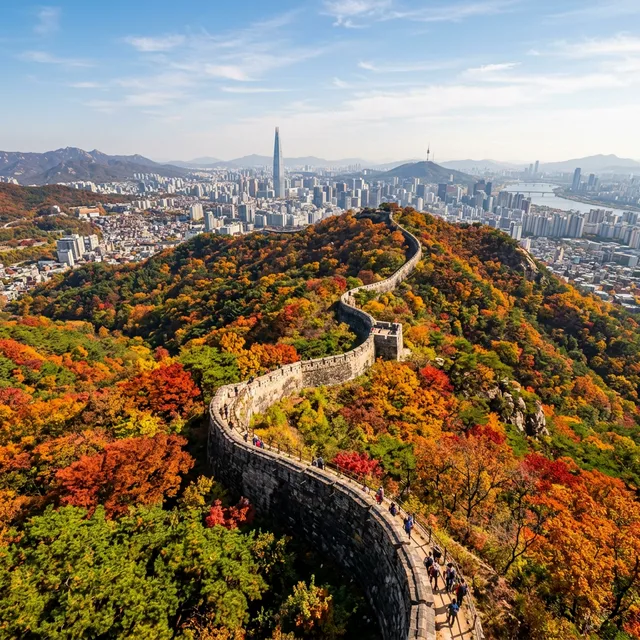
Two of Korea's most historically significant fortresses aren't behind glass in a museum — they're open to be walked, climbed, and explored on foot. Seoul's 18.6-kilometer city wall winds through four mountains above the capital, and Suwon's Hwaseong Fortress, a UNESCO World Heritage Site just an hour south, circles a living city. Both offer a rare combination: genuine history, genuine exercise, and genuinely spectacular views.
Seoul City Wall (Hanyangdoseong): Walking the Walls of the Capital
The Seoul City Wall (한양도성 / Hanyangdoseong) is an 18.6-kilometer loop of stone that encircles the historic center of Seoul. Parts of it date to 1396, when the Joseon dynasty first fortified the capital. It passes over and through four mountains — Bugaksan (Baegaksan), Naksan, Namsan, and Inwangsan — and incorporates four main gates and four minor gates, several of which still stand as active landmarks in modern Seoul.
The entire wall can be hiked in a single ambitious day, though most visitors choose to focus on one or two sections. Difficulty varies considerably — some sections are peaceful, paved strolls; others involve steep stairs, ropes, and genuine scrambling.
The Four Sections
1. Naksan Mountain Trail (가장 쉬운 구간 — Easiest)
Heunginjimun Gate → Hyehwamun Gate | Distance: ~2.1 km | Time: 1–3 hours | Difficulty: Easy
The Naksan section is the most beginner-friendly stretch of the Seoul City Wall and one of the most popular for good reason. The trail follows the ridge of low Naksan Mountain through a residential neighborhood, offering unexpected views of old tile-roofed houses below and the modern city beyond. Afternoon light on this section is particularly beautiful. Start at Heunginjimun (동대문, Dongdaemun Gate) and follow the wall north.
2. Bugaksan (Baegaksan) Mountain Trail (가장 온전한 구간 — Most Pristine)
Malbawi → Changuimun | Distance: ~2.3 km | Time: 1.5–2 hours | Difficulty: Moderate
This section was closed to the public for decades due to its proximity to Cheong Wa Dae (the presidential residence, formerly the Blue House). It reopened in 2006 and remains the most dramatically well-preserved stretch of the original wall — minimal alterations, ancient stonework, dense forest, and extraordinary views north over Bugaksan toward the mountains beyond the city. Note: you may need to carry identification, and photography is restricted in certain zones near the military installation.
3. Inwangsan Mountain Trail (가장 극적인 전망 — Most Dramatic Views)
Inwangsan area | Time: 2–3 hours | Difficulty: Moderate-Challenging
Inwangsan is the most atmospherically striking section — steep stairs, help ropes on the steeper passages, granite boulders, and sweeping panoramas over the entire city. The Seonbawi Rock (선바위), a dramatic pair of standing rocks considered sacred in Korean shamanism, is located just off the trail. The views from the ridge are arguably the best of any of the four mountain sections.
4. Namsan (Mongmyeoksan) Mountain Trail (N서울타워 뷰 — Seoul Tower Views)
Namsan Mountain section | Difficulty: Moderate
The Namsan section integrates the city wall with Namsan Park, Korea's beloved urban mountain. The trail passes below N Seoul Tower and offers city views in every direction. This section is well-maintained, accessible, and the most urban of the four. The combination of the ancient wall and the iconic tower silhouette makes for some of the most photographed views on the entire Hanyangdoseong loop.
The Stamp Tour: Collect Your Certificate
The city runs an official Hanyangdoseong Stamp Tour: collect stamps at four designated stamp locations along the wall (Sukjeongmun, Donuimun site, Sungnyemun/Namdaemun, and Heunginjimun/Dongdaemun) and present your completed stamp card at the Hanyangdoseong Museum or other designated centers to receive an official certificate of completion.
Stamp books are available free at the starting points and at the Hanyangdoseong Urban Wall Museum (Naksan section entry area).
Practical Tips for the Seoul City Wall
Entry points: Any of the four gates or mountain access points; the Naksan section starting at Heunginjimun (Dongdaemun History & Culture Park Station, Line 2/4/5) is the most straightforward for first-timers. The Inwangsan section begins near Dongnimmun Station (Line 3).
What to wear: Comfortable walking shoes with good grip; the stone paths can be slippery when wet. Layers for the mountain sections.
Time required: One section: 1.5–3 hours. Full loop: 6–8 hours for a fit walker.
Admission: Free throughout.
Water and food: Bring water; convenience stores near the starting points. The Naksan section passes cafes and restaurants in the adjacent neighborhood.
Best season: Spring (cherry blossoms along parts of the wall), autumn (golden foliage). Avoid summer midday for the mountain sections — heat and humidity are intense.
Suwon Hwaseong Fortress: The UNESCO World Heritage Site
An hour south of Seoul by train, Suwon Hwaseong Fortress (수원 화성) is one of Korea's most important architectural achievements — a nearly 6-kilometer fortress wall commissioned by King Jeongjo of Joseon in 1796. It was designed using the most advanced military engineering theories of its era, incorporating European military design concepts that had reached Korea through scholars. In 1997, UNESCO added it to the World Heritage List.
Unlike the Seoul City Wall's wilder mountain character, Hwaseong is built around the hills and valleys of a living city — Suwon's old town. Walking the entire circuit takes you through residential neighborhoods, along dramatic ridgeline ramparts, past pavilions and watchtowers, and eventually to the busy commercial areas around the main gates.
The Fortress at a Glance
| Feature | Detail |
|---|---|
| Perimeter | ~5.7 km |
| Walk Time (Full Circuit) | 2–3 hours |
| UNESCO Status | World Heritage Site (1997) |
| Main Gates | Paldalmun (South), Janganmun (North), Hwaseomun (West), Changnyongmun (East) |
| Admission | 1,000 KRW (adults); under 12 free |
| Opening Hours | 9:00 AM – 6:00 PM |
Walking the Circuit: Route Options
Full Circuit (Most Rewarding) Start at Paldalmun (South Gate) — the most accessible entry point from Suwon Station — and walk the full perimeter clockwise or counterclockwise. The full circuit takes 2–3 hours at a comfortable pace.
Walking clockwise from Paldalmun: The initial section heading west involves a significant uphill climb to the ridge; the views from the top are worth the effort. The western ridge section offers some of the most dramatic scenery of the walk.
Walking counterclockwise from Paldalmun: The eastern section from Paldalmun is flatter and more residential, moving through neighborhoods before ascending the mountain sections in the northern half. Better for those who prefer to end with the views rather than start with them.
Easier Alternative: Hwaseomun to Yeonmudae For a shorter and easier scenic stretch without the steep climbs, walk the section between Hwaseomun (West Gate) and Yeonmudae (Northwest Command Post). This 30–40 minute section follows the ridge with excellent views and most of the architectural highlights.
Key Architecture to Look For
Janganmun (North Gate) — The largest of the four main gates; two-storied wooden structure on a stone arch foundation.
Hwahongmun (Water Gate) — A sluice gate with 7 arches where the stream flows through the fortress wall; perhaps the most photographed single structure in Hwaseong.
Dongjangdae (Eastern Command Platform) — The highest point of the fortress wall; 360-degree views over Suwon and the surrounding hills.
Seojangtae (Western Main Command Post) — The primary military command headquarters during the Joseon era; elegantly proportioned pavilion.
Five Secret Gates (Ammun) — Hidden gateways designed for troop movements and emergency access; look carefully for the small-scale arched openings set into the wall.
Getting to Suwon from Seoul
By subway: Take Line 1 (Blue) to Suwon Station. From Hwaseong, it takes approximately 50–70 minutes depending on your Seoul starting point.
By KTX/ITX: Faster intercity trains from Seoul Station to Suwon Station; approximately 25–30 minutes.
From Suwon Station to the Fortress: Buses 60, 66, 66-4, or 400-A connect the station to Paldalmun (South Gate). A taxi from the station costs approximately 5,000–8,000 KRW.
Guided Tours and Experiences
Several tour operators offer guided Hwaseong experiences that add historical depth to the walk:
- Gongsimdon Turtle Vessel Tour: A small boat on the pond inside the fortress grounds
- Archery Experience: Traditional Korean archery (국궁) within the fortress grounds — available at the Hwaseong archery range
- Makgeolli After the Hike: Suwon's old market (Jidong Market area) is famous for its makgeolli (Korean rice wine) and pajeon (scallion pancake) — a well-earned reward after the circuit
Comparing the Two: Which Should You Choose?
| Seoul City Wall | Suwon Hwaseong | |
|---|---|---|
| Distance from central Seoul | Within the city | ~1 hour by train |
| Total length | 18.6 km (full loop) | ~5.7 km |
| Difficulty | Varies (easy to challenging) | Moderate (some climbs) |
| UNESCO status | No | Yes (1997) |
| Terrain | Mountains, forests, neighborhoods | Hills, city streets, ridgelines |
| Best for | Urban adventure; multiple day hikes | Day trip; single comprehensive walk |
| Admission | Free | 1,000 KRW |
If you have one day: Suwon Hwaseong offers the most complete, contained experience — a single circuit of a spectacular UNESCO fortress with clear historical narrative and varied architecture.
If you want a multi-day project: The Seoul City Wall rewards revisiting section by section, with each section offering a distinct character and set of views.
The Simplest Choice for Most Travelers
If you are still deciding, use this shortcut:
- Choose Suwon Hwaseong if you want one clean day trip with a full beginning, middle, and end.
- Choose Naksan or Namsan on the Seoul City Wall if you only have half a day and want the easiest fortress walk.
- Choose Inwangsan or Bugaksan if the hike matters as much as the history.
This works especially well when paired with the broader UNESCO heritage guide. Suwon fits a heritage day trip. Seoul's wall fits a city-based itinerary with less transit.
5. The Guardians of the City: A Guide to the Eight Gates
The Seoul City Wall originally featured four main gates and four small gates, each corresponding to a direction and a Confucian virtue. Understanding them makes the hike feel like a walk through a philosophical map.
The Four Great Gates (Sadaemun)
- Sungnyemun (South Gate): National Treasure No. 1. Reconstructed after the 2008 fire, it stands as a symbol of Korean resilience. It represented Propriety (Ye).
- Heunginjimun (East Gate): Unique for its ongseong (a semi-circular protective wall). It represented Benevolence (In).
- Sukjeongmun (North Gate): Located deep in the mountains of Bugaksan. Historically, it was rarely opened as it was thought to bring too much "Yin" energy into the city. It represented Wisdom (Ji).
- Donuimun (West Gate): Sadly demolished during the Japanese occupation. Today, a digital restoration project (Donuimun VR) allows you to see it through specialized kiosks at the original site near the Seoul Museum of History. It represented Righteousness (Ui).
6. The Magic of Night Hiking in Seoul
In 2026, the Seoul City Wall has become a global destination for "Night Hikers." The contrast between the ancient moonlit battlements and the neon-lit futuristic city below is a scene straight out of a sci-fi drama.
The Best Night Section: Naksan
The stretch between Hyehwamun and Heunginjimun is fully illuminated with soft orange floodlights. The trail is gentle, and the view of the "skyscrapers in the mist" is unmatched.
- Pro Tip: Arrive at Naksan Park around sunset. Watch the city lights flicker on, then follow the illuminated wall down toward Dongdaemun for late-night snacks.
7. Suwon Hwaseong: The "Living Heritage" Experience
While the wall itself is a military masterpiece, what's inside is equally compelling. Suwon has managed to preserve a living urban fabric within its UNESCO ramparts.
Haengnidan-gil (행리단길): The Trending Alleys
The neighborhood of Haenggung-dong is Suwon’s answer to Seoul’s Ikseon-dong. Narrow alleys are lined with:
- K-Drama Filming Spots: Fans of Lovely Runner will recognize the iconic yellow-umbrella house (Cafe Mong Ted) and the Hwahongmun Gate bridge.
- Hanok Workshops: Take a 1-hour class in traditional woodcarving or tea-making.
- Modern Bistros: Try "Haenggung Curry" or the various fusion pasta spots that have made this area a foodie destination in 2026.
Flying Suwon (플라잉 수원)
For the ultimate overview, board the Flying Suwon—a tethered helium balloon that rises 150 meters above the fortress. In 2026, you can book your slot via the Suwon Smart Tourism App, which also provides a real-time "Wind Safety" monitor.
- Cost: ~₩20,000 for adults.
8. 2026 Smart Hiking & The Digital Stamp Tour
Hiking in Korea has entered the "Smart 2.0" era. The traditional physical stamp books are being replaced by seamless digital experiences.
The Hanyangdoseong App
Instead of carrying a paper card, download the Seoul Hanyangdoseong app.
- Beacon Authentication: As you pass through the major gates (Sukjeongmun, Sungnyemun, etc.), your phone will automatically register your "stamp" via Bluetooth beacons.
- Certificate Issuance: Once all four main gate stamps are collected, the app issues a Digital Certificate of Completion and a QR code you can scan at the Hanyangdoseong Museum to receive a physical commemorative badge.
2026 Safety & Logistics
- K-Pass 2.0: Use your integrated K-Pass for a 20% discount on the Suwon KTX/SRT or the "Hallyu Shuttle" that connects Seoul's wall to Suwon's fortress.
- Real-Time Trail Status: The app now provides "Crowd Density" and "Air Quality" levels for each section of the mountain trails, helping you choose the best time to hike.
9. Preparation Checklist for 2026: The Smart Hiker Carry
Hiking a 600-year-old wall in 2026 requires a mix of traditional gear and modern tech. You are walking through history, but you are navigating with the future.
| Item | Importance | why? |
|---|---|---|
| Mobile Passport/ID | High | Required for entry into the Bugaksan high-security zones. Digital ID on the PASS app or a photo of your passport is generally accepted in 2026. |
| Grip-Soles Shoes | High | The granite steps of Inwangsan and the ancient flagstones of Hwaseong are smooth and can be dangerously slick in morning dew or after rain. |
| Power Bank (10,000mAh+) | High | AR scene overlays, beacon-based stamp authentication, and constant GPS tracking for the "Stamp Tour" drain your smartphone battery significantly faster than a standard day in the city. |
| Reusable Water Bottle | High | Both Seoul and Suwon have installed numerous "Arisu" (Seoul tap water) refill stations along the trails to eliminate single-use plastic bottles. Look for the blue "ARISU" logo. |
| Blister Pads & First Aid | Medium | A 5-kilometer hike might seem short, but the vertical gain on the Seoul City Wall segments (especially Inwangsan) is significant. Blister pads are a lifesaver. |
| K-Pass 2.0 / T-money | High | Most regional buses in Suwon and the shuttle between Bulguksa and Seokguram are cashless in 2026. |
10. The Best Season for Wall Hiking in Korea
While the fortress walls are open year-round, the visual and physical experience changes drastically with the dynamic Korean seasons.
- Spring (April-May): Cherry blossoms explosion. The Namsan and Naksan sections are lined with pink and white petals, making it a "floral fortress" hike.
- Autumn (October-November): The undisputed best time. High visibility and cool temperatures allow for stunning views of the city. The maple and ginkgo leaves against the ancient stones are a photographer's dream.
- Winter (January-February): Snow-covered ramparts offer a quiet, monochromatic beauty. However, be sure to wear spikes (crampons), as the stone stairs can become dangerously icy.
Final Thoughts
Korea's fortress walls are among the most accessible historical experiences available to travelers in the country — no tickets required for Seoul's wall, minimal cost for Hwaseong, and both offer something that indoor museums cannot: the feeling of standing where soldiers, royal entourages, and ordinary citizens have stood for 600 years, looking out over a city that has changed beyond recognition yet retained its ancient bones.
For the next layer, connect this with the UNESCO World Heritage Sites in South Korea, a palace-heavy Seoul day through Seoul's five grand palaces, or the National Museum of Korea guide if you want the historical background before hiking the walls.