Free Things to Do in Tokyo: Parks, Markets & No-Entry-Fee Shrines

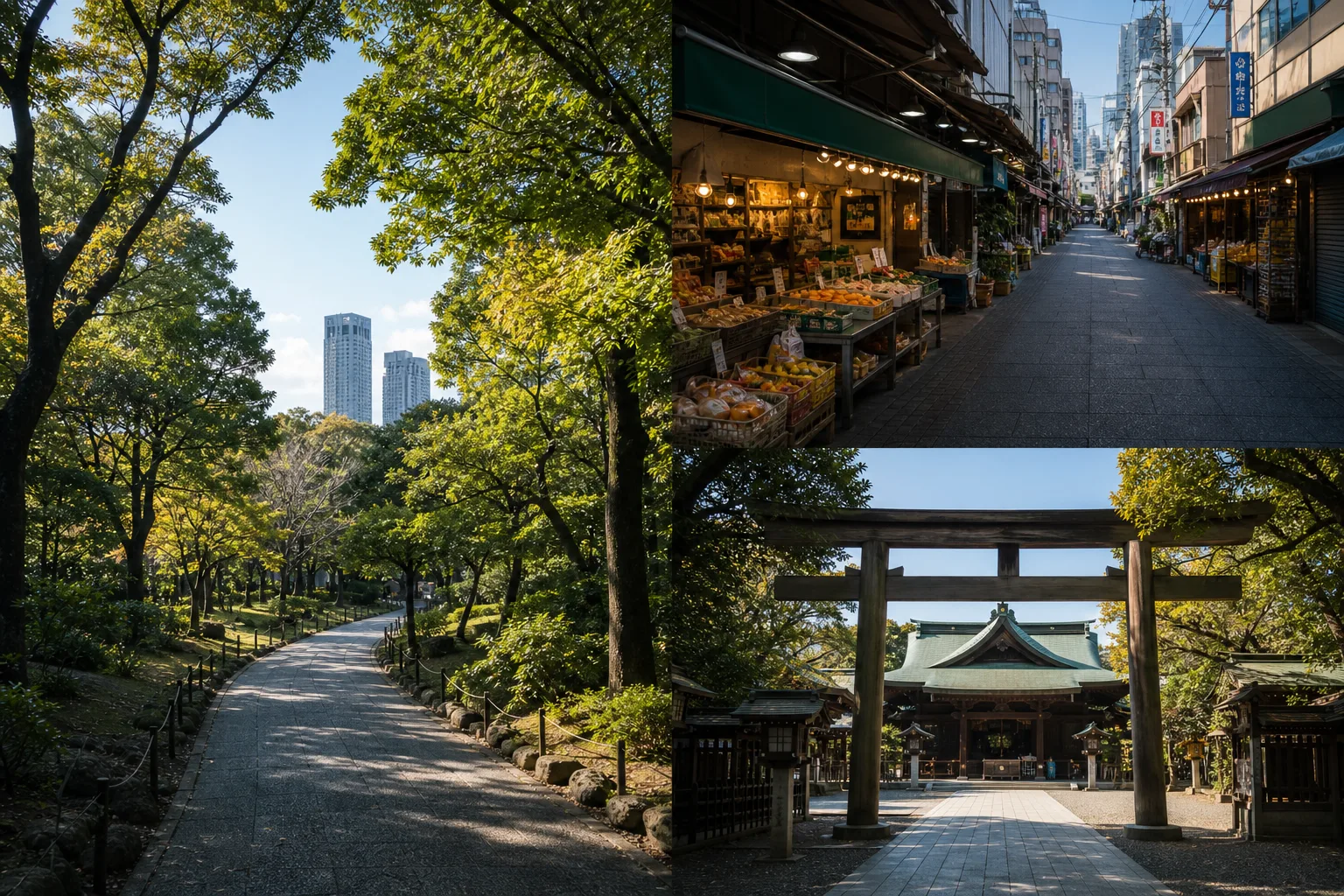
Tokyo looks expensive from the outside because it is full of premium food, big-name attractions, and efficient transit that makes it easy to spend money quickly. But the city also has a deep free layer that most first-time visitors never fully use: forested shrine grounds, riverside parks, old market streets, and station-to-station neighborhoods where the best experience is simply walking. If you plan the day right, you can see a huge amount of Tokyo without buying a ticket. If your broader trip budget is tight, this sits nicely alongside How to Travel Japan on a Budget: Cheap Eats, Transport & Stays.
The trick is not chasing "free" as a gimmick. The trick is understanding how Tokyo actually works. A shrine visit is best early in the morning. A market walk is best when vendors are open but the lunch crowd has not fully arrived. A park works best when it is treated as part of a larger neighborhood loop, not a random stop. That is the difference between a bare-bones day and a genuinely good one.
Introduction
If you are trying to keep Tokyo costs low without turning the trip into a scavenger hunt, start with the places that are free by design: parks, shrine precincts, and market streets. This guide focuses on the kinds of outings that work for a first-time visitor who wants atmosphere, not just a list of technically free addresses.
The featured-snippet version is simple: pair a quiet shrine in the morning, a park or riverside walk around midday, and a market street in the afternoon. Meiji Jingu, Ueno Park, Tsukiji Outer Market, Yoyogi Park, and Ameyoko are the easiest free anchors to combine in one trip.
The useful part is the sequencing. Tokyo is a city where distance feels smaller than it is because the trains are so good. That means you can do a shrine, a park, and a market in a single day without wasting time crossing town unnecessarily. If you are still sorting the basics of IC cards, transit logic, and whether you actually need any rail pass at all, the Japan Travel Planning: Visa, IC Card, Rail Pass & Essential Logistics Guide is the right companion piece.
For readers who want a wider first-timer view of the city, the broader neighborhood-level logistics live elsewhere. Here, the goal is narrower: spend less, walk more, and still come home feeling like you saw real Tokyo.
Tokyo's Best Free Parks
Tokyo's parks are not blank green spaces you visit only if you have extra time. They are some of the city's most useful travel assets. They give you a break from station congestion, a place to eat cheap food without feeling rushed, and a way to see neighborhoods without paying an admission fee every hour.
Ueno Park: The obvious choice for a reason
Ueno Park is one of Tokyo's best free public spaces because it is large, central, and layered. You can spend an hour there or a half day there without repeating yourself. The park itself is free, which matters because the surrounding area tempts you with paid museums, zoo tickets, and souvenir stalls. If you are disciplined, you can keep the whole visit free.
The best way to use Ueno Park is to treat it like a flexible base rather than a single attraction. Walk from the station side into the main park, circle Shinobazu Pond, pause near the shrine areas, then continue toward Ameyoko afterward. That gives you a natural sequence: green space, water, and market energy in one compact loop.
Cherry blossom season is the obvious headline, but Ueno works beyond spring too. In summer, the heavy tree cover gives you shade. In autumn, the paths around the pond turn more golden and less crowded than the peak spring picnic rush. Even on a plain weekday, it feels more alive than many paid sightseeing spots because the park is where Tokyo residents actually pass through, sit down, and take breaks.
Yoyogi Park: Big, open, and useful
Yoyogi Park is the opposite of manicured. That is why it is good. It is one of the easiest places in central Tokyo to get a real sense of scale, with broad lawns, runners, dog walkers, picnickers, performers, and the constant background movement of Harajuku nearby. Because it sits next to Meiji Jingu and Harajuku, it fits naturally into a free half-day.
The practical benefit is simple: you can enter from the Meiji Jingu side, walk through the wooded precincts, step out into Yoyogi Park, and then keep going toward Harajuku or Omotesando. It is a very Tokyo kind of transition because you move from sacred quiet to urban fashion district in a matter of minutes.
If you are traveling with children, a stroller, or just a low-energy mood, Yoyogi Park is one of the least stressful places to reset. It does not ask anything from you except time and comfortable shoes.
Sumida Park: Free river views without the observation deck price
If your idea of a free outing includes skyline and water, Sumida Park is one of the easiest answers. The river walk gives you open views, bridges, boats, and a sense of east Tokyo that feels less compressed than the city center. It is especially good if you want a slower pace than the major sightseeing districts.
The advantage of a riverside park is that it creates a natural walking route. You do not need a fixed endpoint. Start near Asakusa, move along the river, and let the views and foot traffic dictate how long you stay. That is often more satisfying than forcing another ticketed attraction into the day simply because the guidebook says you should.
How to use Tokyo parks well
Most visitors make one of two mistakes with parks. They either treat them as filler between "real" attractions, or they overcommit and spend too much of the day in one place. The better approach is to use a park as one segment of a larger neighborhood route.
That means pairing Ueno Park with a market street, Yoyogi Park with Meiji Jingu and Harajuku, or Sumida Park with Asakusa. You get more variety, better pacing, and fewer transport transfers. In practical terms, that also keeps food and transit costs under control because you are not hopping randomly across the city.
Markets You Can Browse Without Paying Entry
Tokyo's markets are excellent because they do not require a ticket just to enter and look around. You can browse, photograph, snack, and leave without committing to a full meal. That makes them ideal for travelers who want atmosphere first and spending second.
Tsukiji Outer Market: The easiest free market morning in Tokyo
Tsukiji Outer Market remains one of the most useful free experiences in central Tokyo. You do not need a ticket to walk the lanes, and the appeal is in the movement: knives being sharpened, tamagoyaki being cooked, seafood being set out, kitchen tools stacked in narrow storefronts, and lunch crowds building slowly as the morning goes on.
This is not the place to think in terms of strict admission. It is more like a food district where the browsing is free and the eating is optional. That matters because a lot of first-time visitors assume Tsukiji is only worth it if they spend a lot. It is not. A short walk through the market area, plus one snack if you want it, already gives you the experience.
The timing matters. Go in the morning, not late afternoon. By the time the day is halfway done, the market energy thins out. The shops and eateries that make the area feel alive are strongest earlier, when the delivery flow and breakfast crowd are still in motion.
Ameyoko: Busy, rough-edged, and completely free to wander
Ameyoko, the market street between Ueno and Okachimachi, is the other classic free market walk in Tokyo. It is loud, compact, and much more chaotic than a polished shopping street. That is exactly why it works for travelers. You get a dense mix of snack shops, discount goods, street-level food, dried seafood, and everyday energy without paying anything to enter.
The emotional contrast with Ueno Park is the point. You can go from calm trees and pond water to compressed market energy in five minutes. Few cities give you that much range at no cost.
Ameyoko is also useful when the weather is less than perfect. If it is hot, humid, or lightly raining, the covered sections and tight lanes still work. If you want a market that feels alive rather than curated, this is it.
Yanaka Ginza and the slower neighborhood market
Yanaka Ginza is not a market in the wholesale sense, but it belongs in the same free-browse category. It is a shopping street where you can slow down, look at daily goods, and get a sense of a more local Tokyo rhythm. It is especially good if you want something less intense than Tsukiji or Ameyoko.
The value here is pacing. Yanaka Ginza is useful when you want to wander without constantly dodging crowds. It works well after a cemetery walk, a temple visit, or a park visit in the same area. A lot of Tokyo travel is about context rather than singular monuments, and Yanaka Ginza gives you that context cheaply.
What market browsing actually costs
The entry cost is usually zero. The spending cost is optional and highly variable.
If you want to keep things lean:
- Buy one snack and one drink, then leave
- Share a breakfast bowl rather than ordering two full meals
- Skip the souvenir pressure until you know what you actually want
- Use the market as a morning walk, not as an all-day food festival
That last point matters. A market can be free to enter and still become expensive if every stall looks tempting. Pick a budget before you go. For many travelers, ¥1,000 to ¥2,000 is enough for a snack, a drink, and maybe one small purchase.
No-Entry-Fee Shrines
Tokyo's shrines are some of the city's best free experiences because they are not designed around ticket gates. The approach, the torii gates, the purification basin, the wooded paths, and the main precincts are usually open without admission. The trick is to distinguish the free grounds from any separate museum, garden, or special exhibition space that may charge a fee.
Meiji Jingu: The essential free shrine in central Tokyo
Meiji Jingu is the easiest shrine recommendation in Tokyo because it is large, central, and genuinely atmospheric. According to the official site, it is open every day of the year and free of charge. It opens at sunrise and closes at sunset, with seasonal hours that shift across the year. In July, the shrine opens at 5:00 am and closes at 6:20 pm.
That timing makes Meiji Jingu especially good in the morning. Early visits are quieter, the forest feels deeper, and the shrine path is less interrupted by group traffic. If you arrive from Harajuku or Yoyogi Station, the transition from city noise to shrine silence is immediate and striking.
The shrine works for different kinds of travelers:
- First-timers who want one iconic Tokyo shrine
- Budget travelers who need a strong free anchor in the city center
- Slow travelers who prefer atmosphere over checklist sightseeing
- People arriving jet-lagged who can only manage a gentle walk
The other reason Meiji Jingu belongs on every free Tokyo list is that it solves a common planning problem. Visitors often want to see Harajuku and Yoyogi Park, but they do not know how to connect them. Meiji Jingu provides the bridge: it lets you move from one district to the next through a calm, wooded corridor instead of a busy arterial street.
Smaller shrines that stay free and low-pressure
Tokyo has plenty of smaller shrines that are free simply because they are neighborhood places of worship, not major tourist products. That does not mean they are less interesting. In some cases, they are more interesting because they feel used rather than packaged.
When you find a neighborhood shrine, look for three things:
- A compact precinct that feels local rather than staged
- A path or side street that naturally leads into a walkable district
- Enough room to pause, observe, and continue without feeling rushed
That is the right mindset. You do not need every shrine visit to be a headline attraction. Sometimes the best free stop is simply the one that breaks up a long walking loop and gives your day a quieter rhythm.
What shrine visits cost in practice
Most of the time, the answer is nothing. The main cost is getting there and, if you want it, buying a small charm or omamori. Those are optional.
The real value is that a shrine visit gives you a structured break from the city. You are not paying to enter, but you are getting something that would cost money in other cities: quiet, greenery, and a sense that the place still belongs to local life.
Practical Guide: Hours, Admission, and Getting There
The best free Tokyo days are not random. They are timed. You can see more, and spend less, if you make the day follow the opening rhythm of the city.
Hours and admission at a glance
| Place | Admission | Best timing | Practical note |
|---|---|---|---|
| Meiji Jingu | Free | Sunrise to mid-morning | Official hours shift by season; July closes at 6:20 pm |
| Ueno Park | Free | Morning to late afternoon | Park itself is free; nearby museums are not |
| Yoyogi Park | Free | Late morning to sunset | Easy to combine with Harajuku and Meiji Jingu |
| Tsukiji Outer Market | Free to browse | Morning | Best before lunch crowds thin out |
| Ameyoko | Free to browse | Late morning to evening | Great for cheap snacks and market atmosphere |
| Sumida Park | Free | Anytime, especially daylight | Good for river walks and skyline views |
How to get there without wasting transit budget
The cheapest way to move around these spots is simple: use an IC card, stay on the train lines that already connect the district clusters, and avoid unnecessary transfers. Tokyo rewards route planning much more than it rewards spontaneity at the station ticket gate.
If you are doing a shrine-plus-park day, the usual pattern is:
- Meiji Jingu and Yoyogi Park: Harajuku or Yoyogi Station
- Ueno Park and Ameyoko: Ueno or Okachimachi Station
- Tsukiji Outer Market: Tsukiji or Tsukijishijo Station
- Sumida Park and Asakusa: Asakusa Station or nearby river-access exits
That is enough detail for the day. You do not need a special pass for these trips. In most cases, a loaded IC card is the cleanest answer, which is why the planning guide linked earlier is worth reading if you are new to Tokyo transit.
Do you need reservations?
For the places in this article, usually no. That is part of the appeal. You can decide in the morning, board a train, and go.
The only thing to remember is that "free" does not mean "open in every possible corner at every possible minute." Some shrine facilities or adjacent paid museums have separate hours, and market stalls do close for the day. If you want the best experience, go early enough that the city still feels awake.
What to pack for a free-day route
You do not need much:
- Comfortable walking shoes
- A water bottle
- A small amount of cash for snacks
- A charged phone with offline maps
- A rain layer in shoulder seasons
That is it. Free days in Tokyo are still walking days, and the city becomes much easier when you treat them that way.
Tips & Common Mistakes
Don't go to markets too late
The biggest mistake is treating a market like an evening activity. A lot of the action at Tsukiji Outer Market and similar streets happens in the morning. By the time late afternoon arrives, the energy drops, the best-stocked stalls have been busier all day, and the neighborhood feels less special.
If you can only do one market in Tokyo, do it early and pair it with a park or shrine so the day has shape.
Don't assume every shrine area has the same rules
The main precincts are usually free, but that does not mean every extra garden, museum, or special area is included. Read the signs at the entrance. If you see a separate ticket desk, that is your cue to decide whether the add-on is worth it.
This is not a reason to be suspicious. It is just how Tokyo organizes many sites: the public core is free, and the add-ons are optional.
Don't try to cross the city for one free attraction
A free site is not a bargain if you spend an hour getting there and then immediately leave. The city pays you back when you cluster places that belong together.
Good combinations:
- Meiji Jingu + Yoyogi Park + Harajuku
- Ueno Park + Ameyoko
- Tsukiji Outer Market + Ginza walk
- Asakusa + Sumida Park
Those pairings reduce transit friction and make the day feel coherent.
Do leave room for one paid meal
One of the most practical ways to enjoy Tokyo cheaply is to keep your sightseeing free and spend money selectively on food. A single excellent bowl of ramen or a market breakfast can be more satisfying than forcing every expense down to zero.
That balance is healthier than pretending the city should be experienced only through free admission. The point is value, not deprivation.
Do pay attention to weather and season
Tokyo changes fast with the season. Summer heat makes shaded parks more valuable. Spring makes shrine approaches and park lawns feel crowded but beautiful. Autumn gives you longer walking days. Rainy days push you toward covered market streets and indoor rest stops between outdoor segments.
The best free itinerary is the one that fits the weather instead of fighting it.
FAQ
Is Tokyo actually good for free sightseeing?
Yes. It is one of the better big cities in Asia for free sightseeing because the best parts of several districts are not behind ticket gates. Parks, shrine precincts, river walks, and market streets give you a strong trip even if you keep spending low.
What is the best free thing to do in Tokyo for a first-timer?
Meiji Jingu is the safest first choice because it is central, peaceful, and easy to combine with Yoyogi Park and Harajuku. If you prefer a busier city feel, Ueno Park and Ameyoko make a stronger free half-day.
Are Tokyo shrines really free?
Usually, yes for the main grounds. That is the norm for shrines like Meiji Jingu and many neighborhood shrines. Separate museums, gardens, or special exhibits may charge fees, so always check the sign at the entrance if you plan to enter add-on spaces.
Can I visit Tsukiji Outer Market without buying anything?
Yes. Browsing is free, and that is a legitimate way to experience it. You can walk the lanes, look at the food and kitchenware, and leave without ordering a meal. If you do want to eat, set a budget first because it is easy to spend more than expected.
What time should I go to free parks and markets?
For shrine visits, morning is best. For parks, late morning through late afternoon usually works well. For markets, earlier is better, especially if you want the full atmosphere rather than the cleaned-up version at the end of the day.
Do I need cash for free places?
Not for entry, but yes if you want snacks, drinks, or small purchases. Many market stalls still prefer cash, and it is easier to keep spending under control when you know exactly how much cash you brought.
Conclusion
Free Tokyo works when you stop treating "free" as a compromise. A good shrine walk, a park loop, and a market morning can be the most memorable parts of a trip because they show you how the city behaves when no one is trying to sell you a premium experience at every step.
If you want the practical version of Tokyo, start with Meiji Jingu for quiet, Ueno Park for scale, Tsukiji Outer Market for movement, and Ameyoko for density. Add Yoyogi Park or Sumida Park if you want more open space. That is enough for a strong no-entry-fee itinerary.
Use the train lines efficiently, keep one paid meal in the plan, and do the free stops in the right order. That is how you get a day that feels rich without becoming expensive.
For the full city context around neighborhoods, transit, and first-timer logistics, the Ultimate Tokyo Travel Guide 2026: Everything First-Timers Need to Know is the natural next read after this one.