Japan Under $50 Per Day: Is It Possible? A Real Breakdown of Costs

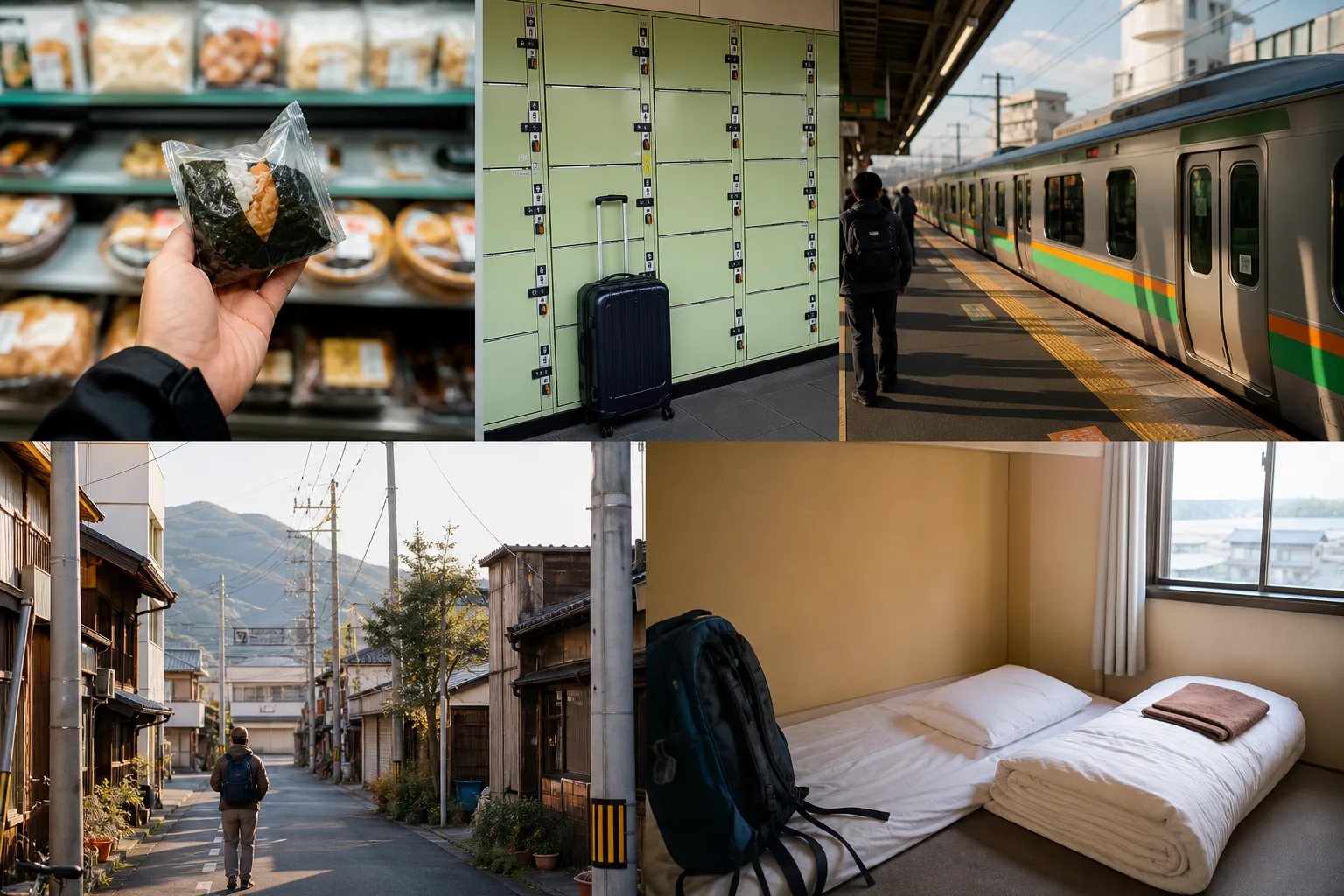
Japan can look expensive from the outside. If you have ever priced a Tokyo hotel, stared at a Shinkansen fare, or compared restaurant menus in a busy station district, it is easy to assume the whole country sits outside budget-travel range.
That assumption is only partly true. Japan is not the cheapest country in Asia, but it is also not automatically a luxury destination. With the right mix of city choice, accommodation style, transit discipline, and food habits, a traveler can absolutely stay near the $50-per-day line.
The catch is that “possible” does not mean “comfortable in every scenario.” If you want daily rides on the bullet train, private rooms in central Tokyo, and sit-down meals three times a day, $50 disappears fast. If you build the trip around business hotels, hostels, neighborhood trains, and convenience-store meals, the numbers start to work.
This guide breaks down where the money goes, where the budget breaks, and what a realistic sub-$50 day looks like in Japan in 2026.
1. What Under $50 a Day Actually Means in Japan
At current mid-2026 prices, think of $50 as roughly the amount you can spend in a normal travel day if you avoid the obvious traps. In yen terms, that is usually around the mid-7,000s to low-8,000s depending on exchange rates, so the exact dollar figure will move a bit with currency swings.
The important question is not whether Japan can be done for “cheap.” It is whether you can keep the trip within a clearly defined spending ceiling without making it miserable. The answer is yes, but only if you treat the budget as a system. Accommodation, food, and transport all have to be chosen together, because one expensive decision can wipe out the savings from everything else.
If you want a broader trip-planning baseline before you dive into the numbers, keep this open alongside Japan Travel Planning: Visa, IC Card, Rail Pass & Essential Logistics Guide. If you are comparing a budget-first itinerary against a more food- or transit-heavy trip, that guide gives you the logistics layer this article assumes.
The short answer
Yes, Japan under $50 per day is possible if you:
- Sleep in hostels, capsule hotels, or business hotels booked early.
- Eat a mix of convenience-store food, cheap set meals, and simple chain restaurants.
- Rely on local transit instead of long-distance rail every day.
- Focus on free or low-cost attractions.
- Travel in cities where budget inventory is strong and walkability reduces transit costs.
No, it is not realistic if you:
- Take intercity Shinkansen rides every day.
- Stay in central Tokyo or Kyoto without booking ahead.
- Eat convenience food all day and then splurge on dinner every night.
- Add major shopping, theme parks, or high-ticket experiences to the same day.
The budget question is really a trade-off question. Japan rewards travelers who plan routes carefully and punish travelers who improvise their way into expensive transport and last-minute lodging.
2. Where the Money Goes
If you want to stay under $50/day, it helps to see the trip in categories rather than as one giant daily total. Once you understand the shape of the spending, it becomes easier to decide where to save and where to spend.
Accommodation
Accommodation is usually the biggest variable. In Japan, a clean bed can range from surprisingly cheap to dramatically expensive depending on season and location.
Budget-friendly options usually include:
- Hostels with dorm beds.
- Capsule hotels.
- Business hotels outside prime central districts.
- Guesthouses and minshuku in smaller cities.
- Weekly apartment-style stays for longer trips.
In practice, a well-chosen dorm bed or capsule can land around $20 to $35 per night in many cities, while a basic business hotel can sit a little above that. Tokyo, Kyoto, and Osaka tend to be more expensive than secondary cities, and weekend dates are usually pricier than weekdays.
The main mistake travelers make is treating accommodation as an isolated line item. If you pay a little more for a room near a major station, you may save money on transport and time. If you book a cheaper hotel far from the center, transit can erase the savings. Under-$50 travel is often about total trip cost, not the lowest possible nightly rate.
Food
Food is one of the easiest places to stay under budget if you are willing to be practical.
Japan’s convenience stores are useful in a way that many first-time visitors underestimate. You can build a decent breakfast and lunch around rice balls, sandwiches, boiled eggs, yogurt, instant soup, salad packs, and prepared meals. Simple chain restaurants and noodle shops can also provide a substantial hot meal without wrecking your budget.
Typical spending patterns:
- Convenience store breakfast: $3 to $6
- Cheap lunch set or noodle bowl: $5 to $10
- Simple dinner: $8 to $15
You do not need to eat badly to stay within budget. You do need to avoid turning every meal into a “must-try” experience. The budget breaks when a casual snack becomes a themed dessert stop, which becomes a late-night izakaya visit, which becomes a taxi ride home.
For a deeper dive into the mechanics of eating cheaply without making the trip feel stripped down, see How to Travel Japan on a Budget: Cheap Eats, Transport & Stays. That guide pairs well with this one because it focuses on the food-and-transit layer instead of the daily budget math.
Transport
Transport can be cheap or brutally expensive depending on your choices.
Local metro and commuter rail rides are manageable if you stay in one city or a connected metro area. Once you start adding long-distance trains, airport express fares, or taxis, the budget starts climbing quickly.
If you are using an IC card and moving around one city, transit can stay modest. If you are hopping between Tokyo, Kyoto, Osaka, Hiroshima, and Fukuoka in a short span, the rail costs become a real budget line. This is where many travelers quietly fail the under-$50 challenge.
The simplest rule is this:
- Local city movement: usually manageable
- Airport transfer: sometimes manageable
- Intercity rail every day: usually not manageable
Attractions
Japan has plenty of free or low-cost things to do, but the budget can still crack if you stack paid attractions in the same day.
Examples of budget-friendly options:
- City walks and neighborhood exploration.
- Temples and shrines with low admission fees.
- Parks, observation areas, and riverside paths.
- Museums on discount days or with modest entry fees.
- Window shopping and station-area food halls, as long as you do not buy everything you see.
The trick is to choose one “paid highlight” and let the rest of the day stay cheap. If every outing includes an admission fee, a special drink, a souvenir, and a taxi, you are no longer on a budget trip.
Miscellaneous costs
This is the category that surprises people.
Small costs add up:
- Coin lockers.
- Laundry.
- Water and drinks.
- Mobile data.
- Convenience fees.
- Bathroom stops at pay facilities or ticketed attractions.
- Late-night taxis when you miss the last train.
Budget travelers often focus on accommodation and food, then lose control through little extras. A day with many small purchases can look harmless at the point of sale and still become a $15 to $20 overrun by the end of the evening.
3. Can You Actually Do It?
The answer depends on where you travel, how long you stay, and what “day” means. A city day in Osaka is very different from a Tokyo-to-Kyoto transfer day.
The realistic yes
You can absolutely stay under $50/day if your trip looks like this:
- Sleep in one city for several nights.
- Walk a lot and use local trains sparingly.
- Eat one or two cheap meals and one modest sit-down meal.
- Visit free neighborhoods, parks, or low-fee temples.
- Skip taxis unless you genuinely need them.
This works especially well in cities with strong budget lodging and dense transit:
- Osaka
- Fukuoka
- Nagoya
- Sapporo outside peak dates
- Hiroshima
- Kanazawa on some itineraries
Tokyo is possible too, but it is less forgiving. You will need to book ahead and be disciplined about station choice, meal style, and daily movement.
The realistic maybe
You may stay near $50/day if:
- You are traveling in shoulder season.
- You are sharing a room or splitting a private room.
- You are using reward points, discounted rates, or longer-stay pricing.
- You are staying in one city and doing day trips carefully.
This is the middle ground where the trip is technically budget-friendly but not especially flexible. One missed booking or one expensive dinner can push the average upward.
The realistic no
Under $50/day becomes hard when:
- You travel during cherry blossom or peak autumn foliage periods.
- You stay in central Kyoto on short notice.
- You take a Shinkansen on a whim.
- You want full-service dining multiple times per day.
- You travel as a pair and split costs unevenly.
That last point matters. Solo travelers can control every purchase. Couples and groups often have slightly higher per-person costs because room types, seating choices, and meal habits change the arithmetic.
The biggest budgeting truth
Japan is not expensive because every individual item is outrageous. It is expensive because the “normal” version of travel in Japan encourages lots of small premium decisions.
You can pay for:
- Better station access
- Cleaner private rooms
- Faster trains
- Better coffee
- More comfortable luggage movement
- More convenient timing
Each of those choices can be reasonable on its own. The budget only breaks when too many of them happen on the same day.
4. Practical Guide
This is the part that turns the theory into a working trip. If you want to keep the average close to $50/day, your practical decisions matter more than the headline price tag.
Accommodation strategy
The cheapest reliable strategies usually fall into four buckets.
1. Hostels and dorm beds
Good for solo travelers who do not mind shared space. These are often the cleanest way to keep lodging costs down while still staying in central neighborhoods.
What to look for:
- Lockers for bags.
- Good reviews for cleanliness.
- Easy access to a train station.
- Kitchen or microwave access.
- Late check-in support if your arrival is delayed.
2. Capsule hotels
Capsule hotels work well for one- or two-night stays in cities where you only need a place to sleep. They are not luxurious, but they are often more private than a dorm bed and still budget-friendly.
They make the most sense when:
- You arrive late.
- You leave early.
- You are doing a fast city hop.
- You want privacy without paying for a full room.
3. Business hotels
Business hotels are the budget traveler’s best “upgrade” option. They usually cost more than dorm beds, but they are often worth it if you need a private bathroom, a better night’s sleep, or a location near a station.
Use them when:
- You are staying three or more nights.
- You want to do laundry in the room or building.
- You need a good desk for repacking or planning.
- You are tired of shared accommodation.
4. Rural guesthouses and minshuku
These can be great value outside the main tourist zones. They are especially useful if your route includes smaller towns where hotel inventory is thinner and the experience is part of the reason to go.
Food strategy
Food is where Japan gives budget travelers a lot of room to win.
The core approach is simple:
- Breakfast from convenience stores or bakery chains.
- Lunch from set menus, noodle shops, curry chains, or department-store food halls near closing time.
- Dinner from cheap local restaurants, chain donburi spots, ramen shops, or supermarket deli items.
What works well:
- Breakfast: onigiri, yogurt, banana, coffee
- Lunch: soba, udon, curry rice, gyudon, donburi
- Dinner: ramen, set meal, grilled fish set, tofu set, tempura bowl
- Snacks: seasonal fruit, bakery items, convenience-store desserts if you want a small treat
What to avoid if you are serious about the budget:
- Multiplying snacks at every station
- Random dessert stops because the packaging looks good
- Sitting down for coffee just because you are tired
- Treating every lunch as an event meal
Budget food in Japan does not have to feel punishing. The country is full of reliable, clean, quick places to eat well without turning your day into a spending marathon.
Transit strategy
This is where many trips quietly drift above budget.
To keep transit under control:
- Stay in one city for multiple nights.
- Use an IC card for taps and transfers.
- Pick accommodations that reduce station-to-hotel friction.
- Walk when the distance is under 20 minutes and the weather is manageable.
- Save taxis for genuine late-night or luggage emergencies.
If your route includes a city pair, think carefully before buying the fastest option. Shinkansen is excellent, but it is usually not the budget answer unless it replaces multiple other transit costs or you are using a pass that truly fits the itinerary.
That does not mean rail passes are useless. It means they have to be matched to your route instead of bought because they feel like the responsible thing to do.
How to get there and move around
Within cities, the best budget strategy is to stay near a major station on a local line and build the rest of the day around walking. The closer your hotel is to a station with multiple lines, the easier it is to avoid taxis and complicated transfers.
For airport arrivals:
- Check whether the cheapest train or limousine bus is enough.
- Avoid private transfers unless you are arriving very late or traveling with bulky luggage.
- If you land exhausted, pay for convenience only once, not repeatedly.
For intercity movement:
- Compare bus, local train, and Shinkansen before locking in your route.
- If your trip is short, it may be cheaper to reduce city changes rather than to buy a pass.
- If you are moving luggage across multiple cities, build in a small buffer for station lockers or courier costs.
What to book early
Under-$50 travel usually works best when you book these items in advance:
- The first two or three nights of lodging.
- Popular weekend nights.
- Any long-distance train that is nonrefundable or has limited seats.
- A major attraction or timed entry if your route requires it.
The goal is not to create a rigid itinerary. The goal is to prevent one expensive last-minute decision from setting the tone for the whole trip.
5. Tips and Common Mistakes
These are the details that make the difference between “budget trip” and “why did I spend so much?”
1. Do not make every day a transit day
The fastest way to blow the budget is to treat Japan like a checklist of cities. A route with too many one-night stops creates expensive rail days, more luggage friction, and less time to absorb free activities.
If you want to keep costs down, do fewer moves and stay longer in each place.
2. Be careful with airport timing
Late arrivals and early departures often trigger taxi rides, station locker costs, and convenience store dinners that are more expensive than expected. A cheap hotel that saves you stress is often better than a slightly cheaper one that forces a complicated commute.
3. Use “cheap” food strategically
Convenience stores are excellent, but they should not become the whole trip. A better budget pattern is one cheap meal, one moderate meal, and one flexible snack or drink. That gives you variety without turning the day into a food crawl.
4. Watch the neighborhood, not just the room rate
A room that is $10 cheaper but a 15-minute ride from the station can become more expensive than the room next to the train line. Proximity has value in Japan because it reduces transit, fatigue, and the temptation to take a taxi.
5. Keep one “money leak” category under control
For some travelers it is coffee. For others it is drinks, souvenirs, or snacks. Identify your personal leak early, because a small daily habit can quietly break the daily average.
6. Understand that convenience costs money
Japan is very efficient. It also makes convenience easy to buy. Better station access, timed reservations, good seating, and late-night flexibility all cost something. If you want the budget trip, you must consciously decline convenience in several places.
7. Don’t over-interpret the dollar target
The phrase “under $50 per day” is a planning tool, not a law. Some days will be cheaper and some will be more expensive. The real question is whether the average stays near the line over the full trip.
8. Keep your route honest
It is easy to start with a budget plan and then add “just one” expensive leg or “just one” special dinner. That is how a good budget trip turns into a medium-cost trip without any obvious moment of failure.
6. FAQ
Is Japan really possible on $50 per day?
Yes, but only if you build the trip around budget lodging, local transport, and low-cost food. If you want private rooms in prime areas and frequent long-distance rail, the budget will not hold.
Is Tokyo impossible on a budget?
No, but it is less forgiving than many other cities. Tokyo can work under $50/day if you book early, stay outside the most expensive core districts, and keep your transport simple.
What is the cheapest style of accommodation in Japan that still feels safe?
Hostels, capsule hotels, and budget business hotels are the most practical options for most travelers. The best choice depends on whether you value privacy, location, or nightly price more.
Can I save money by buying a rail pass?
Sometimes, but not automatically. Rail passes only make sense if your actual route matches the pass structure. If your trip is mostly local transit and short hops, a pass may be more expensive than paying as you go.
How much should I budget for food alone?
If you are disciplined, food can often stay in a modest range with convenience-store breakfast, simple lunch, and an inexpensive dinner. The bigger variable is not base meals; it is impulse snacks, drinks, and sit-down extras.
Is it cheaper to travel Japan in one city or across multiple cities?
One city or one compact region is usually cheaper. Every long-distance move increases train costs, luggage hassles, and the chance of booking a more expensive room near the station.
Conclusion
Japan under $50 per day is real, but it is a controlled version of travel rather than a carefree one. The budget works when you prioritize location, use local transport, keep meals practical, and avoid turning every day into a special occasion.
If your goal is to see Japan cheaply, the winning strategy is not deprivation. It is discipline. Book the right bed, pick the right neighborhood, move less often, and use the country’s excellent everyday infrastructure instead of chasing premium convenience at every step.
If you want the broader context behind the budget numbers, revisit the budget guide mentioned above and the logistics guide. Together, those two articles give you the practical planning frame for a low-cost Japan trip that still feels like a real trip.