Cherry Blossom Festivals in Korea 2026: Dates, Locations & Viewing Tips
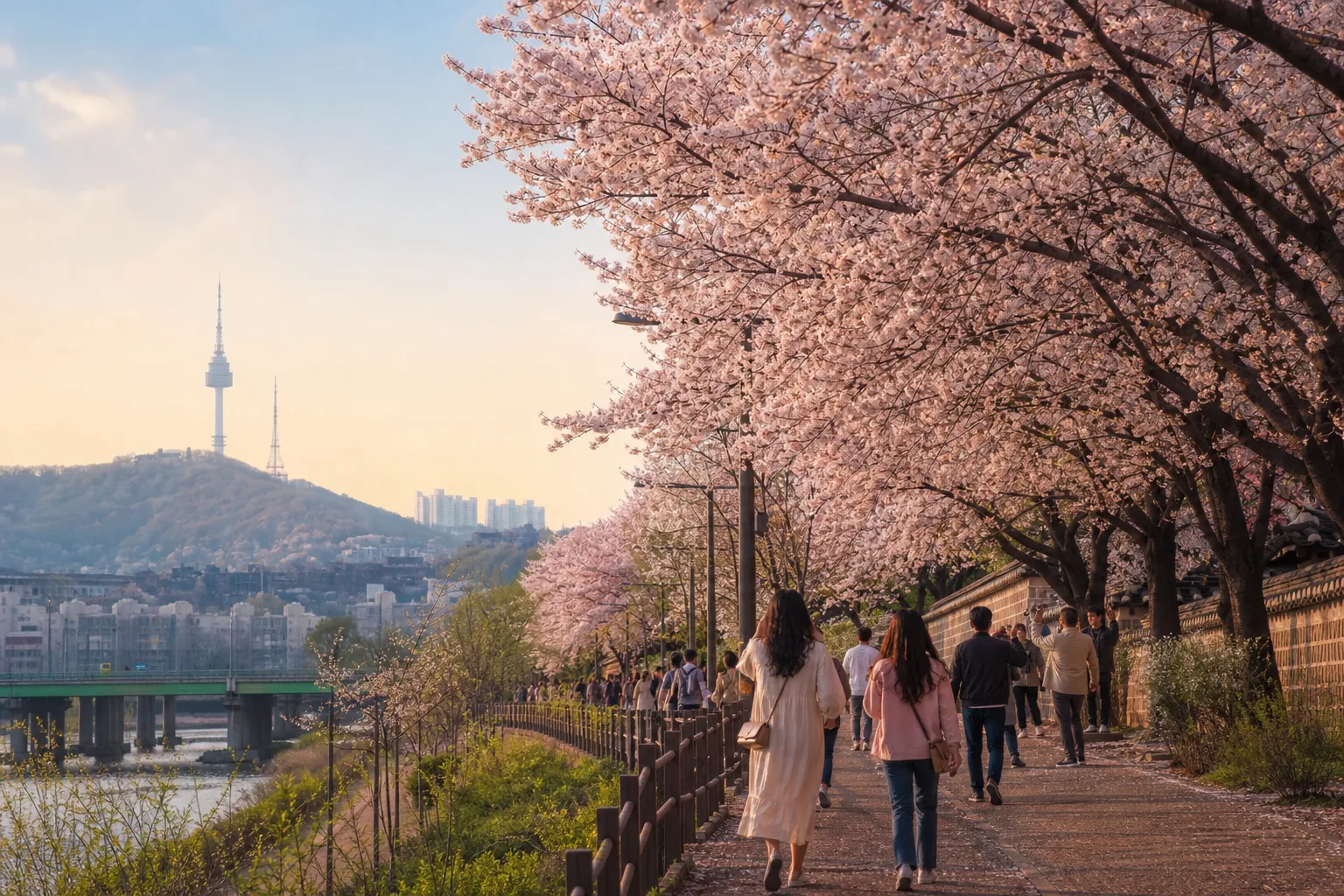
If you are trying to time a cherry blossom trip to Korea, the hard part is not knowing that the season is beautiful. The hard part is choosing the right region, the right week, and the right viewing style so you do not end up standing in traffic with half-bloom trees and a dead phone battery. Korea's blossom season is short, highly regional, and crowded enough that timing matters more than almost anything else.
What Cherry Blossom Season Looks Like in Korea
Cherry blossom season in Korea is not one event but a staggered wave of bloom that moves north from Jeju and the southern coast into Seoul and the northern cities. In practice, the best strategy is to pair region with timing: late March for the south, early April for central Korea, and a flexible plan if you want the blossoms plus manageable crowds.
If you are using this guide to plan around a Korea spring trip, the basic rule is simple. The farther south you go, the earlier the flowers open. That is why Jinhae tends to feel like the season opener, Yeouido becomes the Seoul headline act, and Gyeongju is often the strongest choice for travelers who want blossoms with a heritage setting rather than a city parade.
For most visitors, the question is not whether to go, but how to combine the blossom season with the rest of the trip. If you want a broader seasonal lens, our Korea Seasonal Travel Guide: Best Time to Visit by Month is the best companion piece. If you are building a first-time route, the The Ultimate 10-Day South Korea Itinerary for First-Timers helps you see where a blossom stop fits naturally without turning the whole trip into a logistics puzzle.
2026 Timing At a Glance
The safest way to think about 2026 is as a regional window, not a single date. Exact bloom timing shifts every year with temperature, and local festival committees usually finalize event schedules closer to spring. That means the practical job is to plan the window and then confirm local announcements before you book the rest of your trip.
For 2026, the working pattern was the same as in most recent seasons. The south bloomed first, central Korea followed, and Seoul came later. Jinhae was the best-known early-April target, Yeouido was the standard Seoul destination, and Gyeongju sat in the sweet spot between coastal warmth and inland accessibility. If you want one sentence to remember, it is this: the south is for earliest bloom, Seoul is for convenience, and Gyeongju is for a strong all-around blossom trip.
Jinhae: Best for the Season Opener
Jinhae in Changwon is the festival most people picture when they think of cherry blossoms in Korea. It is the classic long-weekend blossom trip because the district is dense with trees, the viewing streets are well known, and the atmosphere feels purpose-built for spring travel. The common festival rhythm is a ten-day event beginning around April 1, which means it usually sits at the front edge of the blossom season.
That early timing is the reason Jinhae is useful if you are trying to catch blossoms before central Korea peaks. It also means you should not wait for the rest of the country to warm up before checking dates. If your trip is in the final week of March or the first days of April, Jinhae is the first place to watch.
Yeouido: Best for Seoul Convenience
Yeouido is the easy answer for travelers based in Seoul or landing in the capital first. It is central, transit-friendly, and easy to fold into a city day. The blossom streets in Yeouido are a practical choice because they do not require a separate regional trip, and the crowd energy is part of the experience rather than a surprise complication.
The tradeoff is that Yeouido is less of a destination in its own right and more of an urban blossom route. That is not a flaw. For many travelers, it is exactly what makes it useful. If you only have one free spring afternoon in Seoul, Yeouido gives you a concentrated blossom experience without an overnight transfer.
Gyeongju: Best for Scenery and History
Gyeongju is the strongest choice if you want blossoms in a landscape that already feels historic. Instead of a pure city street festival, you get a spring setting that works with temple roofs, burial mounds, parks, and heritage roads. That makes the viewing feel more layered and less like a single photogenic corridor.
For many travelers, Gyeongju is the easiest place to recommend if they want blossoms plus a reason to stay beyond the trees. It suits slower travel better than a one-photo-stop route. If your idea of a spring trip is wandering, eating well, and moving at a human pace, Gyeongju usually lands better than a crowded festival street.
Best Viewing Locations
The best blossom location in Korea depends on what you value more: early timing, easy transport, iconic scenery, or a relaxed pace. There is no single winner because each major site solves a different problem for the traveler. Jinhae solves timing and spectacle. Yeouido solves convenience. Gyeongju solves atmosphere.
Jinhae: Yeojwacheon and Gyeonghwa Station
Jinhae's two most famous blossom landmarks are Yeojwacheon Stream and Gyeonghwa Station. Yeojwacheon is famous because the blossom canopy feels continuous and the stream adds a reflective layer that makes the whole area look more cinematic, especially in softer daylight. Gyeonghwa Station is the classic railway-side blossom view, which is one reason Jinhae appears in so many spring travel posts.
The practical issue with Jinhae is crowd pressure. That is not just a comfort complaint. It affects your photos, your walking pace, and your ability to move between spots quickly. If you are going to Jinhae, the biggest advantage comes from arriving early, moving on foot as much as possible, and treating the festival like a route rather than a single photo stop.
Yeouido: The Blossom Street Loop
Yeouido works because it is efficient. You can arrive by subway, walk the blossom roads, stop for snacks, and leave without needing a regional transport reset. That makes it a good choice for travelers who value the experience but do not want to spend half a day on intercity logistics.
The blossom corridor is also a useful place to compare atmosphere. Early morning is quieter and better for photos. Late afternoon brings more people, more food activity, and more of the spring outing feeling that many locals enjoy. If you like a festival to feel social, Yeouido is the kind of place where that works in your favor.
Gyeongju: Bomun Lake and Historic District Walks
Gyeongju's advantage is that blossom viewing is not isolated from the rest of the city. The trees sit within a broader heritage setting, and that makes the day feel more balanced. Bomun Lake and nearby historic areas are often where travelers combine flowers with a slower walk, a meal, and maybe a stop at another cultural site.
If you prefer one place to feel like an actual day trip rather than a festival queue, Gyeongju is often the better fit. It is especially good for travelers who want a spring trip that feels less commercial and more scenic. You still get the flowers, but you also get context.
Seoul Outer Options: Smaller, Quieter, More Flexible
Not every blossom trip has to be the famous headline festival. Seoul and nearby areas usually have smaller blossom roads, parks, and riverside walks that are easier to enjoy if you dislike peak crowds. These are not always as dramatic as Jinhae, but they can be more satisfying if your goal is a calm stroll rather than a seasonal must-do.
This is the hidden advantage of a Korea blossom trip. Even if you miss the exact festival peak, the country still gives you many opportunities to enjoy the season. A quieter neighborhood route can be more pleasant than a legendary spot if what you really want is shade, space, and a coffee break.
Practical Guide
Hours, Admission, and Prices
The main blossom areas are outdoor public spaces, so the baseline cost is often zero. Yeouido routes, river walks, and many festival streets do not require a ticket just to enter and look around. That is one reason Korean cherry blossom travel feels accessible even when the season is busy. Your real costs are usually transport, food, and anything special you add around the festival.
That said, don't assume every blossom-related stop is free. Some connected attractions, parking areas, temporary exhibits, boat rides, or heritage sites nearby may have separate admission. In the southern cities, the value comes from the whole festival area, not from paying a single gate fee. In Seoul, the value comes from easy access and flexible timing. In Gyeongju, the value comes from combining blossoms with other sightseeing.
For hours, the simplest rule is to assume the outdoor spaces are open all day but that the festival program itself may have a schedule. Morning is usually best for photography and movement. Night viewing can be worthwhile if the site offers lights or a special atmosphere, but it also tends to be busier and more compressed.
If you are the kind of traveler who wants a numbers-based plan, think of the budget like this. Public blossom viewing is low cost. Transport is the major variable. Food and coffee are optional but likely. A taxi to save time in the wrong place is often worth more than a cheap but confusing transfer. That is especially true in Jinhae, where traffic and event crowds can turn a short route into a long one.
How to Get There
The transit logic is different for each site.
Jinhae usually requires the most planning. If you are coming from Seoul, you are looking at an intercity bus, KTX plus local transfer, or a full-day route that avoids unnecessary backtracking. That is why many travelers either stay overnight nearby or join a booked day trip rather than trying to improvise the whole trip on the morning of the festival. Once you are in the area, expect crowd controls and heavy pedestrian movement.
Yeouido is the simplest for Seoul-based travelers. Subway access is the big advantage. You can usually treat it like an urban outing rather than a separate travel day, which makes it ideal for short stays or for people who want to see blossoms without leaving the capital.
Gyeongju sits in between. It is a destination city, but it does not usually feel as compressed as Jinhae during peak bloom. That means the journey is more deliberate but less frantic. If you are already planning a South Korea route with KTX or intercity bus segments, Gyeongju is easy to justify as a stop that adds both blossoms and depth.
Booking Rules and Planning Logic
The best booking rule is to reserve transport before you obsess over photos. Blossom season in Korea is time-sensitive, and the difference between a good day and a frustrating day is often whether you secured a sensible arrival time. If you are joining a guided day trip, book early enough that you can still choose a departure time that makes sense for your base city.
For independent travelers, accommodation matters more than usual. A blossom weekend can make nearby rooms disappear quickly, especially in headline areas. If you are staying in Seoul and visiting Yeouido, the hotel question is easy. If you are targeting Jinhae or Gyeongju, it is smarter to anchor your stay before you lock the festival day.
The real mistake is booking the festival first and everything else later. Blossom season works the other way around. Lock transport, lock the night before if needed, and then let the viewing plan fit around those fixed pieces.
What to Pack
Spring in Korea sounds warm until you spend a full day outside. The temperature swing can be sharp, especially in the morning and after sunset. Pack a light layer, comfortable walking shoes, a portable battery, and a small umbrella if the forecast is unstable. If you plan to take many photos, you will also want storage space and a backup charging plan.
Food and water sound obvious, but they matter more than people think when they are moving between blossom areas. Festivals are crowded, and you do not want to waste your best viewing hour standing in the wrong line because you waited too long to eat.
If you are traveling with family, a stroller or luggage-heavy setup will make crowded blossom paths more annoying. Keep the carry load small. The season is much better when you can move quickly.
Tips and Common Mistakes
The first mistake is assuming the whole country blooms at once. It does not. If you book blindly and arrive too late for Jinhae or too early for Seoul, you may still see blossoms, but you will not see the same density. The regional timing difference is the backbone of the trip, not a minor detail.
The second mistake is chasing only the famous site. Famous sites are famous because they look good in photos, but they are also the most crowded. If your priority is comfort, a slightly less iconic route can be the better experience. The best blossom trip is the one that matches your tolerance for lines, noise, and walking.
The third mistake is arriving at peak crowd time and expecting calm photos. Late morning and mid-afternoon are often the worst for congestion. If you care about photos, go early. If you care about atmosphere, go later but accept that the tradeoff is heavier foot traffic. There is no free version of both.
The fourth mistake is underestimating local movement patterns. On festival days, people are not just sightseeing. They are meeting friends, eating snacks, taking family photos, and trying to move at the same time. That changes the pace of the whole district. Build in extra transit time, extra walking time, and extra patience.
The fifth mistake is overlooking nearby food and rest stops. A blossom route that ignores bathrooms, coffee, and shade is a route designed by someone who does not stay outdoors long. The better plan is to treat the day as a sequence: arrive, walk, rest, eat, and then decide whether you want to keep going.
If you are deciding whether blossom season should be the centerpiece of a Korea trip or just one part of it, think about your route structure. For a first visit, blossoms work best as a highlight inside a broader itinerary, not as the entire trip. If you are leaning toward a mixed pace with spring viewing, city time, and food stops, this article pairs well with a first-time South Korea itinerary that keeps the pacing realistic.
FAQ
When is the best time to see cherry blossoms in Korea?
The best time usually runs from late March in the south to early or mid-April in central Korea. Exact bloom timing changes each year, so the right answer depends on the region you choose. If you want the earliest chance, head south. If you want Seoul convenience, target early April and monitor local announcements.
Which festival is best for first-time visitors?
Yeouido is the easiest for first-time visitors who are staying in Seoul because it is simple to reach and does not require an intercity transfer. Jinhae is the most iconic if you want the classic spring festival mood. Gyeongju is the best compromise if you want blossoms plus a more scenic and historic setting.
Are cherry blossom festivals in Korea expensive?
The blossom viewing itself is usually free because most major areas are public outdoor spaces. What you spend money on is transport, food, and sometimes parking or paid attractions nearby. The biggest budget difference is not admission. It is whether you stay local, use a taxi, or make the trip a day tour.
Should I book a guided tour or do it myself?
If you are going to Jinhae and you are short on time, a guided tour can save energy and reduce logistical friction. If you are going to Yeouido, DIY is usually better because the subway makes it easy. Gyeongju works either way, but overnight DIY travel gives you more flexibility if you want a slower trip.
What happens if the bloom peak shifts?
That is normal. Blossom timing moves with temperature, wind, and rain. The smart response is not to panic, but to keep your schedule flexible and check local updates before your travel date. If you are building a trip around blossoms, give yourself a small buffer rather than betting everything on one exact day.
Conclusion
Cherry blossom travel in Korea works best when you treat it like a timing decision, not just a scenic one. The country gives you three very different blossom experiences: Jinhae for the iconic early-season festival, Yeouido for Seoul convenience, and Gyeongju for a more scenic and historic spring day. Once you choose the right region, the rest of the trip becomes much easier.
If you want the cleanest version of the experience, keep your plan flexible, book transport before you obsess over the photo spots, and go early enough in the day to avoid the worst crowd pressure. That single discipline makes the whole trip better.
For readers who want to widen the trip beyond one festival stop, the spring season fits naturally into a longer Korea route, and the best next step is to map blossom timing against your broader itinerary. If you are still deciding how to combine the season with other travel goals, the regional seasonal overview is the right place to start.
If you want an extra spring event to contrast with blossom season and remind yourself how crowded a famous Korean festival can get, it is also worth comparing this guide with Boryeong Mud Festival: The Ultimate Survival Guide. The logistics are very different, but the planning lesson is the same: in Korea, the best event trips reward early decisions and realistic expectations.