Forbidden City Golden Hours: Photography Permit Rules & Best Entry Gates

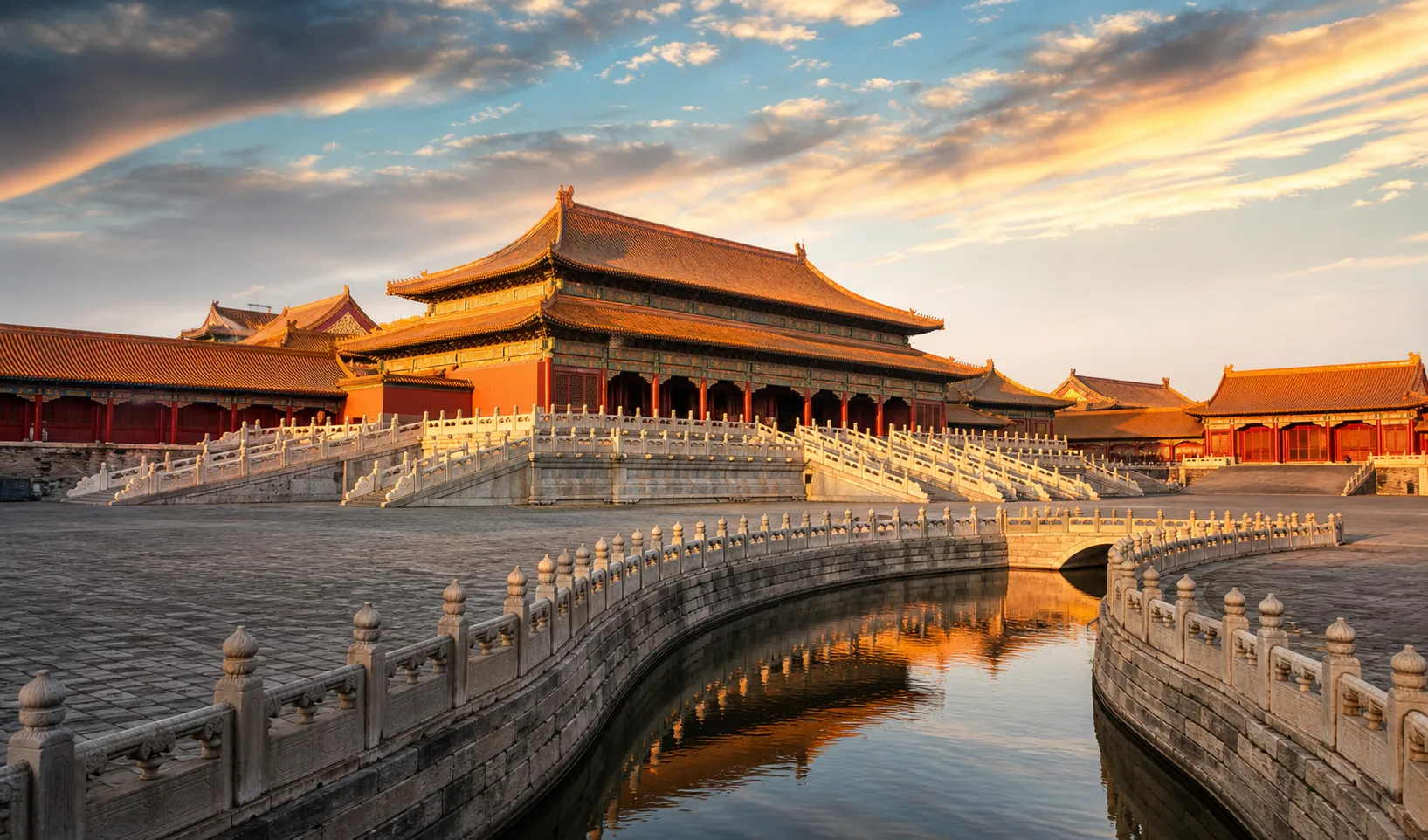
The Forbidden City is one of the hardest Beijing landmarks to photograph well because the crowds, the security flow, and the long walk through the palace axis all work against casual visitors. If you want clean frames, better light, and fewer surprises, the difference is in timing and route choice.
Introduction
If you are trying to photograph the Forbidden City at its best, the real challenge is not finding a famous angle. It is fitting the visit around the museum’s fixed entry rules, the single-direction route, and the changing light on the red walls, golden roofs, and vast courtyards. A good plan turns a rushed checklist stop into a visit with deliberate frames and less stress.
This guide focuses on three things first-time visitors usually need but rarely get in one place: when the light is most flattering, what the current public visitor rules actually are, and how the entry and exit gates affect your route. It also separates ordinary visitor photography from the kind of special-use or commercial shooting that needs extra approval.
After the first H2, this article gives you a compact planning summary you can use before booking. The rest of the piece then breaks down golden-hour strategy, the practical admission rules, and the mistakes that waste the most time inside Beijing’s most famous palace museum.
Golden Hours & Photo Strategy
Golden hour inside the Forbidden City is not just about pretty light. It is about using the museum’s fixed route to meet the light where the architecture opens up, instead of arriving when the courtyards are already crowded or the sun has dropped behind the wrong roofline.
The short version: arrive with a timed plan, not a vague afternoon window. If you want warm light on the outer walls and the main axial courtyards, the best approach is to enter early enough to clear security comfortably, move straight through the first plazas, and save your most important frames for the hour before closing when the light is softer and the crowd density often starts to ease.
What "golden hour" means here
At the Forbidden City, golden hour behaves differently from a city street or a park because the palace complex is vast, enclosed, and highly directional. The best light often lands on the central axis, the gates, and the broad courtyards that face east or west depending on the season. In summer, late afternoon light can stay usable for longer; in winter, the low sun creates stronger contrast but also shorter windows.
For most visitors, the simplest photo plan is this: use the first part of the visit to get established, then slow down once you understand how the light is moving over the roofs and in the open courtyards. The architecture rewards patience. A rushed pace tends to produce the same common angle everyone else gets from the middle of the crowd.
The best light for the main landmarks
The outer walls, moat-adjacent views, and the main gates are usually easiest to shoot in the calmer edges of the day. Midday tends to flatten the red and gold palette, while afternoon brings more shape to the carved rooflines and steps. If you want the palace to feel monumental rather than merely busy, wait for the lower sun that separates architectural layers and gives the roofs dimension.
For the most recognizable views, look for three things: clean foreground space, angled light on the walls, and a little breathing room from the crowd. The Forbidden City is not a place where one spot is enough. The better frames come from moving a few meters left or right, then waiting for pedestrians to clear.
How the route affects your photos
The palace is entered and visited in a single direction, so your route is not fully flexible. That matters because you cannot simply backtrack to a perfect position if you missed the light. Once you know the flow, you can plan your slow-down points: gate thresholds, open courtyards, and places where the crowd naturally compresses before opening again.
The practical takeaway is to save energy for the later part of the visit. Early on, focus on orientation and basic composition. Later, when you have less navigation overhead, you can watch the light more carefully and make the most of subtle changes in contrast and color.
A photo-first way to think about the visit
Most people think of the Forbidden City as a landmark to “see.” Photographers get more out of it by thinking of it as a sequence of light zones. The walls and gate exteriors are about scale. The courtyards are about symmetry and repetition. The deeper interior spaces are about texture and detail. That sequence gives you a natural story for your camera roll.
If you want a broader China photography plan around the palace, pair this visit with the ideas in Best Photography Spots in China: Ancient Towns to Modern Skylines. It helps you decide whether you want more imperial architecture, modern skyline contrast, or a mixed itinerary.
Secondary Topic Section
The word “permit” is where many travelers get confused. For ordinary tourists, the question is usually not whether you need a personal photography permit just to take photos with a phone or camera. The more important question is whether the museum has a separate approval path for special equipment, commercial shoots, or any setup that goes beyond normal sightseeing.
What the public visitor rules clearly cover
The museum’s public visitor pages clearly publish the basics: opening hours, ticket price, advance booking, and the single-direction visit flow. They also make clear that entry is controlled and tied to reserved admission. That means photography has to fit around the visit structure rather than the other way around.
For normal visitors, the safest assumption is simple: personal, non-commercial photography is usually the default behavior in outdoor museum spaces, but you should still expect restrictions inside certain galleries, special exhibitions, or temporarily closed areas. Always follow posted signs and staff instructions. If a room or exhibition says no photography, treat that as final.
When a permit becomes a real issue
A permit question becomes real when your visit is not just a tourist visit. Examples include a tripod-heavy portrait session, influencer content with a crew, editorial or commercial work, a brand shoot, or any setup that could slow traffic or affect the museum environment.
The museum’s public-facing visitor pages do not present a simple one-click consumer photography permit process. That does not mean approval is impossible. It means you should treat special-use photography as a separate request and contact the museum directly well in advance, rather than assuming a ticket covers it.
Why the distinction matters
This distinction saves time because many travelers over-prepare the wrong thing. A standard ticket gets you access to the route. It does not guarantee that every photography style is acceptable. If you are traveling light, the issue barely comes up. If you are carrying a tripod, flash, drone, light stand, or similar gear, you need to think like a producer, not a casual visitor.
For travelers building a practical China itinerary, the palace visit also sits inside a larger logistics puzzle. If you still need help with payments, trains, data, or entry planning, China Travel Planning: Visa, WeChat Pay, High-Speed Rail & Practical Guide is the right companion piece. It is the kind of background that prevents small friction from eating your photo window.
A reasonable interpretation for regular travelers
If your goal is simply to take strong travel photos, do not overcomplicate the permit issue. Book correctly, arrive on time, follow the museum route, respect signage, and keep your equipment modest. For most visitors that means a phone or a standard camera, a spare battery, and no setup that blocks foot traffic.
If your goal is to publish photos commercially or use the site as a production location, assume you need explicit permission even if the standard visitor route is open. When in doubt, ask before the day of your visit. The cost of clarifying in advance is tiny compared with being turned back at the gate.
Practical Guide
The practical side of the Forbidden City is straightforward once you know the official rules. The museum does not reward improvisation. It rewards advance booking, punctual arrival, and a route plan that matches the entry flow.
Hours, admission, and what is current
As of the current published visitor information, the Palace Museum operates with seasonal hours. The common daytime window is 8:30 opening, with entry stopping earlier than closing. During the main season, the site opens at 8:30, stops entry at 16:00, and closes at 17:00. In the off-season, opening remains 8:30, entry stops at 15:30, and closing is 16:30.
The public ticket price is also seasonal. The main gate ticket is 60 CNY in the peak season and 40 CNY in the off-season. Separate tickets for the Treasure Gallery and the Clock and Watch Gallery are 10 CNY each. Some special halls or temporary closures can change availability, so you should still check the official site before you go.
The museum is generally closed on Mondays except during legal holidays. That matters more than many first-time visitors realize, because a Monday in Beijing can easily wipe out a carefully planned photo day if you do not check in advance.
Booking rules you should not ignore
Advance booking is not optional for a smooth visit. The official system opens reservations seven days before the visit date at 20:00, and visitors enter with an identity check. If you are traveling during a busy week, do not wait until the morning you want to go.
The museum also says that annual pass holders must register at least one day in advance. If you are not using an annual pass, the practical rule is still the same: reserve early, confirm your identity document is ready, and build your day around the time you actually secured, not the time you hoped for.
How to get there
For most travelers, the easiest approach is to stay in central Beijing and use the subway or a taxi to reach the museum perimeter, then follow the official entry process. The key planning detail is not simply how to arrive, but where you expect to leave afterward, because the museum’s route is one-way.
That one-way structure is important for photographers. If you want to end with a specific exterior shot or a particular area around the northern side, plan your exit accordingly. You can leave through the north or east side after the visit, but you should not assume you can reverse the route once inside.
Which gate is best
For standard admission, the real answer is that there is only one entry gate for visitors: the South Gate, or Wumen. The museum’s visitor information states that guests enter from the south and can exit via Shenwumen or Donghuamen.
That means the “best entry gate” question is less about choice and more about strategy. Enter at Wumen as early as possible for your booking window, clear the initial flow, and use the route to position yourself for the light you want. If you are asking which gate is best for photographs, the answer depends on whether you care more about the entrance moment, the central axis, or the exit framing.
Entry and exit strategy for photographers
If you care about clean entrance photos, be at the gate early enough that you are not forced to shoot while moving. If you care about the central courtyards, keep your pace steady and avoid losing time in the first half of the route. If you care about an atmospheric exit, build in a little buffer so you are not rushing out at the end of the day with the light already gone.
The museum’s route is best treated like a long, linear photo walk. You do not need to stop at every landmark. You need to stop at the places where the geometry, light, and crowd density come together. That is usually more effective than trying to collect every famous courtyard in one breathless push.
Best time window by season
Season matters because the sun angle changes the look of the red walls and the roof tiles. In spring and autumn, the light is usually the most forgiving, with warmer tones and more comfortable walking temperatures. Summer offers longer usable daylight but also harsher heat and more pressure on the schedule. Winter can be excellent for crisp contrast and thinner crowds, but the usable light window feels shorter.
If you can choose your day freely, aim for a visit that starts early enough to avoid a late arrival and ends with enough daylight to enjoy the outer sections without rushing. For many photographers, the sweet spot is a calm morning booking combined with patient pacing toward the back half of the route, where the sun is lower and the surfaces begin to glow.
Suggested route logic
A good first-time route is not just about the iconic halls. It is about spacing. Spend the first stretch learning the flow and getting your exposure stable. Spend the middle stretch on the central architectural sequence. Save the last stretch for the places where light and openness make the strongest compositions.
If you want to think about the day as more than just a museum stop, combine the palace with a larger Beijing plan. Ultimate Beijing Travel Guide: Great Wall, Forbidden City & More is the best place to see how the Forbidden City fits into a fuller city itinerary, especially if you are balancing it with other major landmarks.
Tips & Common Mistakes
Most bad Forbidden City visits fail for predictable reasons. The visitor ignored the booking window, arrived too late, assumed there would be multiple entry options, or tried to photograph everything instead of choosing a few strong moments.
Mistake 1: Treating it like a walk-in attraction
The most common error is showing up with the mindset of a casual, flexible walk-in. The museum is not set up that way. If you do not book ahead, you are not really planning the visit. You are hoping the schedule will rescue you.
Mistake 2: Ignoring the single-direction route
Many visitors underestimate how much the one-way flow affects photography. Once you pass a strong viewpoint, you may not get a clean second chance. That is why you need to anticipate where the light will improve later, not just enjoy whatever is in front of you now.
Mistake 3: Bringing too much gear
If you carry a large kit, you will spend more time thinking about logistics than composition. The Forbidden City is a place where mobility matters. A lighter camera setup almost always produces more usable images than a heavy kit you are tired of carrying by noon.
Mistake 4: Assuming all areas are equally open
Temporary closures, restored halls, and special exhibition restrictions can change what you can see on a given day. The museum regularly posts notices, and the availability of specific halls can shift. If you have one particular room in mind, check the latest visitor information before you leave your hotel.
Mistake 5: Forgetting that crowds shape composition
Even the best light can be ruined by a crowded frame. The easiest fix is patience. Wait for a cleaner lane. Shift your angle. Use architecture as a frame. If you need a perfectly empty scene, you are probably visiting the wrong hour or the wrong season.
A practical packing list
Bring your booking details, the ID you used for entry, a charged battery, a compact lens or phone setup, and comfortable shoes. If you are staying out until late afternoon, carry water and a plan for where you will go after the visit so you do not waste the good light on indecision.
FAQ
Do I need a photography permit to take normal travel photos?
Usually, no separate visitor-facing permit is the first thing to worry about if you are just taking ordinary travel photos. The practical issue is whether your activity stays within normal sightseeing. If you are doing something commercial or equipment-heavy, assume you need permission and ask in advance.
Can I use a tripod or flash inside the Forbidden City?
Do not assume that either is acceptable everywhere. If you plan to use special equipment, check the current rules and be ready to comply with staff instructions. For most travelers, the simplest approach is to keep the kit small and unobtrusive.
Which gate should I enter through?
For standard visitors, the entry gate is Wumen, the South Gate. The museum’s route then carries you north through the site. You can exit through Shenwumen or Donghuamen after the visit.
What is the best time of day for photos?
For many visitors, the most useful window is the later part of the day when the light softens and the red-and-gold surfaces gain more depth. That said, you still need to enter on time and keep enough daylight left to finish the route without rushing.
Is the Forbidden City open every day?
No. It is generally closed on Mondays except during legal holidays. Always check the official schedule before you book transport.
Conclusion
The Forbidden City is easiest to photograph when you stop treating it like a generic attraction and start treating it like a timed architectural route. Book early, enter through Wumen, save your best energy for the later light, and keep your gear simple enough that you can move when the composition opens up.
If you want the best results, focus on three things: the official schedule, the one-way flow, and the moments when the sun starts to flatten less and shape more. That approach will give you cleaner images, fewer surprises, and a visit that feels deliberate rather than rushed.
If you are building a broader Beijing trip, the Forbidden City is best handled as one part of a larger route, not a standalone box to check. Plan the palace around light, then plan the rest of the day around what kind of city story you want to tell after you leave.