Exploring Gyeongju: How to Visit Korea's Open-Air Museum City

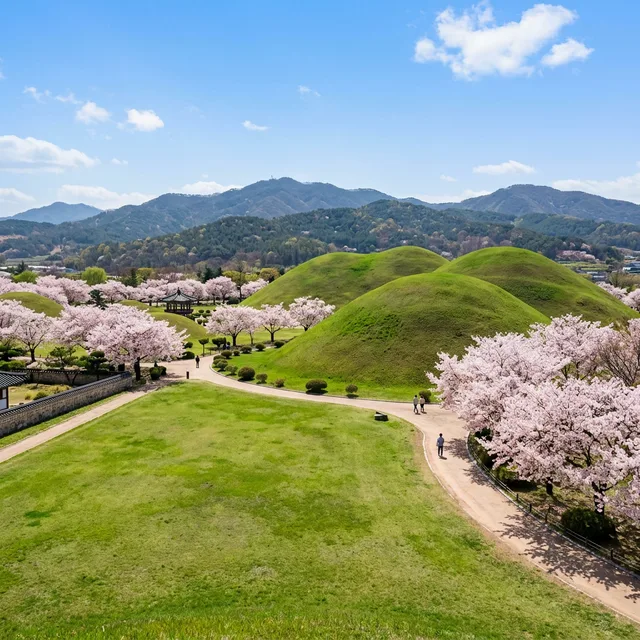
Gyeongju is called "the museum without walls" for a reason that becomes clear within the first hour of being there. Burial mounds the size of small hills rise from the middle of residential neighborhoods. Pagodas stand in grassy fields without fences or ticket booths. A seventh-century astronomical observatory occupies the center of the city like a perfectly preserved giant egg. No other city in Korea — arguably in East Asia — wears its 1,000-year history this openly, this casually, this extensively.
Why Gyeongju?
Gyeongju was the capital of the Silla Kingdom (57 BCE – 935 CE) — the dynasty that eventually unified the three kingdoms of the Korean peninsula and presided over one of East Asia's most sophisticated Buddhist civilizations. At its peak, Gyeongju was one of the largest cities in the world, home to a million people and adorned with temples, palaces, and royal tombs across the entire basin.
Most of that world is gone — but the physical traces are everywhere. Gyeongju's UNESCO World Heritage designation covers four separate protected zones, and that's before counting the additional UNESCO-listed Bulguksa Temple and Seokguram Grotto on the mountain outside town.
It is a place that rewards depth. Two days is better than one, three is better than two.
Getting To Gyeongju
By KTX (fastest): Seoul KTX from Seoul Station to Singyeongju Station (신경주역) — approximately 2 hours 10 minutes. From Singyeongju, take a local bus or taxi into the city center (~15–20 minutes).
By ITX-Saemaeul / Mugungwha: Longer (~3–4 hours) but arrives at Gyeongju Station in the center of town; more convenient for reaching central sites on foot.
By express bus (from Seoul): ~3.5–4 hours, arriving at Gyeongju Express Bus Terminal.
By KTX from Busan: ~15–20 minutes; excellent for combining a Gyeongju visit with time in Busan.
Getting around Gyeongju: The city is notably flat and bike-friendly — rental bikes and e-bikes are available near major attractions, and many central sites are within cycling distance of each other. Taxis are inexpensive for sites further out (Bulguksa, Seokguram). A local bus network connects the major sites.
Key Attractions
Tumuli Park (Daereungwon Tomb Complex) — The Royal Burial Mounds
Hours: 9:00 AM – 10:00 PM (last admission 9:30 PM) Admission: Small fee (~3,000 KRW adults) Best time: Early morning or late afternoon for photography; the mounds are also beautifully atmospheric at dusk
The scale of the Silla royal tombs takes a moment to absorb. These are not modest grave markers — they are enormous grass-covered mounds, some reaching 20+ meters in height, scattered across the center of Gyeongju like a herd of giant sleeping animals. The Tumuli Park complex contains 23 of these tumuli in a parkland setting.
Cheonmachong Tomb ("Heavenly Horse Tomb") is the one tomb open to visitors — you enter the mound itself and see the excavated burial chamber reproduced inside, with the original gold crown, gold belt, jade ornaments, and the famous Cheonma (Heavenly Horse) painting on birch bark displayed. The original artifacts are now in the Gyeongju National Museum.
Walk early in the morning when the mounds are mist-covered, the light is golden, and you have the paths between them largely to yourself.
Bulguksa Temple (불국사) — UNESCO World Heritage
Hours: 7:00 AM – 6:00 PM (seasonal variation) Admission: Free (as of May 2023) Getting there: Bus from Gyeongju Station or taxi (~15–20 min); the ride up the mountain through pine forest is part of the experience
Bulguksa is the masterpiece of Silla Buddhist architecture — built in 751 CE under the direction of Kim Daeseong during the reign of King Gyeongdeok, it embodies the Silla ideal of a temple as both a spiritual space and a mathematical expression of cosmic order.
What to see:
- Dabotap Pagoda (다보탑) and Seokgatap Pagoda (석가탑) — the two pagodas in the courtyard represent balance and contrast in every dimension; Seokgatap is pure geometry; Dabotap is intricate and ornamented. Dabotap appears on the 10-won coin.
- The Stone Staircases (Cheongungyo and Baegungyo) — ascending stairways representing the transition from the ordinary world to the Buddhist realm; 33 steps precisely counted
- Gwaneumjeon Hall — houses the great bronze Eleven-Faced Gwaneum Bodhisattva
- Birojeon Hall — the Vairocana Buddha in gilded bronze, one of the finest surviving examples of Unified Silla metalwork
Allow at least 45–60 minutes; combine with Seokguram on the same day.
Seokguram Grotto (석굴암) — UNESCO World Heritage
Hours: 6:00 AM – 6:00 PM (seasonal variation) Admission: Combined ticket with Bulguksa; ~6,000 KRW Getting there: Short shuttle bus or 40-minute uphill walk from Bulguksa
Built simultaneously with Bulguksa, Seokguram Grotto is one of the most extraordinary Buddhist monuments in Asia. A granite cave chamber was carved into the mountain and a large stone Shakyamuni Buddha placed at its center — gazing east toward the sunrise over the East Sea.
The Buddha figure and the surrounding relief carvings of bodhisattvas, guardian deities, and disciples are executed with a mathematical precision and a sculptural quality that remains stunning 1,300 years after completion. The chamber's proportions are based on consistent mathematical ratios throughout; scholars continue to study them.
Practical note: Visitors view the Buddha through a glass partition from the cave entrance; full entry to the inner chamber is restricted to preserve the environment. The early morning light (when the sun rises above the sea in the distance) is the traditionally designated best viewing time.
The walk downhill after visiting, through pine forest, is one of the most peaceful 40 minutes available on the Korean peninsula.
Anapji Pond / Donggung Palace and Wolji Pond (안압지, 동궁과 월지)
Hours: 9:00 AM – 10:00 PM (night viewing until 10 PM) Admission: ~1,500 KRW adults Best time: Sunset and evening, when illuminated reflections appear on the water
Originally built in 674 CE as a royal pleasure garden and detached palace for the Silla crown prince, Anapji was abandoned and silted over after the kingdom fell in 935. The name "Anapji" (Wild Goose Pond) was the name given by later farmers who found geese using the marshy land. When archaeologists excavated in the 1970s, they discovered that the pond's original name was Wolji (Moon Pond), and recovered 33,000 artifacts — the largest single haul from any Silla site.
Three reconstructed Joseon-era pavilions now stand at the water's edge, and the reflection of their illuminated interiors in the still pond at night is one of Korea's most photographed scenes.
Cheomseongdae Observatory (첨성대)
Hours: Always open (exterior only) Admission: Free Location: 5-minute walk from Tumuli Park
The Cheomseongdae is the oldest surviving astronomical observatory in East Asia — built in the 7th century CE during the reign of Queen Seondeok. It is a gracefully proportioned stone cylinder, 9.17 meters tall, constructed from 367 carefully fitted stone blocks (one for each day of the lunar year). Its exact astronomical function is debated — it may have been used for direct observation, for signaling solstices and equinoxes, or as a symbolic monument to heaven.
What is undisputed: it has stood in its original location for nearly 1,400 years and shows no sign of deteriorating. Walk around it slowly; the craftsmanship rewards close examination.
Gyeongju National Museum
Hours: 10:00 AM – 6:00 PM (Thu/Sat until 9 PM) Admission: Free Location: 15-minute walk from Tumuli Park; 5 minutes from Anapji Pond
The Gyeongju National Museum houses the finest collection of Silla artifacts anywhere — the excavated contents of the royal tombs, including the famous gold crowns (three survive from Silla-era excavations; all are here), gold belts, glass vessels from the Silk Road, jade gogok (curved bead) jewelry, bronze vessels, and the giant Emille Bell (Divine Bell of King Seongdeok, 771 CE — one of the largest bronze bells in East Asia, whose sound is said to carry for miles).
The museum is essential context for everything else you'll see in Gyeongju. Visit it early or late in your trip as a framing device.
Gyeongju 2-Day Itinerary
Day 1: City Center
- Morning: Tumuli Park (arrive at 9 AM opening → beat the crowds, beautiful morning light)
- Late morning: Cheomseongdae Observatory (10 min walk)
- Lunch: Gyeongju Hanjeonsik (traditional Korean set meal) near Hwangnam-dong
- Afternoon: Gyeongju National Museum (2–2.5 hours)
- Late afternoon: Wolseong / Hue Royal Garden area
- Evening: Anapji Pond (sunset arrival; stay for the illuminated night view)
Day 2: Mountain Temples
- Morning: Bulguksa Temple (arrive early; quieter before 10 AM)
- Mid-morning: Seokguram Grotto (shuttle or walk from Bulguksa)
- Lunch: Restaurants near the Bulguksa bus stop
- Afternoon: Namsan Mountain (rock carvings; pick one trail — the Samneung trail is most accessible)
- Evening: Return to city; Hwangnam Bread (황남빵) as a take-home souvenir — the traditional wheat pastry with sweet red bean filling has been made in Gyeongju since 1939
Who Should Do Gyeongju as a Day Trip vs. Overnight?
The biggest planning mistake is treating Gyeongju like a quick box-checking stop. It can work as a day trip, but only for a narrow kind of traveler.
| Trip style | Best approach |
|---|---|
| First-time Korea trip with limited time | 1 overnight minimum |
| Deep history / museum interest | 2 nights |
| Seoul + Busan route already planned | Stop between the two cities |
| Fast highlight collector | One long day focused on central Gyeongju only |
If Bulguksa, Seokguram, and the museum all matter to you, stay overnight. If you only want the burial mounds, Anapji, and one evening walk, a long day can work. For travelers building a wider heritage route, pair this with the UNESCO sites guide rather than treating Gyeongju as a random side stop.
Best Season to Visit
Spring (late March–early April): Cherry blossoms across Tumuli Park and the mountain approach to Bulguksa. One of Korea's most beautiful seasonal spectacles.
Autumn (late October–November): Golden foliage around Bulguksa and Seokguram; Anapji Pond at its most photogenic. The most recommended season for photography.
Avoid: Summer midday heat and humidity (high 30s°C). If visiting in summer, start early, rest midday, revive for evening at Anapji.
8. Hwangnidan-gil (황리단길): The Retro Heart of Gyeongju
If the Tumuli are Gyeongju’s soul, Hwangnidan-gil is its heartbeat. This once-quiet residential neighborhood of traditional Hanoks has transformed into one of Korea’s trendiest districts. It is the perfect marriage of 1960s nostalgia and 2026 "Hip-ro" (Hip + Retro) culture.
- The Vibe: Low-slung rooftops, narrow alleys, and a policy that prevents high-rise buildings, ensuring the sky is always visible above the tiled roofs.
- Hanok Cafes: Don't miss Cafe Neung, a restored Hanok with a rooftop view of the tombs, or Skunk Works, famous for its industrial-chic interior.
- 2026 Trend: Look for Selfie Studios with Hanbok Rentals—it’s now common to rent a modern "fusion" Hanbok and take high-quality studio photos before wandering the streets.
9. The Gyeongju Food Deep Dive: Beyond the Lunch Box
Most travelers know about Gyeongju’s traditional set meals, but the local food scene is much richer.
Gyeongju Ssambap (Rice Wrap Course)
Gyeongju is famous for Ssambap, where your table is covered with over 20 different side dishes (banchan), various types of fresh leafy greens, and a main protein (usually spicy pork or grilled beef). You wrap the rice and meat in the greens for a healthy, explosive flavor experience.
- Recommendation: Ssam-bab-jib near the Daereungwon complex.
Gyeongju Milmyeon
While Busan is famous for Milmyeon (wheat noodles), Gyeongju has its own version that is slightly sweeter and often served with a slice of grilled meat on top. It’s the perfect cooling meal after a long morning of walking.
The Legendary Hwangnam Bread (황남빵)
Since 1939, this small, round pastry filled with dense, unsweetened red bean paste has been Gyeongju’s most famous export.
- Pro Tip: Look for the "Certified Authentic" seal. The original shop is near the Gyeongju Express Bus Terminal, and you can watch the artisans hand-fold each bun through the glass.
10. Smart Gyeongju 2026: The Digital Silla Experience
In 2026, Gyeongju has fully embraced its "Smart Tourism City" status. The history is ancient, but the access is futuristic.
The GyeongjuTOUR App
Download the official GyeongjuTOUR app before you arrive. It integrates:
- AR Historical Reconstruction: Hold your phone up at the ruins of Hwangnyongsa Temple, and the app will overlay a 3D model of the original 9-story wooden pagoda (once the tallest in East Asia) over the empty stone foundations.
- Autonomous Shuttle Bus: A specialized Level 4 autonomous shuttle now loops around the Bomun Tourist Complex and major downtown sites, offering a futuristic way to transit between Silla monuments.
- Smart Order & Tax Refund: Use the app to order at local cafes in Hwangnidan-gil and receive instant digital tax refunds to your registered payment method.
11. Gyeochon Village and the "Rich Man Choi" Philosophy
Located near the Woljeonggyo Bridge, Gyochon Traditional Village offers a glimpse into the lifestyle of the Gyeongju Choi clan. The "Rich Man Choi" family was legendary for their philosophy of social responsibility: “Never let anyone within 10 ri (4km) of the house go hungry.”
- Gyori Gimbap: This village is home to the most famous gimbap in Korea. It’s filled with a massive amount of finely shredded egg omelet, giving it a fluffy, savory texture. Expect a line!
12. Namsan Mountain: The Open-Air Cathedral
Currently mentioned as a footnote, Namsan deserves a full morning. It is literally a mountain carved with 150+ Buddhist statues and 100+ pagodas.
- Samneung Trail: The most popular route. You start in a mystical pine forest and pass several carved Buddhas right on the rock faces.
- Yongjangsa Site: Features a Buddha statue sitting directly on the mountain ridge, looking out over the valley. It’s one of the most spiritually powerful spots in Gyeongju.
13. Night-Time Mastery: Woljeonggyo and the Pink Muhly
If you think Gyeongju is finished at 6 PM, you’re missing the best part.
- Woljeonggyo Bridge: This massive wooden bridge, meticulously restored in 2018, is stunning when lit up at night. The reflection in the Namcheon stream is the "must-have" photo of 2026.
- Cheomseongdae Pink Muhly: In late September and October, the fields around the observatory turn a vibrant, fluffy pink. This has become a viral sensation for autumn travelers.
14. 2026 Practical Planning Table
| Feature | 2026 Detail |
|---|---|
| Local 2026 Sim Card | ₩35,000 (30 days) |
| Hwangnam-ppang Box | ₩20,000 (20 pcs) |
| Gyeongju Smart Bus | ₩1,250 (Flat) |
| Autonomous Shuttle | ₩2,000 (Trip) |
15. The Gyeongju Eco-Travel Commitment
In 2026, the city has implemented a "No-Carbon Heritage" initiative. Travelers are encouraged to use the Gyeongju Blue Bike system, which features electric pedal-assist bikes to help you navigate the hills around Bulguksa. Many Hanok guesthouses now offer discounts to visitors who arrive via the KTX and use the public bike system instead of rental cars. This effort preserves the silence and air quality of the ancient Buddhist sites, ensuring they remain pristine for the next thousand years.
Final Thoughts
Gyeongju is one of the most underrated destinations in all of East Asia. It offers a depth of historical experience comparable to Kyoto, Rome, or Athens — but with a fraction of the crowd density at most of its sites. The combination of outdoor landscapes and urban heritage, UNESCO temples and unexplained astronomical monuments, gold-crowned tombs and still reflecting ponds at night, makes it a destination that expands proportionally with the time you give it.
Use this city guide together with the broader UNESCO World Heritage Sites in South Korea, the temple stay guide if you want a quieter monastery detour, and the National Museum of Korea guide for historical context before or after the trip.