Eating Cheaply in China: Where Locals Eat & Menu Navigation Tips

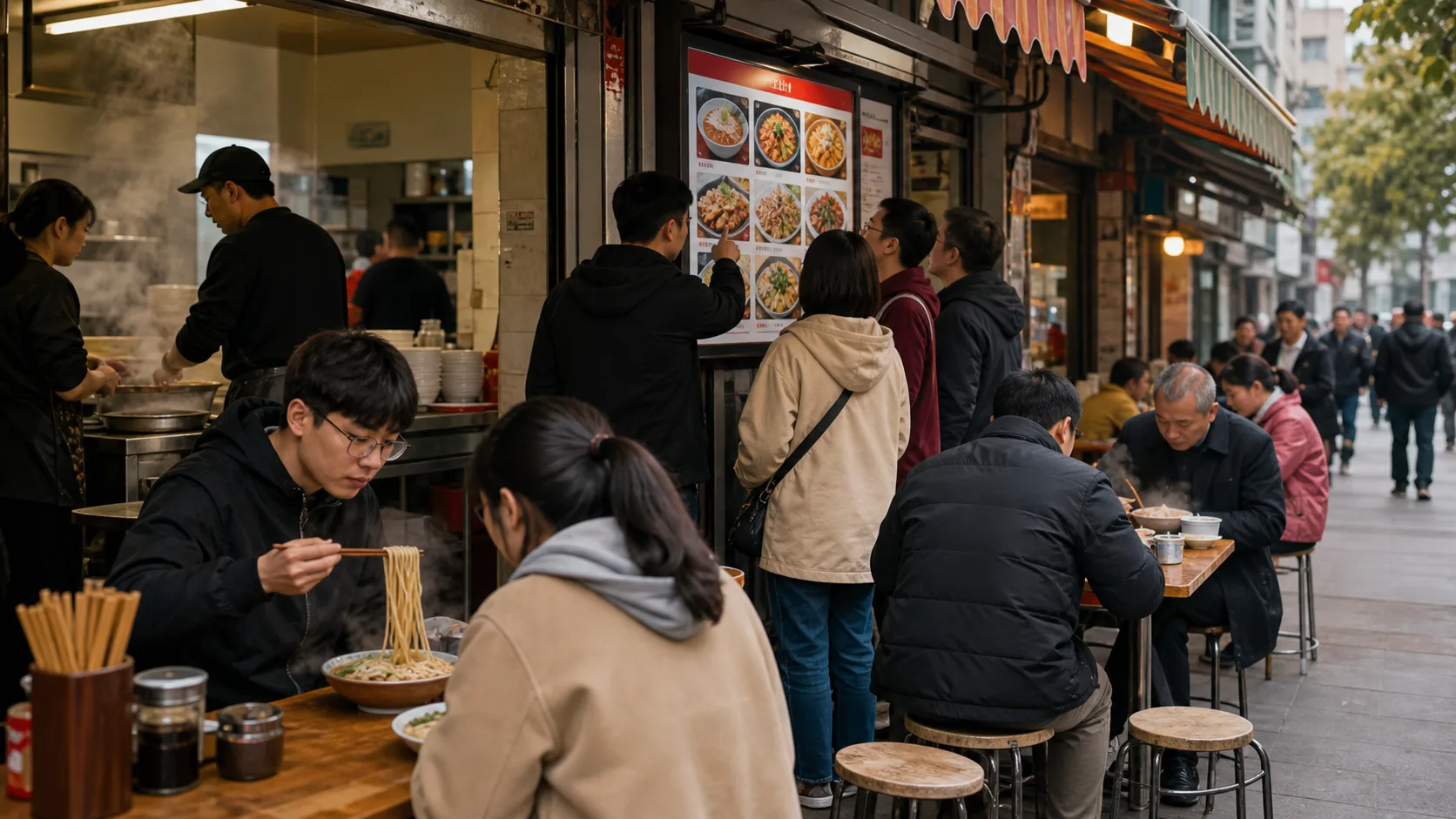
The easiest way to overpay for food in China is not by ordering something fancy. It is by eating in the wrong place, at the wrong time, with the wrong expectations. A traveler who understands where locals actually eat can keep costs low, order with confidence, and avoid the awkward cycle of pointing at random dishes and hoping for the best. Cheap food in China is not a survival tactic. It is a skill.
Why Cheap Eating in China Is About Systems, Not Discounts
The best budget food strategy in China is not "find the lowest price." It is "align with the local rhythm." That means eating where office workers, students, delivery riders, and families already go, then choosing dishes that are made for everyday demand rather than tourist performance. Once you do that, the price drops naturally and the food usually improves.
If you are planning the broader trip as well as the meals, this pairs well with How to Travel China on a Budget: Cheap Transport, Food & Stays, which covers the transport and lodging side of the budget equation. Food is only one part of the system; if your hotel and transit choices are wasteful, the savings disappear somewhere else.
What "cheap" really looks like in China
Cheap eating in China usually means paying local prices for filling food, not chasing the absolute bottom of the market. In practice, that can look like a bowl of noodles for lunch, a simple breakfast of soy milk and steamed buns, and a family-run dinner place that serves one or two regional staples well. You do not need to eat street food at every meal. You need to stop paying premium tourist markup for everyday dishes.
The most useful budget benchmark is not a single number. It is whether the meal feels like something locals would consider normal. A restaurant can be clean, fast, and affordable without being the cheapest shop on the block. A cheap-looking place can still be expensive if it sits in a tourist corridor or sells only curated "must-try" dishes. The budget traveler wins by recognizing the difference.
Why local habits matter more than guidebook fame
People often ask where to find the "best" cheap food in China as if the answer were a single street or a single chain. It is rarely that simple. The real answer changes by city, neighborhood, time of day, and even weather. A lunch district that is full at 12:10 p.m. may be sleepy at 3:00 p.m. A breakfast stall can be unbeatable before 9:00 a.m. and gone by mid-morning. A late-night snack alley may be lively only after 8:00 p.m.
That is why local behavior is a better guide than internet lists. If you see a queue of workers with takeout bags, that is a strong clue. If a restaurant has a dense Chinese menu, visible prices, and quick turnover, that is another clue. If a place has English-only signs, a glossy storefront, and a menu built around the same five dishes every foreign visitor already knows, the value is usually worse than it first appears.
What this article solves
This guide is for travelers who want to do three things at once: eat well, spend less, and avoid menu panic. It focuses on the kind of decisions that actually change your daily budget. Where should you sit down? How do you tell whether the place is local or tourist-facing? What do you order when the menu is huge and only partly translated? How do you avoid overpaying for drinks, side dishes, or convenience?
The goal is not to turn you into a food expert overnight. The goal is to make your first few meals in China feel manageable, then predictable, then easy.
Where Locals Eat
The best places to eat cheaply are usually the ones built around routine. That means breakfast shops near residential blocks, lunch spots near offices and schools, neighborhood noodle houses, dumpling counters, rice-bowl shops, fast casual canteens, and barbecue places that fill up after work. These are not the restaurants most travel blogs lead with, but they are the ones that keep a trip affordable.
Follow the crowd that has a schedule
Locals in China eat with the clock. Breakfast shops are busiest in the morning commute window. Lunch places fill up around midday and then quiet down. Dinner spots pick up after work and again later in the evening, depending on the district. If you understand that rhythm, you can use it to your advantage.
Look for places where the crowd is tied to a routine rather than a one-time visit. Office workers do not wander around for an hour deciding where to eat lunch. Students do not wait in line for a bad bowl of noodles. Families do not return to the same shop every week if the food is poor. When you see repeat traffic, you are seeing a live quality check.
That is also why side-street eateries often outperform the headline restaurant on a famous commercial avenue. The famous place is visible. The local place is useful.
The strongest cheap formats
Some formats are almost always worth checking first:
- Noodle shops, especially those with regional specialties.
- Dumpling restaurants and steamed bun counters.
- Rice-bowl shops that let you choose a meat, vegetables, and sauce.
- Fast casual canteens with numbered dishes and daily specials.
- Breakfast stands that serve soy milk, pancakes, buns, porridge, or youtiao.
- Barbecue and skewer places that fill up around dinner.
These formats are good because they are designed for speed and repetition. That usually keeps prices lower than in places where every plate is plated like a set piece. You are paying for food, not performance.
Neighborhood signals that matter
If you want to eat cheaply, start by asking what kind of neighborhood you are in. Tourist cores, museum districts, luxury retail blocks, and scenic lakeside promenades often charge more simply because the foot traffic is less price-sensitive. Residential areas, university zones, office districts, and transport nodes are usually better value.
The practical trick is to leave the most obvious landmark area and walk five to ten minutes away from it. Often that is all it takes. The menu prices can fall, the crowd can become more local, and the dish choices get simpler and better. If you have ever wondered why a meal two streets away suddenly felt more honest, that is usually the reason.
How street food fits the picture
Street food can be excellent value, but it is best treated as one part of the day rather than the entire plan. The strongest street food stalls are those with high turnover, visible cooking, and repeat local customers. In cities with good food culture, the stall is often just the front edge of a larger local breakfast or snack ecosystem.
Choose hot food over uncertain room-temperature snacks when you are not sure. Buy things that are assembled in front of you. Let the stall's speed tell you something about demand. If the vendor is moving efficiently and the queue is full of locals on the way to work, that is a good sign. If the stall feels like it was assembled for photos, be cautious.
Regional differences change the budget
China is not one food economy. Northern cities often lean more heavily into wheat-based foods like noodles, dumplings, pancakes, and buns. Southern cities may offer more rice dishes, lighter soups, and stir-fries. Sichuan and Chongqing add spice, peppercorn, and heavy flavor to even simple meals. Coastal cities can be more expensive in polished districts, while inland cities often give you better value for the same style of food.
This matters because a cheap dish in one place may not exist in the same form elsewhere. A bowl of noodles in one city might be a modest local staple. In another city, the dish may be a specialty with a higher price. So the question is not "what is the cheapest food in China?" It is "what is the everyday food in this city, and where do locals buy it?"
How to Read a Chinese Menu Without Guessing
Menu navigation is the part that makes many travelers hesitate. Once you solve it, cheap eating becomes much easier. Most restaurants are not trying to confuse you. They are simply built for local diners who already know the categories, the cooking styles, and the regional names. A bit of pattern recognition goes a long way.
Start with the structure, not the translation
Many Chinese menus are organized by dish type, cooking method, or ingredient family. If you can spot the structure, you can choose more intelligently even when only part of the menu is translated. Look for categories like noodles, rice, dumplings, vegetables, soups, cold dishes, stir-fried dishes, barbecue, claypot dishes, and local specialties. Once you know the bucket, you can narrow down the choice.
This is the same basic logic whether you are reading a laminated menu, a QR-code menu, or a wall of handwritten specials. The names may be different, but the restaurant is still telling you what kind of meal it wants to sell.
Common menu categories to recognize
These categories show up everywhere:
- Noodles: often a good budget anchor, especially when the menu includes broth-based and dry versions.
- Rice dishes: useful when you want something filling and uncomplicated.
- Dumplings and buns: often cheap, shareable, and easy to order.
- Vegetables: important if you want balance or a lighter meal.
- Cold dishes: usually side dishes or small plates, not the main meal.
- Stir-fries: often the core of a sit-down meal, especially if you are sharing.
- Hot pot or dry pot: can be cheap per person only if the group size and ordering style make sense.
- Skewers and barbecue: good for casual dinner and late-night eating.
If you are traveling alone, noodles, rice bowls, dumplings, and set meals are often the cleanest budget choices. If you are with other people, a few shared stir-fries plus rice can sometimes be cheaper than each person ordering a separate main dish.
Learn the difference between price and value
A cheap-looking menu is not always a cheap meal. Some menus show a low headline price but add up quickly through small side dishes, drinks, or minimum orders. Other places look modest but serve generous portions. You want to compare what a dish actually buys you, not just the number printed beside it.
Watch for:
- Dishes priced as "per serving" but intended to be shared.
- Small plates that are too tiny to count as a full meal.
- Dishes that seem inexpensive until rice, noodles, or soup are added.
- Drinks that cost almost as much as the food.
The best way to control spending is to order food that genuinely satisfies your hunger. Otherwise you end up paying twice: once for a snack that was too small, and again for the meal you still needed afterward.
Understand the cooking words that matter
Even if you do not read Chinese, a few cooking clues can help. Stir-fried dishes are often a safe choice if you want something familiar. Steamed dishes are usually lighter. Braised dishes tend to be richer. Spicy dishes are common in many regions, especially in the southwest. Cold noodles are useful in hot weather. Claypot dishes can be comforting and filling in colder seasons.
When in doubt, choose the method rather than the mystery ingredient. If you know whether you want soup, stir-fry, noodles, or a steamed dish, the menu becomes much easier to scan. You do not need to understand every noun to make a good decision.
QR menus, translations, and imperfect English
In many Chinese restaurants, the menu comes through a QR code, a mini app, or a phone-based ordering system. That can feel awkward at first, but it actually helps once you get used to it. QR menus often include photos, categories, and ingredient notes that make ordering easier than a paper menu with tiny font.
Still, machine translation is not perfect. Dish names can be literal, incomplete, or oddly phrased. If a translated dish sounds strange, check the ingredients or the photo before rejecting it. Sometimes the translation is clumsy while the underlying dish is perfectly ordinary. At the same time, do not assume every blurry translation is safe to guess from. When something matters, ask the staff or use a translation app to compare the Chinese text with the English text.
Useful ordering phrases and fallback moves
You do not need fluent Mandarin to eat well, but a few short phrases help. "这个" and pointing at the menu still works in many places. "不要辣" is useful if you want no chili. "少辣" helps if you want a reduced spice level. "米饭" is handy if you want rice. "打包" can mean to take food away, which matters if portions are large.
If all else fails, use a three-step fallback:
- Find a set meal or signature dish with a photo.
- Add one vegetable dish or soup if the meal seems too heavy.
- Keep the order small on the first visit, then refine later.
The first meal is for orientation. The second meal is for confidence.
Practical Guide
The practical part of cheap eating in China is less about one destination and more about daily behavior. You are trying to make each meal quick to choose, easy to understand, and low enough in cost that the rest of the trip stays flexible. That means timing, neighborhood choice, and payment setup all matter.
Typical meal prices and what they mean
Prices vary a lot by city and district, but a few ranges are useful for planning. A simple local breakfast can often stay very low if you keep it to buns, soy milk, pancakes, porridge, or a noodle soup. A lunch at a neighborhood noodle shop or rice place is usually still inexpensive compared with a tourist cafe. A dinner built around shared dishes can be affordable if you avoid alcohol, oversized portions, and premium imported drinks.
The important point is that the cheapest meal of the day is not always the best budget move. A very low-cost snack that leaves you hungry can increase total spending later. A reasonable meal that keeps you full until the next stop is often the smarter choice. Budget travel is about reducing regret, not just shrinking the bill.
Best time of day to eat cheaply
You will often get better value when you eat with local demand rather than outside it. Breakfast shops are usually best early. Lunch places are strongest during the midday rush. Dinner spots are often most efficient soon after workers leave, before the late-night crowd arrives. In other words, the best time is often when the restaurant is busy but not chaotic.
Try not to eat in the dead zone between meal periods unless you have already identified a place that serves continuously. A tired restaurant in an off hour can be slower, less fresh, and less interesting. If you are hungry between meal windows, use a bakery, convenience store, fruit stall, or a small snack shop to bridge the gap.
How to get there and avoid wasting money
The cheapest food is often one metro ride and a short walk away. That is why transport and food should be planned together. If you are staying in a business district, the cheap restaurants may be tucked behind the office towers. If you are near a major station, the best options may be one block outside the obvious station exit. If you are in a residential neighborhood, the best meals may be on the side streets rather than the main road.
If you are still setting up your trip logistics, China Travel Planning: Visa, WeChat Pay, High-Speed Rail & Practical Guide is the companion piece to read first. It covers the travel plumbing that makes cheap food easier to use in practice: payment access, rail planning, and the kind of preparation that prevents last-minute cost spikes.
Payment setup is part of the food budget
Food spending in China is easier when payment works smoothly. If you have to fumble through cash, wait for change, or solve app issues at the counter, you are more likely to settle for the first thing that works instead of the best value option. That is how small friction turns into unnecessary spending.
Before you start the day, make sure you have a working payment method, data access for maps and translation, and a backup in case the first method fails. A restaurant that only accepts mobile payment is not a problem if your setup already works. It becomes a problem when you are hungry, unfamiliar with the menu, and standing in line with people behind you.
What to do if you are traveling with limited Chinese
The easiest way to keep food cheap with limited language skills is to reduce decision complexity. Eat at places with visible prices. Order from a photo menu or a display counter. Repeat dishes that you already understand. Choose one new item per meal instead of changing everything at once. The fewer unknowns you stack together, the less likely you are to overspend.
For example, if one dish looks unfamiliar but the restaurant is busy and the price is fair, you can pair it with something obvious like rice or noodles. That lets you test one new thing without risking the whole meal. Over time, your confidence grows fast because the structure of the meal becomes familiar.
Where regional food knowledge helps
If you know a little about regional cuisine, you will make better choices. Northern food tends to be more noodle- and dumpling-heavy. Sichuan food can be cheap and flavorful but more assertive. Cantonese cooking may be lighter and more delicate, especially in dim sum or roast-meat settings. Shanghai and Jiangnan foods often lean toward balanced sweetness, braising, and refined textures.
That means you should not order as if every city is interchangeable. When you understand the regional profile, you can ask a much better question: what is the daily staple here, and what is the special dish worth paying extra for? That question usually saves more money than chasing the most famous restaurant in town.
How to build a cheap day of eating
The easiest daily pattern is simple:
- Eat a cheap local breakfast.
- Choose a filling lunch near your sightseeing route.
- Use a snack or fruit stop between activities instead of a convenience-store splurge.
- Have a dinner that matches your energy level, not your impulse.
- Skip one unnecessary drink or dessert and let that become your saving.
This is a better system than trying to be frugal in one meal and extravagant in the next. A balanced pattern is easier to repeat, and repeatability is what keeps the budget under control for a multi-day trip.
Planning around the rest of the trip
If you are traveling across multiple cities, food plans should follow the route, not fight it. A city day with long train rides is not the day to schedule an elaborate dinner. A day full of walking is a good day for a cheap, filling lunch and a simple dinner. When you make food decisions based on the rhythm of the day, your spending gets more consistent.
That broader travel context matters, especially if you are trying to keep the whole trip affordable rather than just one meal. Eat where the day naturally brings you. The budget will thank you.
Tips & Common Mistakes
Most budget mistakes in China are not dramatic. They are small habits that add up quickly. The good news is that once you know the pattern, the fixes are straightforward.
Tip 1: Use lunch as your value meal
Lunch is often the best meal for value because many places serve working crowds. Prices are competitive, dishes are fast, and the food is made for repeat demand. If you only want to "splurge" once a day, do it at dinner and keep lunch simple. That pattern usually gives you the best ratio of satisfaction to cost.
Tip 2: Do not order one huge unknown dish
If you do not know the portion size, do not make the whole meal depend on one dish. Start with a safe anchor such as rice, noodles, dumplings, or a set meal. Then add one unfamiliar dish if you are curious. That prevents waste and keeps the risk low.
Tip 3: Watch the drink bill
Tea, bottled water, soft drinks, milk tea, coffee, and alcohol can silently raise your daily spend. This is especially true when the food itself is cheap. A traveler can feel frugal while accidentally spending a lot on drinks. If you want to save, treat beverages as intentional purchases rather than automatic add-ons.
Tip 4: Be suspicious of "special tourist snacks"
Some food streets in China are entertaining but overpriced. A snack that looks theatrical may be more expensive than a much better local dish two blocks away. Spectacle is not value. If a stall exists mainly to get photographed, it is often not the best use of your budget.
Tip 5: Do not assume the prettiest place is the cheapest
Pretty interiors, polished branding, and influencer-friendly lighting all cost money. That cost usually shows up in the menu. You can absolutely enjoy a beautiful restaurant now and then, but do not confuse design with value. Many of the best meals in China happen in plain rooms that exist because the food is good.
Tip 6: Keep one simple fallback meal in mind
When you are tired, the cheapest good choice is often a bowl of noodles, a dumpling plate, a rice dish, or a basic soup. Having a fallback keeps you from panic-ordering something expensive just because you are hungry and impatient.
Tip 7: Learn the difference between local and foreign-targeted menus
Foreign-targeted menus can be useful, but they can also simplify the food in a way that hides the best value items. A local menu often has more dishes, better prices, and more realistic everyday options. If you can handle it, prioritize the local version and use translation tools to bridge the gap.
Tip 8: Compare neighborhoods, not just restaurants
If a neighborhood has mostly tourist restaurants, the cheapest individual place may still be overpriced. Another neighborhood may have several solid local options, which makes the whole area better value. The map matters as much as the restaurant.
Common mistake 1: Eating only near landmarks
Famous locations are convenient, but convenience is not the same as value. If you eat every meal next to major attractions, your average meal cost will creep upward fast. Walking a little farther often solves the problem.
Common mistake 2: Overcomplicating the order
You do not need to order six dishes to understand a restaurant. In fact, that often creates waste. A small, well-chosen order is better for budget control and easier on your stomach.
Common mistake 3: Ignoring breakfast
Skipping breakfast and then buying an expensive "urgent" lunch is a classic travel-budget leak. A low-cost breakfast can anchor the whole day and prevent that problem.
Common mistake 4: Forgetting that portions can be large
Some dishes are more filling than they look. If you are traveling alone, you may not need more than one main and one side. If you are traveling with someone else, sharing can save money and reduce waste.
Common mistake 5: Treating every meal like a special occasion
Not every meal needs to be a highlight. If you reserve your attention for one or two special dishes and let the rest of the day be practical, your budget will stretch much farther.
Use regional context to avoid mistakes
If you want to go deeper on what different parts of China actually eat, the regional lens helps a lot. This article intentionally focuses on cheap everyday eating, but the best budget decisions are easier when you know whether a city leans toward dim sum, spice-heavy dishes, wheat-based staples, or a stronger seafood culture. For a broader flavor map, see Chinese Regional Food Guide: Dim Sum, Sichuan Spice & Beijing Duck.
FAQ
Is it easy to eat cheaply in China?
Yes, if you follow local habits. The country has a lot of affordable everyday food, especially in places where office workers, students, and residents eat regularly. The hard part is not finding cheap food. It is avoiding tourist markup and menu confusion.
What is the cheapest type of meal in China?
It depends on the city, but breakfasts, noodle bowls, dumplings, rice dishes, and canteen-style set meals are often the best value. The cheapest option is usually the one that is designed for repeat local customers rather than visitors.
Are local restaurants better than tourist restaurants?
For budget travel, usually yes. Local restaurants tend to have simpler menus, faster turnover, and more realistic prices. Tourist restaurants can still be good, but they are more likely to charge for location and presentation.
How do I know if a menu item is too much food?
If the dish is meant for sharing, if it comes in a large pot or platter, or if the restaurant is known for family-style service, it may be more than one person needs. Start with a smaller order if you are unsure. It is easier to add food than to waste it.
Do I need to speak Chinese to eat well?
No. It helps, but it is not required. Photos, translation apps, pointing, and a few short phrases are enough for many meals. The more important skill is learning how menus are organized and how to identify a place that locals trust.
Is street food always the cheapest option?
Not always. Some street food is cheap and excellent, but some tourist-facing stalls are overpriced. Street food is best judged by turnover, freshness, and who is lining up to buy it.
What should I order first if I feel lost?
Order the most ordinary thing on the menu that still looks local: noodles, dumplings, rice, a daily set, or a vegetable dish. The first order should teach you how the restaurant works, not impress anyone.
How can I keep my daily food budget stable?
Use a simple pattern: cheap breakfast, practical lunch, reasonable dinner, and minimal beverage extras. If you repeat that pattern, the total stays predictable even when one meal is more expensive than expected.
Conclusion
Eating cheaply in China is easiest when you stop treating every meal like a one-off decision. Once you learn where locals eat, how menus are organized, and which neighborhoods are built for routine rather than spectacle, your budget becomes much easier to control. The food also gets better because you are eating the way the city actually eats.
The short version is simple: follow workers at lunch, trust busy breakfast counters, use the menu structure before the translation, and keep one local fallback meal in mind. If you do that, you can eat well without spending like a tourist at every stop.
For a smoother trip overall, combine this approach with the broader logistics and the regional flavor map from the related guides above, then use those trip-planning habits to keep the whole itinerary aligned.