Suncheon Bay Ecological Park: Korea's Premier Wetland Destination

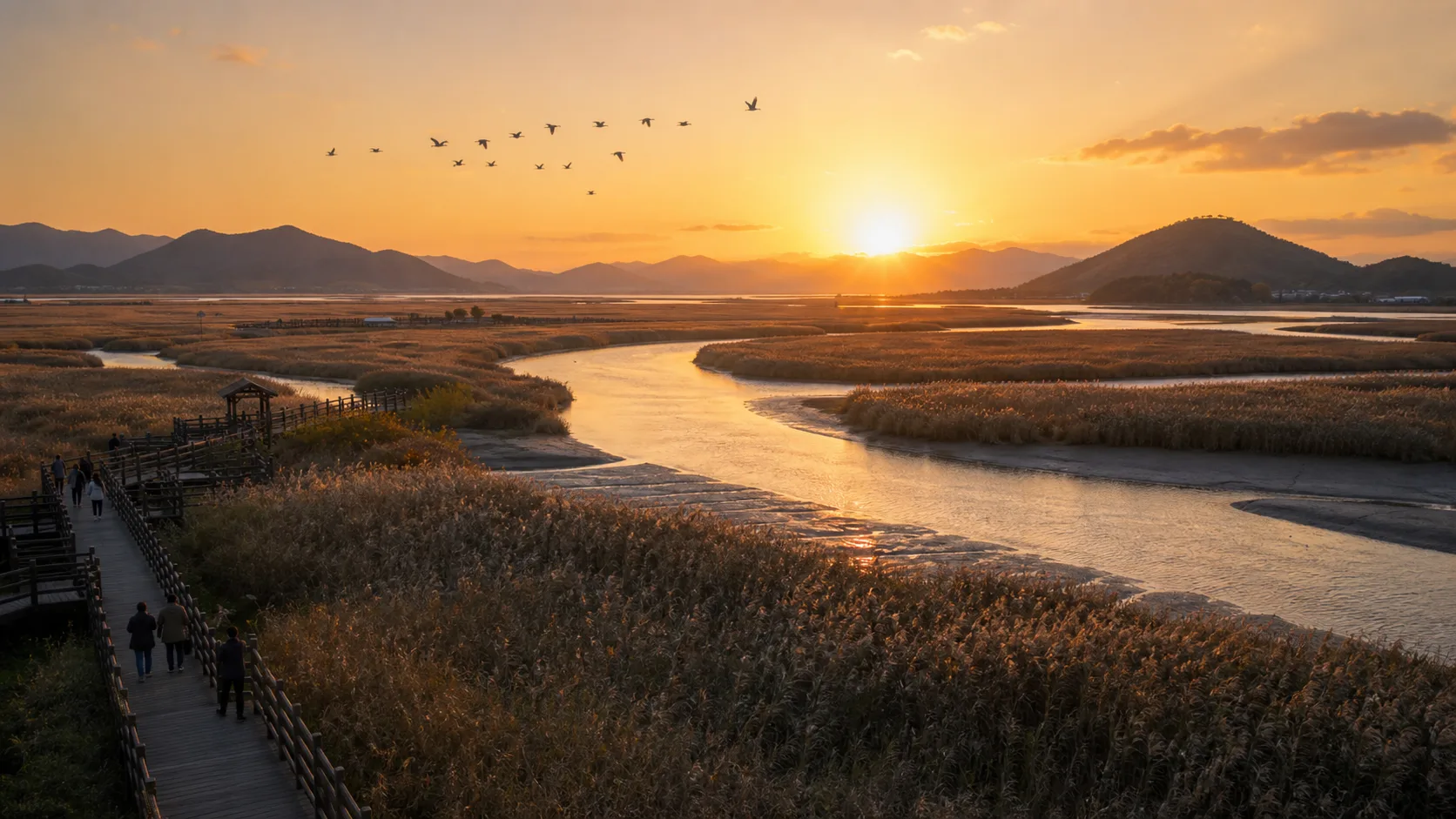
If you want one place in Korea that still feels shaped by tides, birds, and weather rather than by crowds and ticket machines, Suncheon Bay Ecological Park deserves a full day on your itinerary. The area combines reed fields, mudflats, birdlife, and long viewing corridors, so it works both as a scenic stop and as a real nature lesson.
Introduction
Suncheon Bay Ecological Park is one of the easiest places in Korea to understand why a wetland matters. You come for the scenery, but you leave with a better sense of how reeds, mudflats, and migratory birds fit together. The best visit is simple: arrive with enough time, follow the main viewpoints, and let the landscape do the work.
If you are building a broader route across the country, pair this stop with The Ultimate 10-Day South Korea Itinerary for First-Timers so the trip fits naturally into a wider rail-and-bus plan. For a quieter side of the country, Hidden Korea: Off-the-Beaten-Path Destinations Worth Visiting gives useful context for why Suncheon feels different from the usual Seoul-Busan circuit.
Why Suncheon Bay Matters
Suncheon Bay is not just a pretty marshland. It is one of Korea's most important coastal wetlands, and the park works because the natural system is still visible to visitors. The shoreline changes with the tide, the reeds move with the wind, and the bird activity shifts by season. That means the destination feels alive rather than fixed.
The most useful way to think about Suncheon Bay is as a landscape with layers. At ground level, you get reed paths and boardwalk-style walking routes. Looking outward, you see broad mudflats and low water channels. Looking up and across the bay, you see birds, clouds, and light changing quickly through the day. The park is built to help you observe those layers without overwhelming the natural setting.
For first-time visitors, that matters because the site is easy to enjoy even if you do not know much about wetlands. You do not need a specialist background to appreciate the place. You only need enough time to walk slowly, use the main observation points, and avoid treating it like a box to tick on a packed sightseeing schedule.
The experience also changes by season. In winter, the low light and quieter reed beds make the bay feel stark and meditative. In spring, the weather is more comfortable and the site is easier to combine with a larger regional trip. In summer, the landscape becomes greener and denser, but you should expect more heat and humidity. In autumn, the reed fields are usually the biggest draw, and this is when the destination most clearly earns its reputation.
What Makes It Different From a Typical Park Visit
Many parks are designed around recreation first. Suncheon Bay is different because the environment itself is the main attraction. The footpaths, viewing platforms, and visitor facilities are there to help you see the wetland, not replace it with a manicured urban park experience.
That difference becomes obvious once you start walking. Instead of rushing from one monument to another, you are moving through a living habitat. The pace is slower, the views open and close gradually, and the best moments often come when you stop looking for a "headline" viewpoint and start noticing the small details: a line of reeds bending in the wind, a shadow moving across the water, or birds lifting off together from the mudflats.
This is also why the site rewards travelers who are patient. If you arrive expecting an amusement-style attraction, you may feel underwhelmed. If you arrive expecting a place where the quality comes from scale, silence, and atmosphere, it becomes much easier to enjoy.
The Best Kind of Traveler for Suncheon Bay
Suncheon Bay works especially well for travelers who care about nature photography, slow travel, birdwatching, or simple scenic walking. It is also a good stop for families because the route can be adapted to different energy levels. You can keep the visit compact and focus on one or two major viewpoints, or you can extend the day and pair the wetland with surrounding Suncheon sights.
It is less ideal if you are looking for an intense activity schedule. The bay is more about observation than action. That is exactly why it has staying power: the site does one thing well, and it does not try to be all things at once.
How to Experience the Wetland Properly
The easiest way to get value from Suncheon Bay is to divide the visit into three parts: the approach, the main wetland walk, and the final viewpoint or observation stop. This prevents the common mistake of rushing straight to the most photographed location and leaving before the setting has time to register.
Start by treating the approach as part of the experience. The roads, edge landscapes, and entry areas matter because they prepare you for the transition from city to wetland. Once you enter the park area, slow down and accept that the terrain is the point. Reed beds are not an accessory to the attraction; they are the attraction.
The main walk is usually the core of the trip. This is where the wetland opens up, and where the scale of the bay becomes clearer. You should plan on stopping frequently rather than trying to "finish" the route in one push. The best photos often come from pauses, not motion.
The final viewpoint is where many visitors understand the site properly. From above or from a more open observation point, the bay reveals its geometry: the curves of the water, the wide flats, and the repeating texture of the reeds. If you have time to stay through late afternoon, the changing light can make the landscape feel entirely different from the first part of your visit.
When to Go for the Best Experience
If your goal is a classic Suncheon Bay visit, autumn is the safest recommendation because the reed fields are at their most memorable. That said, there is no bad season if your expectations are realistic.
Spring gives you more comfortable walking weather and a clearer opportunity to combine the wetland with other regional sights. Summer offers deep green scenery but can be physically more demanding. Winter is quieter and often more atmospheric, especially if you prefer open views and fewer people.
Time of day matters too. Early morning is better if you want calmer conditions and softer light. Late afternoon is better if you want a more dramatic visual payoff, especially near sunset. If you only have one window, choose a time that lets you avoid the midday heat and gives you enough room to walk without rushing.
One more practical point: the site can feel very different depending on tide and weather. If you are hoping for broad mudflat views, check conditions as close to your visit as possible. If you mainly want reeds and a slow walk, the timing is a little more forgiving.
What to Prioritize If You Only Have Limited Time
If your schedule is tight, prioritize the main wetland walk and one solid observation point. Do not spend the whole visit on transit between separate sub-attractions unless you are intentionally doing a full Suncheon day.
A short visit should still include enough time to:
- Walk into the reed area and take in the texture of the landscape.
- Pause at a wide viewpoint where you can see the bay's shape.
- Leave room for one slow observation stop rather than a rushed photo stop.
That combination is enough to make the place feel distinct. You do not need a marathon itinerary to understand why people remember Suncheon Bay after they leave.
Practical Guide
This is the part most travelers actually need, because the site is beautiful but logistics still matter. Suncheon Bay Ecological Park is straightforward to visit, but it rewards advance planning more than casual drop-in sightseeing.
The official visiting hours for the wetland area vary by season. According to the current visitor information, the site operates from November to February, 08:00 to 17:00; from March to April and September to October, 08:00 to 18:00; and from May to August, 08:00 to 19:00. It is open year-round.
Admission is also clear and easy to budget for. The wetland visitor information lists adult admission at 10,000 won, youth at 7,000 won, and children at 5,000 won. If you are planning to visit other Suncheon attractions on the same day, it is worth confirming whether combined ticketing or separate admission applies to the exact facilities you want to see.
For travelers who like to organize the day around practical transport and reservations, the key is to decide how much time you want on-site before you arrive. Suncheon is not difficult to reach, but the bay itself is large enough that a short stop often feels inadequate.
How to Get There
Most visitors base themselves around Suncheon Station or another central point in the city and then continue by taxi or local bus toward the bay. Taxi is the simplest option if you want to save time and keep the day flexible. Public transport is more economical, but it can add complexity if you are juggling weather, meal timing, or a tight return schedule.
If you are coming from another major city, the most realistic approach is to treat Suncheon as part of a regional train-and-bus itinerary rather than as a standalone half-hour stop. The site fits naturally into a Jeollanam-do route, and that is part of its appeal: you get a more grounded travel day than you would in a dense urban destination.
Travelers who are planning a longer Korea trip should think of Suncheon Bay as a mid-route destination rather than an endpoint. It pairs well with a coastal or southern itinerary because the mood of the place is slower and more contemplative than a city sightseeing block.
Booking and On-Site Planning
For general admission, you usually do not need a complicated reservation strategy. The more useful question is whether you want to add an experience element such as a guided program, boat ride, or other ticketed activity. Those extras can add value if you care about interpretation and access, but they are not mandatory for a satisfying visit.
If your priority is simply to see the wetland and take in the main viewpoints, arrive with enough daylight and budget time for walking. If you want a more structured visit, check the official Suncheon Bay pages before you go so you can see whether the program you want requires a reservation or separate ticketing.
The biggest planning mistake is assuming that Suncheon Bay can be treated like a quick stop between lunch and dinner. It is better than that. Even if you only spend a few hours, give the park enough space to feel like an experience rather than a checkpoint.
What the Admission Fee Means in Practice
At 10,000 won for adults, the wetland is not expensive relative to the value of the visit, especially if you like nature-based destinations. The fee is high enough to suggest that the site is managed with care, but not so high that it discourages a well-planned day trip.
That pricing also means you should approach the visit with intent. If you are already in the region, the entry fee is easy to justify. If you are traveling on a very tight budget, the better strategy is to make sure the wetland is part of a larger Suncheon day so the transport and time investment feel worthwhile.
Food, Rest Breaks, and Comfort
A wetland visit is more enjoyable when you treat it like a walking day. Bring water, wear shoes you can walk in for hours, and assume the weather may feel different on the bay than it does in the city center. Wind and humidity can change the comfort level quickly.
Plan a meal break around the site rather than assuming you will find exactly what you want immediately on arrival. The area around major attractions in Korea often has simple restaurant options, but the park visit becomes much easier if you are not improvising food decisions in the middle of peak walking time.
If you are visiting with kids, older relatives, or anyone who tires easily, it is better to keep the route simple. Focus on the signature parts of the wetland and do not force a complete loop if the group is already satisfied.
Tips & Common Mistakes
The main mistake travelers make at Suncheon Bay is underestimating how much the experience depends on pace. You can technically "see" the site in a short window, but you will not understand it unless you leave room to absorb the atmosphere.
Another common mistake is arriving without checking weather and season. Because the destination is outdoors and visually tied to reed beds, mudflats, and open sky, it changes more than a museum or indoor garden would. A cloudy day is not a deal-breaker, but it changes the mood. Wind, rain, or heat can also affect how much you enjoy the walk.
Do not expect every viewpoint to be equally strong. Some parts of the site are best for movement through the landscape, while others are best for standing still and looking outward. The trick is to use each area for what it does best instead of demanding the same kind of view everywhere.
What Most First-Time Visitors Miss
The most overlooked part of Suncheon Bay is the transition between "getting there" and "being there." Visitors often focus on the final lookout and skip the gradual build-up that makes the park feel immersive. The reeds, path edges, and shifting light are not filler. They are part of the reason the destination stays memorable.
Another thing people miss is the educational value of the site. Even if you are not traveling as a birdwatcher or ecology enthusiast, the park gives you a simple but clear sense of why wetlands matter. You do not have to turn the trip into a lecture, but you should leave enough mental space to notice the habitat itself.
How to Make the Visit Better Than Average
There are a few easy ways to improve the experience:
- Arrive earlier or later than the midday rush if your schedule allows it.
- Wear neutral, practical clothing if you plan to take photos in the reeds and open views.
- Keep one flexible hour in your day so the visit does not feel compressed.
- Treat the bay as a walking destination, not a sightseeing sprint.
That last point matters most. The destination is at its best when you move slowly enough to notice the place changing around you.
Who Should Spend More Time Here
If you enjoy landscape photography, birdlife, slow travel, or destination planning that rewards patience, you should spend more time here than the average traveler would. The same is true if you are building a southern Korea itinerary and want one stop that gives you a real break from urban density.
It also makes sense to stay longer if you are already in the mood for a more reflective day. Suncheon Bay is not loud, flashy, or built around novelty. It is a place that gets better when you let it breathe.
For travelers who want a contrast after city-heavy days, the site pairs nicely with a more active stop like Hiking Bukhansan National Park: Top Trails Near Seoul, because it gives you a different idea of what outdoor Korea can feel like.
FAQ
Is Suncheon Bay Ecological Park worth visiting?
Yes, especially if you care about scenery, birds, or nature-based destinations that feel distinct from standard city sightseeing. It is one of the best places in Korea to see a wetland landscape that still feels alive and unforced.
How much time do I need at Suncheon Bay?
A minimum of two to three hours is reasonable if you are focused. Half a day is better if you want a relaxed pace, photography stops, and a chance to enjoy the place without watching the clock.
What is the best season to go?
Autumn is usually the strongest season because the reed beds are at their most striking. Spring is the next easiest season for comfortable weather and broader itinerary planning. Summer and winter both work, but the experience changes more.
Do I need to book tickets in advance?
For basic admission, usually no. If you want a guided or ticketed program, check the official site before you go. That is the safest way to confirm whether your specific activity needs a reservation.
Is it easy to combine with other Suncheon attractions?
Yes. The bay works well as part of a larger Suncheon day, especially if you want to combine it with other outdoor or garden-focused stops. Just avoid compressing too many activities into the same afternoon.
Is the park good for first-time Korea travelers?
Yes, particularly for travelers who want a quieter destination outside the standard first-timer circuit. It gives you a strong sense of place without requiring specialized knowledge or complicated logistics.
Conclusion
Suncheon Bay Ecological Park is one of those destinations that seems simple until you actually spend time there. Then it becomes clear that the appeal is not just the scenery but the way the place teaches you to slow down. The reeds, mudflats, and bird habitats are the story, and the park is strongest when you let them lead.
If you are planning a Korea trip with a mix of cities, food stops, and one or two deeper nature experiences, Suncheon Bay deserves a place near the top of the list. Build enough time into your schedule, visit in a season that matches your expectations, and focus on the core wetland walk instead of trying to rush through it.
The result is a destination that feels more memorable than many places that are larger or more famous. It is not trying to be the loudest stop on your itinerary. It is trying to be one of the most grounded, and that is exactly why it works.