Day-Use Onsen in Tokyo: Best Spas Without an Overnight Stay

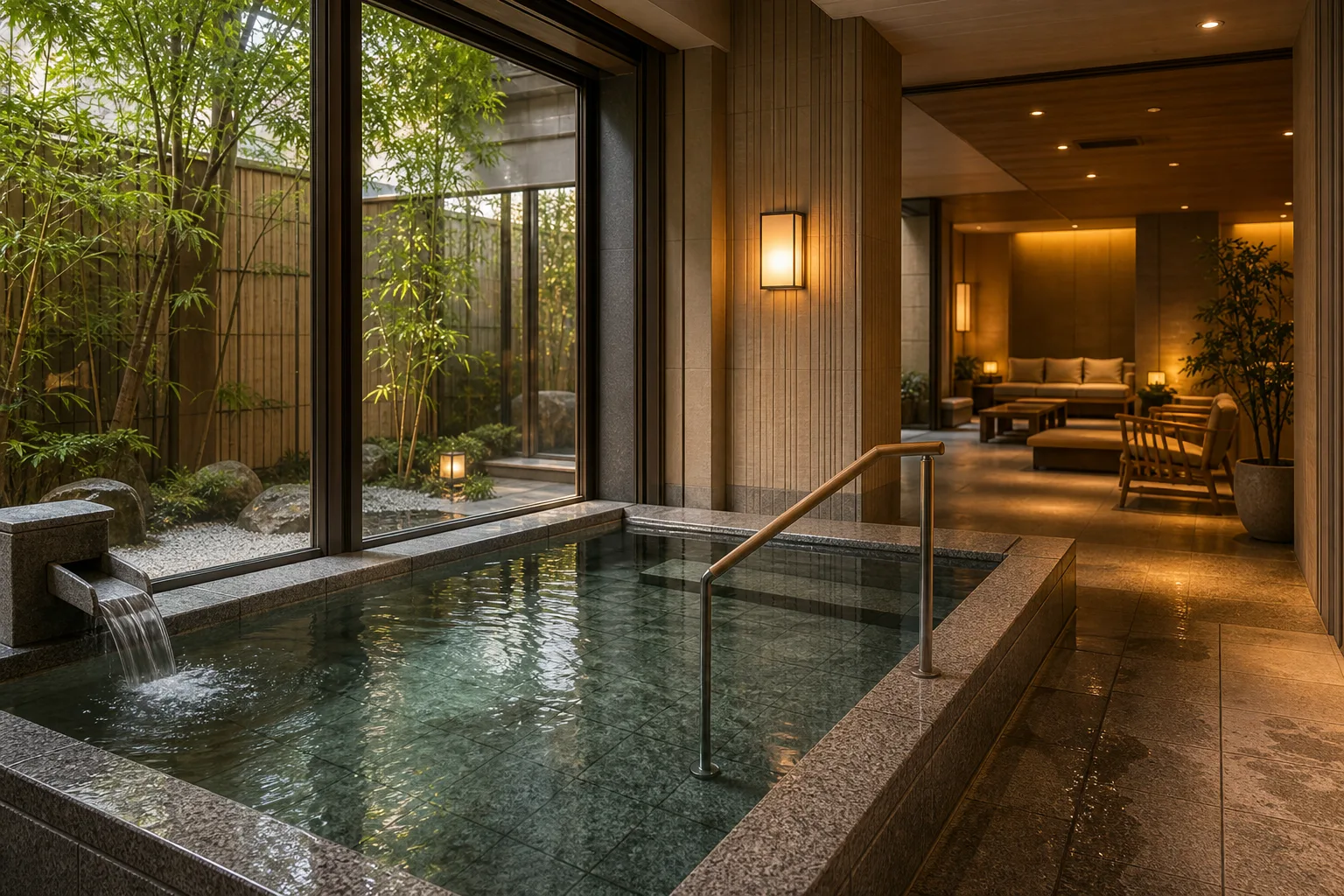
Tokyo is one of the easiest places in Japan to enjoy an onsen-style reset without booking a ryokan or committing to a full overnight stay. If you want to recover from a red-eye, break up a long sightseeing day, or simply spend a few quiet hours in hot water and a lounge chair, day-use spas give you the best parts of the experience with far less planning.
Introduction
Day-use onsen in Tokyo are ideal when you want to soak, sauna, shower, rest, and leave the same day. They are usually easier to fit into an itinerary than a ryokan stay, and the best ones in central Tokyo combine baths with restaurants, reclining lounges, and late-night entry options.
If you are trying to decide whether a spa is worth the time, the answer usually comes down to three things: location, opening hours, and how much of the day you want to spend there. Some facilities are perfect for an afternoon between museums and dinner. Others are built for overnight-like flexibility, where you can arrive late, stay for hours, and leave after breakfast or before your next train.
This guide focuses on the best Tokyo day-use onsen and spa-style baths for travelers who do not want an overnight stay. It explains how the experience works, which types of visitors each place suits best, what to expect on pricing, and how to avoid the most common first-timer mistakes.
For a broader look at bathing culture and etiquette, start with the Japan Onsen Guide: Best Hot Springs, Ryokan Stays & Etiquette Rules. If you are still building the rest of your trip, the Japan Travel Planning: Visa, IC Card, Rail Pass & Essential Logistics Guide covers the transport and entry basics that shape how you move around the city. And if this is your first Tokyo trip, the Ultimate Tokyo Travel Guide 2026: Everything First-Timers Need to Know helps you place a spa stop inside a realistic sightseeing route.
Best Day-Use Onsen in Tokyo
The best day-use onsen in Tokyo are not necessarily the cheapest. They are the places that combine easy access, predictable hours, and enough comfort to justify spending half a day there. In practice, that usually means a facility with reliable public transport access, clean changing areas, multiple bath types, and some kind of lounge or meal option so you are not rushing out after the first soak.
For most travelers, three names rise to the top. Spa LaQua is the most balanced central option if you want a polished spa environment near major sightseeing districts. Thermae-Yu is the best choice if your schedule is messy and you want a place that can absorb a late arrival or a long evening. Tokyo Toyosu Manyo Club is the strongest all-day option if you want a modern complex with 24-hour bathing and a destination feel around it.
Spa LaQua for central Tokyo convenience
Spa LaQua sits in the Korakuen and Suidobashi area, which makes it one of the most practical spa stops if your Tokyo itinerary already includes the Imperial Palace side of town, Tokyo Dome City, or the museum and garden areas around Bunkyo. The facility is open from 11:00 to 9:00 the next morning, with bath use until 8:30 and last admission at 8:00. Adult admission starts from 3,500 yen, and the official site notes that prices vary by day.
That flexibility matters because Spa LaQua is not just a quick soak. It is the kind of place you can use for a half-day reset after a walk-heavy sightseeing route. You can arrive in the afternoon, bathe, take a meal break, and stay long enough to make the visit feel like part of the day rather than a single errand. The site also notes that no prior reservation is required for normal use, which is useful when your itinerary is still shifting.
Spa LaQua is especially useful if you want a refined but still straightforward experience. It is not the cheapest option in Tokyo, but it is one of the easiest to recommend to travelers who value convenience and a polished environment over bargain pricing.
Thermae-Yu for late-night flexibility
Thermae-Yu in Shinjuku is the strongest pick when your day runs long. The facility describes itself as a 24-hour hot spring in Kabukicho, and the official materials list it as open daily except for maintenance days. The JNTO reference gives admission at 2,900 yen Monday to Thursday and 3,000 yen on Friday through Sunday and holidays, with a weekend/holiday surcharge of 900 yen and an overnight surcharge between 0:00 and 9:00.
That pricing structure tells you what kind of visitor Thermae-Yu is for: someone who may not know exactly when they will arrive, who wants to be in a dense central district, or who plans to use the spa after a dinner reservation, a late flight, or a long night out. If Spa LaQua is the polished daytime answer, Thermae-Yu is the pragmatic one.
It is also one of the most useful choices if you are traveling with a complicated check-in or check-out schedule. Even if you are staying elsewhere, you can fit a few hours in a bath, use the lounge, and move on without adjusting your whole day around a narrow closing time.
Tokyo Toyosu Manyo Club for a full-day spa stop
Tokyo Toyosu Manyo Club is the best example of a spa complex that feels like its own destination. GO TOKYO notes that the bathing facility is open 24 hours a day, while the Tokyo Metropolitan pamphlet lists the bath as open 24 hours with cleaning closure from 3:00 a.m. to 6:00 a.m. That same reference lists admission at 3,850 yen, with a morning bathing option from 6:00 a.m. to 9:00 a.m. for 2,200 yen.
This is the place to choose if you want more than a quick soak. The site sits next to Toyosu Senkyaku Banrai, so the whole area works well as an extended outing rather than a single building visit. GO TOKYO also notes rooftop and public footbath access in the surrounding complex, which makes it easy to combine bathing, walking, eating, and resting in one place.
Many travelers treat Toyosu as a flexible replacement for an overnight resort day. You do not need a hotel room to spend a long stretch there, and the combination of bathing, eating, and resting can make it feel almost like a compact getaway inside the city.
How to choose the right one
The easiest way to choose is to match the spa to your schedule:
- Pick Spa LaQua if you want a central, polished, all-purpose option with easy access from major sightseeing areas.
- Pick Thermae-Yu if your day is unpredictable and you want maximum timing flexibility.
- Pick Tokyo Toyosu Manyo Club if you want a larger destination complex and do not mind traveling a bit farther for the experience.
If you only have one spa stop in Tokyo, choose based on where you will already be. A great bath can still feel like a bad choice if it adds too much transit time to your day.
Secondary Options and When They Make Sense
The three headline options above will cover most travelers, but Tokyo has other day-use spa patterns that are worth understanding. Some are standard super sento style facilities with straightforward admission and compact city convenience. Others are more like mini resort complexes, where bathing is only one piece of a larger food-and-rest experience.
When you evaluate alternatives, look at the same four filters every time: total travel time, whether the facility allows day-use only, whether towels are included or rentable, and how much time you actually want to spend inside. A spa with a beautiful bath but no comfortable rest area may not be as useful as a simpler place with better food, better transit access, and a longer opening window.
Super sento versus destination spa
In Tokyo, a super sento is usually the most practical category for travelers. It is a large public bath facility with multiple baths, saunas, locker rooms, and often a restaurant or lounge. A destination spa can offer all of that too, but with more ambiance, more design, or more of a resort-like feel.
For short stays, super sento is often enough. If you have a two-hour window between hotel checkout and a train, you do not need a giant spa complex. If you have a rainy afternoon and want to stay indoors for most of it, the bigger destination-style facilities start to pay off.
What matters more than the label
Travelers often obsess over whether a place is technically an onsen, a sento, or a spa. In practice, what matters more is whether the water, the bath layout, and the rest areas make the visit feel restorative. A genuine hot spring source is nice, but a well-run facility with good timing and clean spaces is usually the better travel choice.
That is why Tokyo onsen planning should be built around your route rather than around a purity test. If you are already in Bunkyo, Spa LaQua wins. If you are in Shinjuku and staying out late, Thermae-Yu wins. If you want a full-day outing in Toyosu, the Manyo Club complex makes the most sense.
When a bath is not the right move
There are also times when a day-use onsen is not the best choice. If you are arriving at Tokyo Station in the middle of a packed business day with luggage and limited time, a long bath might be more trouble than it is worth. If you are traveling with someone who dislikes communal bathing, then a spa visit can turn into a negotiation instead of a break.
In those cases, a bath house near your hotel, a shorter sento visit, or even a footbath stop can be the better call. Tokyo rewards flexibility. The right answer is not always the biggest or most famous spa.
Practical Guide
Most Tokyo day-use onsen visits go smoothly when you understand three basics before you arrive: what the opening hours actually mean, what the price includes, and how you will get there without wasting half the day in transit. These facilities are usually easy to use, but the details matter because some are open 24 hours while others close earlier than a first-time visitor expects.
Hours, admission, and what is included
Spa LaQua currently runs from 11:00 to 9:00 the next morning, with bath use until 8:30 and last admission at 8:00. Adults start from 3,500 yen, although the price varies by day. The official site also notes a lower rate for TD Points members and Tokyo Dome City app users, and it lists a separate night rate for check-in after 19:00. That makes Spa LaQua flexible for both daytime sightseeing and evening recovery.
Thermae-Yu is the most straightforward late-night option. The Tokyo hot spring pamphlet lists Monday to Thursday admission at 2,900 yen and Friday to Sunday or holiday admission at 3,000 yen, with a surcharge for weekends and holidays. It also notes a midnight surcharge between 0:00 and 9:00 and a surcharge after 12 hours of stay, so this is not the cheapest place to linger indefinitely unless your timing is planned carefully.
Tokyo Toyosu Manyo Club is the easiest all-day option to understand as a traveler. The bath is listed as open 24 hours, but the JNTO reference notes a cleaning closure from 3:00 a.m. to 6:00 a.m. The regular admission listed there is 3,850 yen, with a morning bathing option from 6:00 a.m. to 9:00 a.m. at 2,200 yen. If you like early starts or you need a pre-flight reset, that morning pricing can be a useful way to save money.
If you are comparing these in pure budget terms, Thermae-Yu can be the lowest-cost main entrance on a weekday, while Spa LaQua tends to be the most polished value for the money if you want to spend longer inside. Tokyo Toyosu Manyo Club is the most destination-like but usually the easiest to justify if you are planning to stay for many hours.
How to get there
The transport question is usually simpler than first-time travelers expect. Spa LaQua is one of the best-located choices because it is near Korakuen, Kasuga, and Suidobashi, which means multiple subway and JR access paths. If you are already seeing Tokyo Dome City, Koishikawa Korakuen, or the surrounding neighborhoods, it adds very little friction.
Thermae-Yu is equally convenient in a different way. Its Shinjuku location makes it a good add-on to one of the city’s most transit-rich districts. You can reach it from Shinjuku-Sanchome or Shinjuku Station, which helps if your day already revolves around shopping, nightlife, or a transfer through the west side of the city.
Tokyo Toyosu Manyo Club is slightly more of a destination, but Toyosu is still very manageable by train or shuttle. The payoff is that you get a more resort-like zone around the spa rather than being dropped into the middle of a busy commercial block. That can matter if your goal is to mentally disconnect rather than simply kill time.
Booking and ticket strategy
Some day-use onsen accept walk-ins without stress, but it is still worth checking tickets before you go. Spa LaQua notes on its official page that foreign visitors can reserve tickets in advance through a linked booking flow, and it also states that no prior reservation is required for normal use. That is exactly the kind of detail that helps travelers avoid standing in line when they are already tired.
For Thermae-Yu and Tokyo Toyosu Manyo Club, a quick check of the official site or a major ticket platform before leaving your hotel is usually enough. This is less about securing the only available slot and more about confirming current surcharge rules, overnight conditions, and whether any maintenance closure is affecting your preferred day.
If you like to book everything in one place, Klook-style tickets can be convenient for travelers who want to compare a spa visit with other Tokyo activities. The tradeoff is that you still need to read the entry rules carefully, because the most useful booking page is the one that matches your actual arrival time and not just the lowest headline price.
What to pack
For a day-use onsen in Tokyo, pack lighter than you think. Most facilities offer towel rental or towel sets, but you should still bring a small bag with the basics: cash or card, a phone charger if you plan to stay a long time, and any personal toiletries you prefer over the house version.
Do not overpack, because locker space is not the same as hotel-room space. A backpack that is too large becomes annoying inside a bath facility. If you plan to continue sightseeing after the spa, bring a fresh shirt, socks, and underwear in a separate pouch so you do not have to repack your whole suitcase in the locker room.
A simple same-day plan
Here is a realistic Tokyo spa day:
- Spend the morning sightseeing or shopping.
- Arrive at the spa after lunch or in the early evening.
- Bathe, use the sauna, and take a proper break in the lounge.
- Eat inside the facility or nearby before heading back to your hotel.
- Return to your room feeling less rushed than you did when the day started.
That is the real value of a day-use onsen. It is not just a bath. It is a pacing tool that makes the rest of the trip easier.
Tips & Common Mistakes
The biggest mistake first-time visitors make is assuming all Tokyo spa visits work the same way. They do not. One facility may be perfect for a quick daytime stop, while another is best used only if you are prepared to stay for hours. A third may look expensive on paper but actually be the most comfortable if your itinerary is crowded and your feet are tired.
Mistake 1: Treating every onsen as a quick errand
Some travelers try to fit a spa in between two major attractions as if it were a coffee break. That works only for a very small subset of facilities. If a place has lounge seating, multiple baths, saunas, dining, and a long operating window, it is better to budget real time for it.
The more polished the facility, the less you want to rush it. In other words, the spa is the destination, not just a utility stop.
Mistake 2: Ignoring age rules and entry conditions
Tokyo spa facilities can have different age policies, and those policies matter if you are traveling with children or teens. Spa LaQua, for example, lists restrictions for children and notes that younger children cannot enter. Thermae-Yu also has an age threshold in the Tokyo hot spring pamphlet. Do not assume family access is automatic just because a place is modern and central.
Always read the entry conditions before you go, especially if you are planning a family itinerary or bringing someone who may be under a facility’s minimum age.
Mistake 3: Forgetting that midnight changes everything
Late-night onsen are convenient, but they often carry different pricing rules after midnight or after a certain stay duration. Thermae-Yu and Spa LaQua both list extra charges under specific conditions, and Tokyo Toyosu Manyo Club has a cleaning closure window even though it is effectively a 24-hour facility.
If you arrive late, do the math once before entering. A cheap-sounding visit can become expensive if you are charged for the overnight window without planning for it.
Mistake 4: Choosing by reputation instead of location
Tokyo rewards efficiency. If your hotel is in Shinjuku and you are already exhausted, the best spa is probably the one in Shinjuku, not the one with the fanciest photos in another district. If your day is built around Tokyo Dome City, going to a far-off spa just because it is “famous” often wastes the actual benefit you came for.
Pick the facility that sits naturally inside the rest of your route.
Mistake 5: Skipping etiquette research
The bathing routine itself is usually simple, but the social rules are still important. Wash before entering the bath, keep towels out of the water, avoid splashing, and respect quiet spaces. If you have tattoos, large luggage, or any concern about tattoos at the facility, check the rules first rather than assuming they will be fine.
This is the part of the trip where a little preparation makes the whole experience better. A calm bath is much easier to enjoy when you know you are not making avoidable mistakes.
Quick advice for travelers on a tight schedule
If you only remember one thing, remember this: a Tokyo day-use onsen works best when it is chosen as part of your route, not as an afterthought. That means checking the neighborhood, the latest entrance time, and the likely exit time before you leave your hotel.
That one habit saves money, reduces transit stress, and turns a spa visit into a genuinely restorative pause instead of another rushed item on the list.
FAQ
Are day-use onsen in Tokyo worth it?
Yes, especially if you want a proper rest without paying for a ryokan night. A Tokyo day-use onsen gives you hot baths, showers, sauna access, and a quiet place to recover from walking, flights, or a packed sightseeing day. The value gets even better if you already plan to be nearby.
Do I need to reserve in advance?
Not always. Spa LaQua notes that normal use does not require prior reservation, although foreign visitors can use an advance ticket flow. For other facilities, checking the official site or a ticket platform before arrival is smart, especially if you are visiting on a weekend or around holidays.
Which one is best for late-night visits?
Thermae-Yu is the clearest late-night choice because it is open 24 hours and is built around flexible entry. If your schedule ends after dinner, after a show, or after a flight, it is the easiest central Tokyo option to fit around an irregular arrival time.
Which one is best for a full-day rest?
Tokyo Toyosu Manyo Club is the strongest full-day option. You can spend many hours there, use the baths, eat, rest, and move through the surrounding Toyosu complex without feeling like you have to rush. It is the best choice when the spa itself is the main event.
Is Spa LaQua good for first-time visitors?
Yes. Spa LaQua is probably the easiest all-around choice for a first-time visitor who wants a more polished bath experience without leaving central Tokyo. It is convenient, well-known, and broad enough to work for both daytime and evening plans.
Conclusion
Tokyo is one of the best cities in Asia for a same-day onsen experience because you do not need to sacrifice convenience to get something restorative. Whether you choose Spa LaQua for its polished central location, Thermae-Yu for its late-night flexibility, or Tokyo Toyosu Manyo Club for its all-day destination feel, you can build a strong spa stop into a normal sightseeing itinerary.
The real trick is not finding a bath. It is matching the bath to the shape of your day. If you are sightseeing in Bunkyo, use a central option. If your night in Shinjuku runs long, pick a 24-hour facility. If you want a long, unhurried reset, go somewhere that gives you room to stay a while.
If you are planning Tokyo carefully, a day-use onsen is one of the simplest upgrades you can make to the trip. It lowers fatigue, improves pacing, and gives you a break that feels more like a mini-vacation than an errand.