China Family Travel Guide: Planning a Smooth Trip With Kids

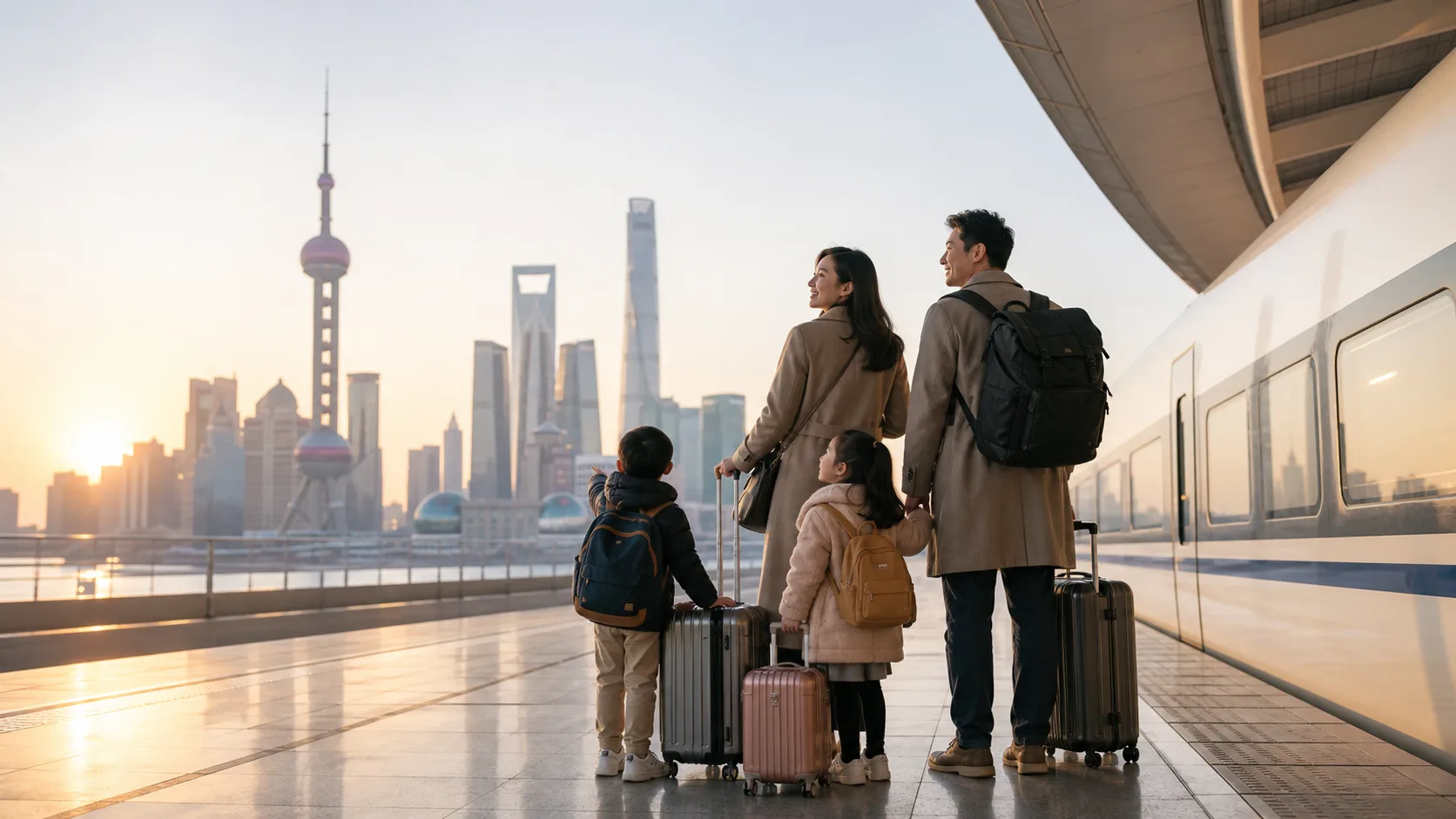
China can be a brilliant family destination: fast trains turn long distances into manageable travel days, cities have an enormous choice of parks and food, and a single itinerary can mix history, animals, skylines and hands-on activities. It also rewards preparation. A family trip feels easy when you decide the route, hotel room, payments and daily pace before you land—not while a tired child is waiting beside a station gate.
The family-first way to plan China
A smooth China trip with children starts by reducing transitions, not by collecting the maximum number of famous places. Choose two or three bases, stay several nights in each, pre-book the experiences that truly matter, and leave a reset period after every long transfer. For most first family trips, that approach is more valuable than adding another city.
Start with the child who will have the hardest day. A preschooler needs an early finish and predictable food; a school-age child may enjoy a museum only if it is paired with a park; a teenager may be happiest with ownership of one activity. Build around that reality. China is large enough that a plan which looks efficient on a map can still involve long drives, security lines and unfamiliar station layouts.
Pick a route with enough recovery time
For a first visit, Beijing plus Shanghai is a useful two-city combination. Beijing provides imperial history, broad parks and a Great Wall day; Shanghai gives a very different urban rhythm, waterfront walks and family attractions. Add Chengdu only when you have enough nights to make the extra flight or rail journey worthwhile. If you have a week, two bases are usually enough. With ten to twelve nights, three bases can work if you protect arrival and transfer days.
Avoid changing hotels for a single attraction. A day trip can be tiring, but packing, checking out, travelling, finding the next hotel and checking in is often harder on a family than a longer excursion from one good base. Put a blank afternoon after an overnight flight and keep the first full day close to your hotel. That is not wasted time; it is what keeps the following days enjoyable.
Decide what a successful day looks like
Write one sentence for each day before you book it: for example, ‘see the main palace area before lunch, then rest and play near the hotel,’ or ‘take a morning train, check in, and have one easy neighbourhood dinner.’ If the sentence contains three major sights, it is probably too ambitious. Children remember dumplings made at a cooking class, feeding time at a zoo, a hotel pool, or a view from a boat as much as a landmark.
Use an anchor-and-option structure. The anchor is a timed ticket, tour, or one major sight. The option is a nearby park, market, playground, short walk, or café that you can take or leave depending on energy and weather. This structure also reduces the damage from rain, a missed nap, or a slow breakfast.
Documents, entry rules and health preparation
Entry requirements depend on passport, route and travel date. Check the official Chinese embassy or consular guidance that applies to the passport each traveller holds before booking non-refundable transport. Do not rely on a social-media itinerary for visa status, permitted stay, transit rules, or document requirements. Children need their own correct travel documents too.
Keep copies of passports, visas or entry permissions, insurance information, hotel addresses and onward travel details in more than one place. One adult should have offline copies on a phone and another should carry a paper copy. This is boring preparation, but it makes a lost phone or a tired check-in line far less stressful.
Talk to a qualified clinician or travel-health service well before departure about routine vaccinations, medicines and the ages of the children travelling. Carry essential medicines in original packaging, with a prescription or doctor’s note where appropriate. Medication rules can be specific, so verify them with an official customs source rather than assuming a product allowed at home can be carried without question. Pack a small daily kit—thermometer, oral rehydration supplies if suitable for your family, plasters, wipes and familiar fever or allergy medication—but do not substitute a packing list for medical advice.
Travel insurance is especially useful when travelling with children because a simple illness can change flights, accommodation and pre-booked tickets. Read the policy wording before purchase. Look for medical assistance, repatriation, cancellation conditions, travel delay rules and exclusions that fit your activities. Keep the assistance number separate from the policy PDF.
Hotels: book the room, not just the rating
A family hotel choice is a logistics decision. The most attractive property is not automatically the best one if it adds forty minutes to every outing. Prioritise a location near the activities you will do most, a simple route to rail or metro transport, and enough space for everyone to sleep.
Room descriptions can be unreliable shorthand. Before paying, confirm the exact bed configuration, whether children count toward occupancy, whether an extra bed or cot is possible, and whether breakfast is included for each guest. Ask the property directly in writing if the booking page is unclear. Connecting rooms may be scarce; a suite may have a higher headline price but be better value than two rooms if it provides a living area and one bathroom routine.
Families often appreciate a fridge, laundry access, kettle, bath or wet-room arrangement, blackout curtains and a nearby convenience store. These are not luxury details after a long day. Check the map at walking level too: a hotel can be close to a station in a straight line yet involve a large road crossing or multiple exits. Save the hotel name and address in Chinese characters offline so you can show it to a taxi driver or hotel staff member.
Choose breakfast deliberately. A generous hotel breakfast saves time on sightseeing mornings and gives cautious eaters familiar options, but it can be unnecessary if you prefer a slower neighbourhood start. Either way, bring a small reserve of familiar snacks for the arrival night and for rail journeys. Do not expect every restaurant to have high chairs, children’s cutlery or an English menu.
Getting around without making transport the main event
China’s high-speed rail network can be an excellent family tool, but stations are transport hubs with their own rhythm. Allow more time than you would for a casual metro ride. Arrive early enough to find the correct entrance, pass security, identify the waiting area and reach the platform without rushing. Keep passports and booking information accessible; do not bury them in the bottom of a suitcase.
When choosing train times, favour departures that match your child’s best window rather than the earliest or cheapest option. A mid-morning departure can allow breakfast, a calm hotel check-out and arrival before dinner. For a long journey, bring water, snacks, tissues, wipes, a light layer and quiet entertainment. Store the one bag you need during the ride where you can reach it without blocking the aisle.
Seat preferences and booking procedures can change, so confirm the current rules with the official railway sales channel or your booking provider before relying on a particular arrangement. If your group is split across carriages, ask early and politely whether seats can be changed; treat it as a request, not an entitlement. A private transfer can be worth its higher cost for airport arrivals, very early departures, a stroller plus luggage, or a family with several young children.
In cities, use the metro when it makes the day simpler, not as an achievement. Check which exit is closest to your destination and allow time for long underground interchanges. Strollers are useful in large parks and airports but can be awkward on crowded trains and uneven older streets. A lightweight foldable model or a carrier can be a better compromise depending on the child’s age.
Payments, maps and translation: prepare redundancy
Mobile payments are widely used, but do not make one app your entire plan. Before travelling, confirm through the official information of your preferred payment service whether your card, passport and phone number can be linked and what verification is required. Set this up while you have reliable internet and time to receive verification messages. Carry a backup payment card and a modest amount of cash for situations where a digital setup fails.
Download maps, translation packs, hotel confirmations and key addresses before departure. Make a small phrase card with dietary needs, allergies and the hotel address in Chinese. A translation app is a bridge, not a guarantee of nuance, so use short sentences and confirm important details by repeating them back: ‘no peanuts,’ ‘two tickets for tomorrow,’ or ‘this is our hotel.’
Families should also discuss what happens if someone is separated in a busy place. Older children can carry a card with a parent’s phone number, hotel information and a simple instruction to ask a uniformed employee or a family with children for help. Take a photo of what everyone is wearing each morning. This is precaution, not alarm, and it is useful in every major city.
Food without a daily negotiation
China offers an extraordinary range of regional food, but travel is easier when each child is not required to be adventurous at every meal. Use breakfast and one familiar snack window to keep hunger from turning into conflict, then make the other meal an opportunity to try something new. Rice, noodles, steamed buns, dumplings, eggs, plain vegetables and soups can provide useful starting points, but ingredients and spice vary widely by region.
If allergies or medical dietary requirements are involved, prepare a clear translated card, discuss the risk with a clinician, and do not assume that removing a visible ingredient prevents cross-contact. Choose restaurants when you can communicate clearly and carry safe backup food. Vegetarian, halal, gluten-free and allergy needs need advance research tailored to the city and the family; a generic label on a menu is not enough.
Schedule meals before the child is desperate to eat. Attractions can have queues and restaurants may be busy at popular times. A simple lunch near the day’s main activity is usually better than a long cross-city search for a highly rated restaurant. Food delivery may look convenient, but a visiting family should not depend on it until payment, address and communication are working reliably.
Booking attractions and avoiding disappointment
Many major Chinese attractions use timed entry, identity-linked reservations or capacity limits. Check the attraction’s official website or verified official account before you travel, then re-check close to your visit because opening days, ticket release windows, security requirements and child-ticket rules can change. Book only the experiences whose loss would genuinely disappoint your group.
For a landmark such as the Forbidden City or a panda base, plan one major activity in the morning, then keep the afternoon flexible. A pre-booked tour can simplify transport and explanation, especially outside a city centre, but compare the meeting point, duration, language, cancellation terms, child suitability and what is actually included. The cheapest listing can be poor value if it begins far from your hotel or turns a short visit into an all-day shopping stop.
At theme parks, decide whether the priority is rides, character experiences, a relaxed atmosphere or one headline land. Study the official app and rules before buying optional queue products. Height restrictions, virtual queues, show reservations and operating hours are changeable operational facts, so use the park’s own current guidance rather than a past trip report. Bring sun protection, a refillable bottle where permitted, a poncho if rain is possible, and a defined rest point.
Beijing, Shanghai and Chengdu: three useful family bases
Beijing works well for families who want history with room to breathe. Pair a major heritage site with a large park, a hutong walk with a relaxed meal, or a Great Wall excursion with a quiet evening. The key is timing: start early for your booked attraction, avoid trying to see every gallery, and choose a Wall section and transport plan that match your child’s stamina. Verify all access and ticket details through the official site or a reputable operator.
Shanghai is easier to treat as a collection of neighbourhood days. The Bund, a river view, museums, parks, cafés and kid-focused attractions can be mixed without long cross-city transfers if you choose your hotel base carefully. It is also a practical place to build a rain plan: indoor museums, an aquarium or a hands-on activity can replace an outdoor afternoon. Do not schedule the skyline, a major museum, a theme park and a shopping district as one ‘easy’ day simply because they appear close on a map.
Chengdu offers a gentler pace for many families. Panda-related visits are the obvious draw, but advance reservations, transport and early-start requirements deserve attention. Balance the early morning with a slow teahouse, a park or a neighbourhood meal. Sichuan food can be spicy, but the region has plenty of less spicy dishes; communicate preferences clearly rather than assuming every dish will be fiery.
A simple 8-day family template
Days one and two: arrive in Beijing, rest, walk locally and do one low-stakes outing. Days three and four: one timed heritage site and one Great Wall or park day, separated by an unhurried evening. Day five: transfer to Shanghai and keep dinner close to the hotel. Days six and seven: one city-sightseeing day and one child-led attraction or neighbourhood day. Day eight: depart, with enough margin for the airport.
This is deliberately incomplete. It leaves room for jet lag, rain, a favourite playground, a slow lunch, or the attraction that your child unexpectedly loves. If you have more time, add nights before adding transfers. If you have less time, choose one city and do it properly.
Common mistakes to avoid
The first mistake is treating every day like an adult sightseeing day. The second is booking non-refundable activities before confirming documents and transport. The third is relying on a single phone, card, app or parent. The fourth is assuming an online ‘family room’ label answers occupancy, bed and breakfast questions. The fifth is failing to check current official rules for timed tickets, holidays and operating hours.
Also avoid presenting China as a problem to be solved. Children notice the tone of the trip. Explain what will be different, give them choices they can genuinely make, and let unfamiliar moments be part of the experience. A calm parent with water, snacks, offline hotel details and an uncluttered schedule is more useful than a perfect spreadsheet.
Final planning checklist
Before paying: confirm entry rules, passport validity, insurance, route and hotel room details. One month out: reserve high-priority attractions where the official release window permits, set up payments, download maps and prepare translated essentials. One week out: reconfirm transport, weather-appropriate clothing, medicines and hotel addresses. Each day: choose one anchor, one flexible option, a meal plan and an early exit.
China with children does not need to be complicated. It needs a route that respects energy, a few reliable systems, and permission to travel at family speed. Make those decisions first, then let the history, food, parks and unexpected small moments do the rest.
Related: china-shanghai-short-trip-theme-park-and-family-ticket-guide