Youth Hostels and Guest Houses in Japan: Best Affordable Stays

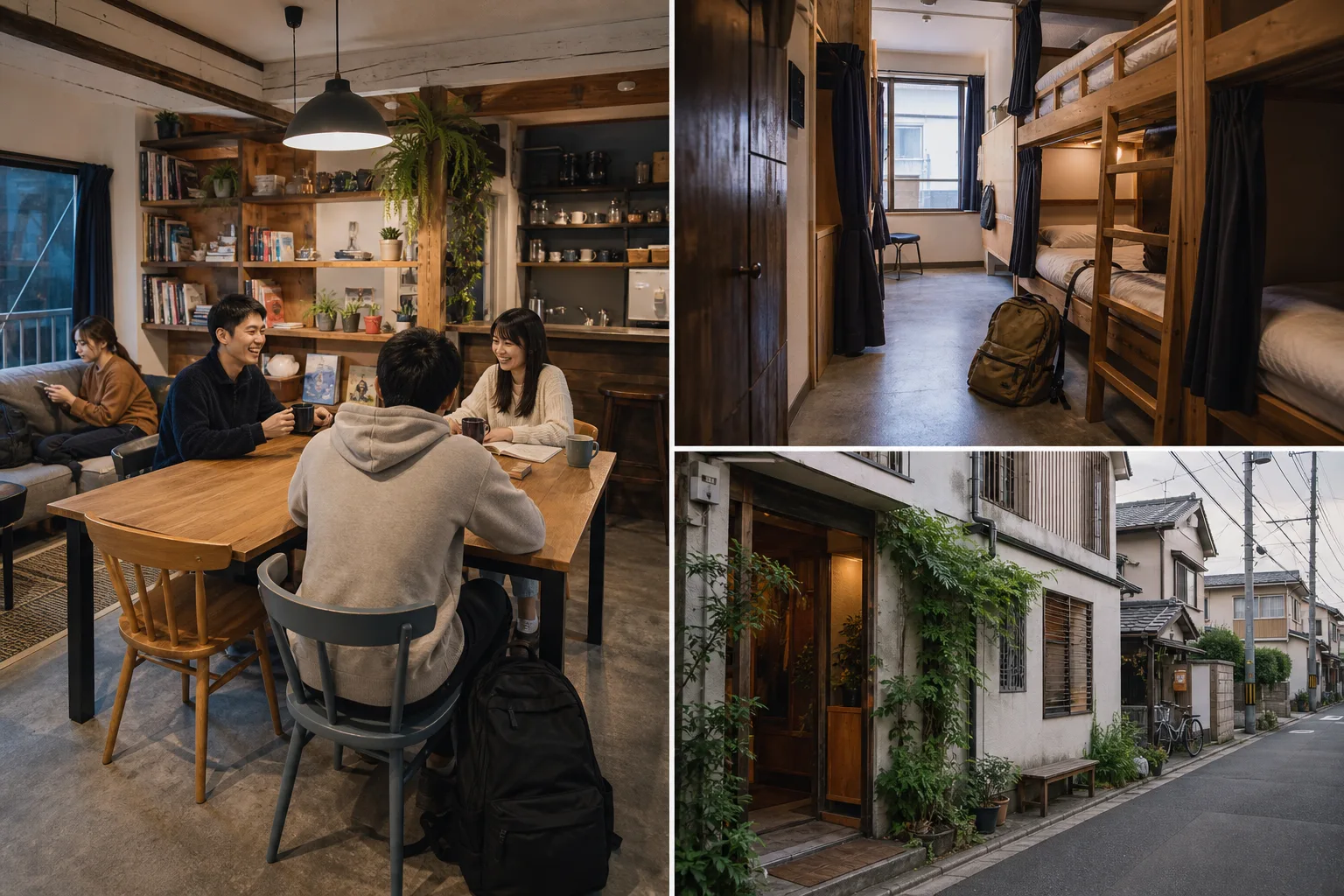
Japan can be expensive in all the obvious ways: trains, entrance fees, airport transfers, and the occasional splurge meal you did not budget for. Accommodation is where many travelers can regain control. Youth hostels and guest houses are still the two most flexible low-cost options, but they are not identical. One gives you more structure and social energy; the other often feels smaller, calmer, and more local. If you pick the wrong one, you can end up paying too much for a bed that does not fit your travel style.
Introduction
This guide is for travelers who want to keep Japan affordable without turning the trip into a compromise. If you are deciding between a youth hostel and a guest house, the real question is not only price. It is how much privacy you need, whether you want kitchen access, how late you arrive, how much luggage you carry, and whether you prefer an international social scene or a more neighborhood-level stay.
After this article, you should be able to compare the main low-cost stay types in Japan, estimate what you are likely to pay, spot booking pitfalls, and decide when to book a dorm, a private room, or a guest house. You will also get practical advice for Tokyo, Kyoto, Osaka, Sapporo, Fukuoka, and smaller regional cities where the right place to sleep can make the rest of the itinerary easier.
What travelers usually mean by “cheap but good” in Japan
For most visitors, “cheap” in Japan does not mean the absolute lowest number on the screen. It means a place that is clean, safe, close enough to transit, and realistic for the rest of the day. A hostel bed that saves a few hundred yen but adds a 30-minute transfer can cost you more in time and energy than it saves in cash. A guest house with a quieter atmosphere may be worth more than a dorm if you are arriving after a long bullet-train day or planning to wake up early for sightseeing.
Primary Topic Section
The phrase “youth hostel” and the phrase “guest house” are often used interchangeably by travelers, but in Japan they usually describe different experiences.
Youth hostels are usually more standardized. They often follow a predictable format: dorm beds, shared bathrooms, common areas, front desk rules, and a clear check-in routine. Many are designed for budget travelers, students, families, and independent visitors who want a clean base without hotel pricing. Some youth hostels are older and simple; others are modern and almost boutique-like, especially in major cities.
Guest houses in Japan are typically smaller, more personal, and sometimes run by an owner who lives on site. They can feel like a cross between a small inn, a hostel, and a local home stay. A guest house may have dorm beds, private rooms, tatami rooms, or capsule-style spaces. Some are very social. Others are intentionally quiet. The term itself is flexible, so you should never book based on the label alone. You should book based on the room type, facilities, reviews, and location.
The biggest practical difference is predictability. Youth hostels generally make it easier to know what you are getting. Guest houses can be excellent value, but the quality varies more from property to property. That is not a problem if you read reviews carefully. It becomes a problem when you assume every guest house behaves like a chain hotel.
Why these stays work especially well in Japan
Japan is one of the easiest countries in Asia for affordable independent travel because public transport is efficient, neighborhoods are walkable, and many budget stays are located near rail or subway lines rather than in isolated zones. That means you can save money on accommodation without necessarily sacrificing convenience. If you are using IC cards, regional trains, and local food halls, a good hostel or guest house fits naturally into the rest of the budget-trip structure.
The best cheap stays also help you manage the parts of Japan that surprise first-time visitors:
- Late arrival after a long airport transfer or Shinkansen connection
- Small room sizes in central areas
- The need to separate luggage storage from sleeping space
- Laundry needs on multi-city itineraries
- Recovery days after long walking routes or day trips
This is why low-cost accommodation in Japan is not just about sleeping cheaply. It is about making the rest of the trip easier.
Typical room types and what they actually feel like
Most travelers decide too late whether they want a dorm or a private room. In Japan, that choice matters more than in some countries because room sizes can be compact and the transit schedule can be relentless.
Dorm beds are the cheapest option and the best choice when:
- You are traveling solo
- You want the lowest nightly rate
- You do not mind shared bathrooms and common areas
- You expect to spend most of the day outside
- You are comfortable with mixed-gender or female-only rooms, depending on availability
Private rooms are better when:
- You are traveling as a couple or with family
- You want reliable sleep and more privacy
- You have heavy luggage
- You will be working remotely or planning from the room
- You want a cheap stay without the social friction of a dorm
Guest houses often bridge those two worlds. A small private room in a guest house may cost a bit more than a dorm bed, but it can be cheaper than an equivalent hotel room while still giving you a more personal atmosphere than a chain business hotel.
Price expectations in 2026
Rates move by season, city, and room type, so the most honest answer is to budget by range rather than by exact number. In 2026, you should expect major-city dorm beds to be the cheapest entry point, with private rooms and busy-season weekends moving upward quickly. Tokyo, Kyoto, and Osaka are usually more expensive than regional cities. Sapporo, Fukuoka, Kanazawa, and some smaller prefectural capitals can feel much more forgiving, especially if you are booking early.
As a planning rule of thumb:
- Dorm beds are usually the lowest-cost option
- Guest house private rooms often sit in the middle
- Small hotel rooms and business hotels can sometimes match or beat hostel private-room rates when supply is high
That last point matters. The cheapest “hostel-like” option is not always a hostel. In shoulder seasons, you may find a tiny hotel room at a competitive rate, especially outside the core tourist districts. So the right comparison is not “hostel versus hotel” in the abstract. It is “best total value for this exact date, city, and itinerary.”
Who should choose a youth hostel
Choose a youth hostel if you want a dependable low-cost base and you do not mind a more communal setup. Youth hostels are a strong fit for backpackers, solo travelers, students, and anyone who wants a straightforward booking process. They are also useful for travelers who care about kitchens, laundry, lockers, and common spaces because those amenities can offset the cost of eating out every meal.
Youth hostels tend to be best when:
- You are moving city to city
- You want structured, predictable rules
- You need public transport access more than neighborhood charm
- You are trying to meet other travelers
- You want a simple place to crash after sightseeing
The downside is that “youth hostel” does not automatically mean lively or modern. Some properties are old-school and basic. Others are excellent. Reviews matter.
Who should choose a guest house
Choose a guest house if you want a smaller stay with more character and you are willing to trade a bit of consistency for atmosphere. Guest houses are often the better option for travelers who want a quieter night, a more local feel, or a room type that is not a classic dorm.
Guest houses tend to work best when:
- You want a calmer environment than a large hostel
- You value owner-run hospitality
- You prefer a local neighborhood over a tourist core
- You want private-room flexibility at a lower price than a hotel
- You are staying multiple nights and want a place that feels lived-in
This is also the category where the best stays can feel much better than the price suggests. A good guest house in Kyoto or Kanazawa, for example, can make the whole trip feel more grounded. But if you are arriving after midnight or leaving before sunrise, make sure the check-in rules fit your schedule.
Secondary Topic Section
Low-cost stays in Japan are not all interchangeable. Once you move beyond the room price, the differences start to matter more.
Location strategy: stay near transit, not just near attractions
Japan rewards transit-first planning. A hostel five minutes from a major station often beats a guest house in a beautiful but inconvenient district. This is especially true when you are carrying luggage, changing cities frequently, or arriving in bad weather.
For Tokyo, “near transit” usually means a place with easy access to JR lines, subway lines, or a major hub where you can switch trains without backtracking. For Kyoto, prioritize access that reduces bus dependence, because buses can be slow when the city is crowded. In Osaka, station access can save a surprising amount of energy. In smaller cities, being within walking distance of the main station often matters more than being near a sightseeing block.
The cheapest bed on the map can become expensive if it forces taxi rides, late-night convenience-store meals, or missed train connections.
Cleanliness, noise, and sleep quality
Budget travelers sometimes overemphasize price and underweight sleep quality. In Japan, where many itineraries are packed and rail transfers are frequent, sleep is not a luxury line item. It is part of the trip infrastructure.
When reading reviews, focus on:
- Noise from common areas or street-facing rooms
- Mattress and bedding quality
- Bathroom cleanliness
- Air-conditioning or heating control
- Locker or storage availability
- Staff responsiveness
- How well the property handles late arrivals
Guest houses can be quieter than hostels, but not always. Some are social by design. Some host backpackers who stay up late planning trips. Others have strict quiet hours. You should never assume a small property is automatically restful.
Kitchens, laundry, and long-stay value
If you are in Japan for more than a few nights, shared kitchens and laundry machines can matter as much as the room itself. A place that lets you make breakfast, prepare a simple dinner, or wash clothes every few days can reduce daily costs meaningfully.
This matters most for:
- Two-week or longer itineraries
- Winter trips with heavier clothing
- Summer trips with frequent sweat-soaked clothing changes
- Families with snack-heavy routines
- Travelers who want to minimize restaurant spending
For budget planning, a cheap room plus a usable kitchen may beat a slightly cheaper room with no food storage and no laundry. The total trip cost can be lower even if the nightly rate is not the absolute minimum.
Social travel versus quiet travel
The social dimension is a real reason people choose hostels. In Japan, that can mean meeting other independent travelers, sharing route tips, or finding a dinner companion for the night. That is helpful if you are solo and want occasional company without joining organized tours.
Guest houses can also be social, but the vibe is often softer and less programmatic. You may have a nice conversation with the owner or another guest, but not necessarily the same built-in common-room energy you get in a larger hostel.
If you are an introvert, or if you are recovering from a packed itinerary, a guest house or a private room inside a hostel may be the better answer. If you want travel companionship and local advice, a lively hostel can help.
Practical Guide
How to book the right place
The safest booking method is to compare at least three things before you reserve:
- The room type and bed setup
- The location relative to the station you will actually use
- The review pattern around noise, cleanliness, and staff communication
Do not trust the category name alone. A “guest house” may offer a dorm, but the dorm might be only one bunk room above a family-run house. A “hostel” may have hotel-like private rooms. The only reliable indicators are photos, policies, and recent reviews.
When you book, pay attention to:
- Check-in window
- Curfew or quiet hours
- Towel and amenity policy
- Kitchen access times
- Luggage storage before check-in and after checkout
- Cancellation flexibility
- Whether bedding is included
If you are traveling during cherry blossom season, Golden Week, Obon, New Year, or major event weekends, book early. Cheap stays near transit disappear fast.
Hours, check-in, and what to expect on arrival
Most budget stays in Japan have a narrower operational rhythm than a 24-hour hotel. Check-in is often afternoon to early evening, and some smaller properties close the front desk earlier than travelers expect. If you are arriving on a late flight, from a delayed train, or after a long day trip, verify the exact arrival process before you pay.
On arrival, expect a fairly efficient routine:
- Remove shoes where required
- Show your reservation
- Receive house rules
- Sort luggage storage if needed
- Get the Wi-Fi details and room assignment
In smaller guest houses, the owner may walk you through the property personally. In hostels, the process may be more automated. Either way, the main rule is the same: if your arrival time is uncertain, communicate early.
Price and booking strategy by city
The same room type does not cost the same across Japan.
Tokyo: Central convenience is expensive. If you want to save money, look slightly outside the most famous station clusters while keeping strong rail access. Hostels can be excellent for this because the transport network handles the rest.
Kyoto: Location mistakes are costly because transit can eat time. A cheaper property far from useful routes can turn into a long bus commute every morning. A well-placed guest house near a manageable station may beat a slightly cheaper dorm.
Osaka: Osaka is often one of the easiest major cities for value hunting. A clean, well-located hostel or guest house can be excellent if you are using the city as a base for day trips.
Sapporo and Fukuoka: These cities can be more forgiving for budget travelers, especially outside peak event dates. You may find better private-room value than you expect.
Regional cities: This is where guest houses can shine. Smaller properties often have strong character, and the price gap between dorm beds and private rooms may be smaller than in major tourist centers.
Booking links and comparison sources
For travelers who want to compare cheap stays as part of a larger budget trip, it helps to plan accommodation together with transport and daily costs. If you are building a broader low-cost route through Japan, start with How to Travel Japan on a Budget: Cheap Eats, Transport & Stays. If you are still sorting out transit cards, rail passes, visa basics, and arrival logistics, pair this guide with Japan Travel Planning: Visa, IC Card, Rail Pass & Essential Logistics Guide.
For actual booking, compare the official property site with major booking platforms, then check whether the rate includes tax, linen, towels, or cleaning fees. The cheapest listed price is not always the cheapest total cost.
Tips & Common Mistakes
The most common mistake is choosing the cheapest nightly rate without checking the real travel cost around it. In Japan, a slightly more expensive place near the right station can save enough time and energy to be worth it.
Here is what most travelers miss:
- A low price can hide a very late or very early check-in window
- A dorm bed can be noisy if the property is popular with groups
- A guest house private room can still have shared bathrooms and thin walls
- A “central” listing may still require two transfers
- A nonrefundable rate is a bad idea when your route is still changing
Other practical mistakes include:
- Ignoring luggage storage rules
- Forgetting that some buildings have steep stairs and no elevator
- Assuming laundry machines are always available
- Booking a room without checking whether towels are included
- Overlooking female-only dorms if privacy matters to you
- Choosing atmosphere over sleep when the next day is transit-heavy
If your itinerary includes several major cities, a smart pattern is to mix stay types. Use a social hostel when you want energy and convenience. Use a guest house when you want calm. Use a private room when you need recovery before a long travel day.
One useful rule: if you will be out all day and sleeping there only one night, prioritize station access and easy check-in. If you will stay three nights or longer, prioritize room comfort, laundry, and a quieter setting.
Another good rule: in Japan, the value of a place is often revealed in the first five minutes after arrival. If the entry process is smooth, the staff communicates clearly, and the room is as described, the property is usually worth keeping on your shortlist for future trips.
FAQ
Are youth hostels in Japan only for young travelers?
No. The name is historical. Many hostels welcome adults of all ages, including couples, solo travelers, and older travelers who want a budget-friendly base. What matters is the room type and house rules, not your age.
Is a guest house better than a hostel in Japan?
Not automatically. Guest houses are often smaller and more personal, but hostels are usually more predictable. Choose a guest house if you want atmosphere and a quieter feel. Choose a hostel if you want clear rules, shared facilities, and easier comparison shopping.
Do budget stays in Japan usually include towels and toiletries?
Sometimes, but not always. That is why you need to check the listing carefully. Many budget properties provide bedding but charge extra for towels, pajamas, or basic amenities. Bring your own small towel if you want to avoid surprise add-ons.
Can I arrive late at a hostel or guest house in Japan?
Sometimes, but you should never assume it. Smaller properties may have limited reception hours or specific late-arrival instructions. If your arrival depends on a delayed flight or a late train, contact the property before you book or immediately after.
What is the best choice for a couple on a budget?
Usually a private room in a guest house or hostel, or a small business hotel if the price is close. A dorm bed is the cheapest option, but couples often get better rest and more privacy from a small private room that still keeps the total cost under control.
Conclusion
Youth hostels and guest houses remain two of the most practical ways to keep a Japan trip affordable. Hostels are strongest when you want predictability, social energy, and simple budget control. Guest houses are strongest when you want character, a calmer atmosphere, and a more local feeling. The best choice is not the one with the lowest advertised rate. It is the one that matches your route, your sleep needs, your check-in timing, and your transit plan.
If you keep the decision simple, you usually win: book near transit, verify the room type, read recent reviews, and match the stay to the kind of day you are actually having. A good cheap stay should reduce friction, not create it. That is the real advantage of Japan’s hostel and guest house scene when you use it well.