Chuseok Travel in Korea: What to Expect During the Harvest Festival

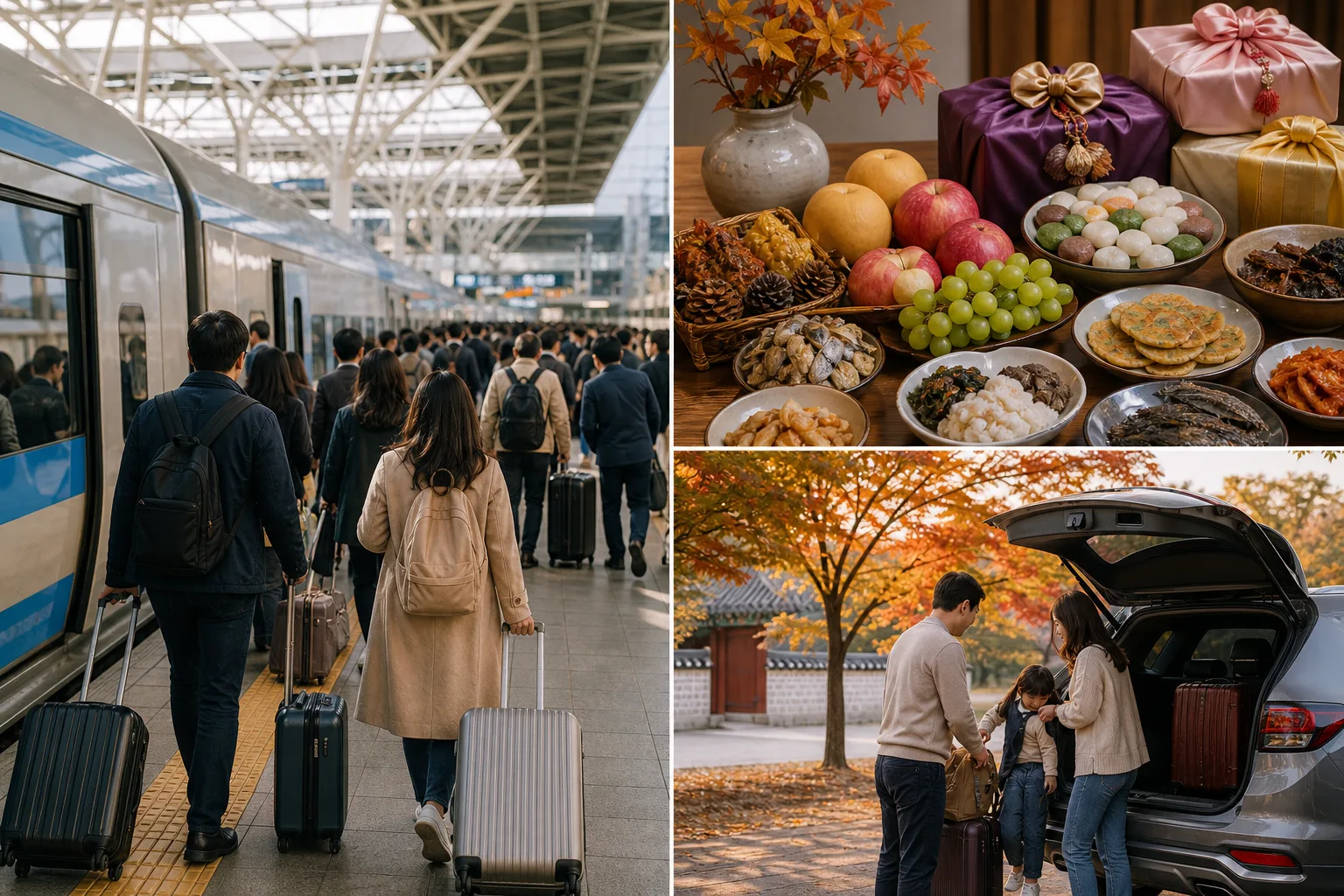
If you are planning a Korea trip around Chuseok, the main challenge is not finding things to do. It is avoiding the parts of the holiday that can derail a trip: sold-out trains, shorter opening hours, family-centered closures, and the sudden shift from a normal city rhythm to a much quieter one. This guide explains what changes, what stays open, and how to plan around the holiday without wasting time.
What Chuseok Means for Travelers
Chuseok is the Korean harvest holiday, and for visitors it behaves less like a single festival and more like a nationwide schedule reset. In 2026, the official Chuseok public holiday runs from September 24 to 26, with the main day on September 25. The travel effect can still spill into the surrounding days, especially as people leave before the holiday and return afterward.
For a traveler, that translates into three practical realities. First, long-distance transport fills early. Second, small businesses and family-run places may close completely. Third, the biggest tourist districts in Seoul, Busan, Gyeongju, Jeonju, and Jeju do not stop functioning, but they often operate on reduced or irregular schedules. The trip is still very doable, but the margin for improvisation is smaller than usual.
The holiday window in 2026
The official 2026 Chuseok holiday spans three calendar days, but the real travel effect is wider than that. Many Koreans take extra leave around the public holiday, and some organizations build a longer break into the surrounding week. If you are flying in or moving between cities, assume that September 23 through September 28 may feel like a peak travel period rather than only the official holiday days.
That matters because Korea’s transport system is efficient but heavily used. On a normal week you can often decide your movement spontaneously. Around Chuseok, the best seats and most convenient departure times can disappear quickly, especially for KTX, express buses, airport rail links, and domestic flights. If your itinerary depends on exact timing, book first and optimize later.
What the holiday is actually for
Chuseok is not a tourist festival designed around spectators. It is a family holiday rooted in ancestor rites, homecoming, and shared food. That is why the country changes character so noticeably. Many people leave the city to visit hometowns, and daily routines shift toward family gatherings and memorial customs. Travelers benefit from understanding that the quiet streets are not a sign of emptiness or inconvenience alone; they are part of a nationwide cultural rhythm.
That also means you should not expect a single citywide event schedule. There may be performances, museum programming, and traditional games at select venues, but Chuseok travel is mostly about working around a holiday culture rather than attending a centralized festival.
How Chuseok Changes the Travel Experience
The most useful thing a traveler can do is separate what gets harder from what actually gets better during Chuseok. Korea does not become untravelable. It becomes more pattern-based. If you understand the pattern, you can use the holiday to your advantage.
Crowds move, not disappear
The cities do not simply empty out. They change shape. Seoul’s central districts may feel calmer than usual on the holiday itself, while stations, highways, and intercity terminals become congested as residents leave or return. Some local neighborhoods can feel unusually quiet, while places near major tourist sites remain active enough that you will not feel stranded.
This unevenness is important. A traveler who expects every area to be busy may overpack a city stay and waste time avoiding crowds that are not there. A traveler who assumes everything will be calm can end up surprised at a train platform or a major expressway rest stop.
Store hours become less predictable
Large chain stores and convenience stores tend to be the safest bets, but they are not a universal solution. Smaller restaurants, family-owned guesthouses, neighborhood shops, and independent attractions may close for at least part of the holiday. Some museums and palaces adjust hours, and some cultural sites reduce staff coverage.
The pattern is simple: the more local, specialized, or family-run a place is, the more likely it is to have altered hours. If your itinerary depends on a specific restaurant, a countryside experience, or a museum in a smaller city, check ahead and have a backup.
Domestic transport is the main pressure point
For most visitors, the biggest pain point is not taxis or city subways. It is long-distance movement between cities. Chuseok is one of the major homecoming periods in Korea, so routes between Seoul and regional hubs become highly competitive. High-speed rail, regional rail, express buses, and flights can all be affected.
This is why Chuseok is not the best time for a loose, multi-city, book-on-the-go itinerary. It is a better time for a simpler route plan, with fewer hotel changes and a clearer understanding of where you need to be each night.
Tourism in the big cities still works
Seoul, Busan, Incheon, Daegu, Gwangju, and other major cities still have plenty of functioning tourism infrastructure during Chuseok. Public transit still runs, and you can still visit most major landmarks. The difference is that you should expect some closures and less predictable operating hours, not a shutdown.
For example, if you want a slow cultural day in Seoul, palace grounds, major observatories, branded department stores, and prominent museum districts are usually more manageable than trying to assemble a highly local neighborhood food crawl that depends on small independently run restaurants staying open.
Best Way to Build an Itinerary Around the Holiday
The smartest Chuseok trip is the one that accepts the holiday instead of fighting it. Travelers who do best usually keep the itinerary compact, front-load reservations, and keep a few open windows for weather, closures, or transport delays.
Choose a base and reduce hotel hops
If you are visiting Korea for the first time, base yourself in one city and add day trips only if the transport plan is already secure. Seoul is the easiest base because it offers the widest backup options when one place closes. Busan is another good base if your trip is centered on the southern coast and you want a slower pace.
The more you move around during Chuseok, the more friction you add. Every hotel change means a check-in time, luggage movement, transport timing, and possible schedule risk. During the holiday, simplicity is not boring. It is efficient.
Book key segments first
Start with the parts of the trip that are hardest to replace:
- intercity rail seats
- domestic flights
- airport transfers
- holiday-night hotel stays
- timed-entry attractions if you already know you want them
After that, fill in meals, neighborhood walks, and flexible attractions. This order matters because a meal can usually be replaced. A sold-out KTX seat cannot.
Build a city-day and a transit-day
One of the most practical ways to travel around Chuseok is to assign different expectations to different days. Use a city-day for flexible sightseeing, shopping, and meals in your base city. Use a transit-day for moving between cities, with fewer must-do activities scheduled around it.
That separation helps because holiday travel sometimes creates invisible delays. A normal one-hour movement can become a two- or three-hour block once station congestion, baggage handling, and platform lines are included. If you leave room, the delay is annoying. If you stack a museum reservation and a dinner booking on top of it, the delay becomes a problem.
Match the trip style to the holiday
Chuseok works better for some travel styles than others. It is excellent for:
- slower cultural sightseeing
- food-focused city breaks
- temple or heritage exploration
- autumn scenery trips that do not depend on exact timing
It is less ideal for:
- highly optimized multi-city itineraries
- last-minute rail hopping
- small-town food tours with no backup restaurants
- tight connection-heavy itineraries involving multiple domestic flights
If you want help framing the trip as a seasonal Korea itinerary rather than a pure holiday survival plan, the broader context of Korea’s travel calendar is useful because it shows where Chuseok sits in the year.
What to Expect on the Ground
Once you are in Korea, the holiday’s impact becomes very concrete. You will notice it in station lines, restaurant availability, quieter residential areas, and the tone of the city itself.
Transportation: plan for bottlenecks
The strongest rule is simple: do not assume spontaneous intercity movement will be easy. If you are traveling by KTX, intercity bus, or domestic flight, leave a cushion around departure time. Arrive early, keep your route simple, and avoid stacking transfers with little margin.
For city transit, the situation is usually more manageable. Subways, city buses, and taxis continue to operate, though some routes may be busier at certain times of day. The practical difference is that city movement remains usable while long-haul movement becomes strategic.
If you are arriving at Incheon or Gimpo and then connecting onward, be careful with same-day onward travel. A delayed arrival, a long customs line, or a packed rail platform can turn a straightforward transfer into a race. During Chuseok, a same-day city arrival plus intercity departure is possible, but it is not the safest first-choice plan.
Food: chains are safer, local places may close
Eating well during Chuseok is absolutely possible, but it works best when you keep a few food assumptions in mind.
First, convenience stores are reliable but not the whole story. Second, larger restaurant chains and hotel dining are more predictable than a single neighborhood favorite. Third, local family-run restaurants may close or shorten hours without much notice.
That does not mean you should avoid local food. It means you should identify likely-open zones in advance, especially near major stations, tourist corridors, and hotel districts. If one plan fails, you can switch quickly without wandering long distances hungry and tired.
Attractions: some stay open, some become selective
Popular destinations do not all behave the same way. Major outdoor attractions, scenic districts, and highly visited landmarks often stay accessible, but hours can shift. Museums may shorten schedules, and smaller sites may close entirely or operate with reduced staff. Some experiences also become more crowded on the holiday itself because domestic visitors use the long break for sightseeing.
The safest approach is to think in tiers:
- Tier one: major city landmarks and high-volume tourist districts.
- Tier two: museums and attractions with published holiday-hour pages.
- Tier three: small local businesses, niche museums, and specialty experiences that need direct confirmation.
Cultural etiquette matters more than usual
Chuseok is a family and memorial holiday, not just a long weekend. Travelers do not need to act as if they are participating in ancestral rites, but a bit of awareness matters. If you visit cultural sites, avoid treating the holiday like a generic spectacle. Be patient with closures, give staff extra time, and do not assume locals are inconvenienced by the same things a visitor is.
If you happen to see traditional food displays, family gatherings, or ceremonial elements, the right response is respect and curiosity rather than interruption. That is true year-round, but it matters more during a holiday with deep family meaning.
Weather and clothing
Late September in Korea is usually comfortable for travel, but the weather can still shift enough to affect long walks, outdoor markets, and evening plans. Layering works better than packing for a single temperature. If you are planning temple visits, old neighborhoods, palace grounds, or river walks, bring shoes you can actually walk in for several hours.
Chuseok often overlaps with the beginning of autumn travel season, so the city may feel pleasant but slightly busier in popular photo spots and scenic areas. Build around that, not against it.
Practical Guide
This is the section that saves the most frustration. If you only remember one part of the article, remember this: Chuseok is not a good time for guesswork.
Hours, admission, and prices
Exact prices are not the issue during Chuseok as much as variability is. The real question is whether a place is open and whether its holiday schedule differs from normal.
Use this order of checks:
- official attraction website
- official social or notice pages
- recent local visitor information
- hotel concierge or host confirmation
If a place does publish a holiday schedule, save a screenshot before you leave your hotel. Wi-Fi and mobile data are easy to assume, but a cached screenshot can be more useful if you are on the move and the site is slow or translated poorly.
For paid attractions, the safest strategy is to buy ahead only when the plan is fixed. For flexible sightseeing, do not pre-commit to several time-sensitive tickets unless they are truly limited-capacity or otherwise hard to replace.
How to get there
The best arrival strategy depends on your route.
If you are arriving in Seoul, start with the airport-to-hotel transfer that is least exposed to rush-hour and holiday congestion. If your hotel is in a central district, city rail may be easier than a complicated shuttle arrangement. If you are continuing to another city, do not leave a narrow connection window.
If you are starting in Busan, Gyeongju, or another regional destination, look at whether the trip can be done entirely with one transport mode rather than stitching together several. Every extra handoff increases the chance that holiday traffic, lines, or schedule changes affect you.
If you are traveling to a heritage city or a countryside destination, assume a taxi or private transfer may be more reliable for the last mile than a seasonal local bus service with limited frequency.
Booking links if applicable
For holiday trips, I would prioritize booking the kind of product that protects time rather than the kind that just sounds convenient. That usually means:
- intercity rail
- airport transfers
- one-time special tickets
- private or semi-private tours with fixed start times
If you are deciding between a flexible self-guided day and a structured outing, think about holiday crowd pressure first and price second. The cheaper option is not always cheaper if it loses half a day to a sold-out platform or a closed attraction.
Tips and Common Mistakes
Most Chuseok travel mistakes are not dramatic. They are small planning errors that add up. If you avoid them, the holiday becomes much more manageable.
Do not assume every site uses the same holiday hours
One museum may be open, one nearby gallery may be closed, and one cafe on the same street may run reduced hours. Do not generalize from one successful stop to the rest of the day. The correct habit is to verify each must-see site individually.
Do not leave intercity transport until the last minute
This is the biggest avoidable mistake. People often assume that because Korea has excellent rail and bus networks, they will be able to decide later. During Chuseok, later can mean sold out or much less convenient. Reserve the route first and build the rest of the day around it.
Do not pack too many rural stops into one holiday window
Rural or smaller-city travel can be rewarding during autumn, but it is also the area where holiday closures and limited frequencies become most noticeable. If you want countryside scenery or a festival atmosphere, keep one clear target and make sure you know how to exit it.
Do not overschedule food
One common mistake is building the day around four or five restaurant stops and assuming all of them will work. A better plan is to identify one strong lunch option and one backup dinner zone. That is enough. Chuseok is not the time to optimize every meal by hype alone.
Do keep one flexible half-day
The single best hedge against holiday uncertainty is to leave one block of time unclaimed. Use it for a delayed train, a closed site, a long lunch, or a slower walk. If nothing goes wrong, you gain a relaxed bonus day. If something does go wrong, you have already built in the correction.
Do use the holiday for slow travel, not perfect travel
The rhythm of Chuseok works better if you lean into slower experiences. A heritage district, a palace walk, a museum with flexible timing, a long café stop, or a scenic river path is more aligned with the holiday mood than a sprint between five booked attractions.
For many travelers, that slower approach is what makes the trip memorable. It also leaves enough room for a spontaneous local moment, which is often more valuable than a fully optimized checklist.
Do compare holiday timing to the rest of your Korea trip
If Chuseok is only one slice of a longer stay, then you do not need to force all the holiday-sensitive activities into those four days. Put the higher-friction city movement before or after the holiday when possible, and reserve the Chuseok window for things that tolerate uncertainty.
That is especially true if your route includes scenic side trips, airport transfers, or a final departure day with little margin.
Do not ignore the tone of the holiday
This is a travel tip, but it is also a mindset tip. Chuseok is a living cultural holiday. The trip improves when you treat the quieter streets, the family closures, and the public holiday rhythm as part of the experience rather than as an inconvenience to be defeated.
FAQ
Is Chuseok a bad time to visit Korea?
No. It is a different kind of trip, not a bad one. If you like structure, advance planning, and quieter city atmospheres, Chuseok can be rewarding. If you want spontaneous train hopping and ultra-flexible reservations, it is harder than an average week.
Will restaurants and shops be closed?
Some will be, especially smaller or family-run places. Larger chains, convenience stores, and tourist-zone businesses are more likely to remain open or operate with adjusted hours. You should always check the exact place you want to visit.
Are major tourist attractions open during Chuseok?
Many are, but not all in the same way. Expect reduced hours, special holiday schedules, or partial closures in some cases. Never assume an attraction’s normal schedule applies automatically during the holiday.
Should I avoid traveling between cities?
Not necessarily, but you should book early and travel with a buffer. If your trip depends on one exact train or bus, secure it as soon as you can. If the route is already sold out or inconvenient, adjust the itinerary rather than forcing it.
What is the best trip style for Chuseok?
One base city, moderate sightseeing, good food planning, and a few flexible backup activities. That is the easiest way to enjoy Korea during the holiday without spending half your time solving logistics.
Conclusion
Chuseok is one of the most distinctive times to be in Korea. It changes transport patterns, store hours, and the mood of the country, but it does not stop travel. If you plan ahead, keep your itinerary compact, and book the hard-to-replace pieces first, the holiday becomes an asset instead of a problem.
The real goal is not to avoid every closure. It is to build a trip that can absorb them. That means fewer unnecessary city hops, more attention to transport timing, and a stronger bias toward reliable options over optimistic ones.
If you are still mapping out a broader Korea route, it helps to treat Chuseok as one seasonal layer inside the trip rather than the whole trip. For a month-by-month perspective, revisit Korea Seasonal Travel Guide: Best Time to Visit by Month. For a trip structure that can absorb holiday constraints, the The Ultimate 10-Day South Korea Itinerary for First-Timers post is a good next step. And if you want a contrasting seasonal event that shows how Korea travel changes around major festival dates, Boryeong Mud Festival: The Ultimate Survival Guide is another useful comparison.
The bottom line is simple: during Chuseok, the best Korea trip is the one that respects the holiday calendar, books the bottlenecks early, and leaves enough room for the country to move on its own schedule.