Universal Studios Japan With Kids: Height Rules, Timed Entry and Family Plans

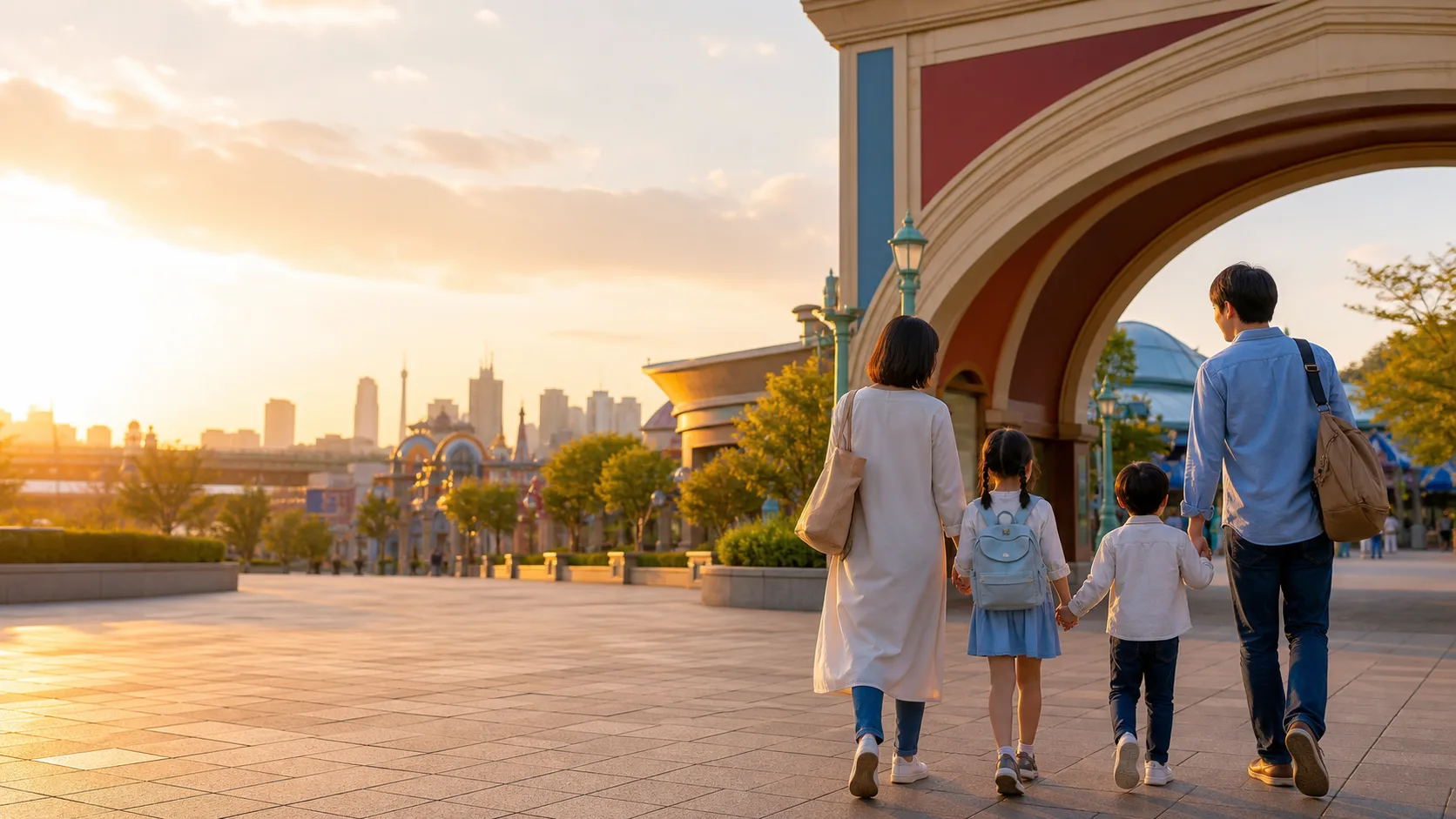
Universal Studios Japan can be a brilliant family day, but it rewards a plan that is built around children rather than a grown-up’s ride checklist. The useful question is not how many attractions you can fit in. It is how to give each person enough successful moments while still leaving room for food, weather, toilets, and a change of mood.
The short answer
For a family visit to Universal Studios Japan, buy the dated Studio Pass in advance, then plan around the shortest child’s height and confidence rather than the adults’ wish list. Check each chosen attraction’s current official restrictions, download the official app, and keep the first two hours flexible. USJ says certain areas or attractions may use timed-entry or standby tickets depending on attendance, so a successful day needs a backup plan as well as a list of favourites.
Begin with the child, not the park map
Write down every child’s height without shoes, comfort with darkness and motion, toilet and meal rhythm, and likely nap or quiet-break needs. Then make three columns: “definitely happy to do”, “might try”, and “adult-only if another adult is available”. This prevents the familiar mistake of arriving with a long list of headline rides that only one person can use. A good family plan gives each child several successes before lunch. It also gives adults permission to split briefly when that is safer and kinder than persuading a frightened child to queue.
Height is only the first restriction
A posted height range is not a promise that every child within it will enjoy the attraction. Read the official attraction page for health, safety, accompaniment, transfer, and seating information. Consider darkness, sudden sound, water, motion, and how long a child must sit still. A child who technically qualifies may still prefer a gentler option; a child who misses a threshold by a small amount should not be encouraged to negotiate with staff. Set expectations before you enter. Tell children that rules protect guests and that a backup attraction, snack, or character moment is already part of the plan.
Buy admission before you travel to the gate
USJ’s official ticket guidance recommends buying in advance, and its 2025 notice says tickets are no longer sold at the entrance ticket booths. A Studio Pass gives admission and access to attractions, but it is not the same as every separately offered Express product, timed experience, show ticket, or special event. Use the official web ticket store or another authorised source that explains fulfilment clearly. Save the QR ticket or collection instructions, confirmation number, payment record, and the seller’s change terms. Do not leave a family’s admission to a same-day gamble just because an old guide says tickets are sometimes available.
Choose a date before you choose an upgrade
A flexible weekday can be more valuable than a complicated paid add-on, especially for young children. Look at school holidays, weekends, weather, special events, and the number of days you could move within your Osaka stay. If the park day cannot move, lock the date when official inventory is available and keep the day before it light. Do not make it the morning after a late flight from Singapore or a late-night airport transfer. A rested child and a calm adult usually save more time than an extra hour of online research.
Understand timed entry as a live crowd-management system
USJ’s official timed-entry page explains that access to designated areas or attractions can depend on attendance. It describes advance-booking routes through certain Express Passes or selected travel agencies, and app-based tickets obtained after entry. It also says issuance can be stopped or suspended without notice. That means a timed-entry ticket is a current operational tool, not an entitlement you can infer from another visitor’s itinerary. Check the official app after entering, follow the instruction for that day, and keep a nearby alternative ready if an area is unavailable or the time does not suit the family.
Decide whether an Express Pass fits your family
An Express Pass can be worthwhile when a family has one day, a limited tolerance for queues, and attractions that several people genuinely want. It can be poor value when it creates rigid ride windows around a toddler’s nap, divides the family, or includes experiences that the youngest child cannot use. Before paying, check the exact attractions, selected date, time windows, height rules, and whether the adults’ and children’s tickets align. Buy for the problem you have—protecting one or two shared priorities—not because “skip the line” sounds universally sensible.
Make the first hour deliberately small
Arrive with tickets accessible, phones charged, water ready, and one adult responsible for the app. Once inside, confirm live timed-entry information and make only the next decision. If the priority attraction is workable, go there; if not, choose a nearby family-friendly alternative rather than walking across the park in disappointment. Avoid making a long breakfast line, a merchandise stop, and a complicated photo plan compete with the opening hour. The first hour should build confidence, especially for children seeing a large, loud park for the first time.
Use a zone-based route
USJ is easier with children when you stay in an area long enough to get value from it. Group a priority ride, a lower-intensity activity, toilets, a snack stop, and one visual or play experience in the same broad zone. Crossing the park repeatedly burns time and makes small children feel that the day is mostly walking. A zone plan does not mean an inflexible timetable. It means that when a child needs a break or an attraction pauses, you know what pleasant option is close by. Check the official map and live app information on the visit date.
Plan food as a reset, not a reward for endurance
Choose a meal rhythm before hunger starts. A family does not need a perfect restaurant reservation to have a good park day, but it does need a backup when queues or timed experiences shift the schedule. Check current restaurant operation and allergy guidance through USJ’s official information. Carry what park rules allow, keep water available, and choose a seated break before a child becomes overwhelmed. If your group has allergies or special dietary needs, contact official guest services or use official guidance rather than relying on a social-media menu photograph.
Build a nap and quiet-break plan
A stroller, a hotel break, or simply a quiet seated interval can change the whole day. Decide in advance whether leaving the park is realistic; USJ says ordinary admission tickets do not permit re-entry after exiting. That makes an in-park rest strategy especially important. Locate shaded or indoor pauses on the official map, agree on a meeting point, and let one adult take a child to a calmer activity without treating it as a failure. The goal is not to maximise every minute inside the gate. It is to keep enough energy for the things the family values most.
Splitting up without losing the day
Families sometimes need to divide: one adult and older child may want a high-intensity ride while another adult stays with a younger sibling. Do this intentionally. Set a time, a location, a communication method, and a simple fallback if a phone battery fails or a queue lasts longer than expected. Check whether an attraction’s conditions permit the approach you have in mind; do not assume every ride has a particular child-swap or waiting arrangement. Rejoin for a shared meal, show, or low-intensity attraction so the day does not become two unrelated itineraries.
Rain, heat, and sensory load
Osaka weather can make a queue or outdoor walk feel much longer than its listed time. Pack light rain layers, sun protection, cooling options, familiar snacks, and any medication your family needs. Use indoor attractions and shops as occasional transitions, not as the entire weather plan. Loud music, crowds, sudden effects, and costumed characters can be exciting for one child and overwhelming for another. Give children a clear signal that they can ask for a pause. A ten-minute reset often prevents a much longer meltdown.
Shows, events, and special tickets
Limited events and shows can be excellent family highlights, but they should be added after core admission and child suitability are settled. Read official details for the actual season, including age limits, assigned times, photography rules, and what happens if you arrive late. Some products have separate sales and fulfilment rules. Do not base the entire day on a show if the rest of the group would be unhappy waiting around it. Give the event a realistic travel and toilet buffer, then plan a nearby activity before and after.
A family decision matrix
Score each proposed priority on four questions: can everyone enjoy it, does it require a fixed time, how hard is it to replace, and what happens if it goes wrong? A high-score shared attraction belongs early in the plan. A low-score adult-only thrill ride can be optional. This simple test reveals whether an Express Pass, early arrival, or particular route is solving the family’s actual problem. It also makes it easier to say no to an attraction that is fashionable but unsuitable. The best day is usually a collection of shared wins, not proof that every major ride was completed.
The evening before and the morning of
The night before, check the official app and site for operating hours, weather alerts, ticket display instructions, attraction conditions, and the route from your hotel. Charge phones and power banks. Put tickets, IDs, medication, a small rain layer, and snacks in one known bag. On the morning, eat enough, leave early enough to avoid a rushed entry, and explain the first two steps to children. If something changes, name the backup calmly. Children take their cue from the adults’ tone; a changed plan can still feel like an adventure if it is presented that way.
Common family mistakes
Do not promise every child that they will ride everything. Do not buy a timed product before checking its exact included attractions and windows. Do not assume a child who meets a height rule will enjoy the experience. Do not spend the first hour arguing over a phone. Do not schedule every meal and show around a single ride. Do not leave the park for a hotel rest without understanding re-entry rules. And do not judge a successful day by a ride count. If children remember a favourite character, a shared laugh, and adults who stayed patient, the plan worked.
Final checklist
Before payment, confirm the date, Studio Pass type, official seller, party ages, priority attraction restrictions, and any separately paid product. Before travel, download the official app, save QR tickets, check the live operating calendar, and create a zone-based list of priorities and backups. On the day, follow current timed-entry instructions, protect food and breaks, and change plans early when a child is struggling. USJ’s systems and availability can change, so treat the official website and app as the final source for your exact visit.
Three realistic family scenarios
A preschooler and an older sibling. Build the day around the younger child’s reliable pleasures first: a low-intensity attraction, a visual play area, a snack break, and a chance to see the park without being rushed. Let the older sibling choose one priority that may need a temporary split. The key is to make the split feel fair rather than like the older child is being punished for liking bigger rides. Rejoin at a fixed landmark before lunch. If a timed-entry instruction appears in the app, compare it with the younger child’s meal and toilet rhythm before accepting a time that will make everyone hurry.
One parent travelling alone with two children. Keep the route even smaller. Choose one zone for the morning, one shared meal, and one afternoon zone. Do not rely on a plan that requires one adult to hold a place while another supervises a child elsewhere unless the attraction’s official rules expressly support it. Keep tickets and phone power under the parent’s control, teach children what to do if they are briefly separated, and use visible meeting places. The best purchase may be a simple advance Studio Pass rather than an elaborate set of timed upgrades that cannot be used by the whole group.
Grandparents joining the visit. Add seating, shade, walking distance, and bathroom access to the decision matrix. Grandparents may love the atmosphere but not an early, high-speed route. Agree in advance whether they will join the whole group, meet for a midday meal, or take a calmer route. Avoid treating them as default bag holders while everyone else queues. Their comfort is part of the family experience, and their presence can make the day easier if the plan includes clear rendezvous points and realistic intervals.
What to ask before choosing a hotel or transport route
A hotel does not need to be beside the gate to be useful, but the journey should be predictable on a morning with children. Check the number of changes, lift access, final walking distance, and what happens if your party leaves later than planned. If arriving in Osaka on the same day as a park visit, reconsider. Luggage, unfamiliar stations, a late flight, and a child who has slept poorly are a poor foundation for a fixed-date ticket. Store bags, settle into the hotel, and give the family a normal meal first. A park day is usually more rewarding after a night of rest.
How to decide that you have done enough
Set a “good day” threshold before you arrive. It might be three shared attractions, one child’s top priority, a relaxed meal, and staying until the evening show—or it might be leaving before fatigue turns into tears. When you meet the threshold, extra rides become a bonus instead of a source of stress. This is especially useful when queues or weather are worse than expected. Adults often continue chasing efficiency long after children have stopped enjoying it. A plan that ends at the right time can be more successful than a plan that technically fits in one more attraction.
A calm exit is part of the plan
Before the afternoon, decide whether the family needs a hard departure time or whether you can leave whenever energy drops. Keep the return route, hotel name, and any luggage plan accessible without relying on one exhausted adult’s memory. If the park is crowded at closing, move slowly, keep children close, and avoid promising a last-minute ride that would make transport difficult. A final snack, a short recap of favourite moments, and a straightforward route home usually creates a happier ending than one more rushed queue.
Check the return journey before sunset
Open the route home while the family still has energy, not after the last attraction. Confirm the station entrance, hotel address, transfer count, and whether a taxi queue is realistic with a stroller or tired child. Give one adult responsibility for tickets and the other for children and bags. A short, predictable exit routine protects the good parts of the day and makes it easier to decide honestly when the park has already given your family enough.
Related: japan-tokyo-short-trip-theme-park-and-family-ticket-guide