Sichuan Opera (Face-Changing): Where to Watch & What to Expect

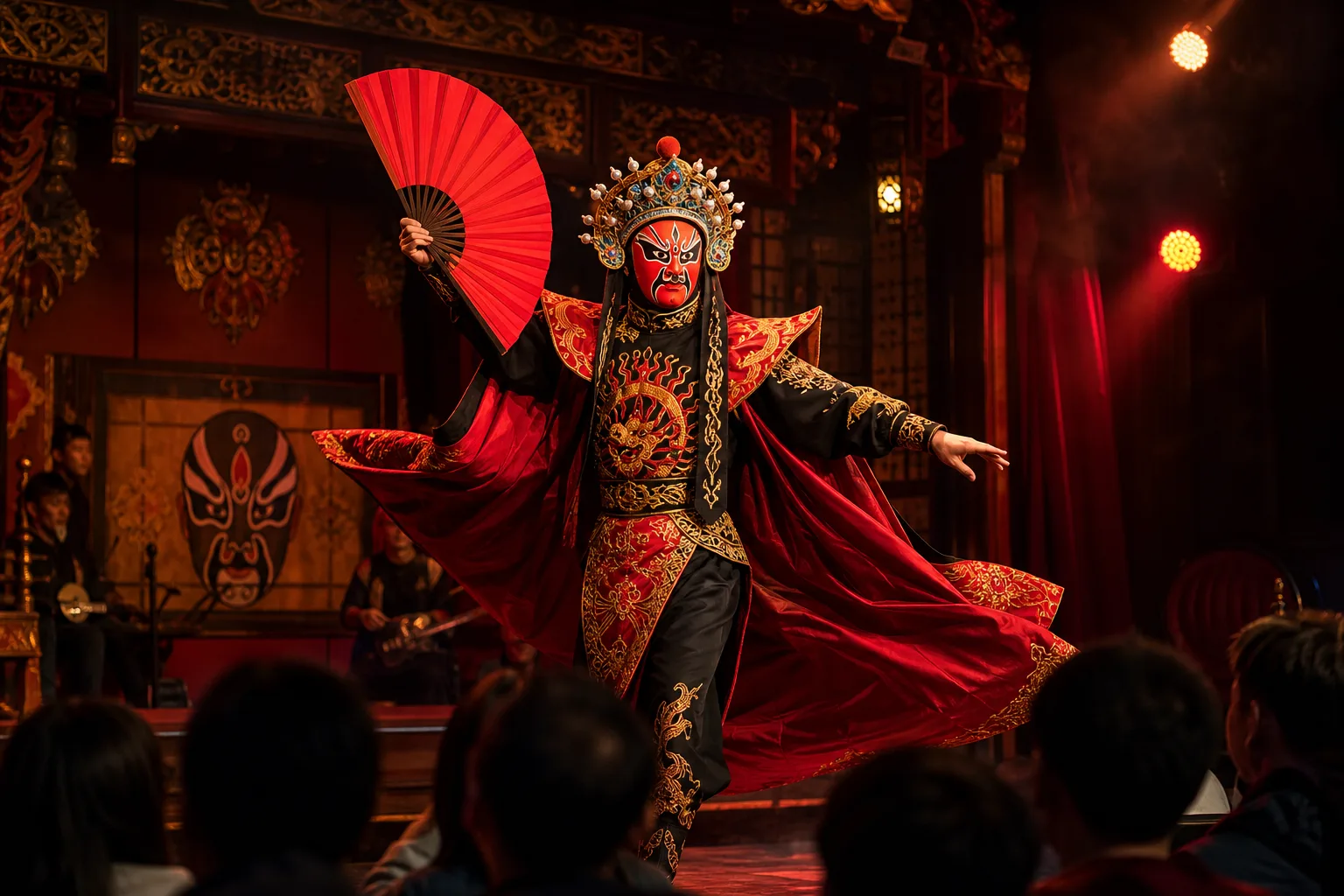
If Sichuan Opera face-changing is on your Chengdu list, the real challenge is not deciding whether it looks cool. The hard part is choosing the right venue, understanding what the ticket actually includes, and avoiding a booking that looks impressive online but feels awkward, rushed, or inconvenient once you are in the city.
What Sichuan Opera Face-Changing Actually Is
Sichuan Opera face-changing is one of Chengdu’s most recognizable cultural experiences, but it is often misunderstood as a single trick instead of a full performance tradition. In reality, it sits inside a broader theatrical form that mixes singing, dialogue, percussion, comic acting, acrobatics, costume work, and the quick mask transformations that made the style famous.
For first-time travelers, the easiest way to think about it is this: you are booking an evening cultural show that happens to feature one of the most surprising stage effects in China. The mask-changing routine is the headline, but the rest of the performance gives it context and pacing. When the whole program is good, the reveal feels earned instead of gimmicky.
The good news is that Chengdu is one of the easiest places in China to see a polished version of the art. You do not need deep opera knowledge to enjoy it. You mainly need a practical plan: know which venue fits your trip style, know how long to stay, and know what a fair ticket should look like.
If you are planning a broader city itinerary, it helps to see the show as one part of a full Chengdu day rather than an isolated event. A good starting point is Chengdu Travel Guide: Giant Pandas, Hotpot & the Best of Sichuan, which gives useful context for how the opera night fits between daytime sightseeing and dinner.
Where To Watch In Chengdu
The best place to watch Sichuan Opera depends less on the art itself and more on your travel priorities. Some travelers want the most classic theater setting. Others want a tea-house atmosphere, a shorter commitment, or a venue that is easy to reach after dinner. In Chengdu, all of those options exist, and the right one is usually the one that matches your schedule.
Shufeng Yayun for the classic first-time choice
Shufeng Yayun is the venue many travelers hear about first, and it remains the safest “first opera night” pick for most visitors. The official site currently shows a nightly performance pattern with an 8:00 pm start, guidance to arrive 30 minutes early, and additional holiday showtimes that can expand to 6:00 pm, 4:00 pm, or even 2:00 pm during major holiday periods. The same site also presents the venue as operating from 14:00 to 22:00, which supports the idea that it is set up for a long evening service window rather than a single fixed slot.
That matters because it tells you something about the audience. This is not a niche performance for specialists only. It is built for travelers who want a reliable, polished cultural evening with predictable timing and enough structure that they can book it with confidence before dinner or after a day of sightseeing.
Shufeng Yayun is also useful if you care about seating hierarchy. The venue sells multiple ticket classes, which means you can trade budget against sightlines. In a show where the mask change can happen in an instant, the seat matters more than the marketing language. If the budget allows, a cleaner view is usually worth more than a slightly lower price.
Tea-house style shows for atmosphere and flexibility
If your ideal Chengdu night is more atmospheric than formal, tea-house style Sichuan Opera is the other strong option. These experiences often combine face-changing with tea service, snacks, and a slower pacing style that feels closer to a local cultural evening than a conventional stage show. That can be ideal if you want a more relaxed environment or if you only have a narrow window before bedtime.
The tradeoff is variability. Some tea-house packages are excellent and add the kind of old-Chengdu atmosphere that makes the night memorable. Others feel more like a convenient tourist bundle where the show is solid but the experience is built mainly for fast turnover. Before booking, look carefully at what is included: tea, snacks, seat type, runtime, and whether the listing is a true performance or a mixed cultural package.
For some travelers, that flexibility is exactly the appeal. A short show can fit neatly after a hotpot dinner or before an early departure the next morning. If you are not trying to build a high-art evening and just want to see face-changing in a comfortable setting, a tea-house product can be the right balance.
Smaller central venues when convenience matters most
There are also smaller venues and troupe-based performances in central Chengdu districts such as Jinjiang, Chunxi Road, and nearby commercial areas. These can be surprisingly useful if your hotel is already in the center and you do not want to spend half the evening in a car. If you are traveling with family, have a late dinner reservation, or simply want the least complicated logistics possible, convenience is a legitimate deciding factor.
These options should not be dismissed as second-tier by default. In practice, the quality of the performance often depends more on the production team and the seating package than on the brand name alone. A smaller venue with a good stage layout can be a better experience than a famous venue with poor sightlines or an inconvenient location.
The key is to match the venue to the shape of your trip. If you want the classic Chengdu reference point, Shufeng Yayun is the easiest recommendation. If you want a gentler evening with tea and a shorter runtime, a tea-house show may suit you better. If you are already staying in the city center and want to avoid transport friction, a smaller downtown venue may be the most sensible choice.
If your bigger concern is getting the rest of China logistics right, it is worth reading China Travel Planning: Visa, WeChat Pay, High-Speed Rail & Practical Guide before you lock in tickets. A show is easier to enjoy when payment, connectivity, and intercity transport are already handled.
What To Expect During The Show
The strongest Sichuan Opera performances are built on momentum. They move quickly, shift tone often, and give you a mix of physical theater, stylized singing, comic rhythm, and stage craft before the face-changing moment lands. Even if you do not understand the language, the show is usually legible because the visual storytelling does so much of the work.
The performance style
Traditional Sichuan Opera is not a one-note spectacle. A full program may include dialogue, stylized movement, percussion-driven scenes, humorous interactions, and short dramatic sequences that build anticipation for the signature mask changes. That variety is what keeps the experience from becoming repetitive.
For international visitors, this is one of the main reasons the show works well. You are not asked to follow every lyric or plot twist. You are meant to watch the energy of the performers, the rhythm of the stage, and the way the production uses costume and movement to carry the audience toward the climax. In a good venue, the pacing is clear enough that even a first-time visitor can feel when the show is opening up and when the big reveal is close.
The face-changing moment
The face-changing routine is the best-known part of the performance because it feels physically impossible the first time you see it. Masks seem to switch instantly, often in a way that hides the actual hand movement from the audience. The best versions are not just fast. They are coordinated with music, body posture, audience timing, and stage direction so that the reveal lands as a dramatic transformation rather than a technical demonstration.
It helps not to treat it like a trick puzzle you are trying to reverse-engineer. You will enjoy the evening more if you let the performance be what it is: a stage tradition that combines speed, discipline, theater, and audience management. The technique matters, but the mood matters just as much.
Other common elements you may see
Depending on the venue and package, the show may also include fire-spitting, rolling lanterns, fan dance, short comic pieces, or long-spout tea performance. Some listings also weave in a tea service or small snacks. That mix is normal because the visitor-friendly versions of Sichuan Opera are often curated as a broader evening product rather than a purist repertory performance.
The important point is to read the listing carefully. A ticket called “face-changing” may still include multiple acts, while a tea-house package may center atmosphere and service more than stage complexity. That is not necessarily a bad thing. It simply means you should know what mood you are paying for.
How long it usually lasts
For most travelers, the show is not a half-day commitment. A common runtime is around 50 to 60 minutes, and some current booking listings describe it as a 1 to 2 hour activity when you include entry time, seat settling, and the broader venue experience. That is short enough to fit into a normal Chengdu evening, but long enough that you should not treat it as an in-and-out stop.
This matters for dinner planning, transport planning, and hotel choice. If you are squeezing the show between hotpot and an early start the next morning, a 60-minute performance may be perfect. If you are hoping for a leisurely arts evening with tea and post-show lingering, choose a package that explicitly offers a longer atmosphere.
Practical Guide
Hours, admission, and prices
The most useful current reference point for 2026 is the official Shufeng Yayun schedule. The venue’s site currently shows nightly performances at 8:00 pm, recommends arrival 30 minutes before showtime, and notes that holiday periods can add earlier performances. The same site also presents the venue as operating from 14:00 to 22:00, which suggests a broad visitor window for ticketing and evening operations.
For a live booking benchmark, the current Klook listing for Fu Rong Guo Cui shows multiple ticket tiers. As of the latest listing I checked, Class C is around US$11.40, Block B is around US$18.59, and Block A is around US$25.79. The listing also notes that one package includes a cup of lidded tea, which is useful if you want a small tea-house element without committing to a full premium package.
You should treat those figures as a planning range, not a promise. Ticket prices move, seat maps change, and some packages sell out faster than others. Still, the spread is helpful because it tells you the basic pricing logic: lower-priced seats are available, but better seating and extra inclusions cost more.
A practical way to interpret the options:
- Choose the cheapest tier if your goal is simply to experience face-changing once and you are comfortable with a more basic view.
- Choose the middle tier if you want a better chance of seeing the stage details without overspending.
- Choose the top tier if you care about sightlines, comfort, and a more polished first-time experience.
If you are booking around a holiday or weekend, do not wait until the day of the show unless you are genuinely flexible. The best seats disappear first, and once you are in the city, your timing will be constrained by dinner, traffic, and your return route.
How to get there
The Klook listing places one of the main current venues at 108 Zihui Street in Jinjiang District and gives a useful transit cue: Metro Line 1 to Jinjiang Hotel Station, Exit C2, followed by about a 7-minute walk. That is about as practical as a traveler can hope for in central Chengdu because it gives you a clear route, a clear district, and a backup if your ride-hailing app struggles with map labels.
In practice, most visitors will still use a taxi or Didi, especially if they are coming from the hotel after dinner or traveling with family. That is perfectly reasonable, but the metro detail is useful because it gives you a predictable fallback and a way to estimate distance when traffic is bad.
If you do take a ride-hailing car, use the booking pin or the venue name from your confirmation instead of relying on a vague English map label. Some attractions in Chengdu are listed under slightly different transliterations across apps, and the wrong gate is an unnecessary way to ruin the first ten minutes of your evening.
How to book
For most travelers, the easiest booking path is to compare the official venue site with a major travel platform and then decide based on seat map, cancellation policy, and convenience. Official sites are useful for understanding the event structure, while booking platforms are often easier if you want a confirmation on your phone and a more familiar checkout flow.
Current Klook listings are especially useful because they show the ticket tiers clearly, note free cancellation with 72 hours’ notice, and provide 24-hour confirmation for the current package. That is a practical advantage if your Chengdu plans are still moving around or if you want to keep your evening flexible until closer to the date.
If you want a lower-friction cultural add-on, some platforms also bundle face-changing with tea and snack elements. Those can be ideal for travelers who want the experience to feel complete without needing to research every operational detail. The tradeoff is that bundled listings can blur the line between performance ticket and leisure package, so read the inclusions closely.
Booking rules and small but important details
A few booking details are worth paying attention to before you click buy:
- Some tickets are valid only on the selected date, so do not assume you can move the show at the last minute.
- Some packages include tea, but not all do.
- Some seats are much better for seeing the mask work than others.
- Some venues are easier to find on Didi than on Apple Maps or other general-purpose map apps.
Those sound like small issues, but they are the things that determine whether the evening feels smooth or clunky. A good cultural activity should not require detective work once you are already in Chengdu.
Who should book which option
If you want the most reliable first-timer experience, book a recognized theater seat with a clear view. If you want tea-house atmosphere and a slower pace, choose a package that explicitly says so. If you are traveling on a tighter schedule and just want one memorable Chengdu night, prioritize location and total runtime over prestige.
For travelers who like to make the trip feel culturally grounded, it is also worth thinking about etiquette before you go. The show is not just entertainment. It is also a living part of local performance culture, which means small things like seating behavior, photo habits, and timing matter. A quick refresher like Chinese Culture Guide: Customs, Etiquette & Dos and Don'ts for Travelers helps you avoid the usual visitor mistakes.
Tips & Common Mistakes
Do not choose the show from a short clip alone
The most common mistake is booking because one viral clip looked magical. That clip may be from a different venue, a different production, or the best 10 seconds in a much longer program. The right question is not “Did the mask change look amazing?” It is “Does the full evening sound like the kind of experience I want?”
A strong face-changing moment can absolutely carry the memory of the night, but it is still only part of the experience. If the rest of the show feels thin, the novelty can fade quickly. If the pacing, music, staging, and variety are all good, the performance becomes more than a one-trick attraction.
Do not buy the cheapest seat blindly
The mask transformation is fast and usually small in scale, which means sightline quality matters more than it would in a larger dance or music show. A cheap seat that puts you off-angle can be a false economy if you only plan to see Sichuan Opera once.
This is one of those situations where “better view” is more important than “lowest price.” You do not need luxury seating, but you do want to be close enough to see posture, hand movement, and the performer’s alignment with the stage. That is the difference between watching the routine and actually appreciating how it works.
Arrive early enough to settle in
Official guidance for Shufeng Yayun currently says to arrive 30 minutes early, and that is good advice. Even if you have digital tickets, you still want time to find the entrance, settle into the seat, and orient yourself before the program begins.
Arriving late is annoying in any show, but it is especially annoying in a cultural performance where the room, music, and pacing help set the mood. If you walk in stressed and distracted, you will miss some of the atmosphere that makes the evening worthwhile.
Check runtime before you plan dinner
Some listings are closer to an hour, while others feel like a 1 to 2 hour experience once you factor in the venue flow. If you are scheduling a hotpot dinner before the show, or planning to catch a taxi to the airport afterward, the runtime matters a lot.
Do not assume the title tells you everything. Check whether the listing is for a compact performance, a tea-house package, or a longer mixed program. A difference of 20 to 30 minutes can determine whether your evening feels relaxed or rushed.
Match the venue to your travel style
The best venue is not always the most famous one. Choose based on how you actually travel:
- If you like certainty and a recognizable cultural landmark, choose a main theater.
- If you like atmosphere, choose a tea-house setting.
- If you value convenience and a simple night out, choose the venue nearest your hotel or dinner area.
That framework is more useful than trying to identify a single “best” show for everyone. Travelers have different tolerance levels for transport, price, and crowds. A good booking respects those differences instead of pretending all opera nights are interchangeable.
Be realistic about what the show is
Sichuan Opera face-changing is memorable, but it is not a theme-park stunt, and it is not a silent museum exhibit. It is a performance tradition that has been adapted for visitors. That means you should expect a real stage show with a cultural framework, not a pure spectacle with no context.
The best attitude is curious but practical. Know that the face-changing is the big draw. Also know that the evening will be richer if you appreciate the surrounding performance style instead of waiting only for the climax.
FAQ
Is Sichuan Opera face-changing worth it for first-time visitors?
Yes. If you want one evening activity in Chengdu that is visually distinctive and easy to enjoy without specialized knowledge, this is one of the strongest choices. It is short enough to fit into a normal travel schedule and memorable enough that many visitors remember it long after the trip.
Do I need to understand Chinese to enjoy the show?
No. You will get more out of the performance if you know the cultural background, but the core appeal is visual. The face-changing, music, rhythm, and stage movement do most of the communication.
How far in advance should I book?
If you are traveling on a weekday and your schedule is flexible, you may be able to book closer to the date. If you are visiting on a weekend, during a holiday, or if you want better seats, book earlier. The official schedule notes extra holiday showtimes, which usually means demand rises when more travelers are in town.
What should I wear?
Smart casual is the safest answer. You do not need formal clothing, but you should avoid looking so casual that you feel out of place in a cultural theater setting. If you plan to take photos after the show, muted colors usually work better under stage lighting than loud patterns.
Is face-changing the same as fire-spitting?
No. Face-changing is the mask transformation routine. Fire-spitting is a separate stunt that some programs include as part of a wider repertoire. Many visitor-friendly shows feature both, but you should always check the actual listing if you care about a specific act.
Is there a best area to sit?
Usually, the best seats are the ones that give you a straight, unobstructed view of the stage. In a show built around quick motion and visual reveal, center-facing seating is often worth the extra cost. If you are uncertain, pay more attention to sightline quality than to the price gap alone.
Can I book through a platform instead of the official site?
Yes, and for many travelers that is the easiest option. Platform listings can be especially helpful when you want clear English instructions, easy confirmation, and cancellation rules that are easy to understand. The official site is still valuable for schedule verification and ticket-category context.
How long should I plan to be there overall?
Even if the performance itself is around an hour, plan a little longer for arrival, seating, and the post-show exit. If you are taking a car or trying to fit dinner around the show, give yourself a comfortable buffer so the evening stays relaxed.
Conclusion
Sichuan Opera face-changing is one of the few Chengdu activities that is both easy to book and genuinely distinctive. It is short enough to fit into a normal evening, but special enough to justify building a dinner-and-show plan around it. If you choose the right venue and the right seat, the experience is straightforward, memorable, and very easy to recommend.
The practical formula is simple. Choose a venue that matches your pace, compare the current seat tiers, and do not ignore the runtime or location. Shufeng Yayun is the most reliable first-timer choice, tea-house packages are better for atmosphere, and central venues are best when convenience matters more than prestige.
For most travelers, that is enough to make the night work: one good performance, one clear seat, and one Chengdu evening that feels more specific than a generic tourist stop. Pair it with a strong day in the city, book with enough lead time to avoid stress, and let the mask change be the surprise it was meant to be.