Onsen Ryokan Booking Tips: What to Know Before You Reserve

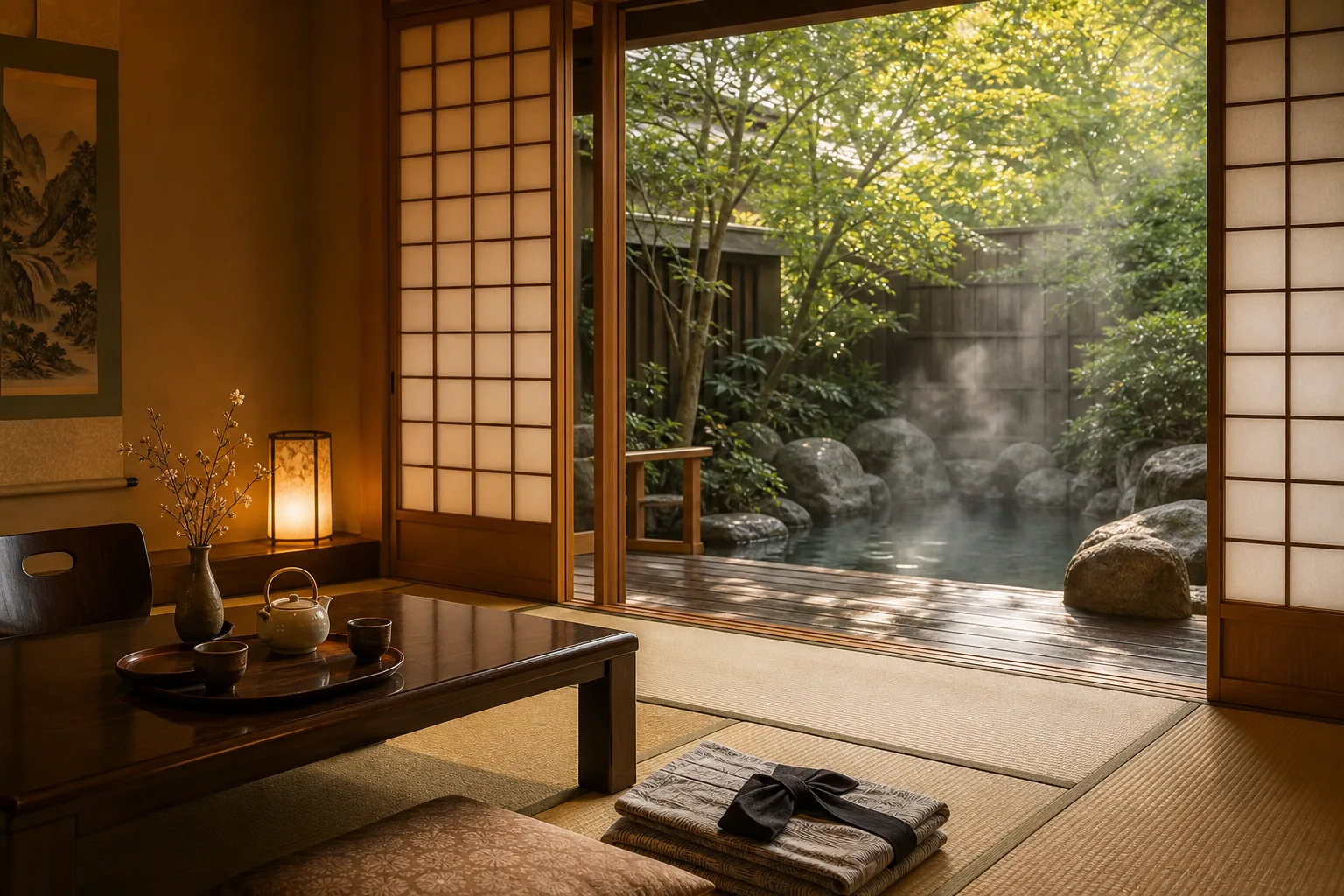
Planning an onsen ryokan stay is one of the easiest ways to make a Japan trip feel memorable, but it is also where first-time visitors make expensive mistakes. The room you book can determine whether meals are included, whether you get a private bath, how strict the check-in window is, and whether the property is suited to tattoos, children, or a late arrival. This guide breaks down the booking details that matter before you reserve.
Introduction
The smartest way to book an onsen ryokan is to treat it less like a standard hotel and more like a fixed travel experience with a schedule, meal plan, and bathing rules attached. Many ryokan are built around a simple logic: arrive on time, settle in, bathe, eat dinner, sleep on futons, then enjoy breakfast and check out the next morning. If you know that rhythm before you reserve, you will avoid most of the common frustrations travelers run into.
At a high level, the key things to check before you book are the room style, whether dinner and breakfast are included, the bath setup, and the property’s rules around tattoos, children, and late check-in. You should also think about where the ryokan is located in relation to the train station, whether the town is quiet after dark, and whether you actually want a full-service stay or just a ryokan-style room with access to hot springs. Those choices affect both price and comfort.
For travelers planning Japan more broadly, it also helps to understand how the ryokan fits into the rest of the trip. If you are still sorting out transport, rail passes, IC cards, or entry requirements, start with Japan Travel Planning: Visa, IC Card, Rail Pass & Essential Logistics Guide. If your main goal is the bathing experience itself, Japan Onsen Guide: Best Hot Springs, Ryokan Stays & Etiquette Rules is the better companion piece.
What a ryokan booking really includes
Before you reserve, assume that the most important details are not the glossy room photos but the fine print. A standard ryokan booking often includes a tatami room, futon bedding prepared by staff, access to one or more baths, and meal plans that may range from breakfast only to full half-board with dinner and breakfast. Some properties include use of a private bath, while others charge extra or require advance reservation.
The biggest difference between a ryokan and a typical hotel is timing. Dinner may be served only during a fixed window. Check-in may close earlier than you expect. A private bath slot may be tied to a specific arrival time. If you plan to arrive late, travel with a tight rail connection, or go sightseeing until evening, you need to confirm those constraints before you pay.
Who should choose an onsen ryokan
An onsen ryokan is ideal if you want a slow, structured overnight stay where the accommodation is part of the destination rather than just a place to sleep. It works especially well for couples, first-time visitors who want a cultural stay, and travelers who enjoy food, bathing, and quiet evenings more than nightlife.
It is less ideal if you want maximum flexibility, if you expect to be out late, or if you prefer a simple hotel where you can come and go at any hour. Families should also check room size and meal policies carefully, because some ryokan are relaxed and welcoming while others are clearly designed for couples or adult groups.
Primary Topic Section
A good onsen ryokan booking starts with matching the property type to your travel style. The word ryokan covers a broad range of inns, from historic traditional properties to modern resort-style stays, but the core experience remains similar: Japanese hospitality, tatami rooms, hot spring bathing, and meals that are often a major part of the stay. JNTO describes ryokan as places where tatami flooring, futon bedding, yukata robes, private baths, and kaiseki-style dinners are common elements. That means the reservation is usually a package of room, bath access, and food rather than just a bed.
When you search, the first fork in the road is whether you want an onsen ryokan in a hot spring town or a ryokan attached to a city hotel zone. Hot spring towns tend to be more atmospheric and more focused on the bath experience. City ryokan can be easier to reach and may work better if you want to combine a traditional stay with museums, dining, or rail connections. If you want the classic trip, choose a town where the ryokan itself is the destination. If you want convenience, choose a property closer to transit.
The second fork is meals. Dinner-inclusive ryokan are the most immersive, but they also lock you into a timetable. In many places, dinner is served at a fixed hour and missing it can mean losing the meal entirely. Breakfast is usually more forgiving, but still often has a set serving time. If you plan to arrive after a long train ride or after visiting a nearby city, dinner timing matters more than almost anything else. A property that looks slightly cheaper on a booking site can become poor value once you add the cost of an outside dinner or the stress of arriving too late.
The third fork is the bath setup. Some ryokan have only large communal baths, others have family baths or private baths that can be reserved, and some offer in-room open-air baths. A private bath is especially useful for travelers with tattoos, travelers who feel shy about communal bathing, or anyone who wants a slower and more private experience. JNTO notes that private baths can often be booked in advance and are a practical option when public-bath rules feel limiting.
The fourth fork is the room style. Traditional rooms usually mean tatami flooring, low tables, and futons laid out later by staff. Some modern ryokan offer western beds in certain rooms, while others combine both styles. If you are sensitive to sleeping on futons or need more mobility support, read the room description carefully. If you want the full cultural feel, a tatami room with a separate bath and meal plan is often worth the extra money.
The fifth fork is the guest policy. Tattoo rules are changing in Japan, but they still vary by facility. JNTO’s guidance notes that many baths have historically restricted tattoos, although more places now allow them or accept covers. That means you should never assume a ryokan will be tattoo-friendly just because the town is tourist-oriented. If tattoos matter for your group, confirm the policy directly or book a private bath property that removes the uncertainty.
One useful way to think about the best booking is to decide what you want the stay to feel like. If you want a luxurious escape, prioritize private bath access, upgraded meals, and a room with a view. If you want the classic cultural version, prioritize a traditional room, dinner and breakfast, and a location in an established hot spring town. If you want value, look for properties with strong bath access and breakfast included, even if the room itself is simpler.
How booking sites and official sites differ
Booking platforms are useful for comparison, but they are not always enough on their own. Property websites and official booking engines often give clearer information about meal timing, cancellation windows, tattoo policy, children’s rates, and room-by-room bath access. Third-party platforms are better for seeing price differences across dates and room categories. The safest strategy is to use booking sites to compare, then verify the details on the ryokan’s own website before you finalize.
This is especially important when a listing shows a beautiful bath photo but does not clarify whether the bath is public, semi-private, or fully private. It also matters for meal plans, because one room type may include dinner while another does not. When a ryokan looks unusually cheap, the missing meal plan or the lack of bath access is often the reason.
Secondary Topic Section
The practical side of a ryokan stay is where people either get a smooth experience or end up stressed. Once you reserve, the stay becomes a sequence: check your arrival time, confirm your meal schedule, make sure your transit connection is realistic, and pack with the bath rules in mind. Small mistakes matter here because ryokan are built on precision and timing rather than spontaneity.
Start with arrival. In many ryokan, late arrival is a serious issue because dinner service is fixed and staff need to prepare the room and meals around your time slot. If you are traveling from Tokyo, Kyoto, Osaka, or another major hub, leave a bigger buffer than you would for a normal hotel. A train delay that would be annoying in a city hotel can become a real problem in a ryokan town where dinner ends early. If you think you may arrive late, book a meal-free plan or choose a property that explicitly accepts late check-in.
Next, think about the room arrangement. Traditional rooms are often larger than they first appear, but they are arranged differently from western hotel rooms. There may be a low table, floor seating, a separate wash area, and a closet where the futons are stored until evening. The room can feel spacious in the day and minimalist at night. That is part of the appeal, but it can be a surprise if you are expecting a conventional bed from the photos.
Meal structure matters too. Kaiseki dinners are not just "hotel dinner." They are multi-course meals that can take time and often reflect local ingredients and regional style. If you have food allergies, dietary restrictions, or a very selective traveler in your group, confirm in advance that the ryokan can accommodate you. Some properties handle restrictions well, while others have limited flexibility because their meal preparation is highly structured. The more traditional the inn, the more important it is to send meal requests early.
Private baths deserve special attention because they can change the whole trip. A private bath is worth considering if you want privacy, if you are traveling with a partner, if your group prefers bathing together, or if you have tattoo concerns. In some towns, private baths are highly popular and may have hourly use or reserve-ahead windows. JNTO’s tourism guidance notes that private bath use can carry an extra charge and may require pre-booking. That is a small detail that can become critical when you arrive and discover the bath you wanted is fully booked.
Another practical detail is the bathing timeline itself. Many ryokan guests bathe before dinner, then again before bed, then perhaps once more before checkout. That sequence is part of the experience, but it also means you should pack lightly and keep your day bag organized. A small towel, toiletries, socks, and an easy change of clothes make the stay much smoother. If you are coming straight from sightseeing, you do not want to be digging through a suitcase while trying to make dinner on time.
If you are booking a ryokan in a famous onsen town, location within the town can matter more than it first seems. A property near the station is easier if you are carrying luggage. A property in the quieter outer area may offer a better view or a more secluded bath. A ryokan at the center of a historic onsen street may be more atmospheric but also busier. Think about whether your ideal stay is a walkable village experience or a quiet retreat where the inn itself is the main attraction.
For travelers who want a broader planning framework, this is where staying organized pays off. Before you reserve, it helps to know whether you will rely on trains, whether an IC card will cover your local transfers, and whether your itinerary is built around a regional loop or a single destination. If your stay is part of a larger multi-city route, make sure the ryokan fits the transport plan cleanly.
Typical booking choices you will see
Most ryokan booking pages will present a few standard choices:
- Room only
- Breakfast only
- Dinner and breakfast
- Room with private bath access
- Room with open-air bath
- Special seasonal meal plan
- Non-refundable discount plan
Room-only plans look cheaper, but they are not always the best value in an onsen town. If you need to buy dinner elsewhere, the savings may disappear. Breakfast-only plans can be a good middle ground if you want flexibility in the evening. Dinner-and-breakfast plans are often the clearest option if you want a low-stress, fully traditional stay.
When comparing options, read the cancellation policy and the meal window before you focus on the nightly rate. The cheapest option may be non-refundable, while a slightly more expensive plan might let you change dates if weather, train delays, or itinerary changes affect your trip. For a stay that depends on your arrival time, flexibility can be worth more than a small discount.
Practical Guide
Hours / Admission / Prices
Ryokan do not work like museums or attractions with a simple admission fee. The main cost is the room rate, and that rate often changes dramatically by season, day of week, room type, meal plan, and bath features. Weekend rates, holiday periods, cherry blossom season, golden week, summer vacation, and winter travel dates can all push prices up. If you are comparing several ryokan, make sure you are looking at the same board basis, same number of guests, and same cancellation terms.
Instead of focusing on one public price, use this checklist when you compare listings:
- Confirm whether tax and service charges are included.
- Check whether dinner and breakfast are both included.
- See whether the room has a private bath or only shared bath access.
- Verify the check-in and dinner times.
- Read whether tattoos, children, and late arrivals are accepted.
If the property offers day-use onsen, private bath rental, or meal-only add-ons, those extras are usually priced separately and may change by season. JNTO’s onsen guidance notes that private baths may cost extra and require booking ahead. In popular hot spring towns, that can make a meaningful difference in the total cost of the stay.
How to get there
The route to a ryokan depends on the town, but the planning logic is usually the same. First, get yourself to the nearest major rail hub or regional station. Second, confirm whether the property offers pickup service, shuttle service, or a short walking route from the station. Third, leave enough buffer for luggage and for navigating unfamiliar streets after sunset.
If your ryokan is in a well-known onsen town, it may be easiest to arrive during daylight, drop your bags, and then explore on foot before dinner. Some historic hot spring streets are much more enjoyable when you can wander without carrying a suitcase. If the property is uphill, far from the station, or in a mountain area, check the transfer instructions carefully before you book. A cheaper room can become inconvenient if you need a taxi in both directions.
When your ryokan stay is part of a longer Japan itinerary, the transport planning is just as important as the accommodation choice. That is especially true if you are moving between Tokyo, Kyoto, Osaka, or regional onsen areas. Rail passes, reserved seats, and IC cards can all affect how smoothly you arrive before dinner. If the ryokan is a highlight rather than just a stopover, build the route around the check-in window instead of forcing the ryokan into the schedule at the last minute.
Booking links if applicable
For most travelers, the best booking path is a simple one: compare rates on a major booking platform, then verify the property details on the official site before paying. If you want a convenience-first comparison point, Klook can be useful for package-style travel planning, transfers, and destination add-ons, while the ryokan’s own site is often best for room-specific details and bath rules. The exact booking channel matters less than making sure you are booking the correct room type, meal plan, and arrival window.
Use the booking process to answer these four questions:
- Can I arrive before dinner service starts?
- Does my room include the bath experience I actually want?
- Are tattoos, children, or special dietary needs accepted?
- Is the total cost still worth it after meals and transport?
If the answer to any of those is unclear, do not book yet. A good ryokan stay is built on certainty. A rushed reservation can turn into a disappointing one if the meals, bath access, or arrival rules do not match your trip.
Tips & Common Mistakes
The most common mistake travelers make is choosing a ryokan by room photo alone. A beautiful tatami room does not tell you whether dinner is included, whether the bath is private, or whether the property is a steep walk from the station. Always read the actual plan details before you trust the headline price.
The second mistake is assuming all onsen are equally relaxed about tattoos. Some are, some are not, and many fall somewhere in between. JNTO’s guidance makes clear that tattoo policies vary and that private baths are a practical workaround. If tattoos are part of your travel reality, handle this at the booking stage rather than hoping the front desk will solve it after you arrive.
The third mistake is arriving too late for dinner. In city hotels, check-in time is flexible enough that a late arrival is usually fine. In a ryokan, dinner can be part of the room package and tied to a real serving deadline. If you miss it, you may lose more than convenience; you may lose the core experience you paid for. For that reason, if your train plan is shaky, book a meal-free stay or choose a property that clearly allows late check-in.
The fourth mistake is assuming that every ryokan will fit every traveler. Some are great for solo travelers, some for couples, some for families, and some for older guests or those with mobility concerns. Futons, stairs, shared baths, and compact changing spaces can all affect comfort. If anyone in your group has a specific mobility or accessibility need, read the room and bath details very carefully and contact the property directly if necessary.
The fifth mistake is underestimating how much the town itself shapes the trip. A ryokan in a famous onsen village is not just a room; it is part of a slow-paced evening routine with narrow streets, public baths, small shops, and a quieter nighttime atmosphere. That is wonderful if you want immersion. It can feel limiting if you are expecting nightlife or constant convenience stores. Before you book, decide whether you want the town experience or simply a comfortable overnight stay.
Here are a few booking habits that consistently improve the experience:
- Choose dinner-inclusive plans when the ryokan is the main event.
- Choose breakfast-only plans when you want more evening flexibility.
- Choose a private bath if tattoo policy or privacy is a concern.
- Choose a station-close property if you are arriving by train with luggage.
- Choose a quieter, more remote property if the view and atmosphere matter most.
If you are still deciding between different Japan trip styles, the main question is not "Which ryokan is cheapest?" It is "Which ryokan best matches the kind of day I want to have before and after check-in?" That framing prevents most booking regrets because it pushes you to think about arrival time, meal timing, and the tempo of the trip rather than just the room rate.
FAQ
Do I need to book an onsen ryokan far in advance?
For popular onsen towns, yes, especially if you want a specific room type, a private bath, or a weekend stay. The best rooms and meal-inclusive plans often sell out first. If your dates fall during a holiday period or peak travel season, book earlier rather than later so you are not forced into a room or meal plan you do not want.
Are tattoos still a problem at ryokan baths?
Sometimes. Policies vary by property and by bath type. Some ryokan allow tattoos, some do not, and many have become more flexible in recent years. Private baths are the safest solution if you want to avoid uncertainty. If tattoos matter for your trip, confirm the policy directly before booking instead of assuming the town is tattoo-friendly.
Is dinner included in every ryokan stay?
No. Some plans are room only, some include breakfast, and some include both dinner and breakfast. Dinner-inclusive plans are extremely common in traditional onsen ryokan, but they are not universal. Check the plan label carefully because the difference in price may reflect meal inclusion more than room quality.
What if I arrive late?
Contact the property immediately if you expect a late arrival. Depending on the ryokan, dinner may not be held for you, and late check-in may not be possible. If your schedule is uncertain, choose a plan that clearly allows late arrival or skip the meal-inclusive package. That is safer than trying to rescue a reservation after the fact.
Should I book through a platform or directly with the ryokan?
Use whichever channel gives you the clearest information on room type, meals, cancellation rules, and bath access. Booking platforms are good for comparison. Direct booking is often better for fine details and special requests. If you are unsure, compare both and choose the option that gives you the best combination of price clarity and policy clarity.
Conclusion
Booking an onsen ryokan is straightforward once you stop treating it like a standard hotel reservation. The important questions are not only price and location, but also meal timing, bath access, tattoos, arrival windows, and the type of room experience you actually want. If you answer those questions before you reserve, the stay will feel calm and intentional instead of rushed and confusing.
The safest approach is to book the ryokan around the rhythm of the trip. If the inn is the highlight, choose dinner and breakfast, arrive early, and plan to spend the evening in the bath town. If flexibility matters more, choose a simpler meal plan and keep your schedule looser. If privacy matters, prioritize a room with a private or reserved bath. The right reservation makes the entire stay better.
Once those pieces are in place, a ryokan booking becomes one of the best parts of a Japan itinerary instead of one of the riskiest.