Seoul Palaces With Limited Mobility: Which Visit Route Works?

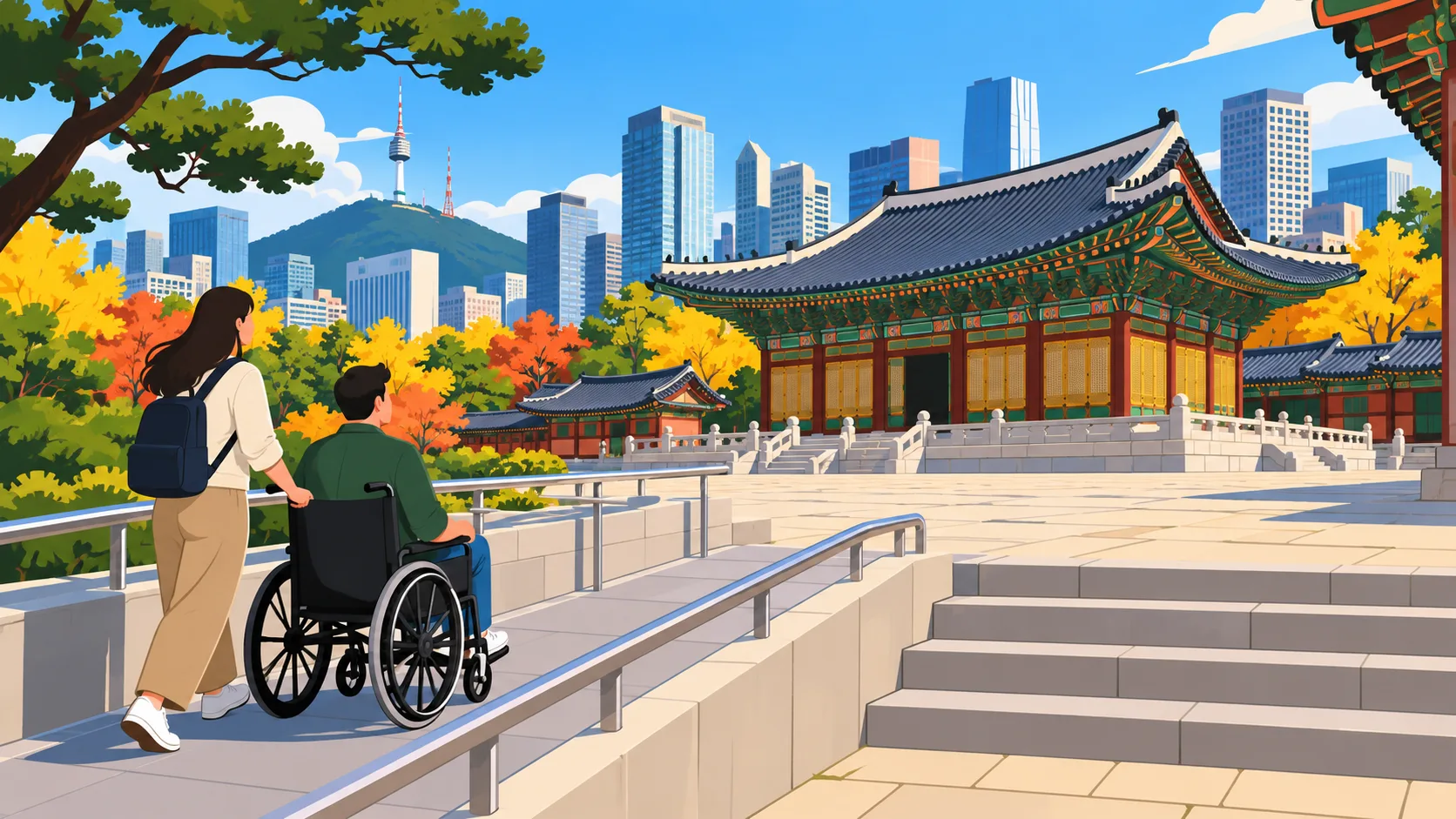
The most famous Seoul palace is not automatically the easiest palace to visit. A short distance on a map can involve a wide stone courtyard, a raised threshold, or a route that doubles back to find a ramp. If walking is tiring or a wheelchair is essential, plan the route before buying tickets or promising the group a full palace circuit. This guide helps you choose a realistic visit and keep an indoor alternative ready.
Compare palace paths and entrances for limited mobility
Deoksugung is a practical first map to inspect for a shorter palace visit: Seoul City describes its setting as flat, and the official map marks wheelchair routes and facilities. A workable example is Daehanmun Gate to the main-hall courtyard and back, with the toilet near the gate checked first. Confirm the marked path is open on your visit date.
There are two separate questions here. Can you enter the palace grounds? And can you reach the particular hall, exhibition, garden or guided tour that interests you? A site may answer the first question positively while a threshold or stepped platform changes the second. An accessible entrance is useful only if the rest of the proposed route is workable for the person in your group. Avoid treating a generic accessibility icon as a promise that every room and viewpoint is reachable.
If this is your first palace day, the most useful comparison is between a compact visit and an ambitious one. Gyeongbokgung is the iconic choice for a broad palace experience, but its large grounds increase walking or rolling time. Changdeokgung offers a different historic landscape and a garden experience, but a garden tour may add distance, uneven ground, timing constraints and a fixed group pace. Deoksugung is appealing if you want to keep a palace visit within a downtown day. None of those observations replaces a current venue map. They help you decide which map to check first.
The Korea Heritage Service publishes palace-specific visitor routes and marks features such as wheelchair and stroller paths, wheelchair rental points, toilets and lifts. Open the map for the palace you intend to visit, then trace a continuous route from the actual gate to one or two priority stops and back. A symbol somewhere on the grounds is not enough. If the map does not make a critical connection clear, contact the venue or the Seoul accessible-tourism service before the visit rather than trying to solve the gap at a crowded gate.
Choose the experience, then the palace
Begin with what the traveler most wants to see. A sweeping royal courtyard, a particular hall, a guided garden, an art collection and a short outdoor walk are different experiences. Write down one essential sight and one optional sight. The essential sight becomes the test for the route. If reaching it requires steps that are unsuitable for the visitor, choose another palace or make a museum the main activity. A palace ticket has little value if the defining part of the day is effectively out of reach.
For a group with mixed walking abilities, avoid making the person with the least mobility follow a route chosen for the fastest walker. Agree on the shortest worthwhile version first. Other companions can explore an extra courtyard while the group takes a break at a planned meeting point. This is more respectful and usually more enjoyable than turning every stop into a negotiation about whether to continue.
A worked Deoksugung route
On the official Deoksugung visitor map, start at Daehanmun, the named front gate on Sejong-daero. The map places an information point, wheelchair-related facilities and a toilet icon in the gate area. After entry, follow the map's marked wheelchair/stroller path past Geumcheongyo Bridge toward the Junghwajeon main-hall courtyard. Make the courtyard your essential sight, then return toward Daehanmun along the marked route. This is a gate-to-sight-to-toilet-and-exit plan, not a claim that you can enter Junghwajeon itself.
The map does not publish a verified walking distance or guaranteed seating for that circuit, so this guide will not invent either. Before travel, ask the Deoksugung office (the official directions page lists 02-771-9951) whether the path to the courtyard is open, which gate-area toilet is accessible for your needs, and where a seated rest is currently available. If the answer does not meet your requirements, use the indoor alternative below. Do not add Seokjojeon or Dondeokjeon merely because they appear on the map; each extra stop needs its own route and opening check. Opening notices can change or conflict during exhibitions and repairs, so check the latest venue announcement for any optional hall on your visit date.
This example is deliberately short. It gives you a named entrance, named sight, return direction and specific facility question while leaving unverified distance and seating as questions for the venue. It also tells companions what the plan is not: a promise of step-free access to every palace building.
Our overview of Seoul's five grand palaces explains their history and main attractions. Use it to decide what you want to see; use the current official access map to decide whether and how you can see it. The two jobs are different. A beautiful photograph or a palace ranking cannot tell you whether today's route has an accessible gate or whether an interior platform can be entered.
Check the path, not just the destination
Look at the route in four pieces: arrival from the nearest practical transport stop, entry through the correct gate, movement between chosen stops, and return to the transport stop. The return matters because a manageable outward journey can feel very different after an hour on stone or gravel. Identify the shortest possible exit as well as the scenic one. Do not assume that the entrance a navigation app points to is the accessible entrance shown on the venue map.
Surface condition deserves its own check. Large paving stones, seams, loose gravel, slopes and drainage channels can make a short path tiring or uncomfortable even when there are no formal steps. Wheelchair users will know that the same route can feel different in a manual chair, a powered chair and a chair being pushed by a companion. Travelers who walk with a cane or need frequent breaks may prefer a route with stable footing and benches over one that is nominally step-free but long and exposed.
Historic buildings often sit on raised foundations. A marked route to a hall does not itself prove that visitors can enter its interior. Confirm the specific hall with staff, and treat a courtyard view as the planned endpoint if the interior route is uncertain. Distinguish "can see the building" from "can enter the building" when discussing the day with companions.
Make the last check close to departure
Palace operations change with conservation work, events, weather and seasonal schedules. The Korea Heritage Service palace route pages are the starting point, and the city-supported Seoul Danurim accessible-tourism service can help with the wider journey. Check both again just before travel. If you need a wheelchair rental or a particular gate, ask whether it is available on your visit date. Treat an old blog map or a saved screenshot as a planning clue, not the final authority.
If the answer is uncertain, decide what uncertainty you can tolerate. A traveler who can walk a few steps with support may accept a route that a full-time wheelchair user cannot. Someone with pain or fatigue may be able to enter but need a much shorter visit. State those needs clearly when asking the venue a question. "Is the palace accessible?" is too broad; "Is there a step-free path from this gate to this hall and the nearest accessible toilet?" is answerable.
Build a shorter palace visit with rest stops
Plan one primary palace area, one optional stop and a definite exit. The goal is not to cover every hall. Put the essential experience early while energy and attention are highest. Then pause, reassess and decide whether the optional stop is worth the extra distance. This structure protects the visit if heat, cold, rain or a rough surface makes the day harder than expected.
A useful route card fits on one phone screen. Record the gate, the nearest practical station exit or taxi drop-off, the first stop, an accessible toilet shown on the current map, a seated rest point, and the exit. Add a venue contact or information desk location. Share it with your companions before arrival so nobody has to search several apps while standing in a queue. Screenshots can be helpful if mobile data is weak, but confirm they match the latest official map.
Do not plan a palace, a long lunch queue, a shopping street and another palace as if all walking were equal. The distances inside the site are only part of the day. Subway corridors, curb crossings and the walk back to the hotel all count. If mobility is limited, make the palace the main outdoor activity. Put the meal close to the exit or choose a transport connection with the fewest uncertain transfers. A shorter itinerary is often a better use of the trip than a checklist of landmarks.
A practical half-day rhythm
First, arrive with time to locate the intended gate and ask staff to confirm the accessible route. Next, visit the single sight that made the palace worth choosing. Then take a deliberate pause, preferably before the group feels exhausted. Only after that decide whether to add the optional courtyard or nearby museum. Leave with enough energy to get home comfortably. You can enjoy a palace without seeing every corner; the day should feel like travel, not an endurance test.
If one member wants more photography time, agree on a meeting point rather than extending the shared route. Keep needed assistance with the person who requires it.
Plan around the weather without overpromising. Courtyards can be exposed to sun, wind or rain. Wet stone and leaves can alter traction. On a hot day, a route with shade and a nearby indoor stop may matter more than adding another landmark. In cold weather, standing still for a long ceremony may be less comfortable than moving at a steady pace. Check the forecast and the venue's own notices, then let conditions change the plan rather than forcing the original itinerary.
Bring what reduces friction
Carry water and any personal items the traveler normally needs for a longer outing. A charged phone and a saved map are useful, but neither replaces a realistic route. If a mobility aid has a particular width, turning radius or charging requirement, ask the venue about any uncertain passage in advance. A folding chair may be helpful for some travelers, but confirm whether personal seating is permitted. Avoid assuming that rental wheelchairs are guaranteed; availability and pickup rules can change.
Tickets and discounts are separate from accessibility. Check the palace's current ticket page for admission rules, any free-entry eligibility and whether a companion ticket arrangement applies. Do not rely on a fee figure from an older guide. A lower ticket price does not make a difficult route comfortable, and a free visit can still take more energy than the traveler wants to spend. Make the experience decision first, then handle the purchase.
If language is a concern, save the palace name and the chosen gate in Korean as well as English. Show the current official map to a staff member if a passage is unclear. Short, specific questions work better than a long explanation. For example: "Can we reach this hall without steps?" and "Where is the nearest accessible toilet?" Staff can point to the route in front of you and may know about a temporary closure that has not reached a third-party map.
Know when to stop
The turn-back point should be decided before anyone is distressed. It might be the first courtyard, a particular gate, or the first rest stop after the main sight. If a companion says the surface is painful or the route feels unsafe, do not bargain for one more hall. Taking the shorter circuit is the plan working as intended. Save the extra section for another trip or choose a different experience the next day.
Energy can change after an airport transfer or a crowded station. Keep the optional stop optional; using the exit needs no justification.
Choose an indoor alternative when palace surfaces are unsuitable
If an outdoor palace route does not work, choose an indoor history stop without presenting it as a consolation prize. The National Museum of Korea offers broad galleries covering Korean history and culture, and its permanent exhibitions are generally free; special exhibitions can have separate admission. It also has a Children's Museum. Check the museum's current visitor information for opening hours, exhibitions and facilities before you set out.
The National Museum of Korea guide helps you decide what collections to prioritize. A museum visit answers a different question from a palace walk: you trade the atmosphere of a historic outdoor site for a more controlled environment and concentrated exhibits. If the traveler wants to understand objects, art and historical periods rather than photograph a courtyard, that trade can be positive. Do not promise that every room or temporary exhibit is accessible until the museum confirms it.
Other nearby indoor options may fit a specific palace day better. For example, the National Palace Museum of Korea is adjacent to Gyeongbokgung, and Seoul has other history and art museums around the central palace district. The best fallback is the one that can be reached comfortably from where you already are, not necessarily the most famous institution. Check the route between venues, not just each building's facilities. A museum that looks close on a map can still involve a busy crossing or a long station exit.
Use a decision rule before you leave the hotel
Choose the palace if its essential sight has a verified route and the visitor is comfortable with the expected outdoor time. Choose a short palace-plus-museum plan if the accessible palace circuit is modest but worthwhile. Choose the museum as the main event if the essential palace sight is not reachable, if the weather makes the grounds uncomfortable, or if the traveler wants more seating and predictable indoor conditions. You can change the choice on the day without calling it a failed itinerary.
This decision rule is more robust than trying to rank the five palaces from "most" to "least" accessible. Individual requirements vary. A route that works for a wheelchair user with a companion might not work for someone who cannot tolerate vibration over paving. Another traveler may walk slowly but have no difficulty with a short step. Ask about the exact barrier that matters to your group, then compare real routes.
For families, check the needs of both the person with limited mobility and any children. A child who is excited to run around a large courtyard may need a separate companion while the visitor using a wheelchair follows the accessible route. A museum may offer a clearer shared activity on a wet day. Do not assume a children's programme is always available; look up the current schedule and reservation rules.
Questions to ask the venue
Ask which entrance is best for the date and time of your visit. Ask whether the accessible path shown on the map is open from the gate to your chosen hall. Ask if there are gravel or cobblestone sections, temporary barriers or steep transitions. Ask where the nearest accessible toilet and resting place are. If you need a wheelchair loan, ask about stock, identification, collection point and return time. If you intend to join a guided tour, ask whether its entire route is suitable for your needs and whether you can leave early.
Record the answer and the date. A useful answer names a path or facility; a vague "yes, accessible" leaves too much unresolved. If the venue cannot confirm a critical connection, do not treat that as proof the route is impossible, but do not build a time-sensitive day around an unverified assumption either. Use the museum alternative or pick a shorter palace route with clearer information.
A compact planning checklist
- Pick one essential sight and one optional stop.
- Open the current palace-specific access map and mark a complete entry-to-exit path.
- Check surface, distance, toilets, resting points and any rental equipment that matters.
- Ask the venue about a specific uncertain segment rather than general accessibility.
- Confirm current hours, admission and any guided-tour reservation separately.
- Save an indoor history alternative with a workable transfer from your starting point.
- Keep the exit option available even if the group is enjoying the visit.
The most useful outcome is an honest day that fits the traveler. Seoul's palaces are memorable because of their spaces and stories, not because a visitor completed every marked path. A well-chosen short route can offer more time to look, talk and remember than a long circuit spent watching for the next obstacle.
Sources and verification
This guide uses the Korea Heritage Service's palace visitor routes, Seoul City's five-palace introduction, Seoul's accessible-tourism information, and the Korea Tourism Organization's National Museum of Korea listing. These sources were checked on 4 October 2026. They describe facilities and planning resources, but a specific route can change. Confirm the relevant entrance and facilities directly before traveling.