Overnight Bus Japan: Tokyo to Osaka for Under 30 Dollars Explained

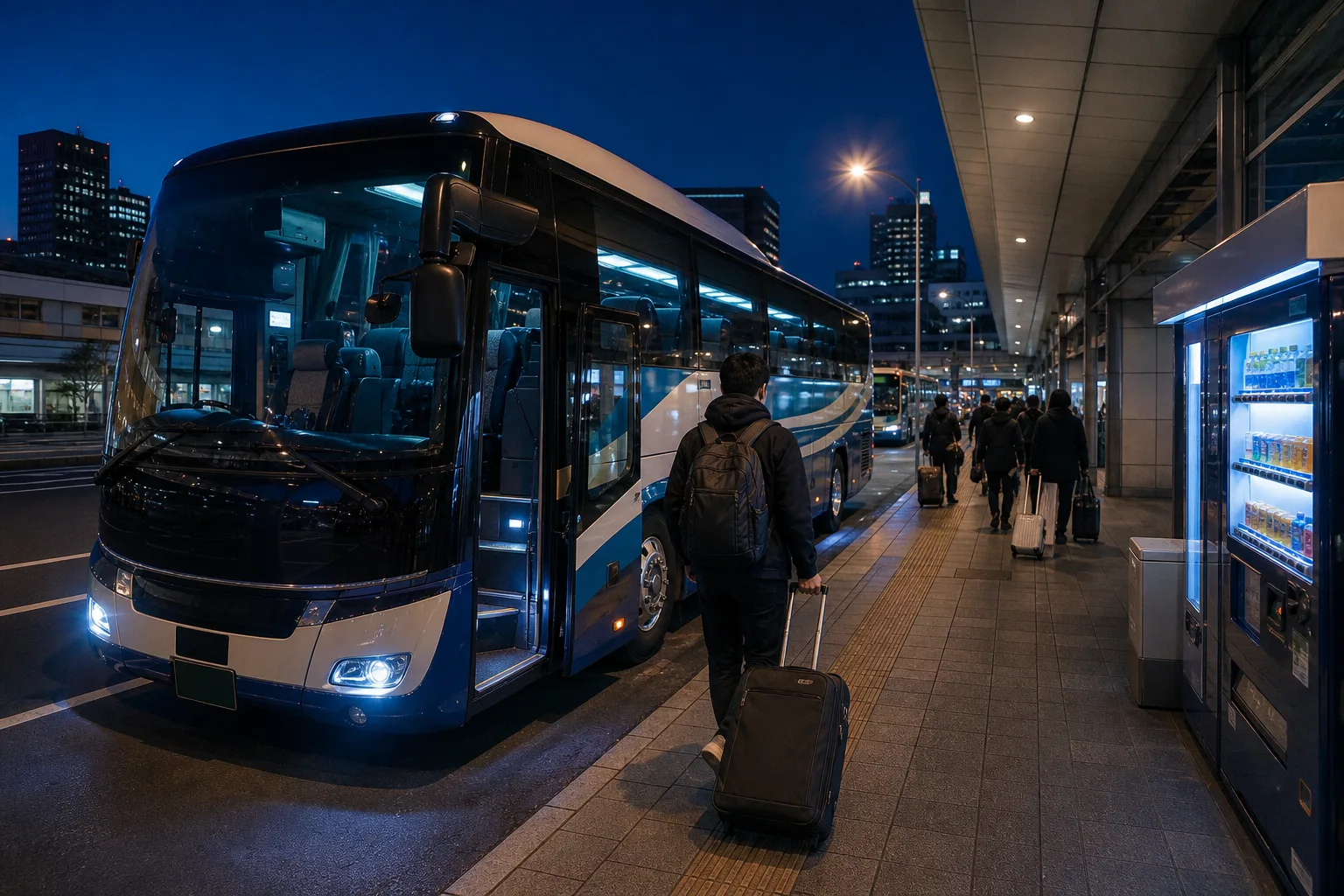
The cheapest Tokyo to Osaka overnight bus is not just a budget trick. It is one of the few ways to save a full night of lodging, move between two major cities, and keep the trip flexible without paying Shinkansen prices. The tradeoff is simple: you save cash, but you need to plan your timing and comfort level.
Introduction
If you are trying to cross Japan cheaply, the Tokyo to Osaka overnight bus is the classic long-distance move. The route is popular because it compresses transport and accommodation into one ride, and on the right date it can land under the $30 mark.
The practical catch is that "under $30" is a floor, not a promise. On this corridor, fares shift by date, seat type, and demand, and the cheapest inventory usually goes first. The good news is that the route is easy to understand once you know how the booking system works.
Why this route matters
Tokyo and Osaka are the two biggest anchors in most first Japan itineraries. If you are flying into Tokyo, then heading west for Kyoto or Osaka, an overnight bus can turn a long transfer into an efficient travel day. If you are moving in the opposite direction, it can do the same thing in reverse.
The real value is not only the low fare. It is the chance to leave after dinner, sleep through the expensive part of the transfer, and wake up already in Kansai with a hotel check-in or breakfast stop ahead of you. For travelers who can sleep on buses, that is a very strong trade.
What this guide covers
This article explains when a Tokyo to Osaka night bus is actually worth it, how the low-end pricing works, what the booking flow usually looks like, and what to pack so the ride does not feel miserable. It also includes practical advice for first-time visitors who want budget savings without creating a logistics mess.
Primary Topic Section
What "under $30" really means
The biggest mistake people make is treating the cheapest bus fare like a fixed menu item. It is not. On Japan's highway-bus market, price is highly dynamic. A low fare may appear on a weekday, disappear on a holiday weekend, then reappear on a less popular departure time or with a different seat class.
On the WILLER Travel route page for Tokyo to Osaka, the site shows that bookings are available up to three months ahead, and it lets you filter by departure time, seat type, and amenities such as toilet access, Wi-Fi, battery charging, and movie streaming. That is a strong clue about how the market works: you are not buying a single product, you are choosing from a moving set of inventory buckets.
The safest way to interpret the title is this:
- Under $30 is possible.
- It is more likely when you book early.
- It is more likely on ordinary weekdays than on peak travel dates.
- It is more likely if you accept a basic seat instead of a premium one.
That means the "cheap" version is a timing game. If you wait until the last minute, the route can still be worth it, but the best fares may be gone and the economics become less compelling.
Why travelers choose the night bus instead of the Shinkansen
This is not a competition about raw speed. The bullet train is faster, smoother, and far easier for many travelers. The night bus wins when one of these is true:
- You care more about total trip cost than speed.
- You want to avoid paying for a hotel night.
- You are traveling between cities after a full sightseeing day.
- You are moving with a backpack and light luggage.
- You do not mind arriving in the morning and starting the day slowly.
For a lot of budget-conscious travelers, the overnight bus is less about "best transport" and more about "best total package." When the bus fare is cheap enough, it can undercut not only the train but also the combined cost of an evening hotel and morning transfer.
What the route usually feels like
The Tokyo to Osaka overnight bus is a long-distance coach, not a luxury sleeper. Most services are designed around seated overnight travel. Some have more privacy, some have more legroom, and some are more basic and therefore cheaper. The common pattern is:
- board in the evening
- keep your main luggage in the trunk or stored area
- settle in for a mostly quiet ride
- arrive early the next morning
You should expect a travel style that prioritizes efficiency over comfort. If you sleep lightly, you need to choose the seat class carefully. If you sleep easily, the low fare can be a very strong deal.
The seat class matters more than people think
WILLER's route page highlights several seat and service filters, including individual seat, spacious seat, reserved seat, ladies seat policy, toilet access, Wi-Fi, and movie streaming. Those options are not just marketing language. They are the difference between a tolerable overnight ride and a rough one.
A few practical interpretations:
- Individual seats are usually better if you value personal space.
- Spacious seats matter if you are tall or broad-shouldered.
- Toilet access matters if you do not want middle-of-the-night stress.
- Wi-Fi and charging matter if you want to work, stream, or keep your phone alive for arrival.
- Ladies seat policy can be important for solo female travelers who want an added layer of comfort.
The cheapest ticket is not always the best ticket. On an overnight route, a slightly higher fare can be a smarter buy if it improves sleep quality enough to save the next day.
Who should not force this trip
The Tokyo to Osaka overnight bus is a good fit for budget travelers, but it is not universally comfortable. You may want to avoid it, or at least spend more on a better seat, if you:
- get car sick easily
- have trouble sleeping in seated positions
- need to arrive fresh for a meeting or early tour
- are traveling with large or fragile luggage
- have back or knee issues that make long sitting painful
There is no virtue in suffering through a cheap ride if it ruins the next day. The better strategy is to match the transport to your real tolerance, not to the internet's favorite budget story.
Secondary Topic Section
How to compare bus, train, and flight
If you are choosing between transport options, think in terms of total trip cost instead of ticket cost alone.
The Shinkansen is the best choice when:
- time matters more than price
- you want the easiest same-day transfer
- you are traveling with a lot of luggage
- you value predictability and comfort above all else
The overnight bus is best when:
- you want to reduce total spending
- you can sleep on the move
- you are okay with an arrival that starts the day slowly
- you want to skip paying for one hotel night
Domestic flights can be competitive in some situations, but once you add airport transfer time and luggage friction, they are not always the simple winner people expect. For Tokyo to Osaka specifically, the overnight bus has a special advantage: it turns dead time into transit time.
How first-time visitors should think about Japan logistics
If this is your first Japan trip, the night bus is easiest when the rest of your itinerary is already structured. In other words, do not pair a cheap overnight bus with a chaotic first day in the country and expect the result to feel relaxing.
For example, if you are building a broader trip around visa checks, IC card setup, rail pass decisions, and everyday arrival logistics, start with Japan Travel Planning: Visa, IC Card, Rail Pass & Essential Logistics Guide. That kind of planning reduces stress long before you reach the bus terminal.
The overnight bus works best when you have already handled:
- arrival timing
- mobile data or eSIM setup
- payment cards or cash access
- your first night's accommodation
- a rough plan for breakfast and morning transit after arrival
If those basics are in place, the bus becomes a simple cost-saving move instead of a source of uncertainty.
When budget travel actually pays off
Some readers want to know whether budget transport is worth the hassle. The answer depends on what you value. If you are squeezing a longer trip into a fixed budget, saving $20 to $60 on transport can matter more than shaving an hour or two off the journey. But if the cheap ride makes you exhausted, you may spend that savings later on coffee, taxis, or a lost sightseeing day.
That is why budget travel should be intentional, not reactive. If you are already optimizing meals, stays, and local transport, see How to Travel Japan on a Budget: Cheap Eats, Transport & Stays. The bus makes the most sense as one part of a broader money-saving strategy, not as a random one-off bargain.
Practical Guide
Prices
There is no single official price for Tokyo to Osaka overnight buses. The fare depends on the operator, seat type, date, and how far in advance you book. WILLER's Tokyo-Osaka search page makes that dynamic pricing obvious by showing the route as a live search result rather than as a fixed fare card.
For planning purposes, the right mental model is:
- cheapest seats can occasionally dip under $30
- better seats usually cost more
- peak dates push prices up
- early booking improves your odds of finding the low end
My practical rule is simple: if your goal is specifically to stay under $30, search early, be flexible about the exact departure day, and avoid premium seats unless comfort is more important than the target price.
Booking window
WILLER's route search states that availability is shown up to three months ahead. That matters because the best value is often not visible if you wait too long. For Japan overnight buses, the best fares are often a combination of:
- early search
- ordinary travel day
- unglamorous departure time
- basic seat category
If you are booking from abroad, do not assume the lowest fare will still be there when your trip gets closer. Long-distance buses are often booked by travelers who are already price-sensitive, so the lowest inventory can disappear quickly.
How to book
The cleanest booking process is usually:
- Search the Tokyo to Osaka route on the operator's site.
- Compare nighttime departures and seat types.
- Read the boarding and drop-off points carefully.
- Check luggage rules before paying.
- Finalize the trip only after confirming your arrival time works for your hotel or onward plan.
On the WILLER site, the route page exposes filters for nighttime departures, seat layout, toilet access, Wi-Fi, and more. That tells you what matters most during booking: comfort options and route timing. Do not skim those details. They are the whole decision.
How to get to the bus
The exact terminal depends on the operator, but the major Tokyo and Osaka bus networks usually serve central, high-traffic areas rather than obscure suburban stops. For a first trip, your best move is to assume nothing and verify the boarding point printed on the ticket.
In practice, you want to arrive early enough to find the platform, sort out luggage, and locate the correct waiting area without stress. The cheapest trips are not worth much if you miss the bus because you underestimated station complexity.
What to bring
For a one-night bus ride, the right packing list is small but important:
- passport
- ticket or booking QR code
- headphones
- eye mask
- neck pillow if you actually use one
- water
- light snack
- portable battery
- layers for temperature control
The bus may feel too cold or too warm depending on the vehicle and your seat location. A thin hoodie or travel blanket can make a real difference.
Luggage expectations
This is another area where people overcomplicate the trip. Most travelers should keep one manageable carry-on bag with them and place larger luggage in the storage area if the operator allows it. The less you have to haul through the terminal, the easier the night becomes.
If you are trying to make the bus work with too much baggage, you may end up trading the cheap fare for an unpleasant boarding experience. Budget travel works best when your bags are equally budget-friendly.
Tips & Common Mistakes
Mistake 1: buying the cheapest fare without reading the seat details
The lowest ticket price may come with the least comfortable seat. On a daytime route, that can be fine. On an overnight bus, it can be a mistake that costs you sleep.
The fix is simple: compare the seat map and the included facilities, not just the headline fare. A slightly higher fare that gives you a better night can still be the better value.
Mistake 2: assuming all overnight buses are the same
They are not. Some routes have toilets, some do not. Some seat configurations are more private. Some operators emphasize comfort features; others compete mostly on price.
If you only look for the cheapest number, you miss the actual product differences. The route page on WILLER makes that point clearly by surfacing seat and service filters right on the search screen.
Mistake 3: booking too late
This is the most expensive mistake in disguise. If you want the route to stay under $30, waiting is risky. The low fare exists because the operator can fill seats early. Once the cheaper seats are gone, your bargain may be gone too.
Mistake 4: scheduling a hard morning after arrival
The first morning after an overnight bus is not the time to pack in a museum marathon, a long hike, or a complex transfer chain. Build in a soft landing. Coffee, breakfast, luggage drop, and a simple first stop are better than a stacked agenda.
Mistake 5: treating the bus as a sleeping guarantee
Even a good overnight bus is still a bus. You are not guaranteed perfect sleep. Noise, motion, temperature, and seat angle all affect the experience. If sleep quality is critical, consider paying for a better seat or taking the train instead.
A smarter way to choose
Use this simple filter:
- If the bus saves you a hotel night and the next day is flexible, choose the bus.
- If you need peak alertness, choose the train.
- If you need the absolute lowest spend and can handle basic comfort, choose the bus early.
That approach turns the decision into a logistics problem instead of a debate about status or travel style.
FAQ
Is it realistic to find a Tokyo to Osaka overnight bus for under $30?
Yes, but usually only at the low end of the pricing curve. The best chance comes from early booking, flexible dates, and accepting a basic seat rather than a premium one. Do not expect the under-$30 fare to be available on every departure.
Is the overnight bus cheaper than the Shinkansen?
Usually yes, especially once you compare against the total cost of transport plus a hotel night. The train is faster and more comfortable, but the bus is often the better budget move if you can sleep on it.
How far ahead should I book?
As early as possible if you care about the cheapest fare. WILLER's search results show availability up to three months ahead, which is a good signal that early search matters. The lowest fares tend to vanish first.
What is the biggest comfort upgrade worth paying for?
For most travelers, seat space is the first thing worth upgrading. After that, toilet access and a more private seating arrangement matter a lot. If you are sensitive to sleep disruption, a better seat can be more valuable than any snack or accessory.
Is the night bus good for first-time Japan visitors?
Yes, if your itinerary is already organized. If you are still figuring out the basics of Japan trip planning, it is smarter to lock down arrival logistics, data, payment, and transport structure first, then use the bus as a cost-saving option.
Conclusion
The Tokyo to Osaka overnight bus can absolutely be a smart under-$30 move, but only if you understand what creates the low fare. The cheapest tickets are usually early, flexible, and basic. The route is best when you value total trip savings more than speed or luxury.
If you want the deal to work, search early, compare seat types, and keep your morning schedule light after arrival. If you want the best possible budget context for the rest of the trip, combine this route with broader planning and spending discipline across food, stays, and local transport.
The simple takeaway is this: the bus is worth it when it solves two problems at once. It gets you from Tokyo to Osaka, and it removes the need for one more hotel night. That is why budget travelers keep using it.