Leshan Giant Buddha: Day Trip from Chengdu, Boat View vs Stairs

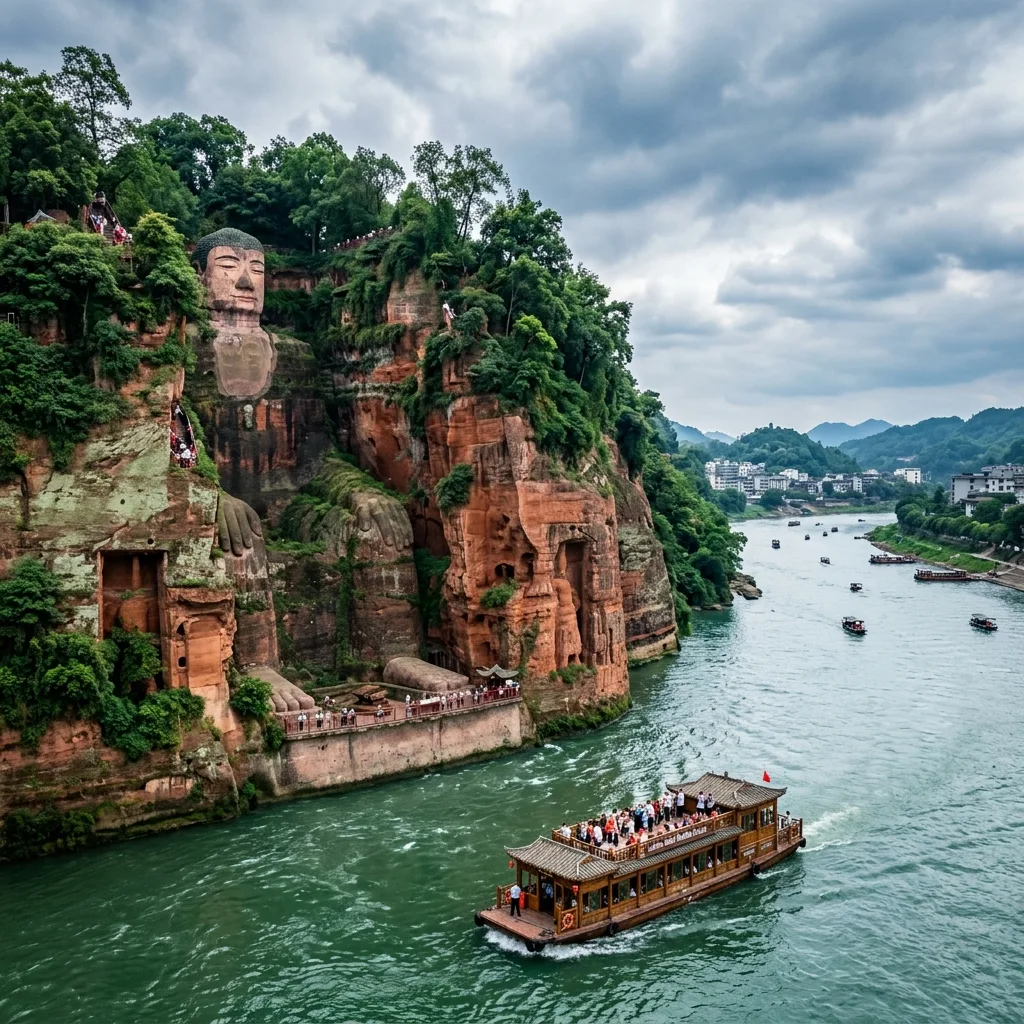
Carved directly into the red sandstone cliffs where the Minjiang, Dadu, and Qingyi rivers converge, the Leshan Giant Buddha (Dafo) is a monumental testament to ancient Chinese engineering and devotion. Standing at 71 meters (233 feet) tall, it is the largest and tallest stone Buddha statue in the world, dwarfing even the famous Bamiyan Buddhas. For travelers basing themselves in Chengdu, visiting Leshan is arguably the most popular and impressive day trip available. However, when planning your visit, you are faced with a crucial decision that will define your experience: do you hike the steep, narrow stairs of the Nine Bends Plank Road to see the Buddha up close, or do you take a riverboat cruise for a panoramic, full-body view? This guide will break down exactly what to expect from both options, the 2026 logistics for getting there, and how to make the most of your day trip.
The Leshan Giant Buddha was constructed during the Tang Dynasty, with work beginning in 713 AD. The project was initiated by a Chinese monk named Hai Tong, who hoped that the Buddha would calm the turbulent waters that plagued shipping vessels traveling down the river. Remarkably, the massive amount of stone excavated from the cliff face and deposited into the river below actually did alter the currents, making the waters safer for navigation. Today, the site is a UNESCO World Heritage site and a must-see for anyone traveling through Sichuan province.
The Two Ways to See the Buddha
The scenic area offers two distinct ways to experience the Giant Buddha. It is important to note that these are separate experiences requiring separate tickets. While many energetic travelers opt to do both, understanding the pros and cons of each will help you plan a trip that suits your physical ability and time constraints.
Option 1: The Hiking Route (Nine Bends Plank Road)
The traditional way to experience the Leshan Giant Buddha is by entering the main scenic park and hiking down the cliff face.
The Experience: Entering the park (80 RMB), you first arrive at the head of the Buddha, located near the Lingyun Temple. From here, you can truly appreciate the immense scale of the carving—the Buddha's head alone is 14.7 meters tall, and each ear is 7 meters long. To see the rest of the body, you must descend the Nine Bends Plank Road, a steep, incredibly narrow staircase carved directly into the cliff right next to the Buddha.
As you descend, you get an unparalleled, up-close view of the architectural details, such as the hidden drainage system carved into the statue's hair and tunic to prevent erosion. Once you reach the bottom, you stand at the Buddha’s massive feet (which are large enough to comfortably seat 100 people). You then ascend via a different set of stairs through the forested park.
The Pros:
- Highly immersive and educational.
- Access to the surrounding Lingyun Temple, Wuyou Temple, and Mahao Cliff Tombs.
- You can touch the base of the statue and appreciate the sheer verticality of the carving.
The Cons:
- Physically demanding: The stairs are steep, narrow, and can be slippery.
- Crowds and wait times: During peak holidays (like Golden Week or summer weekends), the queue just to start walking down the stairs can take over two hours.
- You cannot see the entire Buddha from the front; your view is always angled from the side or looking straight up.
Option 2: The Boat Tour
For those who want to see the Buddha in its entirety without the physical exertion, the boat tour is the perfect alternative.
The Experience: Ferries depart continuously from the nearby docks (typically 70–100 RMB, separate from the park entry fee). The boat sails out into the confluence of the three rivers, pulling up directly in front of the Giant Buddha. The captain will idle the boat for about 10–15 minutes, allowing everyone on board to rush to the deck and take photos.
The Pros:
- The Best Photos: This is the only way to get a full, head-to-toe, straight-on photograph of the Leshan Giant Buddha.
- Low Effort: No hiking, no steep stairs, making it ideal for the elderly, young children, or those visiting during the sweltering peak of summer.
- Time Efficiency: The entire boat tour takes only 30 to 40 minutes, making it a very fast way to see the main attraction.
The Cons:
- You do not get to explore the park, the temples, or see the intricate details up close.
- The viewing time is relatively short.
- Boat operations can be suspended during heavy fog or if the river water levels are dangerously high (which occasionally happens during the summer monsoon season).
The Verdict: Which Should You Choose?
If you are in good physical shape and have a full day, do both. Arrive early, buy the park ticket, and hike the stairs before the crowds peak. Then, head down to the docks and take the boat tour to get your panoramic photos.
If you must choose just one: Choose the stairs for a deep, cultural, and active experience. Choose the boat if you are short on time, hate crowds, or prioritize getting the perfect photograph. If you are interested in more of the region's top sights, you can read our Chengdu Travel Guide.
Practical Guide: Logistics and 2026 Updates
Planning a day trip from Chengdu to Leshan requires some logistical coordination, especially regarding high-speed trains.
2026 Operating Hours and Prices
- Summer/Peak (April 1 – October 7): 07:30 – 18:30
- Winter/Off-Peak (October 8 – March 31): 08:00 – 17:30
- Park Entry (Hiking): ~80 RMB
- Boat Tour: ~70–100 RMB
How to Get There from Chengdu
The high-speed rail network in Sichuan makes reaching Leshan incredibly easy.
- High-Speed Train: Trains depart frequently from Chengdu East Railway Station (Chengdudong) to Leshan Railway Station. The journey takes between 45 minutes to 1 hour. Tickets cost around 54 RMB. Tip: Always book your train tickets in advance via Trip.com or WeChat, as morning trains to Leshan and late afternoon trains back to Chengdu sell out quickly. For a comprehensive look at navigating the Chinese rail system, read our China Travel Planning.
- From Leshan Station to the Buddha: Once you arrive at Leshan Railway Station, do not take a taxi immediately; you will likely be overcharged. Instead, head to the bus terminal right outside the station and take Bus K1 or Bus 3. The bus ride takes about 45 minutes and drops you off directly at the scenic area entrance for just a few RMB. Alternatively, use the DiDi ride-hailing app (via WeChat or Alipay) for a metered, hassle-free ride.
Tips & Common Mistakes for Visiting Leshan
1. Beat the Crowds and the Heat
If you are visiting between May and September, Sichuan is notoriously hot and humid. Furthermore, Leshan is a major domestic tourism hub. Arrive at the park gates right when they open at 7:30 AM. By 10:30 AM, the tour buses arrive, and the queue for the Nine Bends Plank Road can quickly stretch to a 2-hour wait in the blazing sun.
2. Wear the Right Shoes
If you are doing the hiking route, leave the sandals and fashion sneakers at home. The stone steps are steep, uneven, and often slick with moss and river humidity. Sturdy walking shoes with good grip are absolutely essential.
3. Don't Skip the Temples
Many tourists rush to the Buddha, walk down the stairs, walk back up, and leave. If you have the park entry ticket, take the time to explore Lingyun Temple, situated right behind the Buddha's head, and walk over the Haoshang Bridge to Wuyou Temple. The surrounding park is heavily forested, peaceful, and offers a beautiful escape from the main crowds. If you love exploring natural beauty combined with historical elements, you will also enjoy China's Natural Wonders.
4. Try the Local Leshan Food
Leshan is famous throughout Sichuan for its exceptional street food. After seeing the Buddha, don't just jump back on the train to Chengdu. Head into Leshan city center (specifically the Zhanggongqiao Food Street) and try the local specialties:
- Leshan Sweet Duck (Tianpi Ya): A deliciously crispy, sweet, and savory roasted duck.
- Qiaojiao Beef: A deeply flavorful, non-spicy beef broth soup.
- Bobo Ji: Cold skewers of meat and vegetables soaked in a fragrant, spicy chili oil broth.
FAQ
Q: Can I take luggage to the Giant Buddha? A: It is highly discouraged. The hiking route involves thousands of stairs, and there is no luggage storage at the park entrance. If you are stopping in Leshan en route to Mount Emei, leave your luggage in the lockers at Leshan Railway Station before taking the bus to the Buddha.
Q: Is the site wheelchair accessible? A: The boat tour is accessible, allowing everyone to see the Buddha. The hiking route (Nine Bends Plank Road) is absolutely not wheelchair accessible due to the steep, narrow stairs.
Q: How long should I plan for the entire day trip? A: If departing from Chengdu, plan for a full 8-hour day. This accounts for the 1-hour train ride each way, the bus transfers, 3–4 hours at the scenic area (if hiking), and time for lunch in Leshan city.
Q: Is it safe to visit during heavy rain? A: During the summer monsoon season (July/August), heavy rains can cause the river levels to rise dangerously. In these situations, the boat tours will be suspended, and the lower viewing platform at the Buddha's feet may be flooded and closed to hikers. Always check the weather forecast before departing Chengdu.
Additional Expansion Content for Detail and Context
The Engineering Marvel of the Drainage System
One of the most fascinating aspects of the Leshan Giant Buddha—and the reason it has survived over a millennium in a highly humid and rainy environment—is its hidden architectural drainage system. Scattered throughout the Buddha's hair, collar, and chest are cleverly disguised channels and gutters. When it rains, these channels redirect the water away from the face and body, preventing the red sandstone from eroding. This system, conceived in the 8th century, is a masterpiece of ancient engineering.
The Surrounding Environment
The location of the Buddha was chosen for religious reasons, but the natural setting is what elevates the site. The confluence of the Minjiang, Dadu, and Qingyi rivers creates a dramatic natural backdrop. On clear days, the view from the top of the cliff (near the Buddha's head) looks out over the bustling city of Leshan and the misty mountains in the distance. The contrast between the ancient, serene stone monument and the rushing, powerful rivers below provides a perfect snapshot of China's diverse landscape.
Deep Dive: The History and Legend of Hai Tong
To truly appreciate the Leshan Giant Buddha, one must understand the incredible dedication of the monk who started it all: Hai Tong. The legend of his sacrifice is as monumental as the statue itself, adding a layer of profound spiritual gravity to the site.
The Turbulent Rivers
In the 8th century, the convergence of the Minjiang, Dadu, and Qingyi rivers at Leshan was notoriously dangerous. The swirling currents and unpredictable rapids frequently capsized merchant vessels and local fishing boats, leading to a massive loss of life and livelihood. Hai Tong, a devout Buddhist monk living in the nearby Lingyun Temple, was deeply moved by the suffering of the local people. He believed that carving a massive statue of Maitreya—the Buddha of the Future, associated with peace and prosperity—would calm the waters and protect the boats.
A Monk's Sacrifice
Hai Tong spent two decades traveling across China, begging for alms and collecting donations to fund this colossal project. However, when he finally amassed enough wealth to begin construction in 713 AD, corrupt local officials attempted to extort the funds from him. Legend has it that Hai Tong famously declared, "You may have my eyes, but not the Buddha's money!" When the officials called his bluff, the monk gouged out his own eyes and presented them on a plate. The officials, terrified by his conviction, fled the scene, and the project's funds were secured.
Completion Across Generations
Hai Tong did not live to see the statue completed. He died when the carving had only reached the Buddha's shoulders. The project stalled for 70 years due to a lack of funding until a regional military governor, Wei Gao, sponsored its completion. In total, it took 90 years and the efforts of three generations of craftsmen to finish the 71-meter masterpiece.
Detailed Walkthrough: The Surrounding Temples and Tombs
While the Giant Buddha is the undisputed star, the surrounding scenic area is packed with historical sites that many tourists rush past. If you choose the hiking route, allocating time to explore these areas transforms a simple sightseeing trip into a rich cultural exploration.
Lingyun Temple (The Temple of the Clouds)
Located directly behind the Giant Buddha's head, Lingyun Temple is an active Buddhist monastery that dates back to the Tang Dynasty.
- The Architecture: The temple features classic sweeping eaves, intricate wood carvings, and beautiful courtyards filled with burning incense.
- The Atmosphere: Despite its proximity to the main attraction, the temple retains a surprisingly peaceful atmosphere. Monks can often be seen chanting or maintaining the grounds.
- The View: The terrace outside the temple offers the best vantage point for photographing the Buddha's head, particularly the 1,021 twisted buns of hair carved into the stone.
Mahao Cliff Tombs
As you walk away from the Buddha towards Wuyou Temple, you will pass by the Mahao Cliff Tombs. This area features over 500 tombs carved directly into the red sandstone cliffs during the Han Dynasty (206 BC – 220 AD).
- Historical Significance: These tombs provide invaluable insight into the burial practices and daily life of ancient Sichuan.
- What to See: Many of the tombs feature intricate stone carvings at their entrances, depicting scenes of banquets, chariots, and mythical beasts. There is a small museum on-site that houses artifacts excavated from the tombs, including pottery and bronze tools.
Wuyou Temple
Located on a separate, adjacent hill (accessed by crossing the Haoshang Bridge), Wuyou Temple is a massive complex that feels entirely detached from the tourist crowds.
- The Hall of Arhats: The highlight of Wuyou Temple is the Hall of Arhats, which contains 500 unique, life-sized terracotta statues of Buddhist disciples. Each statue has a distinct facial expression and posture, representing the diverse paths to enlightenment.
- The Scenery: The walk to Wuyou Temple is heavily forested, offering shade and a chance to see local wildlife, including occasional macaque monkeys (be sure to keep food securely hidden away in your bag).
How to Integrate Leshan into a Wider Sichuan Itinerary
Leshan is perfectly positioned to serve as either a standalone day trip or a stepping stone to further adventures in Sichuan.
Combining with Mount Emei
The most popular way to expand a trip to Leshan is to combine it with Mount Emei (Emeishan), one of the Four Sacred Buddhist Mountains of China. Mount Emei is located just 40 minutes away from Leshan by bus or a quick 15-minute high-speed train ride.
- The Ideal Itinerary: Spend the morning at the Leshan Giant Buddha, have lunch in Leshan city, and take the afternoon train to Emeishan. Spend the night at the base of the mountain, and dedicate the entire next day (or two) to hiking or taking the cable cars up Mount Emei to see the Golden Summit and the sea of clouds.
Returning to Chengdu for the Evening
If you choose to do Leshan as a pure day trip, aim to be back on a train to Chengdu by 5:00 PM. This will get you back to the city in time for a traditional Sichuan hotpot dinner. The contrast between a day spent exploring an ancient, serene religious site and an evening spent navigating the neon-lit, spicy, chaotic culinary scene of Chengdu perfectly encapsulates the modern Chinese travel experience.
Conclusion
A day trip to the Leshan Giant Buddha is an unforgettable addition to any Chengdu itinerary. Whether you choose the physically demanding yet deeply rewarding hike down the cliff face, or the relaxing, photo-ready boat cruise, standing before a 1,300-year-old, 71-meter-tall statue is a humbling experience. By understanding the logistics, arriving early to beat the crowds, and taking the time to enjoy Leshan's famous local cuisine, you can ensure your visit is as smooth and spectacular as the monument itself.