Kinosaki Onsen Town: Yukata, Geta & Seven Public Bath Circuit

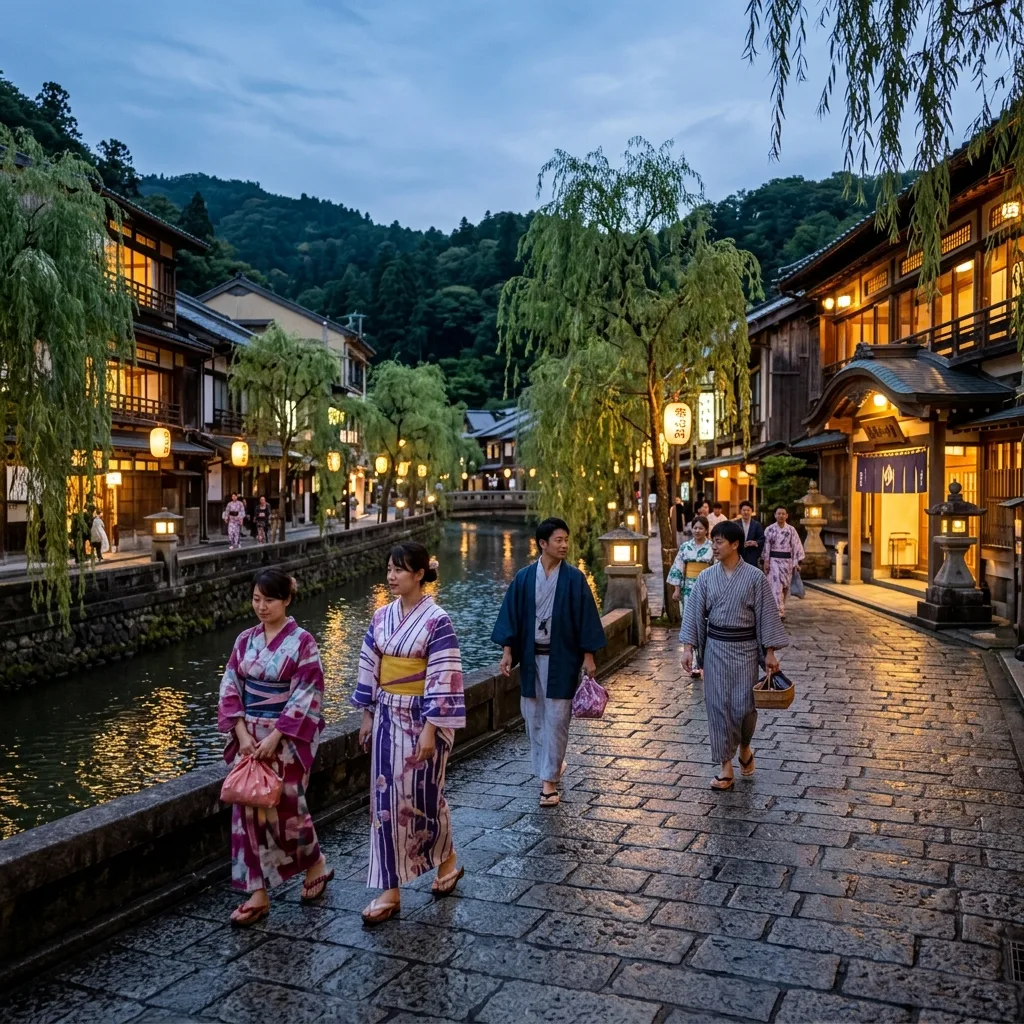
Imagine a town where the streets are filled not with people in business suits or casual streetwear, but with travelers strolling along a willow-lined canal, dressed in colorful traditional robes and clicking wooden sandals. This is Kinosaki Onsen, a 1,300-year-old hot spring town in the Kansai region of Japan that feels like a living portal to the past. If you want the quintessential Japanese hot spring experience—where the entire town serves as one giant resort—Kinosaki is arguably the best destination in the country. For first-time visitors, figuring out the logistics of the public bath circuit, ryokan stays, and proper etiquette can be daunting. This guide will walk you through exactly how to master the seven public bath circuit, embrace the local yukata culture, and make the most of your time in this magical town.
Kinosaki Onsen is built on a unique philosophy: the town itself is one large inn. The ryokan (traditional inns) are the guest rooms, the roads are the hallways, the local restaurants are the dining areas, and the seven public bathhouses (sotoyu) are the communal baths. This communal mindset encourages visitors to leave their accommodations and explore the town, creating a vibrant, festive atmosphere from early morning until late at night.
The Yukata and Geta Culture: Dressing the Part
The most distinctive feature of Kinosaki Onsen is the dress code. Upon arriving at your ryokan, you will be provided with a yukata (a lightweight cotton kimono) and geta (wooden sandals). In many Japanese hot spring towns, visitors only wear their yukata inside their ryokan. However, in Kinosaki, wearing your yukata and geta out in public is not just allowed; it is highly encouraged. In fact, wearing normal street clothes in the evening will make you feel like the odd one out.
How to Wear Your Yukata
Putting on a yukata is relatively simple, but there is one critical rule you must never break: the left side must always be wrapped over the right side. Wrapping the right side over the left is reserved for the deceased at traditional Japanese funerals.
- Put your arms through the sleeves and pull the fabric across your back.
- Wrap the right side of the yukata across your body to your left hip.
- Wrap the left side over the right.
- Secure the yukata with the obi (belt). For men, the obi is tied lower, around the hips. For women, it is tied higher, around the waist. If you are unsure, the staff at your ryokan will happily assist you in tying your obi correctly. During the colder winter months, ryokans will also provide a haori (a traditional jacket) or a heavy coat (tanzen) to wear over your yukata to keep you warm as you walk between baths.
Walking in Geta
Geta are traditional wooden sandals that elevate your feet above the ground. Walking in them requires a slight adjustment to your gait. Instead of rolling your foot from heel to toe, you should walk with a flatter foot, taking slightly smaller steps. The collective clack-clack sound of geta echoing through the streets is the signature soundtrack of Kinosaki Onsen.
The Seven Public Bathhouses (Sotoyu Meguri)
The main attraction of Kinosaki is the Sotoyu Meguri, the tour of the seven public bathhouses. Each bathhouse has its own unique architectural style, history, and supposed healing properties.
1. Satono-yu (Currently Closed)
Note: As of 2026, Satono-yu remains closed for indefinite renovations. Located right next to Kinosaki Onsen Station, this was traditionally the largest bathhouse, featuring observation decks with panoramic views and a mix of Western and Japanese style baths.
2. Jizo-yu
Inspired by a Japanese lantern, this modern, hexagonal building is dedicated to Jizo, the guardian deity of children. It is particularly popular with families. The interior is spacious and features a large, deep bath. It is said that bathing here brings safety and prosperity to one's family.
3. Yanagi-yu
Yanagi-yu (Willow Bath) is the smallest of the seven bathhouses and offers a very traditional, intimate atmosphere. It is named after the willow trees that line the town's canal. The interior is lined with fragrant cypress wood. It is said that bathing here ensures fertility and safe childbirth.
4. Ichino-yu
Located in the center of town, Ichino-yu is one of the most striking buildings in Kinosaki, resembling a traditional kabuki theater. Its standout feature is the cave bath, which is carved out of the natural rock face. It is said to bring success in business and academic pursuits.
5. Goshono-yu
Known as the "Bath of Imperial Beauty," Goshono-yu was historically favored by members of the imperial family. Built to resemble the Kyoto Imperial Palace, it features a stunning open-air bath (rotenburo) with a cascading waterfall in the background. It is highly popular and is said to bring luck in love and protect against fires.
6. Mandara-yu
According to local legend, Mandara-yu was created after a Buddhist saint prayed continuously for 1,000 days, causing the hot spring waters to gush forth. This bathhouse features a beautiful ceramic outdoor bath surrounded by lush greenery. It is said to bring success in business and agriculture.
7. Kono-yu (Temporary Closure in 2026)
Note: Kono-yu is scheduled to be closed for renovations from May 11, 2026, through October 30, 2026. This is the oldest bathhouse in Kinosaki, located at the far end of the town near the ropeway. Legend says that a stork was seen bathing here to heal its wounds, which led to the discovery of the hot spring. It is said to bring happiness in marriage and longevity.
Onsen Etiquette: Rules of the Bath
For first-time visitors, communal bathing can be intimidating. However, observing the proper etiquette will ensure a relaxing and respectful experience for everyone. If you need a comprehensive overview of bathing rules across the country, check out our Japan Onsen Guide.
1. The Towel Rule
When you enter the bathing area, you will bring a small "modesty towel" provided by your ryokan. You can use this to cover yourself while walking from the changing room to the bath. However, the towel must never touch the bathwater. Most people fold it and place it on top of their head while soaking, or set it on the side of the tub.
2. Wash Before You Soak
The hot spring baths are for soaking and relaxing, not for washing. You must thoroughly wash and rinse your entire body at the shower stations before entering the bath. Sit on the provided stool, use the soap and shampoo, and ensure absolutely no soap residue is left on your body before stepping into the communal tub.
3. Tattoos are Welcome
One of the most remarkable things about Kinosaki Onsen is its progressive stance on tattoos. Unlike most public baths in Japan, which strictly ban tattoos due to historical associations with organized crime, all seven public baths in Kinosaki are 100% tattoo-friendly. Guests with tattoos of any size are welcome to bathe without having to cover them up.
4. Keep the Peace
Onsens are places of relaxation. While quiet conversation is fine, loud talking, splashing, and swimming are strictly prohibited.
Practical Guide: 2026 Prices, Passes, and Logistics
The Yumepa Pass
If you are staying at a ryokan in Kinosaki Onsen, you do not need to pay for the public baths. Upon check-in, your ryokan will scan a barcode onto your digital "Yumepa" pass (often attached to a wooden lanyard). This pass grants you unlimited free access to all seven bathhouses from the time you check in until 15:30 on the day you check out.
If you are just visiting for a day trip, you can purchase a Yumepa day pass at any of the bathhouses for 1,500 JPY. This is highly economical, as single entry to a bathhouse costs 800 JPY. If you plan to visit two or more baths, the pass pays for itself.
Operating Hours
Most of the bathhouses operate from 7:00 AM until 11:00 PM (23:00). However, they have staggered closing days to ensure that there are always baths open for visitors. For example, Mandara-yu is closed on Wednesdays, while Goshono-yu is closed on Thursdays. Your ryokan will provide you with a map detailing the current opening hours and closing days for your specific dates.
How to Get There
Kinosaki Onsen is located in northern Hyogo Prefecture, making it an excellent side trip from Kyoto or Osaka.
- From Kyoto: The JR Kinosaki Limited Express train takes about 2.5 hours and offers a direct, scenic route.
- From Osaka: The JR Konotori Limited Express takes about 2 hours and 45 minutes from Shin-Osaka Station. Both of these routes are fully covered by the JR Pass and the JR Kansai Wide Area Pass. For more detailed help with transportation and booking trains, read our Japan Travel Planning.
Tips & Common Mistakes
1. Don't Overdo It (湯あたり - Yu-atari)
A common mistake is trying to visit all seven baths in a single evening. The waters are very hot (usually around 40-42°C / 104-108°F). Soaking in hot water repeatedly can cause yu-atari, or hot spring exhaustion, leading to dizziness, dehydration, and fainting. Limit yourself to two or three baths per day, take breaks, and drink plenty of water.
2. Explore Beyond the Baths
While the baths are the main draw, Kinosaki has more to offer. Take the Kinosaki Ropeway up Mount Daishi for a spectacular view of the town and the Sea of Japan. Visit Onsenji Temple, which historically served as the guardian temple of the town. In the past, visitors were required to pray here before they were allowed to enter the baths.
3. Eat the Local Specialties
Kinosaki is situated near the Sea of Japan, making it famous for its fresh seafood. In the winter months (November to March), the town is obsessed with Matsuba Crab (snow crab). You will see it sold everywhere and featured prominently in ryokan kaiseki (multi-course) dinners. In the summer, Tajima beef—a high-quality wagyu beef that is the genetic origin of the famous Kobe beef—is the local delicacy of choice. Don't leave without trying the local soft-serve ice cream or the onsen tamago (eggs soft-boiled in the hot spring water).
FAQ
Q: Do I have to stay at a ryokan to use the baths? A: No, day-trippers are welcome. You can simply buy the 1,500 JPY Yumepa day pass or pay 800 JPY for single entries. However, staying overnight and walking the streets in a yukata is highly recommended for the full experience.
Q: Are there private baths (kashikiri-buro) available? A: None of the seven public bathhouses offer private baths. However, many of the local ryokans have private onsen facilities within their own buildings that you can reserve. If privacy is essential, ensure you book a ryokan with a private bath.
Q: What do I do with my valuables while bathing? A: Each bathhouse provides secure lockers. Your ryokan will also usually provide a small basket or waterproof bag to carry your room key and phone while you explore the town.
Q: Is Kinosaki Onsen worth visiting in the summer? A: Yes! While winter brings snow and crab season, summer offers lush green willows, fireworks festivals, and a lively, warm-weather festival atmosphere.
Choosing the Right Ryokan in Kinosaki Onsen
Selecting where to stay is just as important as knowing which baths to visit. Kinosaki boasts an impressive array of traditional inns, ranging from budget-friendly guesthouses to ultra-luxurious, multi-century-old estates. Because the ryokan is your base of operations—and because it dictates your dining experience—you should choose carefully based on your priorities.
Luxury Ryokans (Historical Elegance)
If you are looking for the ultimate pampering experience, you want a ryokan that offers exquisite multi-course kaiseki meals served directly in your room, pristine traditional architecture, and perhaps a private open-air bath (rotenburo) attached to your suite.
- Nishimuraya Honkan: With over 150 years of history, this is arguably the most prestigious ryokan in Kinosaki. Set within a sprawling, meticulously maintained Japanese garden, it offers unparalleled service, museum-quality antiques, and an atmosphere of profound tranquility. Staying here is an experience in itself, offering a glimpse into the height of traditional Japanese hospitality.
- Mikuniya: Known for its cozy yet refined atmosphere and excellent food. They also offer beautiful private baths that can be reserved by guests free of charge, which is a massive bonus for couples or families who want to bathe together but still want privacy.
Mid-Range Comfort
Most travelers will fall into this category, seeking a balance between authentic traditional aesthetics and modern comfort without breaking the bank.
- Morizuya: A highly popular, family-run ryokan located right in the center of town. They are famous for their incredibly warm hospitality and their rock-lined private bath. The location is unbeatable for quick access to the main public baths.
- Yamamotomoya: Located along the iconic willow-lined canal, this ryokan offers some of the best views in town. Watching the evening lanterns reflect on the water from your room is an unforgettable experience.
Budget and Modern Options
If you are traveling on a strict budget, or if you prefer a western-style bed over sleeping on a futon on the tatami floor, Kinosaki has adapted to meet these needs as well.
- Kinosaki Onsen Koyado En: This is a more modern, boutique-style inn that caters to solo travelers and those who want a simple, stylish room. They focus on bed-and-breakfast style stays, allowing you the freedom to explore the town's restaurants for dinner rather than being locked into a massive ryokan meal.
Navigating Kinosaki: Detailed Transport and Logistics
While Kinosaki is relatively remote, the Japanese rail network makes getting there straightforward. However, the journey requires a bit of planning, especially if you are traveling with large luggage.
Luggage Forwarding (Takkyubin)
One of the best tips for visiting Kinosaki Onsen is to use Japan's excellent luggage forwarding service (Yamato Transport/Takkyubin). Kinosaki’s streets are narrow, and rolling a massive suitcase over the uneven pavement and traditional bridges can be exhausting and noisy. We highly recommend sending your large luggage directly from your hotel in Kyoto or Osaka to your next major city destination (like Tokyo or Hiroshima), and simply bringing an overnight bag to Kinosaki. This makes navigating the trains and the town infinitely easier.
Train Logistics
When taking the Limited Express trains from Kyoto (Kinosaki Limited Express) or Osaka (Konotori Limited Express), be aware that the scenery becomes increasingly rural and mountainous.
- Reserved Seats: It is highly recommended to reserve your seats in advance, especially during peak seasons like the winter crab season (November to March) or the cherry blossom season in spring. The trains are not massive, and unreserved cars fill up quickly.
- Station Arrival: Upon arriving at Kinosaki Onsen Station, you will immediately notice the shift in atmosphere. The station staff are incredibly welcoming, and there is an information desk right outside the gates. Many of the larger ryokans operate a shared shuttle bus that meets arriving trains and drops guests off at their respective inns. If your ryokan is close, walking is perfectly fine, as the entire town is only about a 20-minute walk from end to end.
Photography Etiquette and Respecting the Locals
Kinosaki Onsen is exceptionally photogenic. The combination of historical architecture, weeping willows, and softly glowing lanterns makes it a paradise for photographers. However, it is crucial to remember that this is a living town, and privacy is paramount.
- No Photography in the Baths: This should go without saying, but cameras and smartphones are strictly prohibited inside the changing rooms and the bathing areas of all seven public baths. Keep your phone in your locker.
- Respecting Geisha and Locals: While it is less common than in Kyoto, you may see local geisha (often called geiko here) walking to appointments. Do not block their path, chase them, or aggressively photograph them.
- Nighttime Noise: While the town is lively in the evening with guests strolling between baths, be mindful of your noise level. The traditional wooden construction of the ryokans means that sound travels easily. Keep voices low when walking late at night, especially near residential areas.
Conclusion
Kinosaki Onsen is a masterclass in preservation and community. By treating the entire town as a single entity, the locals have preserved a way of life that feels increasingly rare in modern Japan. Slipping on a yukata, stepping into wooden sandals, and wandering from bath to bath under the glow of paper lanterns is an experience that transcends mere tourism. It is a chance to slow down, participate in an ancient ritual, and soak in both the healing waters and the rich culture of Kansai. Plan your logistics, book your ryokan early, and prepare for one of the most relaxing and authentic experiences Japan has to offer.