Dujiangyan Irrigation System: UNESCO History & Panda Volunteer Programs

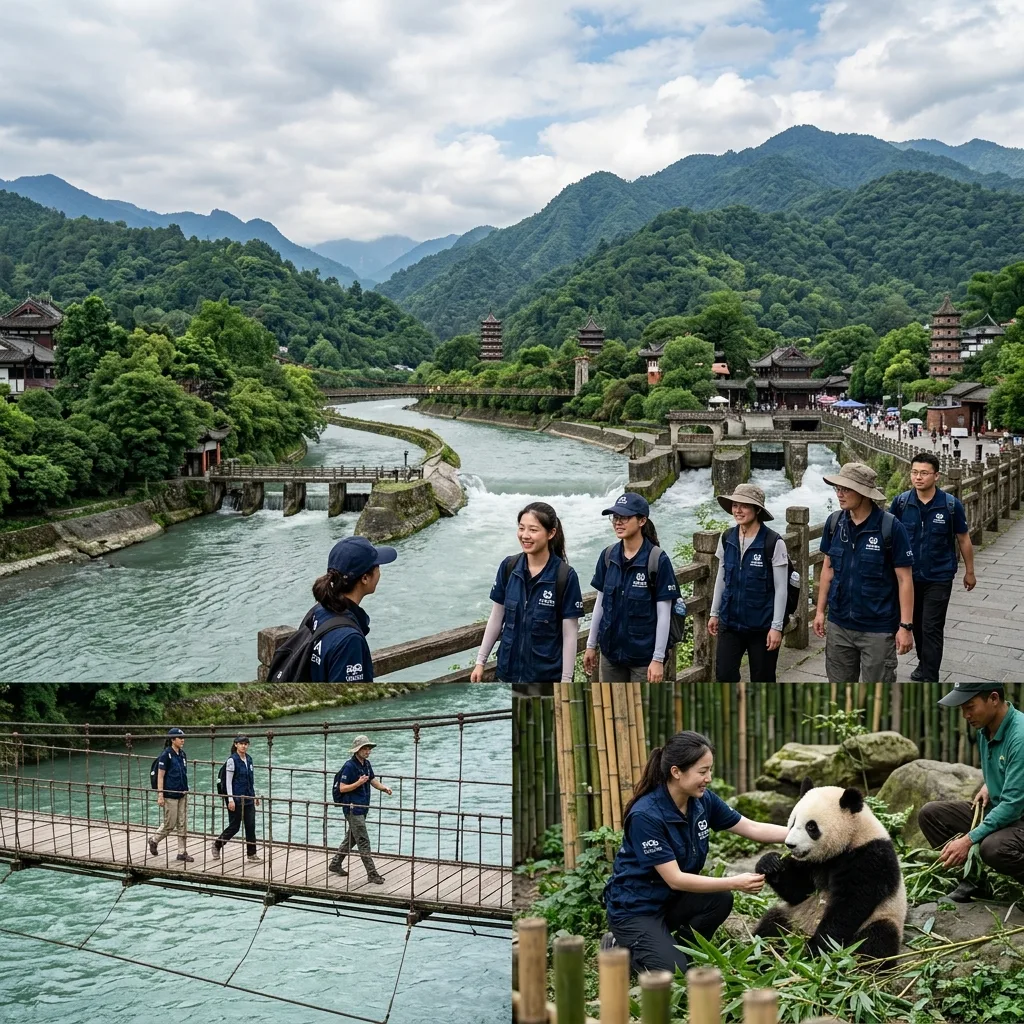
Located just an hour outside of Chengdu at the edge of the Tibetan Plateau, the city of Dujiangyan offers a fascinating blend of ancient engineering, lush mountainous scenery, and world-renowned wildlife conservation. For most travelers, Dujiangyan serves two primary purposes: marveling at the 2,200-year-old Dujiangyan Irrigation System—the oldest surviving non-dam irrigation project in the world—and participating in Giant Panda volunteer programs. However, traveling to this region requires careful planning, especially with significant updates and closures affecting the panda bases in 2026. This comprehensive guide will help you navigate both the historical UNESCO World Heritage site and the realities of panda conservation tourism.
Dujiangyan is more than just a day trip; it is the gateway to western Sichuan. The air is noticeably cooler and cleaner than in the sprawling metropolis of Chengdu, and the landscape quickly transitions from urban flats to towering, mist-covered mountains. Whether you are an engineering history enthusiast, an avid hiker, or an animal lover, Dujiangyan offers a unique, multifaceted travel experience.
The Dujiangyan Irrigation System: An Engineering Marvel
To understand the significance of the Dujiangyan Irrigation System, one must understand the ancient geography of the Chengdu Plain. Over two millennia ago, the Minjiang River—the largest and longest tributary of the Yangtze River—would consistently flood the Chengdu basin during the spring snowmelts, destroying crops and claiming lives. During the dry season, the same area would suffer from severe droughts.
The Genius of Li Bing
In 256 BC, during the Qin Dynasty, a visionary provincial governor named Li Bing was tasked with solving this problem. Rather than building a traditional dam to block the water, which he believed would anger the river gods and eventually fail, Li Bing designed an ingenious system to redirect and divide the flow of the river automatically based on water levels.
The Three Core Components
The brilliance of the system lies in its three main functional parts, all of which are still visible and operating today:
- Yuzui (The Fish Mouth Levee): This is the heart of the system. It is an artificial, arrowhead-shaped levee constructed in the middle of the river. It divides the Minjiang into the Inner River (for irrigation) and the Outer River (for flood discharge). During the dry season, the Fish Mouth funnels 60% of the water into the Inner River to irrigate the Chengdu Plain. During the flood season, the ratio automatically reverses, sending 60% of the floodwaters down the Outer River.
- Feishayan (The Flying Sand Weir): Located downstream from the Fish Mouth, this spillway connects the Inner and Outer rivers. It acts as an emergency pressure release valve. If the Inner River's water level gets too high, the excess water simply spills over the weir and back into the Outer River, preventing the Chengdu Plain from flooding. Furthermore, the curved design creates a whirlpool effect that flushes 98% of the silt and sand out of the Inner River, preventing blockages.
- Baopingkou (The Bottle-Neck Channel): This is the final gatekeeper. It is a narrow channel carved through a mountain (Mount Yulei) using ancient techniques of heating the rock with fire and rapidly cooling it with water to cause cracking. This channel strictly controls the volume of water allowed to flow into the agricultural lands of Chengdu.
Why It Matters Today
The result of Li Bing's work was transformative. It turned the Chengdu Plain into the "Land of Abundance," allowing it to become one of the most agriculturally productive regions in China, which in turn supported the rise of powerful dynasties. Remarkably, after 2,200 years, the system still functions perfectly, irrigating over 5,300 square kilometers of land without causing environmental damage. It is a masterpiece of harmony between human engineering and nature, rightfully earning its UNESCO World Heritage status in 2000.
Touring the Irrigation System Scenic Area
Visiting the Dujiangyan Irrigation System is essentially a beautiful hike through a massive, culturally rich park.
Key Sites Within the Park
- Anlan Suspension Bridge: Originally built using bamboo and wood, this bridge spans the Minjiang River, connecting the artificial island of the Fish Mouth to the mainland. Walking across the swaying bridge while the powerful river roars beneath you is an exhilarating experience.
- Erwang Temple (Temple of Two Kings): This grand temple complex is built into the hillside overlooking the river. It is dedicated to Li Bing and his mythical son, who are revered as gods by the local people for taming the waters. The temple offers excellent vantage points of the engineering works below.
- Mount Yulei and the Fulong Pavilion: Hiking up Mount Yulei provides panoramic views of the entire irrigation layout and the city of Dujiangyan. The Fulong Pavilion (Dragon-Taming Pavilion) sits directly above the Bottle-Neck Channel and houses ancient statues and artifacts related to Li Bing.
2026 Visitor Logistics
- Admission Price: CNY 80
- Opening Hours: 08:00 – 18:00 (March to November), 08:00 – 17:30 (December to February).
- Time Required: Allocate at least 3 to 4 hours to walk the entire loop, cross the bridges, and explore the temples.
2026 Update: The Reality of Panda Volunteer Programs
For years, the Dujiangyan Panda Base (officially the Dujiangyan Base of the China Conservation and Research Center for the Giant Panda, or CCRCGP) has been famous among international travelers for its "Panda Keeper" volunteer program. This program allowed tourists to don protective jumpsuits, clean enclosures, smash bamboo, and interact closely with the pandas.
However, there is a critical update for 2026 travelers: The Dujiangyan Panda Base is currently closed for major renovations, and its volunteer programs have been indefinitely suspended.
Alternative Volunteer Locations
If being a panda volunteer is a bucket-list item for your China trip, you must look to alternative CCRCGP bases. As of 2026, the primary authorized locations offering volunteer programs are:
- Wolong Shenshuping Panda Base: Located deeper into the mountains (about a 2-hour drive from Dujiangyan), Wolong is the true heart of panda conservation. The air is cooler, the enclosures are much larger and more naturalistic, and it is where the most serious breeding and reintroduction work happens.
- Bifengxia (Ya'an) Panda Base: Located south of Chengdu, this base also offers robust volunteer programs but requires significant travel time from the city.
What Does the Volunteer Program Actually Involve?
The landscape of panda tourism has shifted dramatically toward stricter conservation ethics. It is vital to manage your expectations:
- No Hugging: You are absolutely not allowed to hug, hold, or pet the pandas. These policies were strictly enforced years ago to prevent the transmission of human diseases (like canine distemper virus) to the endangered animals, and they remain non-negotiable.
- The Work: As a volunteer, your tasks are focused on animal husbandry. You will clean indoor and outdoor enclosures, shovel panda feces (which mostly smells like damp bamboo), carry bundles of fresh bamboo, and prepare "panda cakes"—a highly nutritious supplementary food made of corn, wheat, and soybeans.
- The Reward: The main benefit of the program is the unprecedented behind-the-scenes access. You will observe the pandas closer than general tourists, watch their feeding routines, and learn directly from the dedicated conservation staff.
How to Book a Program
You cannot simply show up at a base and volunteer. These programs have strict daily quotas to minimize stress on the animals. You must book in advance through authorized, specialized tour operators based in Chengdu. These agencies handle the complex registration process, provide mandatory health certificates, and arrange private transport to the remote bases. For a complete guide on organizing these logistics, read our Chengdu Travel Guide.
Exploring Dujiangyan City: The Old Town and the Blue Tears
While the irrigation system and the pandas draw the crowds, Dujiangyan City itself warrants an evening of exploration.
Dujiangyan Old Town (Guanxian)
Located directly adjacent to the entrance of the irrigation system, the old town area (Guanxian) has been beautifully restored.
- South Bridge (Nanqiao): This massive, ornate, covered bridge spans the river right as it enters the city. It features intricate traditional Chinese rooflines and vibrant paintings.
- The "Blue Tears" Phenomenon: At night, the waters flowing under the South Bridge are illuminated by a striking blue LED light system. The rushing, swirling waters lit in vibrant sapphire create a mesmerizing, somewhat surreal visual effect that locals have dubbed "Blue Tears." It has become a massive social media phenomenon in China.
- Street Food: The old town is packed with vendors selling spicy Sichuan snacks, including potato tornados, grilled squid, and sweet sticky rice cakes.
Jiezi Ancient Town
If you have extra time and prefer a more historical, less neon-lit experience than the South Bridge, take a short taxi ride to Jiezi Ancient Town. Nestled at the foot of Mount Qingcheng, Jiezi boasts over 1,000 years of history. It features ancient temples, traditional courtyards, and a slower pace of life, making it a perfect spot to enjoy a cup of local green tea by the river.
Practical Guide: Logistics and Getting There
Dujiangyan is highly accessible from Chengdu, making it an easy day trip or a convenient overnight stop.
High-Speed Train (The Best Option)
The most efficient way to reach Dujiangyan is via the intercity high-speed train from Chengdu.
- Departure Station: Trains depart from either Chengdu Railway Station (Chengdu North) or Xipu Railway Station. (Note: Xipu is very convenient as you can take Chengdu Metro Line 2 directly to Xipu Station and seamlessly transfer to the high-speed rail platform).
- Arrival Station: Ensure you book a ticket to Lidui Park Station (which is located right in the center of Dujiangyan City and walking distance to the irrigation system) rather than Dujiangyan Station (which is further out in the suburbs).
- Travel Time: The journey takes roughly 30 to 40 minutes.
- Booking: As always with Chinese trains, book in advance using WeChat, Alipay, or Trip.com. For detailed instructions on navigating this process, consult our China Travel Planning.
Private Car and Driver
If you are combining the Dujiangyan Irrigation System with a trip to the Wolong Panda Base or Mount Qingcheng, hiring a private driver for the day is highly recommended. The mountain roads past Dujiangyan leading up to Wolong are winding and not easily serviced by public buses. A driver gives you the flexibility to move between these sprawling sites at your own pace.
Tips & Common Mistakes
1. Don't Fall for Fake Panda Base Information
With the 2026 closure of the Dujiangyan Panda Base, many outdated blogs and travel forums will still tell you to go there. Always double-check information with your hotel concierge or a registered tour agency in Chengdu before setting out, to ensure you are directed to the currently active bases like Wolong.
2. Prepare for the Weather
Dujiangyan is situated at the transitional zone between the Sichuan Basin and the Tibetan Plateau. The weather is notoriously unpredictable. It can be hot and humid in the city center, but rapidly cool down and rain once you enter the mountainous area of the park. Always carry an umbrella and a light rain jacket, regardless of the forecast.
3. Understanding the Geography
Many tourists get confused between the Dujiangyan Panda Base, the Chengdu Research Base of Giant Panda Breeding (the main tourist base in the city center), and Wolong. They are completely different locations. The Chengdu city base is for general viewing (and is always insanely crowded). Dujiangyan and Wolong are further out, focus on rehabilitation and wild release, and are where the volunteer programs are hosted.
Deep Dive: The Philosophical Roots of the Irrigation System
The success and longevity of the Dujiangyan Irrigation System are not merely the result of clever engineering; they are fundamentally rooted in traditional Chinese philosophy, specifically Taoism.
"Following the Nature of Water"
Li Bing’s approach to controlling the Minjiang River perfectly encapsulates the Taoist concept of Wu Wei (non-action or effortless action). Instead of trying to dominate or violently block the river with a massive, unyielding wall (which would eventually be destroyed by the water's relentless force), he chose to work with the natural flow and seasonal rhythms of the water. The system gently guides, divides, and pacifies the river. The famous ancient maxim associated with the project is "Deepen the channel, lower the spillway," which emphasizes regular maintenance and respecting natural forces rather than attempting to conquer them.
Mount Qingcheng: The Birthplace of Taoism
This philosophical connection is deeply geographical as well. Just 15 kilometers from the irrigation system lies Mount Qingcheng (Qingchengshan), one of the most important centers of Taoism in China. In 142 AD, the philosopher Zhang Daoling founded the Way of the Celestial Masters here, officially establishing Taoism as an organized religion.
- The Connection: Many travelers combine a visit to Dujiangyan with a hike up Mount Qingcheng. The mountain is incredibly lush, perpetually shrouded in mist, and dotted with ancient wooden Taoist temples seamlessly integrated into the cliffs and forests. The peaceful, harmonic atmosphere of the mountain provides the perfect spiritual context for understanding the genius of the irrigation system down in the valley.
Beyond Pandas: The Rich Biodiversity of the Region
While the Giant Panda is undeniably the superstar of Sichuan, the mountains surrounding Dujiangyan and Wolong are a global biodiversity hotspot, hosting a myriad of incredible flora and fauna that most tourists completely overlook.
The Red Panda
Often overshadowed by its massive, black-and-white namesake, the Red Panda (which is actually more closely related to raccoons and skunks than to Giant Pandas) also inhabits these bamboo forests. Many of the panda bases, including Wolong, have dedicated enclosures for Red Pandas. With their striking reddish-brown fur, bushy ringed tails, and highly active, acrobatic behavior, they are incredibly entertaining to watch—and much more active during the day than Giant Pandas.
The Golden Snub-Nosed Monkey
Deep in the high-altitude forests of the region lives the Sichuan Golden Hair Monkey, an endangered primate characterized by its vibrant golden-orange fur and bright blue face. While you are unlikely to spot one in the wild unless you are on a specialized, multi-day trekking expedition into the deeper reserves, their presence highlights the critical importance of the conservation work happening in the area. Protecting the panda's habitat inadvertently protects an entire fragile ecosystem of rare Himalayan wildlife.
Cultural Immersion: Tea and Theater in Dujiangyan
To truly complete your visit to Dujiangyan, you must engage with the local culture beyond the engineering and the animals. Sichuan is famous for its relaxed lifestyle, and there is no better way to experience this than through its tea culture and performing arts.
Riverside Teahouses
Along the banks of the Minjiang River, both inside the old town and along the paths leading to the irrigation system, you will find dozens of traditional outdoor teahouses.
- The Experience: Stop for an hour, pull up a bamboo chair, and order a bowl of Gaiwan tea (green or jasmine tea served in a traditional lidded bowl). The locals spend hours here playing Mahjong, chatting, and enjoying the cool breeze coming off the rushing river. It is the perfect antidote to a busy morning of sightseeing.
- Ear Cleaning: If you are feeling adventurous, you might encounter local artisans offering traditional Sichuan ear-cleaning services. Using a variety of delicate, specialized tools, they provide a deeply relaxing (if slightly nerve-wracking for first-timers) grooming experience right in your teahouse chair.
Face-Changing (Bian Lian) Performances
If you stay in Dujiangyan for the evening, look for local theaters or larger restaurants in the old town offering traditional Sichuan Opera performances. The highlight of these shows is Bian Lian (Face-Changing). Performers wear brightly colored, dramatic masks and, with a quick swipe of a fan or a toss of the head, magically change their masks in a fraction of a second. The technique is a closely guarded regional secret and provides a thrilling, uniquely Sichuanese end to your day.
Conclusion
A trip to Dujiangyan offers a rare opportunity to witness the historical ingenuity of the Chinese people standing shoulder-to-shoulder with modern conservation efforts. While navigating the 2026 changes to the panda volunteer programs requires flexibility, the sheer scale and ongoing success of the Dujiangyan Irrigation System remains a constant, awe-inspiring anchor for the region. By planning your transport carefully and setting realistic expectations for wildlife interactions, Dujiangyan provides an unforgettable chapter in any Sichuan adventure.