Kimchi Making Class in Seoul: Best Programs for Tourists

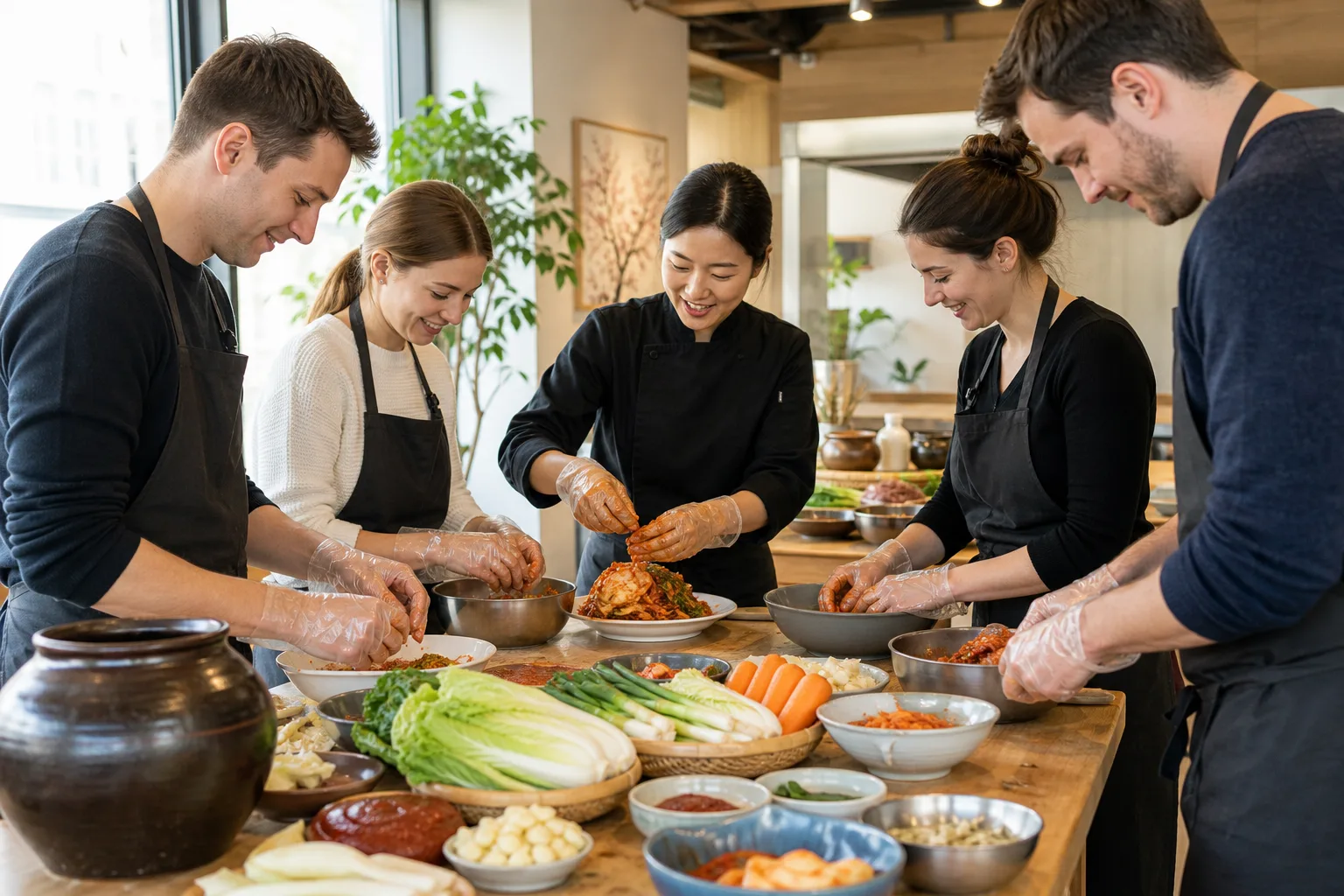
If you are planning a first trip to Seoul, a kimchi making class is one of the rare activities that is fun, useful, and culturally specific at the same time. It gives you a hands-on way to learn the basics of Korean food, meet other travelers, and leave with a better feel for how local meals are built around balance, seasoning, and fermentation.
The best classes are not just about stirring chili paste into cabbage. They also explain why different kimchi types exist, how seasons change the recipe, and what makes a tourist-friendly class feel smooth instead of rushed. That matters if you want an experience that fits a busy Seoul itinerary rather than a long local workshop.
Why a Kimchi Making Class in Seoul Is Worth Your Time
A kimchi class is one of the easiest ways to turn a food stop into a memorable travel experience. You are not only tasting Korean food; you are learning how one of the country’s most iconic dishes is actually made, packaged, and taken home. For many visitors, that turns a simple activity into a genuine cultural memory.
Here is the short version: the best kimchi classes in Seoul are beginner-friendly, easy to book, located near transit, and designed so you can leave with something tangible. If you want to pair the class with other food-focused experiences, start with Korean Cooking Classes: Where to Learn to Cook Like a Local for a wider view of the category.
The class format also works well for travelers who want a calm indoor activity between sightseeing blocks. Seoul days can be dense: palaces in the morning, cafe hopping at lunch, markets or museums in the afternoon, then dinner somewhere else entirely. A two-hour class fits neatly into that rhythm without requiring a full day commitment.
For first-timers, there is another benefit. Kimchi is often introduced in tourist itineraries as a side dish, but in practice it is a lens into Korean dining culture, family habits, and seasonal food logic. If you want to get your bearings before the class, Master the Meal: 10 Korean Dining Rules You Must Know is a useful companion read.
What Makes a Class Good for Tourists
The best tourist classes share a few traits:
- Clear English instructions or an easy multilingual setup
- A central location that is reachable by subway
- A set schedule that does not require local phone support
- A take-home portion so the class feels worth the time
- A beginner pace that does not assume you already know Korean ingredients
If a class is too focused on advanced fermentation theory, it can be fascinating, but it may not be the best match for a short trip. If it is too simplified, it can feel like a gimmick. The sweet spot is a class that explains enough to make the process meaningful while still letting you actively participate.
Best Programs for Tourists
The best kimchi making class for a tourist is usually the one that matches your travel style, not just the cheapest one. Some visitors want a museum-style experience with structured instruction. Others want a small group class that feels social. Others want a private food workshop that they can combine with a bigger Korean cooking day.
Museum Kimchikan: Best All-Around Choice
Museum Kimchikan is the most straightforward recommendation for most visitors because it combines a museum visit with an actual kimchi making program. It is located on the 4th to 6th floors at 35-4, Insa-dong, Jongno-gu, Seoul, which puts it in a convenient area for sightseeing in central Seoul.
The museum’s standard opening hours are Tuesday through Sunday from 10:00 to 18:00, with last admission at 17:30. It is closed every Monday, and also on January 1, Lunar New Year holidays, Chuseok holidays, and Christmas Day. That makes it easy to plan around, but you should still avoid assuming it is open on Korean public holiday periods.
For many travelers, this is the safest first choice because the experience is organized, predictable, and close to major city attractions. The location in Insa-dong also makes it simple to pair the class with a neighborhood walk, tea stop, or souvenir shopping afterward.
The museum experience is especially good if you want the class to feel educational rather than purely transactional. You get a broader food-culture context, which helps if you are the kind of traveler who wants more than a checklist activity.
Why it stands out
- Central Seoul location
- Easy to combine with sightseeing
- Clear schedule and published prices
- Suitable for first-time visitors
- Good fit for travelers who like culture with their food
The Right Choice for Small Groups
If you are traveling with family or friends, look for a class that is short, priced clearly, and built around a minimum group size you can actually meet. Museum Kimchikan’s “Kimchi! Basic” and “Kimchi All-in-one” formats are useful reference points because they show the difference between a shorter entry-level class and a more complete session.
The “Kimchi! Basic” program runs on Tuesday and Friday, with one-hour sessions in the morning and afternoon. It is the better option when you want a compact experience that does not swallow an afternoon. The “Kimchi All-in-one” version runs on the same days but lasts 1 hour 30 minutes, and it is better if you want a fuller food experience and more hands-on time.
For a small group, the deciding factor is usually energy level. If your trip already includes palace visits, market walks, or a long Klook-style transfer day, the shorter class may be the better balance. If this is your main food activity in Seoul, the longer class is easier to justify.
The Best Option for Budget-Minded Travelers
Budget-minded travelers should compare the class fee against what is included, not just the headline price. A lower-cost class can still be a worse value if it skips the museum, gives little instruction, or does not include a meaningful takeaway. In that sense, a slightly pricier class can be a better travel purchase.
At Museum Kimchikan, the current public pricing for the general admission and class programs is straightforward and easy to compare. Adult general admission is 5,000 won, but the class pricing is separate and depends on the program. For a traveler deciding between a museum visit alone and a class, the value comes from whether you want a short cultural stop or a full hands-on lesson.
For broader itinerary planning, it helps to think in terms of day design. If you are already building a food-heavy day, a kimchi class can serve as the anchor activity. If you are trying to stretch a limited budget, you can pair it with self-guided walking instead of adding another paid attraction.
Best for Travelers Who Want a Social Group Experience
If your goal is to meet people, the group-based programs are often the most appealing. They create a shared pace, a bit of conversation, and a photo-friendly environment without requiring deep local knowledge. These classes are best when you want a light cultural interaction instead of a highly customized private session.
Museum Kimchikan’s smaller classes usually work best for this because they feel structured but not overly formal. The mix of tourists and residents can be part of the appeal. You are not only making kimchi; you are also seeing how a Korean food institution presents the dish to visitors.
Best for Deep Cultural Interest
If you care most about cultural interpretation, choose the program that explains kimchi seasonality, regional styles, and why Korean meals often include multiple side dishes. A class that tells you why certain kimchi types appear in specific months is more useful than one that only teaches a single recipe.
The museum model works especially well here because it gives context before the hands-on portion. If you are the traveler who enjoys a good guide more than a photo op, this is likely the strongest format.
When a Different Food Class May Be Better
Kimchi classes are excellent, but they are not always the best first food activity. If your trip is focused on cooking in general rather than kimchi specifically, you may prefer a broader Korean cooking class with multiple dishes. That lets you compare formats, learn a wider ingredient set, and decide which cuisine style you want to deepen later.
If you are still choosing between a themed activity and a wider cooking class, the broader route is better when you want more menu variety. The kimchi route is better when you want one iconic dish done well and a smaller time commitment.
Practical Guide
The most useful way to book a kimchi making class is to work backward from your trip schedule. Decide whether you want a short museum stop, a fuller class, or a group-only workshop, then match the time slot to the rest of your day. That approach usually leads to a better fit than choosing only by price.
Hours, Admission, and Class Prices
Museum Kimchikan’s current published hours are Tuesday to Sunday, 10:00 to 18:00, with last admission at 17:30. It is closed on Mondays, January 1, Lunar New Year holidays, Chuseok holidays, and Christmas Day.
Current general admission prices are:
- Adults 19+ : 5,000 won
- Ages 8 to 18: 3,000 won
- Ages 3 to 7: 2,000 won
- Free for infants under 36 months, adults 65+, and disabled visitors with ID
The published program prices and schedules are:
- Kimchi! Basic: Tuesday and Friday, 10:00 to 11:00 or 14:00 to 15:00, 40,000 won for adults
- Kimchi All-in-one: Tuesday and Friday, 10:00 to 11:30 or 14:00 to 15:30, 65,000 won for adults
- It’s kimchi group program: Tuesday and Sunday, 10:00 to 10:40 or 10:50 to 11:30 or 14:00 to 14:40 or 14:50 to 15:30, 21,000 won for adults
There are also group-only educational formats, including a free Korean-language “Kimchi School” option for organizations. That is not a typical tourist booking, but it shows how the museum structures its education programs around different audience types.
What the Price Really Includes
When you compare class prices, make sure you understand what is bundled with the fee. At Museum Kimchikan, the program fee includes exhibition access for the class participant, which helps explain the price difference between a class-only workshop and a full museum-plus-workshop visit.
The practical takeaway is simple: a slightly higher class fee may still be good value if it includes museum entry, ingredients, packaging, and a structured instructor-led session. For travelers, the real question is not “What is the cheapest option?” but “Which one gives me the best experience per hour spent in Seoul?”
How to Get There
Museum Kimchikan is at 35-4, Insa-dong, Jongno-gu, Seoul. The official directions page gives two especially useful subway routes:
- Jonggak Station Exit 3: walk straight, turn left around the Hyundai Engineering building, enter Insadong Street, and continue about 200 meters
- Anguk Station Exit 6: go straight about 300 meters on Insadong Street and then turn right
That makes the museum quite manageable for visitors staying in central Seoul, especially if you are already exploring Insadong, Jongno, or nearby heritage districts. It is the kind of place where transit access matters more than taxi convenience, because you will likely combine it with several short stops nearby.
Booking Rules You Should Not Miss
The class policies are the kind of detail that can ruin a good plan if you ignore them:
- Cancellations or participant-count changes often have strict cutoffs
- Some programs require a minimum number of participants
- Some group formats are only available to organizations
- You usually take the kimchi home after the class
- Containers and carry bags may be provided, but shipping is not available
Museum Kimchikan specifically notes that some changes must be completed by 10:59 a.m. three days before the experience date, and that the minimum number of participants for certain classes is four. For the group-only “It’s kimchi” and school-style programs, minimum participant counts are higher, so solo travelers should check carefully before assuming they can book any date they want.
Best Time to Book
Book earlier than you think you need to, especially if you are traveling in peak spring or autumn seasons. Those are the periods when Seoul sees more international visitors and when food experiences can fill faster than expected. Even when a class is not officially sold out, the best slots often go first.
If your itinerary is fixed around another attraction or a day trip, try to lock in the kimchi class before you finalize the rest of the day. That keeps you from having to shuffle dinner reservations, neighborhood walks, or shopping plans around a class that only has one convenient time left.
How to Fit It Into a Seoul Trip
For a one-week trip, a kimchi class works best on a lighter sightseeing day. The most natural fit is usually an Insadong or Jongno day, because you can keep the whole experience centered in one area. For a shorter itinerary, use it as a half-day break between a palace morning and an evening food crawl.
If you are still assembling your schedule, a broader overview like The Ultimate 10-Day South Korea Itinerary for First-Timers can help you see where a food class fits without overloading the trip.
Tips and Common Mistakes
The biggest mistake travelers make is treating every kimchi class as interchangeable. They are not. Some are short museum experiences, some are group-only cultural programs, and some are broader cooking classes that happen to include kimchi as one part of the menu.
What Most First-Timers Miss
First, the best class is not always the one with the most dramatic presentation. A good class should be easy to understand, efficient, and well organized. If you spend half the session figuring out instructions or waiting for the next step, that usually means the program is not designed well for tourists.
Second, a lot of travelers overvalue novelty and undervalue logistics. The class may sound great, but if it is far from your hotel, awkward to reach, or scheduled at a time that cuts into dinner plans, the experience feels more stressful than fun.
Third, some visitors assume they can eat the kimchi immediately in the same way they would at a restaurant. In practice, the point is often to take it home, learn how it is made, and then let it continue fermenting or use it later. That distinction matters because it changes how you pack your day and what you expect to taste on the spot.
Insider Advice That Actually Helps
If you are choosing between a shorter and longer session, think about your stamina. A one-hour class is enough if you mainly want a cultural touchpoint. A 90-minute class is better if you enjoy process and explanation. More time is not always better, but too little time can make the class feel rushed.
If you are traveling as a pair or small group, choose a schedule that aligns with your first major sightseeing block of the day, not the last one. That reduces the chance that fatigue makes the class feel like a chore.
If you are already doing a food-heavy trip, space the kimchi class away from the day you are doing the most restaurant hopping. Fermented food is not difficult to fit into a trip, but a crowded meal schedule can make it harder to appreciate the class itself.
Packing and Practical Prep
You do not need special gear, but a few small things help:
- Wear clothes you do not mind getting a little messy
- Bring a bag that can handle a take-home container if the venue does not provide a large tote
- Avoid booking it right before a formal dinner unless you have time to change
- Leave room in your luggage if you plan to keep the kimchi through departure
Those are simple details, but they make the difference between a fun class and a logistical headache.
Common Booking Mistakes
The most common booking mistake is waiting until the last minute and then assuming the class will still be easy to reserve. The second most common mistake is booking the wrong style of class for your trip. A visitor who wants a museum-cultural activity should not accidentally book a large group-only format. A visitor who wants an in-depth cooking experience should not settle for the shortest possible version just because it is cheaper.
Another mistake is ignoring cancellation rules. Some programs require advance changes, and group formats can have stricter participant-count deadlines. If your travel dates are still shifting, do not lock in a class too early without checking the policy carefully.
FAQ
Is a kimchi making class in Seoul worth it for first-time visitors?
Yes, especially if you like food experiences that also teach you something about local culture. It is one of the few tourist activities that combines hands-on participation, a clear takeaway, and a strong connection to everyday Korean life.
What is the best kimchi class for most tourists?
For most visitors, Museum Kimchikan is the best all-around option because it is central, beginner-friendly, and clearly structured. It works especially well if you want a class that feels educational rather than purely recreational.
How much does a kimchi making class cost in Seoul?
At Museum Kimchikan, current public pricing starts with 5,000 won for general admission, while classes range from lower-cost group formats to more complete sessions such as Kimchi All-in-one. Prices vary by age group and program type, so you should always compare the exact schedule before booking.
Do I get to keep the kimchi?
Usually yes. Museum Kimchikan states that participants take the kimchi they made with them, and containers are provided for the takeaway portion. That is one reason the experience feels more valuable than a simple demo.
Can solo travelers book these classes?
Some can, but not all. Certain group-only programs require a minimum participant count, and some educational formats are only available to organizations. Solo travelers should check the reservation rules before assuming every listing is open to individuals.
Where should I stay if I want to do this class easily?
Staying near Jongno, Insadong, or another central Seoul transit area makes the class easiest to fit into a normal sightseeing day. The museum’s subway access is good enough that you do not need to stay directly next door, but you do want to avoid a long cross-city commute.
Conclusion
A kimchi making class in Seoul is worth booking when you want one activity that is practical, culturally grounded, and easy to fit into a city trip. The best options are the ones that balance explanation, hands-on time, and location. For most tourists, Museum Kimchikan is the strongest all-around choice because it offers a clear schedule, published pricing, and a central Insa-dong address.
The main decision is not whether to do a class at all. It is which style fits your trip: a short beginner session, a fuller food workshop, or a group-oriented cultural format. Once you decide that, booking becomes much simpler.
If you are building a broader Seoul food itinerary, start with one good food class, then layer in the markets, neighborhood meals, and dining rules that make the rest of the trip flow more smoothly. The class is the anchor; the rest of the day can grow around it.