Japan Tokyo Short Trip Tour vs DIY Guide for Singapore Travelers

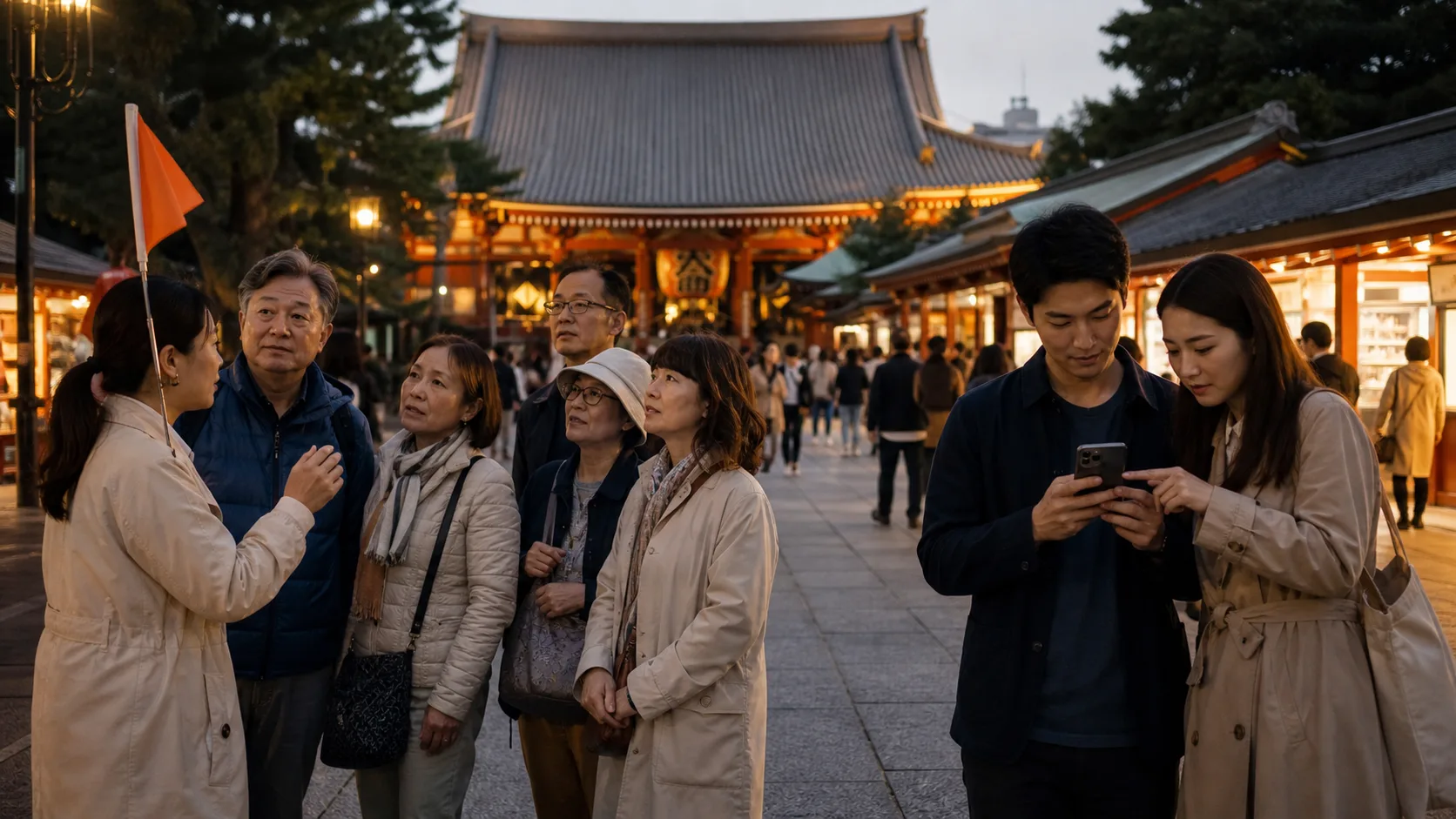
Tokyo is one of the easiest first Japan trips to overcomplicate. If you only have a short window from Singapore, the real choice is not “tour or DIY” in the abstract. It is whether you want to spend your limited time solving logistics, or spend it moving through the city with a prebuilt route.
Fast Answer
For a short Tokyo trip, book a tour if you want certainty, a simple day, and zero station stress. Go DIY if you want control, flexible meal stops, and the freedom to change plans on the spot. For Singapore travelers, DIY is usually the better value when you stay mostly in Tokyo and use the subway, while tours make more sense for one-off sights that are awkward to string together on your own.
The practical rule is simple: tours buy convenience, DIY buys flexibility. On a 3 to 5 day trip, convenience matters most if this is your first Japan visit, you are traveling with parents or kids, or you are arriving late and leaving early. Flexibility matters most if you already know how to ride trains, want to eat where locals eat, and prefer not to spend money on bundled sightseeing you may not fully use.
The decision gets clearer in 2026 because Tokyo transport is still very usable for independent travelers, but prices and product rules keep shifting. That means short-trip travelers should compare the real transport cost, not assume the JR Pass or any national pass is automatically a win. In most Tokyo-only trips, local passes and IC cards beat national rail products, and a well-planned DIY route can be cheaper than a packaged tour without feeling complicated.
Context You Need
Tokyo is not a single “attraction city.” It is a large metro area with distinct districts, layered train operators, and a huge range of trip styles. A short trip tour usually means a preplanned half-day or full-day route with transport, a guide, and a fixed sequence of stops. DIY means you build that same sequence yourself using Tokyo Metro, Toei Subway, JR lines, private railways, IC cards, and the occasional taxi.
For Singapore travelers, the biggest difference is not language. It is mental load. Singaporeans are used to efficient urban transit, frequent departures, clear signage, and compact geography. Tokyo is similar in spirit, but the network is more fragmented. You can move extremely well once you understand that Tokyo Metro, Toei Subway, JR East, Keisei, Odakyu, and other operators each solve a different part of the journey.
That is why “tour vs DIY” is really a decision about where you want to spend your attention. A tour spends your attention for you. A DIY trip makes you spend it yourself, but often rewards you with better pacing, better food choices, and better control over the parts of Tokyo that matter to you. If your priority is to see a lot in a little time, the right answer is not always a tour. Sometimes it is a carefully limited DIY loop with two or three neighborhoods and one anchor attraction.
For short trips, the most common mistake is trying to cover too much. Tokyo looks close on a map, but crossing the city repeatedly consumes time. A tour can hide that inefficiency by putting it into a bus or guide-managed route. DIY can match that efficiency if you plan around clusters: east-side historic sights, central shopping districts, or a west-side food and nightlife loop.
Another key context point: Tokyo is easier to enjoy when you accept that not every movement needs a special pass or a heavily optimized route. The city is built for repeat use of ordinary transit. If you know your airport arrival, hotel base, and two or three target areas, you can usually move around cleanly without doing spreadsheet-level planning.
Step-by-Step Guide
The easiest way to choose is to work through the trip in sequence instead of starting with transport products.
1. Decide what kind of short trip you actually have
If you have one full day, one overnight, or a 2-night stopover, a tour has real value because it compresses decision-making. If you have 3 to 5 nights, DIY becomes much more attractive because you can build a simple base-and-loop itinerary.
Use this test:
| Trip shape | Better choice | Why |
|---|---|---|
| 1 day only | Tour | No time for mistakes or route research |
| 2 to 3 days, first Japan trip | Tour or hybrid | Good for reducing friction while still exploring independently at night |
| 3 to 5 days, comfortable with trains | DIY | Best balance of cost and flexibility |
| Traveling with parents or kids | Tour | Easier pacing, fewer transfer decisions |
| Food-focused, shopping-focused, repeat visitor | DIY | Better control over stops and timing |
A hybrid approach is often the smartest. You can book one guided day for a complicated or high-density area, then do the rest yourself.
2. Pick one hotel base and keep it stable
On a short Tokyo trip, changing hotels is usually a waste of time. Stay near a station with easy access to either JR, Tokyo Metro, or both. For a DIY trip, that matters more than whether the room is slightly larger. A good base lets you return quickly after lunch, drop bags, and head out again.
For a tour-based trip, the hotel location matters less during the day but more in the morning and evening. If the tour departs early, you want a station-linked area. If the tour ends late, you want a base with easy late-night transit and minimal walking from the station.
3. Map the trip by neighborhoods, not by “sights”
Tokyo trips go wrong when travelers treat the city like a checklist of isolated landmarks. Better: group your plan into areas.
Examples:
- Asakusa plus Ueno for a classic east-side day
- Shibuya plus Harajuku for fashion, youth culture, and shopping
- Shinjuku plus Omoide Yokocho for a dense city day and an easy dinner
- Ginza plus Tokyo Station for a polished central Tokyo day
- Odaiba or waterfront areas for a slower, more open-feeling half-day
If you are using a tour, check whether the route already clusters these areas logically. If it does, the tour may save you time. If it does not, a DIY route will often be better because you can avoid backtracking.
4. Choose the right transport layer
For most short Tokyo trips, your simplest DIY setup is an IC card plus occasional single tickets or a short subway pass. You do not need a national rail pass for a city-focused itinerary.
In practice:
- Use an IC card for flexibility and easy fare payment
- Use the Tokyo Subway Ticket only if your planned rides actually fit its coverage and duration
- Use JR lines when the route is naturally JR-shaped, such as the Yamanote Line or certain airport access patterns
- Use taxis sparingly when you are late, tired, or crossing a difficult transfer at night
The key is not to “collect” passes. It is to match the pass to your route.
5. Reserve tours only for the segments that benefit from them
You do not need to book your whole trip as a tour. If there is one segment that is awkward independently, book only that piece.
Good tour candidates:
- Day tours that bundle multiple distant stops
- Food tours where a guide adds context and ordering confidence
- First-time arrival tours when jet lag makes navigation harder
- Out-of-city side trips where train transfers are numerous
Bad tour candidates:
- Straightforward city loops with excellent transit
- Shopping days where you want to linger
- Trips where your main goal is to eat at specific cafés or restaurants
6. Build a simple day plan if you go DIY
A practical short-trip DIY day in Tokyo should look like this:
- Start in one neighborhood.
- Stay in that neighborhood through late morning.
- Move once for lunch.
- Do one afternoon district.
- Stop moving after dinner unless the night scene is the goal.
That structure prevents the classic mistake of crossing Tokyo three or four times in one day.
7. Keep a fallback option
Even if you prefer DIY, keep one backup tour or booking window in mind. If weather turns bad, if you wake up exhausted, or if transit disruption makes your route annoying, it helps to have a lower-effort alternate plan. That is especially useful for short visits where every day counts.
Costs, Hours, and Logistics
The cost comparison is usually what decides the trip. For a Tokyo short trip, a tour often looks more expensive up front but may include transport, guide time, and entry coordination. DIY looks cheaper until you add all the small pieces. The right comparison is not “tour price versus train fare.” It is “tour price versus the full cost of doing the same thing yourself.”
What to expect in 2026
Tokyo’s transit remains straightforward, but pricing has continued to move. Tokyo Metro’s visitor pass products still offer fixed-period unlimited subway travel, and the common Tokyo Subway Ticket pricing remains a useful benchmark: 24 hours for ¥800, 48 hours for ¥1,200, and 72 hours for ¥1,500 for adults. JR East also raised fares on some lines in March 2026, including short-distance fare increases on routes such as the Yamanote Line. That does not make DIY expensive, but it does mean travelers should stop assuming last year’s fare memory is still exact.
The Japan Rail Pass is the wrong tool for most Tokyo short trips. It is designed for broader intercity movement, not for a couple of city days. Its current standard adult pricing is far above what a Tokyo-only trip can justify, so unless your short trip includes major long-distance rail legs, it is usually not worth considering for this itinerary type.
Hours and timing
Tokyo is generous with transport hours, but tours are often much narrower. The practical issues are:
- Tours usually have fixed departure times and fixed meeting points
- Subways and trains run frequently, but late-night service is still finite
- Many attractions have their own closing times, and you should not assume a tour will solve that automatically
- Busy periods like weekends, school holidays, Golden Week, Obon, and year-end can make both tours and DIY transit feel more crowded
For food-focused short trips, mornings and late afternoons are often the best time to move around independently because crowds are more manageable and you have more flexibility if a café or queue is full.
Payment and booking
For DIY travel, carry at least one usable card, a backup payment method, and a transit solution that works when a station is busy. In Tokyo, cash is still useful in some places, but contactless payment is common enough that you do not need to overpack cash for a city trip.
For tours:
- Book earlier if the route is seasonal or highly popular
- Check whether hotel pickup is included or if you need to meet at a station
- Confirm whether attraction admission, lunch, and transit are included
- Check cancellation terms before you pay
For DIY:
- Preload your IC card or mobile transit wallet before the day starts
- Buy any subway pass only after confirming you will use it enough
- Keep your route to one or two neighborhood clusters per day
Practical cost framing
If you are choosing between tour and DIY, compare these buckets:
- Transport
- Entry tickets
- Food
- Time spent navigating
- Flexibility lost by prebooking
A tour often wins when transport is complicated and time is scarce. DIY often wins when you already know the destination mix and want to choose your own meals.
Variations and Edge Cases
Not every short trip should be judged the same way. The better choice changes with season, traveler type, and the exact purpose of the trip.
First-time visitor
If this is your first Japan trip, a tour can reduce friction for one day, especially if you feel nervous about train transfers, language, or packing too much into too little time. That said, first-timers do not automatically need a tour. If you are digitally comfortable, used to transit, and okay with a bit of ambiguity, DIY is still very manageable in Tokyo.
Repeat visitor
Repeat visitors usually get more out of DIY because the emotional value of discovering a new café, neighborhood, or hidden alley is high. On a repeat trip, a tour should be reserved for one specific thing you cannot easily self-organize, not for the whole itinerary.
Traveling with parents
Tours are more attractive when your group has mixed walking speed, less patience for transfer stress, or a preference for someone else to make the plan. But a “tour” does not have to mean a rigid bus day. A lightly structured private or small-group experience can be the sweet spot.
Traveling with children
DIY can work very well if you control the pace and keep destinations close together. However, if you know you will need nap breaks, bathroom breaks, and frequent food stops, a tour can actually lower the stress because the day has built-in structure.
Rainy season, heat, or winter
Weather changes the equation. In hot or rainy periods, transfers that looked simple on a map can feel exhausting in real life. Tours that reduce station-to-street friction become more appealing. In comfortable weather, DIY feels better because walking and wandering are part of the experience.
Budget traveler
DIY almost always gives you more control over budget because you can decide where to spend and where to save. The savings are largest when you avoid paying for packaged transport you do not need. But do not cheap out so hard that you make the trip miserable. Sometimes one good tour is a better value than three hours of transit confusion.
Food-first traveler
If food is your main reason for going to Tokyo, DIY is usually superior. Tours can be good for tasting and orientation, but your best meals often come from self-directed wandering, advance reservations, and choosing neighborhoods that fit your taste.
Mistakes to Avoid
The most common mistake is treating all Tokyo transport as interchangeable. It is not. JR lines, Tokyo Metro, Toei, and private railways solve different problems, and the cheapest option depends on the route.
The second mistake is overusing the JR Pass idea for a city trip. For Tokyo-only travel, it usually does not make financial sense. Short-trip travelers should focus on local transit instead of national rail products unless the itinerary truly includes long-distance rail.
The third mistake is packing the day too tightly. If your plan requires three cross-city transfers, one long queue, and a dinner reservation on the opposite side of town, you are likely making the trip harder than it needs to be.
The fourth mistake is booking a tour for the wrong reason. A tour is not automatically “better.” It is better when the guide, route design, or bundled logistics solve a real problem.
FAQ
Is a tour or DIY cheaper for a Tokyo short trip?
DIY is usually cheaper for a simple Tokyo-only itinerary. Tours can still be better value if they include transport, guide time, and entry coordination that you would otherwise pay for separately. The cheaper choice depends on how many places you plan to hit and how much transit complexity you are avoiding.
Do I need the JR Pass for Tokyo?
Usually no. The JR Pass is built for broader Japan travel, not for a short city stay in Tokyo. If your trip is mostly subway, neighborhood exploration, and a few JR rides, a local transit strategy is usually the smarter choice.
Is Tokyo easy to do without a tour?
Yes. Tokyo is very DIY-friendly once you understand that you should plan by area, not by isolated attractions. If you keep your daily route compact and use an IC card or the right subway ticket, the city is straightforward to move around.
What should Singapore travelers budget for transport?
For short Tokyo days, budget in layers: basic daily transit, occasional longer rides, and one or two reserve taxi rides if you want to avoid late-night drag. Do not budget only for the headline pass price. The more honest budget is the one that includes convenience and fatigue, not just fares.
Are tours better in bad weather?
Often yes. In rain, heat, or winter cold, a tour can reduce decision fatigue and remove some of the walking and transfer friction. But if the tour is mostly outdoor walking with little shelter, DIY with flexible timing can still be better.
Should I book everything before I land?
Not necessarily. Book the must-have tour only if it sells out or has a strict schedule. Otherwise, keep some of the Tokyo trip flexible. DIY days usually improve when you have room to change neighborhoods, meals, or timing after you see how tired you feel.
What is the best short-trip strategy overall?
For most Singapore travelers, the best strategy is hybrid: book one guided experience if it solves a real logistics problem, then DIY the rest of Tokyo by neighborhood. That gives you structure without sacrificing the city’s best quality, which is the freedom to move at your own pace.
Next Steps
If your Tokyo trip is short, start by choosing your hotel base and deciding whether your first full day should be guided or self-directed. Then build the rest of the trip around one or two neighborhood clusters per day. If you are still unsure, use a hybrid approach: one tour for the hardest part of the trip, DIY for the rest. That is usually the best balance of cost, clarity, and flexibility for Singapore travelers.
Related: japan-tokyo-short-trip-first-time-travel-guide-for-short-holidays
Related: japan-tokyo-short-trip-budget-travel-guide-for-singapore-travelers
Related: japan-tokyo-short-trip-itinerary-for-singapore-travelers