Japan Beginner Ski Day: Lessons, Gear and Lift Ticket

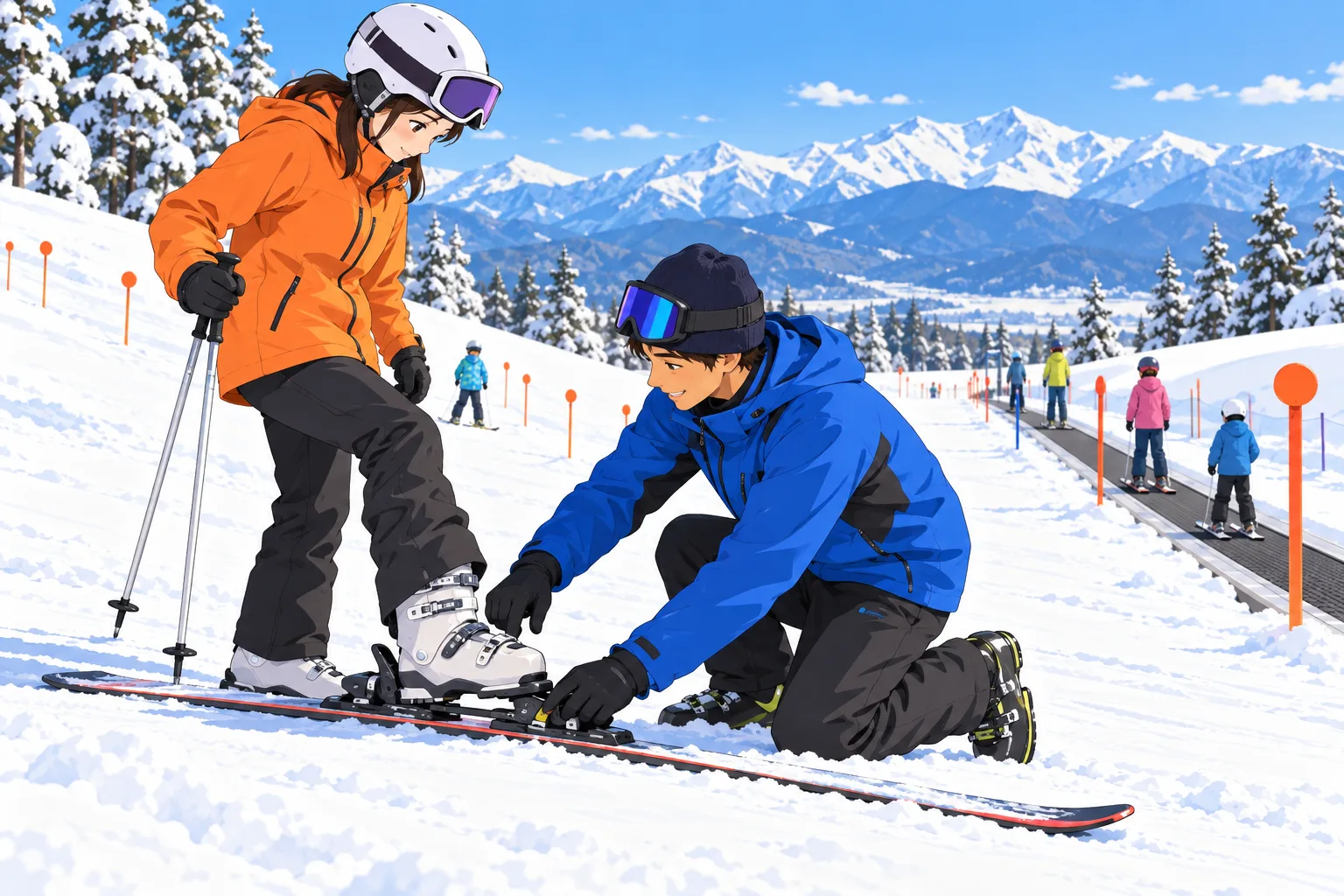
The first ski day of a Japan holiday can unravel before you reach the snow. A resort may have gentle beginner terrain but no lesson in the language your group needs on that date. A cheap equipment set may omit a helmet or waterproof clothing. A train that looks quick on a map can still leave too little time to collect gear, meet the instructor and catch the return service.
This guide is for a Singapore-based visitor arranging a first ski day, not an expert powder trip. It helps match resort, lesson, rental and lift ticket to one realistic timetable. Resort operations, weather, prices and ski-school places change by season; check the operator's current page before paying. Snow play, skiing and snowboarding can have different products, so decide which activity you actually want before buying a package.
Compare beginner ski slopes and available lesson languages
Start with a resort that has a beginner learning area and a route from your overnight base. Check the ski school's language, age rule, lesson date and meeting point before buying transport. Photographs of wide slopes cannot establish that an English-speaking instructor or suitable first-run area is available.
Choose the learning task first
Ask the group whether the aim is to learn basic skiing, try snowboarding, or simply spend a day in snow. A skier needs skis, boots and usually poles; a snowboarder needs a board and different boots. A sightseeing gondola or snow-play ticket may not include access to a ski lesson. The Japan National Tourism Organization's beginner snow guide recommends lessons for first-timers and notes that lesson formats and rental offerings vary. One person should not book a ski class for a companion who wants only to build a snowman. Agree on the actual activity so everyone pays for the right facilities.
For a first ski class, look for marked beginner terrain, a low-pressure learning area and an instructor who can explain stopping, turning and lift use in a language the learner understands. The general statement that a large resort “offers English lessons” may describe only a small number of sessions or private instructors. Check the specific date, class, age group and language with the resort's official ski-school page or desk. JNTO says major Japanese resorts can provide English or Chinese instruction, but advises reserving ahead in busy periods because places may fill. Do not assume a child can join an adult class or that every private lesson is available at the same start time.
Resort choice also depends on the return. The JNTO skiing guide describes beginner-friendly destinations in central Honshu and other regions, with some close enough to Tokyo for a day trip. A short rail ride is useful only if the train schedule, station-to-resort transfer, rental queue and class time fit. From a base in Tokyo, an accessible resort near the rail network can work well for one ski day; a remote resort reached by an additional long bus may be better as an overnight trip. Compare a specific door-to-door timetable rather than the resort's advertised “minutes from Tokyo” headline.
JNTO's Kanto snow guide also notes bus options and beginner-oriented areas in the region. A bus may save a transfer but can leave early, run only on certain dates, or be affected by road weather. Rail can be more predictable for a station-connected resort, though a rail ticket is not automatically a lift ticket. Check the actual operator. If your group has a late flight arrival or a tight hotel checkout the next morning, do not make the first ski day the most complex transfer of the holiday.
Use an operator's page for the final decision
An official resort site should answer: Is the beginner area open in the season you will visit? Where does the lesson meet? What language can be reserved? Is the lesson for adults, children or families? Does it include lift access? Where is the rental shop relative to the meeting point? When must the participant arrive to be fitted? Some answers are updated close to the ski season. A page cached from last winter is research background, not a current ticket guarantee.
For an example of how these pieces separate, GALA Yuzawa's official ski-school page lists lesson reception and start times and tells visitors to arrange chairlift tickets and gear rental before lessons at busy times. Its visible detail may describe the previous season; use it to understand the workflow, then check the current season's dates, school language and booking channel. The resort's facilities page illustrates a station-connected ski centre, but it does not tell you whether your chosen train and class will line up on a particular day. The only useful plan is the one built from current operator information.
Our Japan winter-travel overview helps choose snowy destinations and seasonal experiences. This article answers the narrower first-ski-day question: whether a learner can actually reach a suitable slope, get a place in the right lesson, fit the gear and return comfortably. A scenic snow town is not automatically a suitable ski classroom.
A resort comparison that avoids vague rankings
Create a small table for two or three resorts: beginner-area opening status, lesson language and age, lesson start time, rental fitting time, train or bus arrival, transfer to the ski centre, lift-pass type, final comfortable departure and weather fallback. Do not rank resorts by a generic “best in Japan” label. A huge mountain with expert terrain can be a poor first-day choice if the beginner zone is far from the ski school or the English instructor is unavailable. A modest, easy-to-reach area with a reliable lesson may deliver a much better day.
If you are bringing children, read the school's age cut-offs and guardian rules. JNTO's snow-with-kids guidance recommends age-appropriate instruction and notes that childcare and children's areas vary by resort. A parent who is also a first-time skier should not assume they can supervise a young child while taking their own lesson. You may need separate classes, a non-skiing adult or a different snow-play day. Ask whether children need a specific helmet, lift pass or guardian pickup arrangement at the end of class.
Reserve fitted skis, boots, helmet and instruction
Know what each booking includes
Do not treat “rental included” as a complete packing list. The JNTO skiing guide says rental sets commonly include skis or a snowboard, boots and, for skis, poles; jackets, pants, helmets and other items can be separate. Check the exact package. A lesson booking may include instruction only, with lift ticket and gear billed separately. Another operator may sell a bundle. Read the inclusions before comparing prices, then calculate the entire first day rather than the headline lesson rate.
Reserve the right discipline and sizes. A ski boot should be fitted with the socks you will wear; a poorly fitting boot can make the first hour unpleasant and control difficult. Tell the rental desk your height, approximate weight, shoe size and beginner status through the operator's requested process. Do not select a more advanced ski because it sounds better. Ask staff to check the binding and equipment setup. If the shop cannot fit a boot or helmet properly, raise it before leaving the counter; the person teaching the lesson needs you to be able to stand, stop and move safely.
Plan for a waterproof outer layer, warm layers appropriate to conditions, gloves and eye protection, and consider a helmet. The exact clothing need depends on weather and resort, but a cotton hoodie and ordinary trainers are not equivalent to ski clothing and boots. JNTO's beginner guidance emphasises warm, waterproof clothing and notes that rental clothing availability differs by resort. If you need an unusual size, ask ahead whether it can be reserved. Do not assume the rental counter has every child or adult size at peak times. Keep valuables in a secure locker or according to the operator's system while you are on the slope.
Book the lesson in a language the learner can follow and check whether it is group or private. A group lesson may be good value but may move at the group's pace; a private lesson can focus on one person's confidence but cost more. Check cancellation terms, whether bad weather triggers a closure or rescheduling option, and what happens if the train arrives late. No resort can promise you a particular instructor simply because an old travel article names them. Use the current ski-school confirmation with the date, time, meeting point, participant names and equipment status.
Arrive with enough time to find the rental shop, fit boots, collect the helmet, obtain a lift pass and reach the class meeting point. If the school asks you to arrive 60 or 90 minutes before class, treat that as operational time, not free sightseeing. The GALA school instructions illustrate how rental and chairlift arrangements happen before the lesson at busy times. Check its current notice for your season. Put the class start time in a calendar with the required ready-to-ski time, then work backwards to the train departure. A 10 a.m. lesson is not reached by a train arriving at 9:55 a.m.
Keep the first day deliberately small
The goal of a first lesson is to learn controlled movement on appropriate terrain, not to complete the resort's most dramatic run. Stay within the instructor's guidance and marked area. JNTO's course-variety guide describes the difference between beginner slopes and advanced, ungroomed terrain. Do not follow an experienced companion onto a run because the lift is included in your pass. If you are tired, cold or unable to control speed, stop and ask for help. Weather and visibility can change, and a learner may need a shorter day than the ticket permits.
Ask whether an instructor expects participants to ride a lift during the lesson and whether a beginner-area conveyor or surface lift is available. This matters for lift-pass choice and for a person anxious about loading. If you have a mobility or medical concern, discuss it with the ski school before paying; a general blog cannot decide whether the sport is safe for an individual. A lesson may be unavailable or unsuitable on the desired day, in which case snow play or a scenic gondola can be a separate, lower-commitment activity. Do not label those substitutes “skiing” when buying insurance or tickets.
Our ski-trip insurance guide explains the questions to ask about winter-sports cover. Check your actual policy before participating; ordinary travel insurance may treat skiing differently from general sightseeing, and exclusions can depend on on-piste versus off-piste activity, lessons, equipment and rescue. A resort lesson does not prove your policy covers every event. This article does not promise coverage or recommend an insurer. It does recommend solving the coverage question before the class, while you still have time to choose a different activity or policy.
A rental and lesson example
Suppose you book a beginner lesson near a train-connected resort for a Saturday. The school confirmation says the lesson begins late morning and does not include equipment. You reserve a ski set and helmet in advance, check your sizes, buy or rent the necessary waterproof clothing, and choose a train that reaches the ski centre early enough for fitting. You confirm whether a lift ticket is required for the lesson area and book the correct date. Your companion, who only wants snow play, buys a separate product. The group meets again for lunch rather than paying for two identical ski packages that only one person will use.
Change one fact: the instructor in your language is not available that day. A beginner slope alone does not solve that problem. Shift to another day or resort, choose an instruction format the learner can genuinely follow, or switch to a non-ski snow day. Do not book a high-priced rental and lift pass first, then discover at the mountain that the desired lesson has sold out. The sequence is lesson suitability, current resort operations, equipment, ticket, transport. Bookings can be made together once those pieces agree.
Match lift ticket hours with the lesson and train return
Buy access for the route you will actually use
Resort ticket menus may include beginner-area access, half-day passes, full-day passes, gondola sightseeing tickets and multi-resort products. Their names are not interchangeable. Ask the ski school exactly which lift or learning zone is used and which ticket a first-time participant needs. If the lesson stays in a beginner zone, a full mountain pass may be needless. If it uses a chairlift, a sightseeing-only gondola ticket may not work. Compare the ticket's validity hours with class start and finish, breaks and the time you must return equipment.
Do not assume a package booked through a train operator automatically includes ski instruction, rental or all lifts. Read each component on the confirmation. A cheap lift ticket bought for the wrong date, wrong area or wrong age category is not a saving. Children may have different ticket rules and lesson requirements; verify current resort policy. If a rail-plus-lift product is available, check whether it restricts train times or must be collected at a specific counter. Payment should come after the lesson and gear plan, because those determine the access you need.
Work backwards from a comfortable return train or bus. Allow time to finish the lesson, remove gear, return it, change into dry clothes, collect bags, eat or warm up, and reach the platform. Weather can slow movement around a ski centre. The GALA facilities page illustrates direct station access, but even there a visitor still needs time between slope and train. At a resort reached by shuttle, check the shuttle's final departure and where it boards. A slope closing time is not a guarantee that an easy return connection remains.
If the trip base is Tokyo, compare a station-connected resort with one reached by a longer bus using your specific day. The JNTO Kanto snow guide describes both access patterns. A bus might be direct but less frequent; a rail connection might be faster but require a transfer. Check the operator's current schedule and weather operation, especially on weekends or holidays. Do not build the day on the last possible bus from a mountain if there is no safe backup. For a resort far from the city, consider an overnight stay so the first lesson is not compressed between two long journeys.
Weather and energy are part of the timetable
Before leaving the hotel, check the resort's current opening status, lift operation, ski-school notice and travel service. A resort can limit slopes or suspend lifts for weather even during its published season. If a class is cancelled, follow the operator's actual refund or rescheduling terms; do not assume a snowstorm triggers the same policy at every mountain. If the route is operating but your group is ill-prepared or a learner feels unwell, prioritise a safe change rather than trying to recover a sunk ticket cost with risky skiing.
Take breaks indoors, eat and drink, and watch how the learner is managing the cold and physical effort. A first day may end after one lesson and a short practice period. Do not buy the most expensive all-day pass merely to pressure everyone into using it. An instructor's advice about suitable terrain matters more than the size of the ski map. Keep a simple meeting point and a phone that works in the area, particularly if some companions are non-skiers. Know where to find resort staff if someone is separated or injured; do not substitute an internet article for on-site safety directions.
Final booking check
Before paying, write one line for each item: resort and operating date; beginner area and lesson language; participant age and class meeting time; skis/boots/helmet and clothing sizes; lift ticket required by that class; earliest realistic arrival; latest comfortable return; and cancellation rules. A coherent line for each item means the day can probably work. A blank or assumed field is a reason to ask the operator now. The successful first ski day is not the one with the most kilometres of piste; it is one where the learner reaches the right instructor, has equipment that fits, uses the correct access ticket and returns without racing the clock.