Incheon Airport to Seoul With Kids: Train, Bus or Taxi?

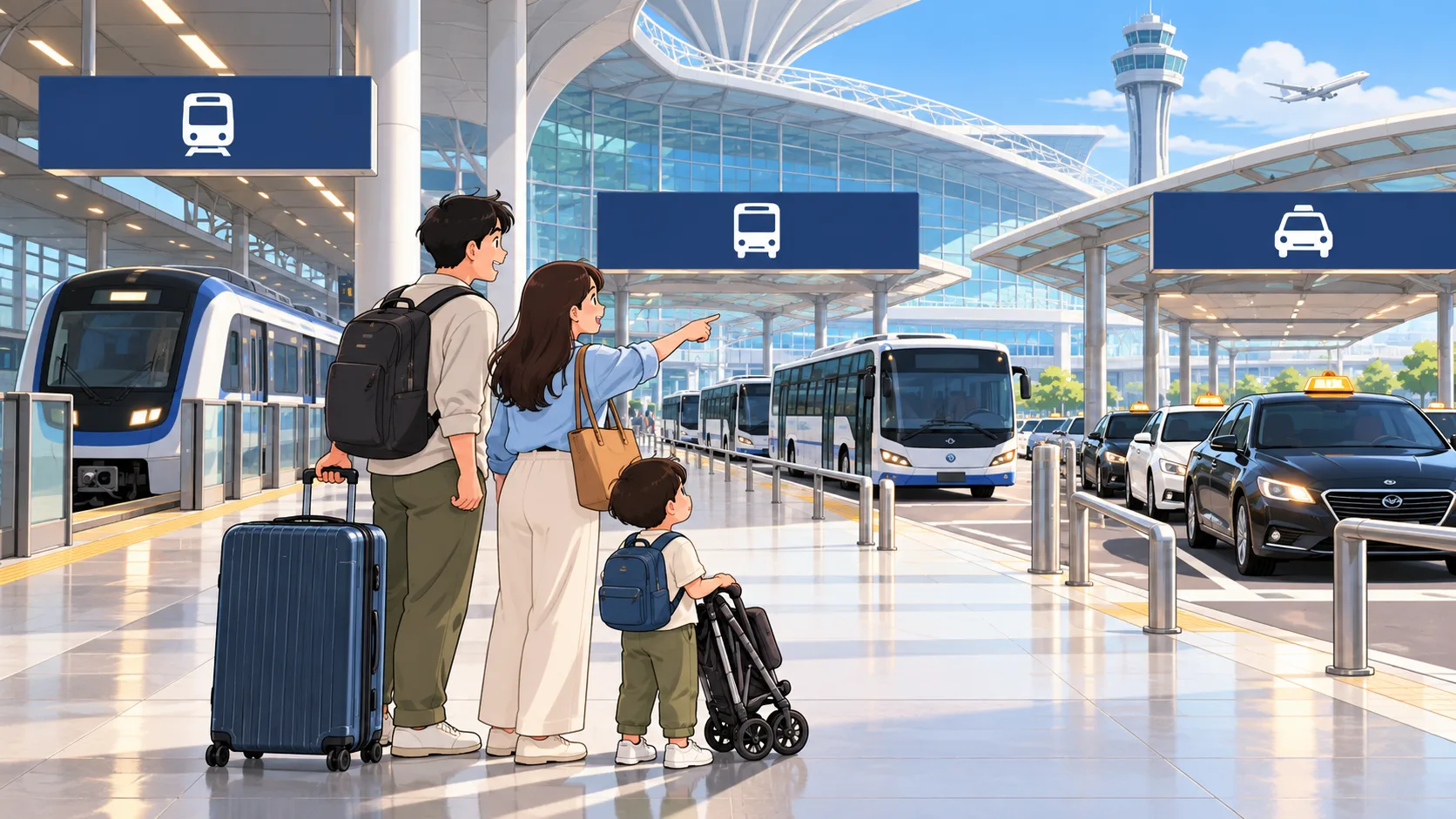
After a flight from Singapore, the best transfer from Incheon Airport is the one that gets your family to the hotel with the fewest difficult steps—not necessarily the fastest vehicle on paper. A train, airport bus and taxi can each be the sensible choice. Decide with your hotel's exact address, your arrival time, the number of bags and whether your stroller can be folded quickly.
Choose the door-to-door route, not just the airport vehicle
Choose the airport train when your hotel is near a useful rail connection, the bus when its stop is close to your hotel, and a licensed taxi when a direct ride removes a difficult transfer. Compare the whole route with children and luggage, then check live services before leaving arrivals.
This is the first decision in a larger South Korea family trip. The flight may be finished, but the children still need a toilet, a snack, a coat or a nap. A journey described as “one hour to Seoul” rarely includes immigration, baggage collection, a walk to the platform, the final station exit or the last blocks to a hotel. Write down the whole route before buying a ticket.
Use your actual hotel address as the destination. “Myeongdong” or “Hongdae” covers many different streets and station exits. Search the address on a map, identify the nearest station or airport bus stop, and look at the final walk. A short walk across a major road, up stairs or along a steep side street may be the hardest part with two children and bags. If your hotel has a late check-in window, save the reception number before you fly.
Three questions usually settle the choice. Can one adult manage the luggage while the other handles the children? Does the route require a lift or a change of level? Is your arrival late enough that a missed departure would cause a long wait? If the answers expose a difficult transfer, the apparent price saving of the train may not be worth it. If everyone can carry their own small bag and the hotel is beside a rail stop, the train may be straightforward.
The train: predictable rail travel with a possible final transfer
Incheon Airport describes both airport rail and other ground transport on its official transport pages. The airport railroad guide distinguishes express and all-stop services. Their stops, fares and departure patterns differ, so do not buy a ticket simply because a sign says “train to Seoul.” Decide which station actually helps you reach the hotel. Confirm the current schedule and fare with the operator before committing, especially after an evening arrival.
The express service is useful when Seoul Station is your intended interchange or the hotel is reasonably accessible from there. Its speed advantage can disappear if you then have to cross a large station, buy another ticket and ride the subway with tired children. The all-stop service serves intermediate areas, which may mean fewer changes for a hotel near its line. Compare the total number of moves: terminal to station, train to interchange, interchange to final station and final station to hotel. Count the moves, not only minutes aboard.
Do a dry run in your head before leaving the arrivals hall. One adult keeps passports, phones and tickets together; the other is responsible for the stroller and the child who may need carrying. Place items needed on the train in one small bag rather than opening a suitcase on a platform. If the stroller is large, check whether you can fold it with one hand and where the luggage can stand without blocking doors. Avoid letting a child step onto an escalator while an adult is pulling a suitcase.
At the airport, follow the current train signs for your terminal. Do not assume Terminal 1 and Terminal 2 have the same walk to the platform or that a search result for the other terminal describes your route. Check the direction of travel and the service name on the ticket and platform display. Keep the hotel address in Korean as well as English; it can help if the last leg requires assistance from station staff or a taxi.
For a family using a stroller after arrival, an accessible station on a map does not guarantee that the particular exit you need is easy. The route from platform to street may involve a different lift than the route between lines. When your train choice relies on an elevator, verify the exact station and exit rather than just the station name.
When the train is a poor fit
The train is less appealing when your hotel is far from a useful rail stop, your child cannot comfortably walk the final stretch, or a late arrival leaves a narrow margin for the last connection. It is also harder if your group has multiple large cases and only one adult can lift them. A station-to-hotel taxi can rescue the last leg, but that creates another queue and vehicle change. Compare that combined journey with a direct airport taxi before buying rail tickets.
If your flight is delayed, revisit the plan while you have airport Wi-Fi. An old screenshot of the timetable is not a promise that the same service is still running. Keep a second option ready: a bus that stops by the hotel, a licensed taxi, or a hotel-approved private transfer. A fallback plan is particularly useful when a child has been unwell on the flight or a stroller has been checked in and must be collected separately.
The airport bus: fewer changes when the stop is close
An airport bus can be the easiest compromise between rail and a taxi. It may take longer in traffic, but a route with one boarding and a short level walk can be calmer than two rail changes. Start with the airport's current bus information, then find the route number, boarding area, current fare, final service and stop nearest your exact hotel. Some buses serve a hotel entrance; others leave you across a road or several blocks away.
Look at the stop on a map and, if possible, a street view. A bus stop 300 metres from the hotel can be excellent if it is on the same side of a wide pavement. The same distance can be a problem if you must cross a busy junction, climb a stairway or drag bags through a crowded market street. Ask the hotel which airport bus stop its guests normally use; do not assume a stop bearing the district name is the closest one.
The airport's bus guidance warns travelers to leave room after arrival for immigration and baggage formalities. That matters with children: toilet breaks and finding the bus stop take time. Avoid a tightly timed advance ticket that assumes you will clear arrivals immediately. Recheck whether a particular route requires a ticket before boarding and where to buy it for your terminal. Keep tickets and the bus number accessible, because a tired adult can easily join the wrong queue at a row of similar coaches.
Pack a small bag for the bus cabin with water, wipes, a layer of clothing and anything a child needs during the ride. The larger cases may be stowed separately, so remove medication, passports and valuables first. Confirm the luggage procedure with the bus operator rather than assuming every bus has the same compartment. Keep the stop name visible on your phone, ideally in Korean. Set a reminder one stop early if you are traveling after dark.
Traffic is the bus's main uncertainty. Do not plan a fixed dinner booking or a child-friendly activity immediately after arrival. If the journey is unusually slow, you may arrive after your hotel's desk hours even though you boarded on time. Tell the hotel your flight number and an approximate arrival window, then send an update if the transfer changes. This small administrative step often matters more than saving ten minutes at the airport.
When the bus beats the train
The bus wins when it removes a rail interchange and drops you close to the hotel. It can also be easier if a child falls asleep soon after boarding and the adults can sit together. It loses when its nearest stop still requires a difficult walk, when road traffic makes timing critical, or when the last departure is too close to your actual arrival. Do not compare “bus direct” with “train indirect” until you have checked the last 500 metres of both routes.
Taxi: a direct ride, with questions to settle first
The airport's taxi guide is the starting point for official stands, taxi categories and fare information. Use the signed airport queue or a legitimate prearranged service. Show the hotel address in Korean and confirm the vehicle can hold every person, the stroller and the luggage. A sedan that technically seats your party may have too little boot space for two large cases and a full-size stroller.
Ask about the child-restraint plan before choosing a taxi. Do not assume the next vehicle in a queue has a suitable child seat. If your family requires a particular seat or restraint, arrange a compliant vehicle in advance and confirm the model, age/size suitability and installation responsibility directly with the operator. A price quote alone does not answer this question. If a prebooked service promises a child seat, keep the confirmation in writing and a backup transport option if it does not appear.
Taxi cost varies with distance, traffic, vehicle type and applicable surcharges. Avoid relying on a single old blog estimate. The official taxi page explains the framework; get a current estimate for your address and ask the driver or operator about tolls and surcharges. Keep a payment method that the service accepts. A bigger vehicle may cost more, but it can be cheaper than splitting the family and bags into two taxis.
A taxi is particularly valuable after a late arrival, for a hotel far from the rail line, or when one adult is traveling alone with small children. It is less compelling if the road journey is much slower than rail and the family can manage the rail route easily. For a holiday with a modest budget, compare the door-to-door price divided across the whole family against separate train tickets plus a final taxi. That is a fairer comparison than headline per-person fares.
If an unfamiliar person offers a ride in the terminal rather than at the official taxi point, continue to the signed stand. Check the vehicle and fare type before loading luggage. Keep the hotel's phone number available in case the driver needs directions. Have one adult buckle the children while the other checks that the stroller and bags are loaded; do not leave a child unattended on the kerb while sorting payment.
Late flights, terminals and disruption
“Late arrival” means the time you reach the public arrivals hall, not the scheduled landing time. Add room for immigration, baggage, a toilet stop, buying a transport ticket and finding the correct platform or stand. If your flight lands near the final rail or bus departure, treat that service as a bonus rather than the only plan. The airport publishes late-night bus information, but routes and hours must be checked for the travel date and destination.
For an overnight transfer, decide in advance what would make you switch to a taxi or an airport-area hotel. Examples include a flight delay beyond a set time, a child too tired to complete a transfer, or a closed rail connection. Share that threshold between adults before arrival. This prevents an exhausted discussion beside a ticket machine. If the final hotel is far across Seoul, an overnight stop near the airport may be easier than an expensive, very late city transfer followed by another early departure.
Incheon Airport has services for travelers with infants and children. Locate toilets, nursing rooms or other facilities on the airport map if you expect to use them. Do not schedule every minute between landing and departure from the terminal; feeding, changing and collecting a stroller can take longer than planned. If the stroller was gate-checked, ask your airline whether it is returned at the aircraft door or baggage area, because that affects the walk through the terminal.
If a flight arrives at a different terminal from the one you expected, do not follow a saved map blindly. Check the terminal on the airline's current arrival information and use the airport's live signs. The same applies if a bus boarding bay moves or a rail service changes. Official information on the day outranks a screenshot saved during planning.
A practical comparison for three family situations
Two adults, one school-age child, light bags, hotel near a useful rail station: the train is often simplest. The family can walk, carry their bags and tolerate a normal platform wait. Check whether express or all-stop rail minimizes the whole journey; a faster train followed by a longer subway ride may not help. Buy tickets only once the child fare and interchange are clear.
Two adults, toddler in a stroller, two large cases, hotel beside an airport bus stop: check the bus first. A one-seat journey may allow a sleeping toddler to remain settled, although the stroller may need folding or stowing. Verify the actual stop and the walk to the hotel. If traffic is heavy, allow a generous arrival window rather than pretending the bus is as predictable as a train.
One adult, two young children, late arrival and hotel far from rail: an arranged vehicle may be worth the cost. Confirm restraints and luggage space, then arrange a clear meeting point. If a suitable car cannot be confirmed, an airport hotel or an easier public-transport destination is safer to plan than improvising after midnight. The decision is about the family's ability to complete the route, not just fare.
These are examples, not fixed rules. A child who sleeps reliably in a stroller may make rail easier; an adult with limited mobility may make a direct bus preferable. Before travel, use the toddler travel guide to prepare the small items and pacing that reduce pressure during the first day. The transfer plan works best when the rest of the arrival day is deliberately light.
Before you leave arrivals
Check five things in one pause: terminal, live service, hotel address, payment method and last leg. Take a screenshot of the hotel map that shows the correct entrance, not merely the district pin. Save the transport operator's current page, the hotel phone number and a second route. Separate immediate-use items from checked luggage. Make sure each adult knows who holds passports, tickets, child essentials and the stroller.
If you choose the train, verify the service name, station, ticket type and final interchange. If you choose the bus, verify the route number, stand, stop and how far the hotel is from it. If you choose a taxi, verify the official pickup area, vehicle capacity, child-restraint arrangement and accepted payment. All three plans should end with a realistic way to reach the hotel door.
Once settled in Seoul, the next family transport decision is how each child pays for metro and bus rides. Age categories and fare media need checking separately; do not assume that a fare rule from Singapore, or even another Korean city, applies. Our Seoul child fares guide covers that next step. For the first night, however, a successful arrival is simple: everyone reaches the hotel with their bags, the children have eaten, and tomorrow can begin without recovering from an avoidable transfer ordeal.