Hiroshima Peace Memorial and Pop Culture South Japan Circuit

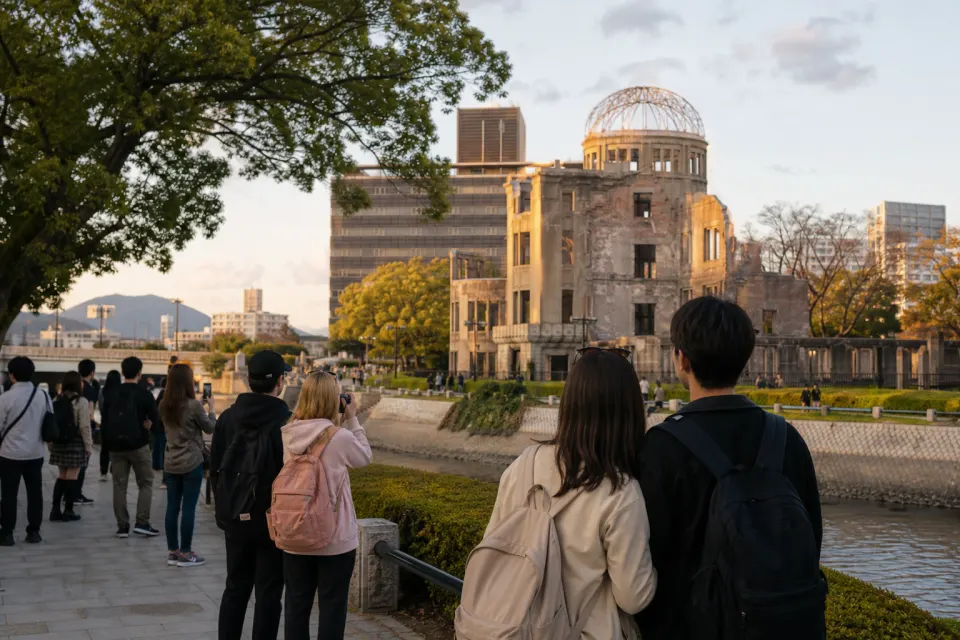
Most travelers planning a Japan trip have the same problem: Hiroshima feels essential, but it is usually squeezed into a rushed day between Shinkansen rides, temple stops, and anime-heavy cities farther east or west. That creates two bad outcomes. Either Hiroshima becomes a checklist stop with no room to absorb what you are seeing, or the whole city gets skipped because the itinerary looks too heavy. This guide is built to solve that problem. It shows how to anchor a south Japan route around the Hiroshima Peace Memorial, then connect it to lighter pop culture stops without wasting transit time, energy, or emotional bandwidth.
What this circuit is for
This circuit works best for travelers who want one serious, memorable cultural stop and one or more lighter, entertainment-driven stops in the same trip. Hiroshima gives the itinerary depth. Pop culture stops give it momentum. Together, they create a route that feels balanced instead of exhausting.
The best way to think about the trip is not as a single sightseeing loop, but as a rhythm. Hiroshima slows you down. Other parts of south Japan re-energize you. That contrast is the whole point.
The structure also helps if you are planning a Japan trip around rail efficiency. Hiroshima sits on the Sanyo Shinkansen corridor, which makes it easy to insert into a wider route without detouring too much. If you are also trying to manage IC cards, seat reservations, and train transfers cleanly, the logistics are much easier when you use a simple base city and build outward. For that side of the trip, the Japan Travel Planning: Visa, IC Card, Rail Pass & Essential Logistics Guide is the right companion piece.
For the pop-culture portion, the key is not to overload the itinerary with every famous anime stop you have ever heard of. Pick a few places that fit naturally into your route and time budget, then leave space for food, shopping, and unplanned wandering. If you want a broader map of anime-oriented travel ideas, start with the Anime Travel in Japan: Akihabara, Studio Ghibli & Pop Culture Guide.
Hiroshima Peace Memorial as the anchor
The Hiroshima Peace Memorial area is the moral center of this itinerary. It is not just a museum visit; it is a place to understand how a city remembers disaster, rebuilds identity, and turns memory into public space.
At the center are the Peace Memorial Park, the Hiroshima Peace Memorial Museum, the Atomic Bomb Dome, the Cenotaph for the A-Bomb Victims, and the surrounding riverfront spaces. The park is open all year, and the museum is the one stop that most visitors should budget real time for instead of treating it like a quick photo stop.
What to expect
If you only have one Hiroshima stop, make it the Peace Memorial area. Start with the museum, walk through the park, pause at the Atomic Bomb Dome and Cenotaph, then continue to the surrounding riverfront. Expect an emotionally heavy but essential visit that usually takes half a day, longer if you read exhibits carefully.
Why the site matters
Hiroshima’s memorial landscape works because it is spatial, not just textual. You are not moving from exhibit to exhibit in a sealed indoor loop. You are walking through a park that keeps the relationships between structures visible. The museum, the river, the Cenotaph, the Dome, and the bridges all sit within view of one another, so the history feels connected to the city itself.
That design choice matters for first-time visitors. It prevents the memorial from becoming abstract. You are not only learning about a historical event; you are standing in a place where the city has deliberately decided how that event should be remembered in daily life.
What to see first
Start at the museum if you want the strongest narrative arc. The exhibits give context before you reach the outdoor memorials, which makes the rest of the site easier to process. If you begin outside and then go into the museum, the sequence can feel fragmented because the outdoor monuments carry more meaning once you understand what you are looking at.
After the museum, walk to the Atomic Bomb Dome. Its preserved shell is one of the most famous surviving structures from the bombing and gives the park its visual focal point. Then continue to the Cenotaph and nearby monuments, including the Children's Peace Monument and the Peace Bell area. These stops are close enough that they work well as one continuous walk.
How long to budget
For a first visit, plan on at least three to four hours for the Peace Memorial area if you want to do more than skim. If you are a careful museum visitor, half a day is more realistic. If you are traveling with children or someone who prefers lighter historical sites, break the visit into shorter blocks with a break for coffee or lunch nearby.
Do not plan a packed afternoon right after the memorial unless the next stop is intentionally low-pressure. This is a place that benefits from a slower transition. A relaxed meal, a river walk, or a ferry crossing is better than another dense museum immediately afterward.
Building the south Japan circuit
Once Hiroshima is the anchor, the rest of the circuit should do one of two things: extend the historical and cultural context, or add pop culture energy without creating train chaos. The cleanest routes do both.
The simplest pattern is this:
- Hiroshima for the memorial day.
- Miyajima or another nearby Hiroshima-area stop for a lighter second day.
- One south Japan city with a stronger pop culture or shopping angle.
- A rail return or continuation that avoids backtracking.
That structure keeps the trip from feeling like a pile of disconnected attractions.
Use Hiroshima as the emotional reset
In practice, Hiroshima works best at the beginning or middle of a trip, not at the very end after you are already tired and overloaded. Putting it early gives the itinerary a tone. It also gives you a meaningful reference point for everything that comes after it.
Travelers often assume a memorial day has to be paired with another equally serious stop to be “worth it.” That is not true. In fact, the contrast with food districts, arcade neighborhoods, or anime-themed shopping streets can make the whole trip feel more human. The key is to keep the transition respectful. Do not turn the day into a theme-park-style dash from solemnity straight into souvenir hunting.
A balanced route shape
One strong option is to use Hiroshima as the first major stop after arriving in western Japan, then move to a city with easier browsing and casual wandering. Another option is to make Hiroshima the midpoint of a longer Japan itinerary, especially if you are traveling from Kansai toward Kyushu or vice versa.
If you are heading west, Hiroshima can sit between Osaka and Fukuoka. If you are heading east, it can be the last major stop before you return to Kansai. Either way, it fits naturally into the Sanyo corridor, which reduces wasted transfer time.
Where pop culture fits best
Pop culture stops work best in this circuit when they are not trying too hard to imitate Tokyo. South Japan has its own appeal: regional anime collaborations, game centers, retro shopping streets, bookstore floors, capsule toy clusters, and food neighborhoods with a more local feel. That is usually better than chasing a checklist of famous fan destinations.
Think in terms of texture, not just brand names. A good pop culture stop might be:
- a station-area shopping district with arcade floors and collectible shops
- a manga bookstore or secondhand media floor
- a district known for youth fashion, cafés, or character goods
- a one-off museum, collaboration event, or themed exhibit that matches your travel dates
That approach makes the route more flexible and more likely to fit your actual arrival and departure times.
Hiroshima plus Miyajima
If you want to keep the itinerary geographically tight, add Miyajima after Hiroshima. It is not pop culture in the anime sense, but it gives the trip a lighter second day and helps balance the memorial visit with scenery, food, and walking.
This is useful because not every “circuit” needs to be built around only urban entertainment. A route that combines one heavy civic-cultural day with one scenic day is often easier to enjoy than a route that tries to chase constant novelty.
Hiroshima plus a bigger city stop
If you want the circuit to lean more toward shopping and fandom culture, pair Hiroshima with a larger city farther along the same rail line. The exact city depends on your trip direction, but the principle is the same: use one place for depth, one place for variety.
In that version, Hiroshima is the reflective stop, while the later city gives you anime stores, game centers, character goods, or special exhibitions. The result is a route with emotional range. That makes the trip feel richer than a pure checklist tour.
Practical Guide
This is the section that saves you time on the ground. Hiroshima is simple to visit, but the details matter if you want the day to stay smooth.
Hours, admission, and pacing
The Peace Memorial Park itself is an open public space, so the outdoor memorial walk is not constrained by a museum-style schedule. The Hiroshima Peace Memorial Museum is the part that requires the most attention. Hours and fees can change, so check the official museum information before you go, especially if your visit falls near a holiday, school break, or special event.
For planning purposes, assume you need enough time to handle security or ticketing, read the core exhibits, and then walk the outdoor memorial area afterward. That means the museum should be treated as the main event, not a side activity.
If you are trying to keep the day efficient, arrive earlier than you think you need to. That gives you room for both the museum and the exterior memorials without feeling rushed. Early arrival also leaves you flexibility if you decide to extend the visit, which happens more often than first-time travelers expect.
How to get there
Hiroshima is easy to reach by rail. For most visitors coming from Kansai, Kyushu, or central Japan, the Shinkansen is the cleanest option. Once in Hiroshima, local streetcars and buses make the Peace Memorial area straightforward to access.
The key practical decision is whether to stay near Hiroshima Station or closer to the Peace Memorial area. Hiroshima Station is better if you are arriving and leaving on the same day or making the city part of a longer rail transfer. Staying closer to the memorial area is better if you want a slower pace and an easy evening walk by the river.
For many travelers, the best sequence is:
- Arrive in Hiroshima in the morning.
- Drop bags at the hotel or station locker.
- Visit the Peace Memorial area before lunch or early afternoon.
- Use the rest of the day for a lighter neighborhood walk, dinner, or an easy transfer.
That rhythm avoids the mistake of arriving tired, sightseeing tired, and leaving confused.
Transit logic for the circuit
The south Japan circuit works best when each transfer has a clear purpose. Do not move cities just because the map looks neat. Move when the next stop actually adds something different.
Good transfer logic looks like this:
- Hiroshima to a nearby scenic stop for a decompression day
- Hiroshima to a larger city for pop culture and shopping
- Hiroshima to a departure city that keeps the final leg simple
Bad transfer logic looks like this:
- Hiroshima to a distant stop that requires multiple platform changes for no real gain
- too many one-night stays
- too much backtracking just to fit one famous attraction into the route
If you are buying rail passes or individual tickets, build the route backward from your exit city. That makes the itinerary less expensive and much easier to execute cleanly.
What to book in advance
You usually do not need to book the outdoor memorial spaces, but you should still treat the museum visit like a timed part of the day. On busy travel periods, it is better to assume longer queues and longer dwell time.
For the rest of the circuit, book the pieces that are hardest to replace:
- long-distance train seats
- hotel nights near your transfer point
- any special pop culture event or limited-run exhibition
That way, the flexible parts of the trip remain flexible, and the fixed parts do not become a source of stress.
Tips and common mistakes
The most common Hiroshima mistake is over-compressing the visit. People assume the Peace Memorial area can be done in under an hour because it looks compact on a map. In reality, the emotional and interpretive weight makes it a much larger stop than the physical footprint suggests.
Do not treat the memorial as a photo stop
Yes, the Atomic Bomb Dome is iconic. Yes, the park is beautiful. But the site works because it asks for attention, not because it provides a background for fast snapshots. If you only take photos and leave, you miss the point and probably shortchange the rest of your trip planning too.
Do not pair it with an overloaded same-day route
Another mistake is scheduling Hiroshima on the same day as a complicated arrival, multiple museum visits, and a late-night move to another city. That creates unnecessary friction. The visit becomes exhausting, and the memorial loses its intended calm.
Do use food and walking as a reset
The best break after the memorial is simple: a quiet meal, a river walk, or a short tram ride to another neighborhood. You do not need a second big attraction immediately afterward. A reset is enough.
Do keep pop culture stops intentional
If you are adding anime or game-related stops, pick them for a reason. A neighborhood with strong bookstores and character goods works better than a random “famous” location that adds two hours of transit. The circuit should feel coherent, not crowded.
Do pay attention to seasonality
Hiroshima is not just a summer destination. The memorial area works year-round, but weather changes the experience. Summer can be hot and crowded. Autumn and spring are easier for walking. Winter can be clearer and quieter. If you are traveling around a holiday period, expect more domestic visitors and plan accordingly.
FAQ
How long should I spend at the Hiroshima Peace Memorial area?
At least half a day if you want the visit to feel complete. Three to four hours is the minimum for most first-time visitors, and longer is better if you want time for reflection, reading exhibits, and walking the park properly.
Is the Hiroshima Peace Memorial Museum too heavy for kids?
It depends on the child and the family. The site is important and accessible, but some exhibits are emotionally intense. Many families do better by focusing on the park walk, the exterior memorials, and a shorter museum visit rather than trying to read everything.
Can I combine Hiroshima with Miyajima in one day?
You can, but it is tight if you want to do both well. If the memorial area matters to you, give Hiroshima its own half-day or full day, then do Miyajima as a separate, lighter follow-up.
What is the best place to stay for this circuit?
Stay near Hiroshima Station if you want maximum rail convenience. Stay closer to the Peace Memorial area if you want easier evening walks and a calmer schedule. If your circuit continues to another major city, choose the base that reduces the hardest transfer.
Do I need a rail pass for this route?
Not always. It depends on how many long-distance segments you are doing and whether your circuit stays mostly on the Sanyo corridor. Compare the cost of individual tickets with any pass you are considering before you commit.
Conclusion
The best Hiroshima plus pop culture itinerary is not the one that tries to do the most. It is the one that gives each stop a job. Hiroshima provides context, memory, and perspective. The later cities in your south Japan circuit provide energy, browsing, food, and fandom culture. When those pieces are arranged carefully, the route feels meaningful instead of random.
If you are building the trip from scratch, start by deciding how much time you owe Hiroshima. Then choose one or two lighter stops that fit naturally into the same rail corridor. Keep the memorial visit slow, keep the pop culture stop intentional, and let the logistics support the experience instead of fighting it.
That is the route most travelers actually enjoy: one day that matters, one or two days that refresh you, and a plan that fits Japan’s rail network without forcing you into a rush.