Hansik (Korean Cuisine) Philosophy: Why Korean Food is a UNESCO Heritage

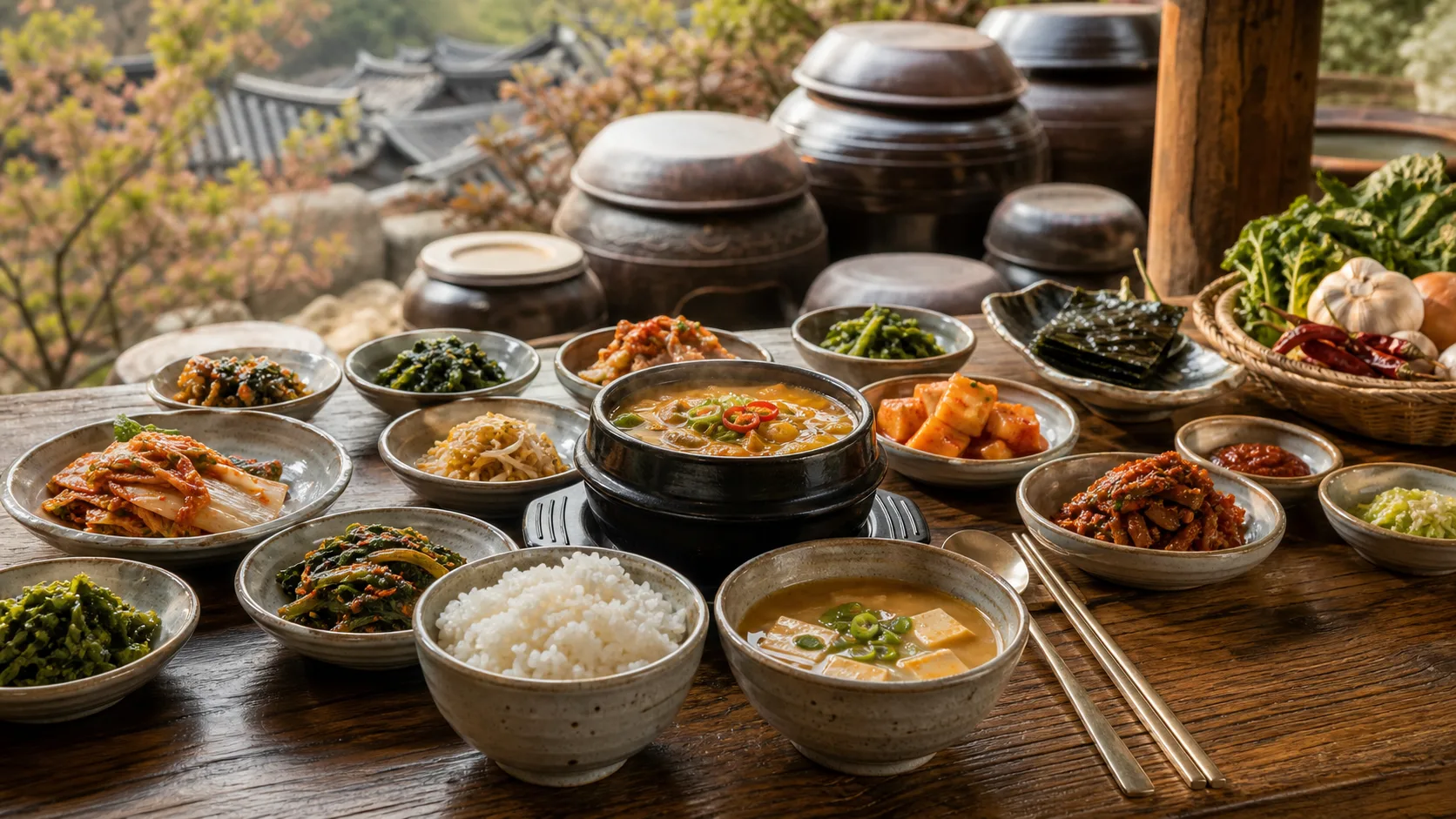
If Korean food has ever felt bigger than a menu to you, that instinct is correct. Hansik is not just about spicy dishes, smoky barbecue, or a viral bowl of bibimbap. It is a way of thinking about balance, seasonality, fermentation, sharing, and respect at the table. For travelers, understanding that philosophy turns a simple meal into a much richer cultural experience.
What Hansik Really Means
Hansik is the broad idea of Korean cuisine, but the word carries more weight than "food from Korea." It includes the ingredients, cooking methods, table structure, social habits, and seasonal logic that shape how Koreans eat. If you only read a list of famous dishes, you miss the part that actually makes the cuisine distinctive: the system underneath it.
In practical terms, hansik is built on a few recurring principles. Meals are usually centered on rice or another staple, supported by soup or stew, and surrounded by banchan, the small side dishes that turn a single meal into a layered composition. Taste is not meant to hit one note over and over. It moves between salty, sweet, sour, bitter, spicy, and savory flavors, often in the same sitting. Texture matters as much as taste. Temperature matters. Season matters. Even color matters.
The featured-snippet version
Hansik is the philosophy of Korean cuisine: a balanced meal pattern built around rice, soup, side dishes, and fermentation, with deep respect for seasonality and communal eating. UNESCO recognizes specific Korean food traditions, especially kimjang and jang-making, because they preserve the living knowledge behind the cuisine rather than just individual dishes.
Why travelers should care
For visitors, this matters because it changes how you order, what you notice, and what you remember. A traveler who only chases the most famous dishes may still eat well, but a traveler who understands hansik will see why a humble bowl of doenjang jjigae can be as culturally important as a fancy tasting menu. You begin to notice how a restaurant thinks about side dishes, how a market is organized around ingredients, and why a family dinner can feel almost ceremonial.
That perspective also helps you travel more intelligently. If you know that Korean cuisine is rooted in balance and preservation, you are better prepared to explore temple food, regional specialties, market snacks, barbecue culture, and fermented condiments without treating them as isolated food trends. They are all parts of one larger system.
The structure of a Korean meal
Most visitors first encounter hansik through a set pattern: rice, soup or stew, a main dish, and several side dishes. The exact composition changes by household, restaurant, region, and budget, but the logic is consistent. A Korean meal is rarely just one plate. It is a composition.
That composition also affects how the table feels socially. In many Western dining contexts, one person orders one dish and owns it. In Korea, meals are often more collective. Side dishes are shared. Stews may be shared. Grilled meat is cooked together. Even when everyone has an individual bowl, the meal is still experienced as a group arrangement rather than a set of independent plates.
The result is that Korean cuisine communicates relationship as much as nourishment. A good meal is not only delicious; it is coordinated, hospitable, and responsive.
Rice is the center, but not the whole story
Rice has long been the symbolic center of Korean dining, but it is important not to reduce hansik to a "rice culture" shorthand. Rice provides the base, yet what makes the meal Korean is the surrounding ecosystem of fermented sauces, soup, vegetables, seasoned greens, pickled items, seafood, meat, and seasonal ingredients.
That ecosystem matters because Korean cuisine was shaped by geography and climate. Winters were long enough to make preservation essential. Mountainous terrain and regional coastlines created different ingredient networks. Agricultural cycles encouraged the development of preserved foods, from kimchi to jang. In other words, the meal pattern is not decorative. It is practical, historical, and ecological.
Fermentation as a national logic
If there is one concept that explains a great deal of Korean food, it is fermentation. The most famous example is kimchi, but the broader category includes doenjang, ganjang, gochujang, and many other preserved or matured foods. Fermentation is not an accessory to the cuisine. It is one of its organizing ideas.
Fermentation gives Korean food depth, longevity, and seasonal memory. It also connects kitchens to the landscape. Soybeans, salt, chilies, rice, and vegetables are transformed over time into condiments that can stretch across many meals. This is part of why Korean cuisine has such strong flavor identity without depending on overly complex restaurant techniques. The flavors are often the result of patience rather than excess.
That patience is one of the philosophical markers of hansik. A short cooking time can still produce a profound meal because the long work happened earlier, in the preparation of the sauces and preserves.
Why Korean Food Matters to UNESCO
UNESCO recognition can be confusing if you read it too literally. Korean food is not listed as one single static object, like a monument under glass. Instead, UNESCO recognizes living traditions that sustain Korea’s food culture. The best known are kimjang, the communal making and sharing of kimchi, and the knowledge, beliefs, and practices related to jang making, the fermented sauces and pastes central to Korean cooking.
That distinction matters. UNESCO is not saying "this one dish is heritage." It is saying the practices behind the cuisine are heritage. That includes shared labor, seasonal timing, family transmission, neighborhood cooperation, and the social meanings attached to food preparation.
Kimjang: making food together
Kimjang is the seasonal tradition of making kimchi in large quantities, usually in late autumn, to prepare for winter. In a narrow sense, that may sound like batch cooking. In cultural terms, it is far more important. Kimjang is a social event. Families gather. Neighbors help. Knowledge passes from one generation to the next. Ingredients are chosen with care. The process ties the household to the season and to the wider community.
For travelers, kimjang explains why kimchi is so central to Korean identity. It is not merely a condiment that happens to appear on the table. It is a tradition embedded in domestic life, seasonal discipline, and communal labor. That is why UNESCO recognized it as intangible cultural heritage. The value lies in the living practice, not only the final jar of kimchi.
If you want to see how that living practice translates into an actual travel experience, a hands-on class is worth considering. A good class will not just teach a recipe; it will explain why ingredients are cut the way they are, why seasoning is layered, and how home cooking differs from restaurant presentation.
Jang making: the hidden engine of Korean flavor
If kimjang is the public face of Korean fermentation, jang is the private engine running underneath many meals. Jang refers to the soybean-based condiments and pastes that shape the flavor of countless dishes: soy sauce, soybean paste, and chili paste among them. These ingredients are often invisible to first-time visitors because they appear as background logic rather than as a dramatic centerpiece.
Yet jang is exactly what gives Korean food its complexity. A spoonful of soup, a bowl of bibimbap, a grilled meat marinade, a dipping sauce, a seasoned vegetable dish: all of them can draw on jang in some way. That is one reason Korean cuisine can taste both direct and layered at the same time.
UNESCO’s recognition of the knowledge and practices related to jang making is significant because it acknowledges that cuisine is not only about recipes. It is about craftsmanship, memory, and the disciplined maintenance of taste over time. The jars, lids, fermentation rooms, temperatures, and seasonal checks are all part of the cultural system.
Why heritage in food is different from heritage in stone
Travelers often understand heritage through architecture: palaces, temples, fortress walls, and old streets. Food heritage works differently. You cannot stand in front of a bowl of kimchi and think you have "seen" it in the same way you see a palace gate. You have to participate in it. You taste it, share it, and learn how it is made.
That is why food heritage can be more difficult to photograph but more memorable to experience. It is not passive. You are not simply observing a tradition. You are sitting inside it.
This is also why Korean cuisine is such a strong entry point for travelers who want to understand the country beyond surface-level tourism. If you can read a meal, you can often read the city around it. Markets, noodle shops, barbecue restaurants, temple kitchens, and family-run banchan stores all reveal the same underlying truth: Korean food is an active cultural language.
The travel value of UNESCO recognition
From a traveler’s point of view, UNESCO recognition does two useful things. First, it highlights which traditions deserve your attention if you want an authentic cultural experience. Second, it gives you a way to explain why a food experience is more than just "trying local dishes."
For example, if you go to a market and see rows of kimchi, you are not looking at a random fermented side dish. You are looking at a living practice with community and seasonal meaning. If you sit down for a meal in a traditional restaurant and notice the side dishes being refilled or adjusted, you are seeing the logic of a cuisine built on hospitality and balance. If you book a class and make paste or kimchi by hand, you are not only learning a recipe. You are taking part in a cultural form that UNESCO recognizes as heritage.
That framing also helps travelers avoid the common mistake of treating Korean food as one flavor profile. It is not all spicy, not all barbecue, and not all street food. It is regional, seasonal, and context-driven.
Practical Guide
The practical question for most travelers is simple: how do you actually experience hansik in a useful way? The answer is to combine three settings. First, eat in normal local restaurants, where you can see how everyday meals are built. Second, visit markets or specialty shops to understand ingredients and fermentation. Third, book at least one hands-on experience, such as a cooking class or temple-food session, so the philosophy becomes tactile instead of abstract.
Where to experience hansik in a real trip
In Seoul, the best starting point is usually not a luxury restaurant. It is a neighborhood meal. A good diner, noodle house, grill restaurant, or soup shop will show you how ordinary hansik works. You will see rice, soup, banchan, and sauce in their practical form, not as a curated performance.
Traditional markets are the next step. They show you the ingredients that make Korean cuisine possible: dried anchovies, radish, chili powder, greens, mushrooms, soy products, seafood, rice cakes, and prepared side dishes. Markets also reveal how regional identity shapes food. The variety inside a market stall is a kind of map.
For a deeper understanding, temple food and temple-adjacent dining are especially useful. They demonstrate how Korean culinary philosophy can be vegetarian, seasonal, restrained, and still deeply flavorful. Temple cuisine is often the clearest example of how balance and mindfulness work in practice.
If you want to organize the food stops into a larger first-time itinerary, it helps to place them inside a wider route such as The Ultimate 10-Day South Korea Itinerary for First-Timers. Food travel works best when it supports movement through neighborhoods, cities, and regions rather than being treated as an isolated activity.
How to get the most out of a Korean meal
The single biggest practical tip is to slow down. Korean cuisine reveals itself through sequence. Start with the side dishes. Taste the soup before adding anything to it. Notice whether the meal is built around grilling, simmering, braising, or cold fermentation. Look at how different textures are arranged together. Ask yourself which items are there for freshness, which are there for heat, and which are there for relief.
The second tip is to pay attention to refills and resets. In many Korean restaurants, banchan can be replenished, and that replenishment is part of the meal’s hospitality logic. It signals that the table is meant to continue, not to be rationed into a fixed portion narrative.
The third tip is to use the meal to ask cultural questions. Why this side dish in winter? Why this soup with this meat? Why this seasoning with this vegetable? Even a very casual meal can become a lesson if you treat it like one.
Booking a hands-on class
If you want the most direct way to understand hansik, book a cooking class. A class gives you access to ingredients, methods, and explanations that are hard to get from a restaurant alone. You may learn how to season kimchi, assemble banchan, make jeon, or understand how Korean pantry staples are prepared and used.
The best classes are not overly theatrical. They teach by doing, and they explain the logic of Korean cooking in plain terms. You should leave with more than a recipe card. You should leave with a better sense of why the cuisine tastes the way it does.
That is why Korean Cooking Classes: Where to Learn to Cook Like a Local is a strong next step after this article. It is the practical complement to the philosophy here. Read the philosophy, then take the class, and the cuisine will make a lot more sense.
What the "hours, prices, and admission" question really means for food heritage
For a monument, travelers ask about opening hours and entry fees. For hansik, the equivalent question is where and when the tradition becomes visible. The answer depends on the venue. Markets have market hours. Restaurants have lunch and dinner peaks. Cooking classes have scheduled sessions. Temple food programs, museum kitchens, and cultural centers often run on limited timetables and may require advance booking.
Rather than treating food heritage as a single attraction with a ticket counter, think of it as a network of experiences. Some parts are free because they are part of daily life. Others cost money because they require instruction, materials, or a hosted experience. That is normal. You are paying not just for a meal, but for access to a practice.
If you are traveling in peak season, especially spring and autumn, booking ahead is wise. Seoul’s most popular food experiences can fill up quickly, and weekend slots are often the first to go. If the class or tasting is in a small group format, reservations matter even more because the value comes from close instruction.
How to find the best fit for your trip style
If you are short on time, prioritize one very good meal and one hands-on experience. If you have more time, add a market and a regional day trip. If you are the type of traveler who wants to understand systems, not just taste dishes, visit a traditional market in the morning, eat a simple lunch, and book a class in the afternoon. That gives you the ingredient, the meal, and the method in one day.
If you are building a broader travel route around food and culture, use the cuisine experience as one piece of the itinerary rather than as the entire itinerary. That is where food becomes memorable instead of repetitive.
Tips & Common Mistakes
The most common mistake travelers make is assuming Korean food is defined by a handful of headline dishes. Bibimbap, bulgogi, kimchi, and barbecue are important, but they are not the whole story. If you stop there, you miss the everyday textures of hansik: broth-based meals, vegetable side dishes, soybean pastes, seasonal greens, preserved foods, and the countless small decisions that shape the table.
Common mistake 1: treating kimchi as a single flavor
Kimchi is not one thing. It is a family of preparations. The vegetables, seasoning, fermentation time, and texture all change the experience. Napa cabbage kimchi is not the same as radish kimchi. Water kimchi is not the same as heavily fermented winter kimchi. Travelers who think they "know kimchi" after one restaurant order usually do not realize how wide the category is.
The better approach is to notice variation. Pay attention to freshness, acidity, heat, crunch, and aroma. Kimchi is a living food, not a fixed product.
Common mistake 2: ignoring the side dishes
Banchan are often where the philosophy of the meal becomes visible. They show range. They show seasonality. They show generosity. They also show restraint, because a table can feel abundant without being wasteful.
Many visitors focus on the main dish and do not engage with the side dishes, but that is where Korean table culture often reveals itself most clearly. A small plate of seasoned spinach or braised potatoes can tell you as much about the cuisine as the main protein.
Common mistake 3: expecting everything to be spicy
Korean food has heat, but it is not defined only by heat. Sweetness, nuttiness, salinity, acid, fermentation, and umami are all essential. Some of the most revealing dishes for first-time visitors are mild ones: clear soups, soybean paste stew, steamed eggs, cold noodles, grilled fish, or seasoned vegetables.
If your only frame is spice, you will miss a huge amount of the cuisine’s depth.
Common mistake 4: thinking restaurant food equals home food
Restaurant hansik and home hansik overlap, but they are not identical. Restaurant dishes may be more standardized, more generous, or more heavily flavored. Home cooking may be simpler, more seasonal, and more influenced by what is already in the kitchen. Heritage often lives most strongly in homes, not in flagship restaurants.
That is why classes, homestays, temple meals, and market visits are valuable. They move you closer to the domestic logic of the cuisine.
Common mistake 5: skipping etiquette
Food in Korea is social. That means how you order, how you share, when you start eating, and how you handle soup, rice, and chopsticks all matter. You do not need to be perfect, but you should be attentive. The more respectful you are, the more naturally the meal will unfold.
If you want a compact practical reference for that side of the experience, keep Master the Meal: 10 Korean Dining Rules You Must Know handy before your trip. It will help you avoid the small mistakes that can make a meal feel awkward instead of smooth.
Tips that make the experience better
First, eat regionally when you can. Korean cuisine changes by city and province, and that regional variation is one of its great strengths. Second, leave room for repetition. A dish you try in one neighborhood may taste different elsewhere because the broth, seasoning, or fermentation balance shifts. Third, ask questions. Many restaurant owners and cooking instructors are happy to explain ingredients if you show genuine curiosity.
Another useful habit is to build a food day around contrast. Pair a rich grilled lunch with a lighter soup dinner. Follow a market visit with a formal meal. Add a tea house or dessert stop after something savory. This keeps the philosophy of balance visible across the day, not just within a single plate.
What most guides miss
Most guides focus on "must-eat dishes." That is useful, but incomplete. What they often miss is that Korean cuisine is also a preservation system, a social practice, and a seasonal calendar. Once you understand that, the rest of the food scene makes more sense.
You begin to see why so many meals include multiple small plates. You understand why fermentation is so culturally important. You notice why home cooking and communal labor matter. And you stop treating the cuisine as a bucket list and start treating it as a living practice.
FAQ
Is all Korean food UNESCO heritage?
No. UNESCO does not list the entire cuisine as one giant heritage item. Instead, it recognizes specific living traditions that support Korean food culture, especially kimjang and jang making. Those recognitions matter because they protect the social knowledge behind the cuisine.
Why is kimchi so important culturally?
Kimchi matters because it is more than a dish. It is the result of seasonal preparation, family labor, food preservation, and shared identity. Kimjang, the communal making and sharing of kimchi, is a cultural practice that connects households and neighborhoods.
What is the best way for a traveler to understand hansik?
Eat a normal meal, visit a market, and book one hands-on class. That combination shows you the table, the ingredients, and the method. If you only do restaurants, you miss the production side. If you only do classes, you miss everyday life.
Is Korean cuisine always spicy?
No. Many dishes are not spicy at all, and some of the most important flavors in Korean cuisine come from fermentation, broth, sesame, garlic, soy, and seasonal vegetables. Heat is only one layer in the flavor system.
Can vegetarians experience hansik well?
Yes, although they need to plan a little more carefully. Temple food, vegetable side dishes, rice-based meals, tofu dishes, and certain soups or noodles can all work well. The philosophy of balance and seasonality is especially visible in plant-forward meals.
Do I need to go to a fancy restaurant to understand Korean food?
No. In fact, everyday restaurants and markets are often better teachers. Fine dining can be excellent, but the cultural logic of hansik is usually easier to see in ordinary meals, neighborhood spots, and home-style cooking.
Conclusion
Hansik is best understood as a living system rather than a fixed list of dishes. It is a cuisine shaped by seasonality, fermentation, balance, shared labor, and respect for ingredients. UNESCO recognition highlights the traditions that keep that system alive, especially kimjang and jang making, but the philosophy extends far beyond those two examples.
For travelers, that means Korean food should be approached the way you would approach a historic district or a protected craft tradition: slowly, attentively, and with curiosity about how it works. A meal is not just a meal here. It is a record of climate, community, and continuity.
If you want to go deeper after reading this, the smartest next move is to pair theory with practice: book a cooking session, eat in a local neighborhood, and notice how your understanding changes when you recognize the structure behind the flavors. Korean cuisine rewards that kind of attention. The more you understand its philosophy, the more each bowl, side dish, and ferment becomes part of a larger story.